
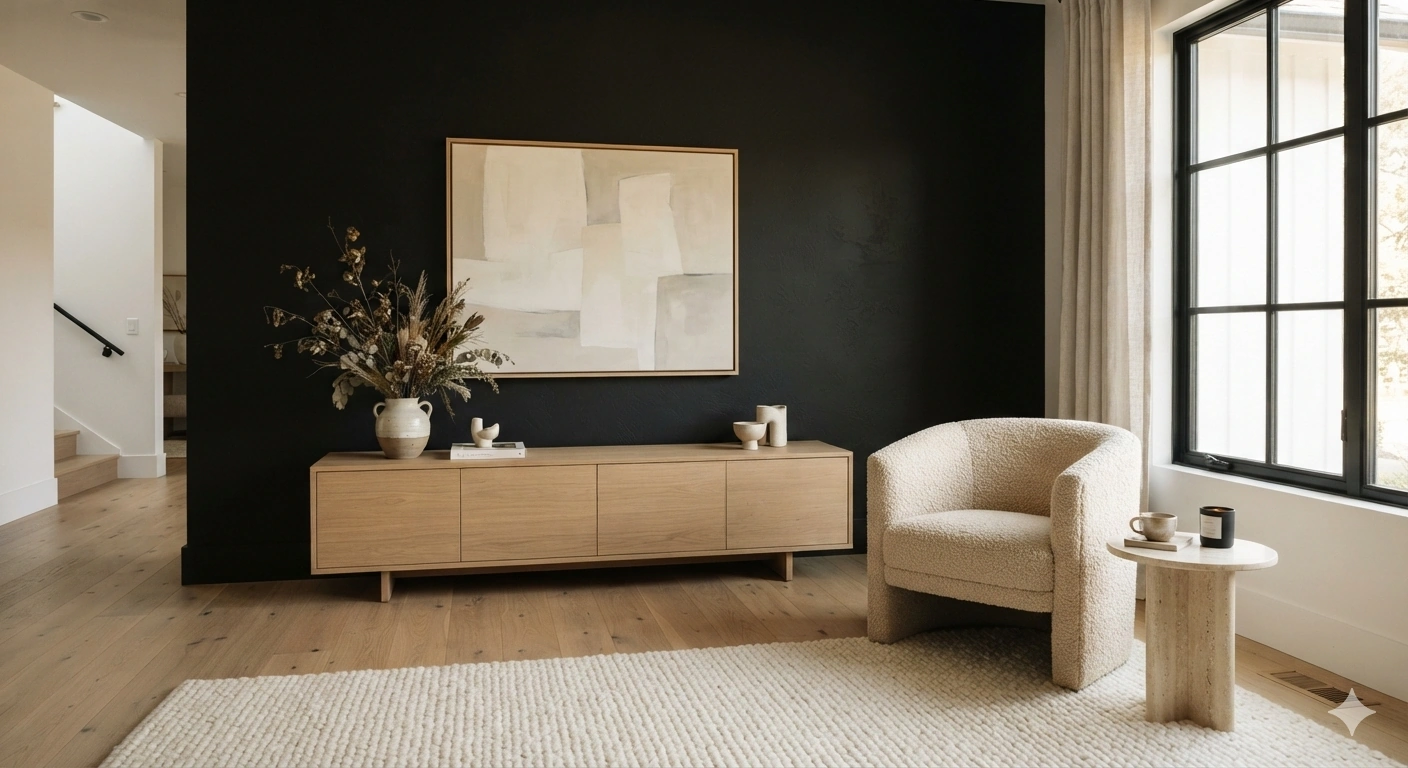
These black accent wall ideas prove a dark wall can make a room feel deeper, warmer and more intentional — not smaller. There is a common misconception in interior design that dark colors shrink a room. In reality, a deep hue can actually push walls back visually, creating an illusion of endless depth and sophisticated drama. Black accent walls have transitioned from a bold, risky trend into a timeless design staple, offering an effortless way to ground a space and make your favorite decor stand out.
Yet, committing to such a saturated shade can feel incredibly intimidating. It is completely natural to worry that a dark feature wall will make your living room feel like a gloomy cave, or that you will accidentally choose a paint with cold, blue undertones that look harsh in natural light. You might also feel stuck on how to style your existing furniture against such a high-contrast backdrop without the space feeling flat and lifeless.
The secret to mastering this look lies in choosing the right warm undertones, incorporating rich textures, and balancing the wall with strategic lighting. In this guide, we cover 20 black accent wall ideas and styling techniques, from paint undertone, finish and lighting to wood slats, board and batten, plaster, art and plants. Read on to discover how to bring this luxurious, cozy aesthetic into your own home with confidence.
The short answer: choose a warm, soft black, use a matte or flat velvet finish, light the wall in layers with warm bulbs between 2700K and 3000K, and balance it with natural wood, texture and light-toned decor.
Key Takeaways
- Check the light first: a typical black paint has an LRV around 5, reflecting only about 5% of the light — warm blacks suit low-light rooms, cool blacks need good light.
- Pick the wall with a job: behind the bed, the sofa or the dining table — the wall you face as you enter the room.
- Add one warm material: wood, brass or leather keeps a black wall reading as depth instead of a void.
- Matte hides flaws, eggshell wipes clean: choose the finish by how much the wall gets touched.
- Light it warm: 2700K bulbs, layered and front-facing, stop a black wall disappearing after dark.
Measure First: Paint Coverage, Light and the 60-30-10 Rule
Black paint is unforgiving about preparation, so measure and test before you commit. A typical black paint has a light reflectance value (LRV) around 5, meaning it reflects only about 5 percent of the light that hits it — so the room’s light level decides everything. Sample your shortlist on large swatches on the actual wall and check them in morning, afternoon and evening light, because a warm black can read brown in daylight and nearly jet black after dark.
Budget one coat of grey-tinted primer and two coats of black, at roughly 350 to 400 square feet per gallon per coat — a single 10-by-12-foot accent wall takes well under a gallon per coat, but buy the gallon so future touch-ups match exactly. Then apply the 60-30-10 rule: let black be the 10 percent accent, warm neutrals or wood take 60 percent, and a secondary tone hold the remaining 30 percent, so the drama stays balanced instead of taking over the room.
1. Why a Black Accent Wall Can Add Depth Instead of Shrinking Your Room
There is a persistent myth in interior design that dark colors automatically make a room feel smaller and more cramped. In practice, dark colors tend to recede visually. Much like the night sky, a deep, saturated black accent wall can make the wall read as further away than it actually is, creating an impression of depth. The effect depends on lighting and the surrounding colors, but it can work well in narrow entryways or compact bedrooms, where you want to push the boundaries of the room outward.
To make this spatial science work in your favor, balance is key. Pair your black feature wall with contrasting elements like a light oak credenza, creamy bouclé accent chairs, or a plush ivory wool rug. This high-contrast juxtaposition prevents the room from feeling cave-like and instead makes the space feel curated, expansive, and incredibly modern. Positioning the accent wall opposite a primary window allows natural light to wash across the surface, softening the intensity of the black and highlighting its subtle textures.
A common mistake is leaving the black wall completely bare, which can make it feel like a cold void. Instead, layer it with oversized, light-toned artwork or a light wood shelving unit to anchor the wall and give the eye a place to rest. For a designer-approved touch, ensure your flooring is a medium-to-light tone, which reflects light upward and beautifully balances the grounding weight of the dark backdrop.
The depth effect is real: a dark wall recedes visually, much like the night sky, so the wall reads as further away than it is. The rule designers use is simple — check the light first, pick the right wall, and add one warm material, wood or brass, so the black reads as depth instead of a flat void. In a narrow entryway or a compact bedroom the effect is strongest, because the dark wall gives the eye somewhere deep to rest.
2. Warm vs. Cool: How to Choose the Right Black Paint Undertone for Your Lighting
Choosing the right black paint is never as simple as picking up a generic can of true black. Black paints are highly sensitive to their undertones, which generally fall into two categories: warm (with brown, yellow, or red undertones) and cool (with blue, purple, or green undertones). The direction your room faces and the natural light it receives should dictate your choice.
For north-facing rooms, which naturally receive cool, blue-toned light, a cool black will feel icy, stark, and clinical. Instead, opt for a warm, charcoal-leaning black with rich brown undertones to inject instant coziness and comfort. South-facing rooms, flooded with warm golden light, are much more forgiving and can beautifully handle true, deep blacks or those with subtle forest-green undertones.
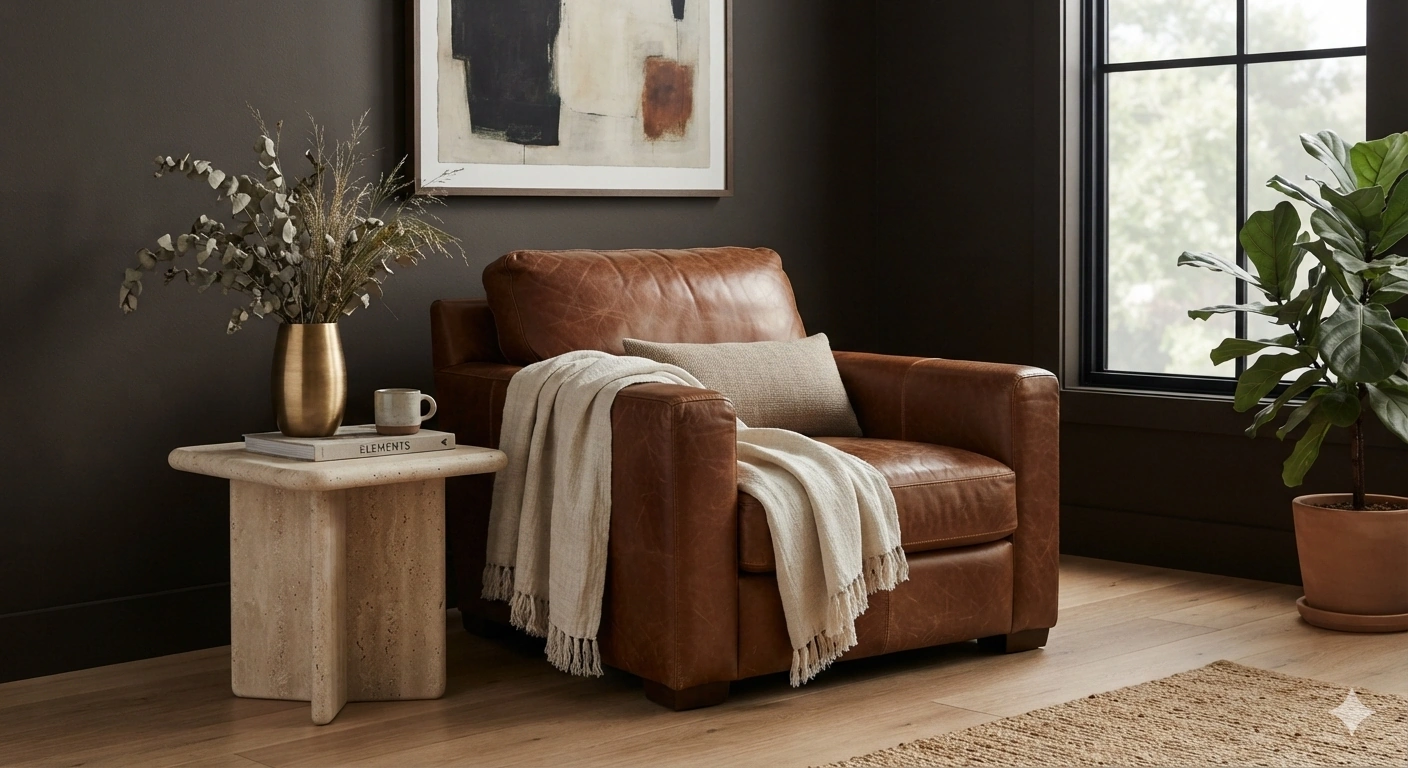
A classic designer mistake is choosing paint chips under harsh showroom fluorescent lights. Always swatch your top three choices directly onto the designated wall and observe them at morning, noon, and night. To complement a warm black, style the space with cognac leather, brushed brass hardware, and warm travertine stone. This creates a cohesive, organic modern palette that feels incredibly sophisticated, intentional, and inviting.
Undertone is the whole decision. In a north-facing room with little direct sun, a cool blue-black absorbs what little light there is and feels heavy by mid-afternoon — a warm black with brown or olive in it stays inviting instead. Test your shortlist on large swatches on the actual wall and check them in morning, afternoon and evening light before committing.
3. Black Paint Colors to Try for a Warm Accent Wall
For a warm accent wall, softer, more complex blacks are usually easier to live with than pure, stark blacks. They offer a gentler transition from light to dark and add depth without feeling aggressive.
One of our favorites is Sherwin-Williams Iron Ore. This is a soft, charcoal-toned black with a light reflectance value of about 6, and many color reviewers describe it as leaning warm, which makes it feel velvety and forgiving in high-traffic family rooms. If you want something slightly darker but still warm, Benjamin Moore’s Black Beauty, which the brand describes as a rich black with a hint of warmth, pairs beautifully with natural white oak and unlacquered brass. For a moodier, cooler alternative, Farrow & Ball’s Railings is a blue-based black that the brand describes as more blue than black. It suits rooms with plenty of warm light and is best avoided in north-facing rooms, and undertones always read differently at home, so swatch each color on your own wall first.
When styling these colors, avoid stark white trim, which can create a jarring, unfinished look. Instead, paint your baseboards and trim in the same black shade for a seamless, high-end floor-to-ceiling look, or opt for a warm, muddy beige like Benjamin Moore’s Revere Pewter to soften the transition. Accentuate the space with natural linen drapery and matte ceramic decor to keep the vibe effortlessly chic. If you are comparing shades beyond black, our luxury paint ideas show how deep colors behave in different rooms.
A few shades cover almost every warm black wall: Sherwin-Williams Tricorn Black is the brand’s darkest true black with almost no perceptible undertone, while Iron Ore is the forgiving entry point — technically a very dark charcoal that reads as black in low light and reveals warm depth in brighter conditions. Benjamin Moore’s Black Beauty is a deep warm black that suits dining rooms, and Wrought Iron is the softer, calmer warm alternative.
4. Choosing the Right Paint Finish: Why Matte and Flat Velvet Work Best
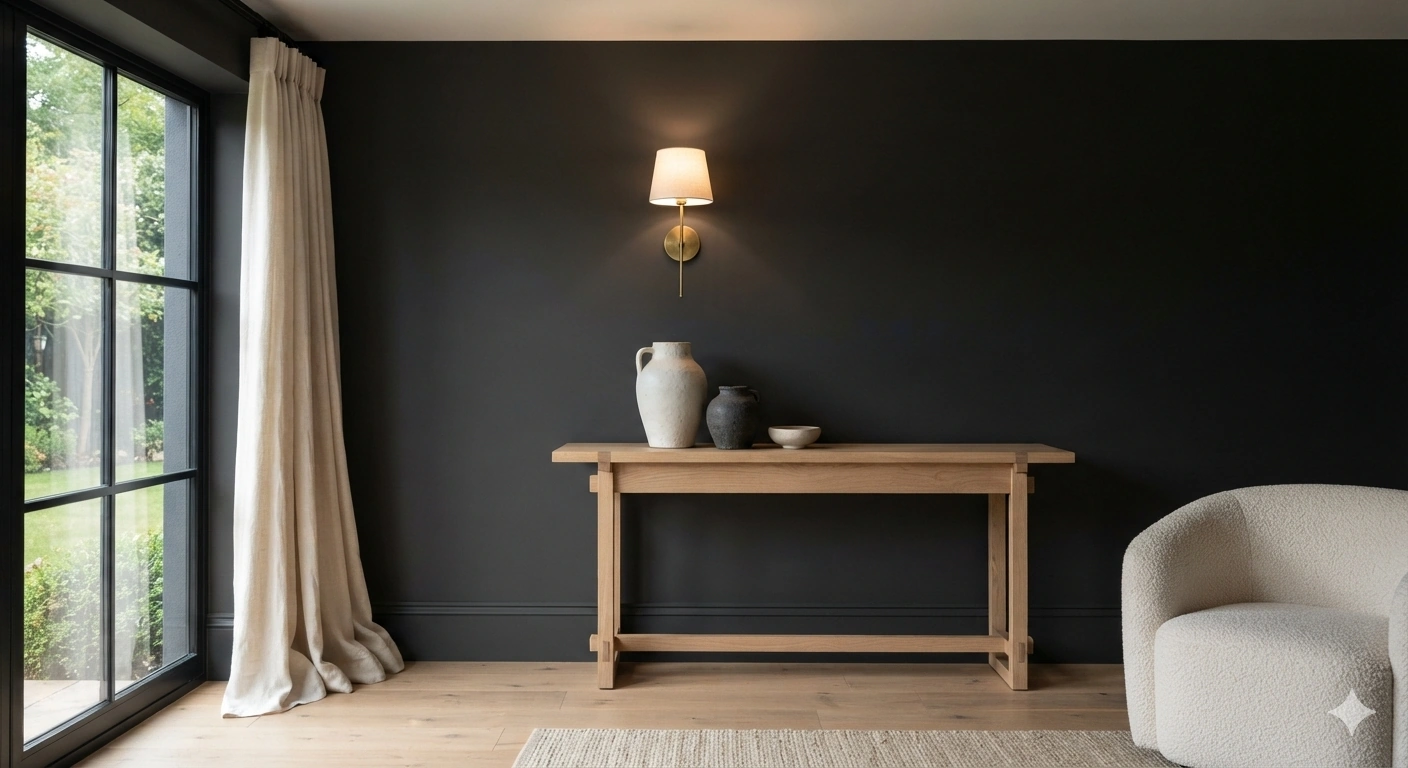
The finish you choose for your black accent wall is just as crucial as the color itself. While high-gloss finishes have their place in high-end lacquered libraries, they are incredibly unforgiving on standard drywall. Glossy dark paint acts like a mirror, catching every ray of light and highlighting every minor bump, joint line, and drywall imperfection.
For a modern, high-end residential aesthetic, matte and flat velvet finishes are the gold standard. These low-luster finishes absorb light rather than reflecting it, resulting in a rich, velvety depth that feels incredibly soft and sophisticated. They minimize visual glare, making your wall look like a cohesive, solid architectural element rather than a painted surface.
If you are worried about durability and fingerprints—especially in homes with children or pets—look for modern, washable matte formulas. These advanced paints offer the gorgeous light-absorbing properties of a flat finish but can be easily wiped clean with a damp cloth. To elevate the tactile experience, pair a matte black wall with highly textured decor elements, such as a rough-hewn stone mantle, ceramic vases, and soft linen drapery. This contrast between the flat wall and textured decor creates a beautiful, designer-approved balance.
Sheen matters as much as shade. A flat or matte finish hides bumps, tape lines and imperfections beautifully, which is why it suits a bedroom accent wall — but it shows fingerprints and smudges more readily. In a hallway, kitchen or mudroom, an eggshell or satin finish gives up a little of that flat depth in exchange for a surface you can wipe clean.
5. How to Avoid the ‘Black Hole’ Effect with Multi-Layered Ambient Lighting
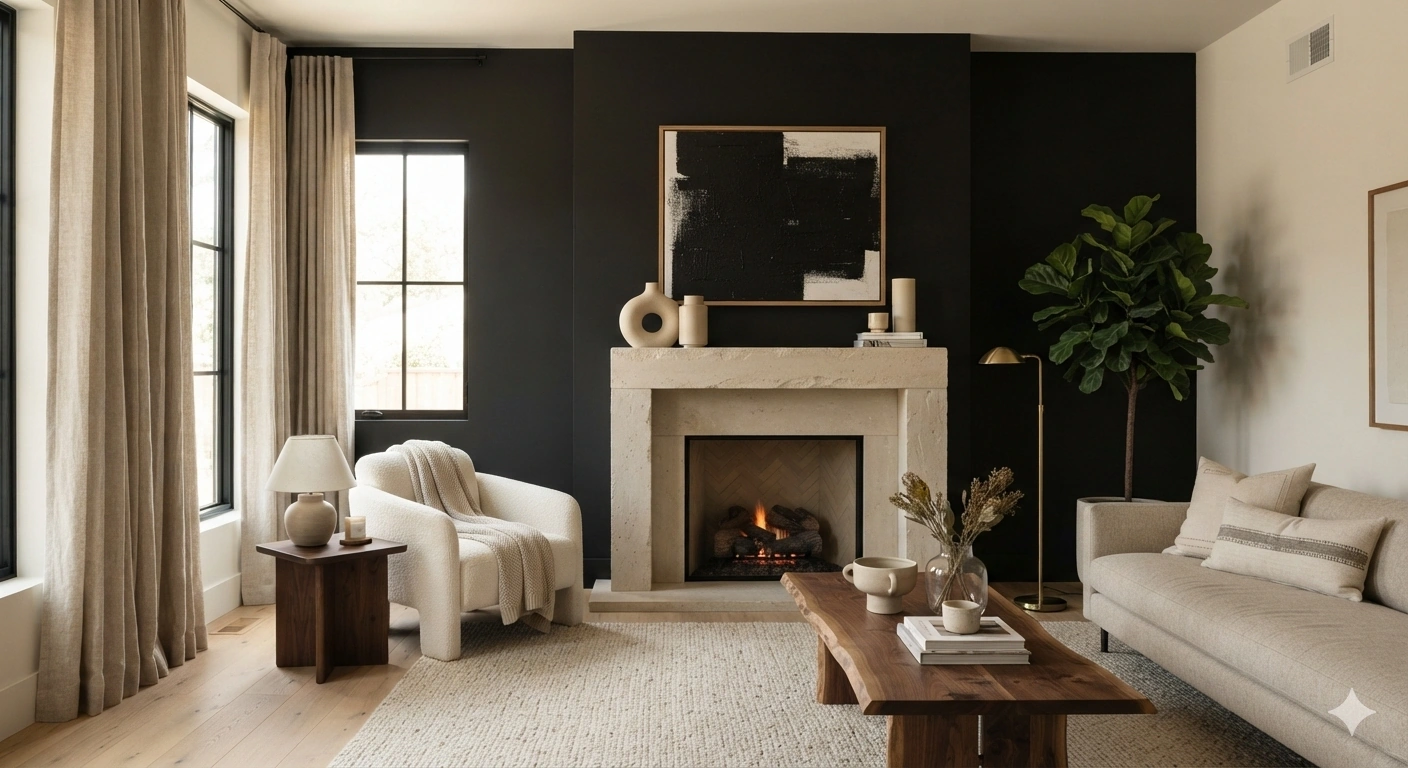
Without a thoughtful lighting plan, a black accent wall can quickly turn into a flat, lifeless “black hole” that drains the energy from your room. The key to unlocking the true luxury of a dark feature wall is multi-layered, warm lighting that accentuates its depth and texture.
Avoid relying solely on overhead recessed can lights, which cast harsh downward shadows and fail to illuminate the wall itself. Instead, introduce vertical layers of light. Install a pair of sleek, low-glare brass picture lights above framed artwork to wash the wall in a warm, targeted glow. Alternatively, mount articulating matte black or brushed bronze sconces (our guide to statement wall light fixtures has more options) on either side of a bed or fireplace to frame the space beautifully.
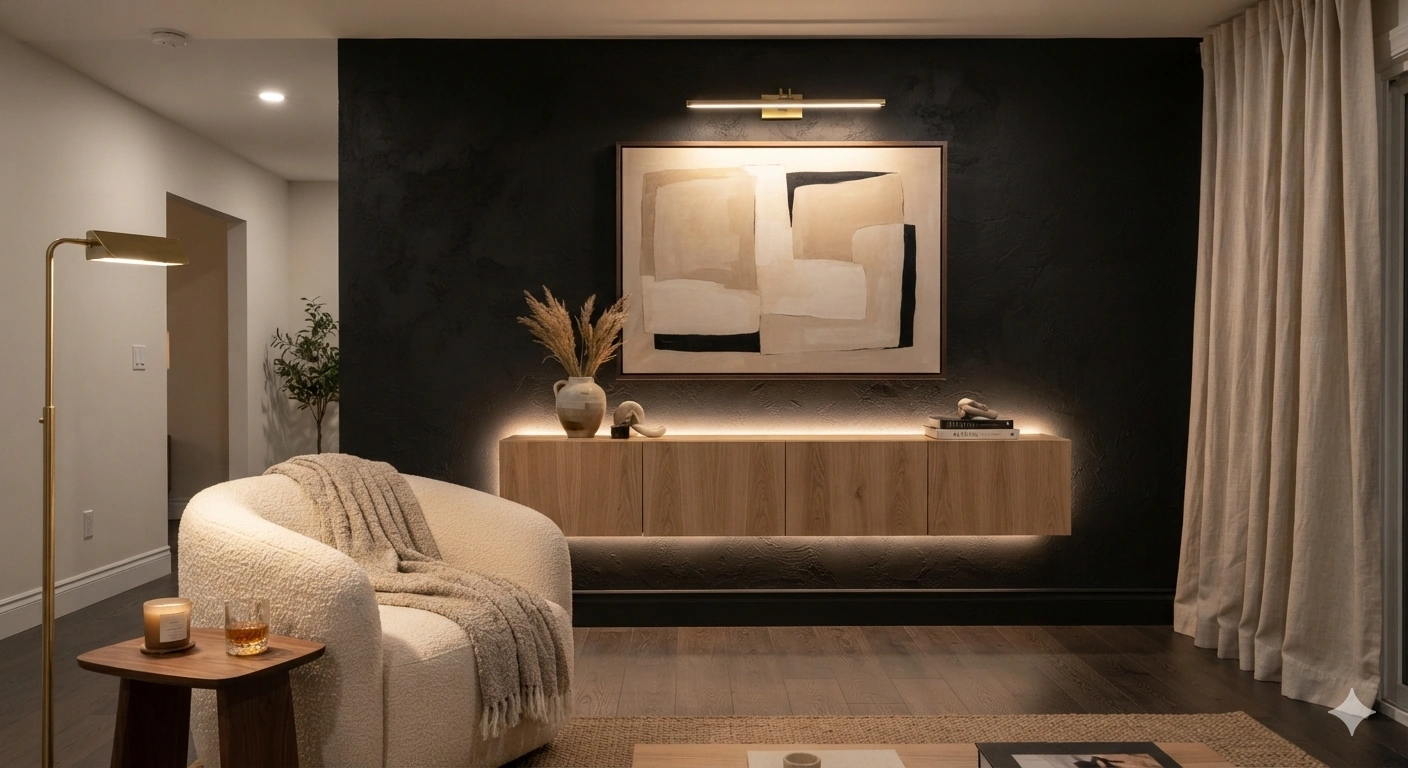
For a truly modern, architectural feel, consider installing concealed LED strip lighting along the top of the wall or behind a floating media console. This creates a soft, ambient halo effect that makes the dark wall appear to float. Always opt for warm-temperature LED bulbs—ideally between 2700K and 3000K—to keep the atmosphere cozy and inviting rather than cold and industrial. This layered approach ensures your black accent wall glows with warmth and sophistication.
Light a black wall in layers and keep the bulbs warm — around 2700K. Cool white light makes a black wall feel clinical instead of rich, while warm white makes it glow. Combine ambient ceiling light with sconces flanking the wall and a picture light or table lamp in front of it, so the wall is lit from the front rather than disappearing into shadow after dark.
6. The Wood Slat Black Accent Wall: Adding Modern Architectural Texture
If you are hesitant to paint a flat drywall surface black, introducing architectural texture is the perfect solution. The wood slat black accent wall has become a staple of high-end, organic modern design, offering a beautiful play of light and shadow that flat paint simply cannot replicate.
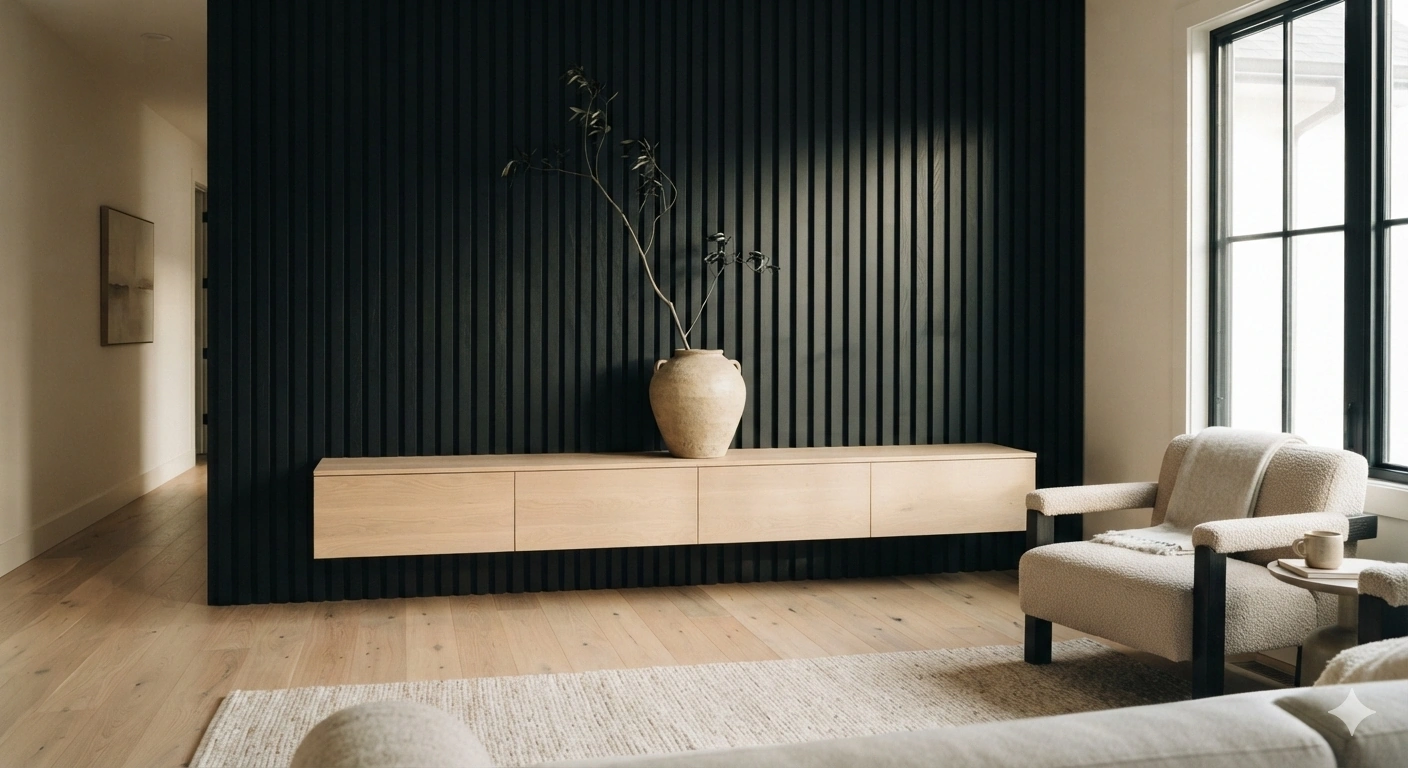
This look is achieved by mounting vertical wood slats—either in natural white oak or painted a matching matte black—onto a dark felt or painted black backing. The gap between the slats creates a deep shadow line, giving the wall incredible three-dimensional texture and geometric interest. This technique is highly functional, too; the felt backing can absorb some sound, making it a useful choice for media rooms, home offices, or behind a master bed.
To style this feature, keep the surrounding decor clean and minimal to let the woodwork shine. A low-profile, floating white oak console placed against the slats creates a stunning, high-contrast focal point. Accentuate the vertical lines of the slats by placing a tall, structural branch in an oversized ceramic vessel nearby, and let natural sunlight highlight the rich grain of the wood. This approach delivers an upscale, architect-designed feel to any home. For more slat and paneling ideas, see our bedroom feature wall ideas.
Wood slats are the easiest way to give a flat black wall architecture. Paint the slats the same black as the wall for a monochrome, textural look — the vertical strips create shadow lines that shift through the day — or leave them in warm wood for contrast. Either way, the slats break up the flat plane so the wall reads as crafted, not just painted.
7. Classic Board and Batten: Elevating Your Feature Wall with Traditional Molding
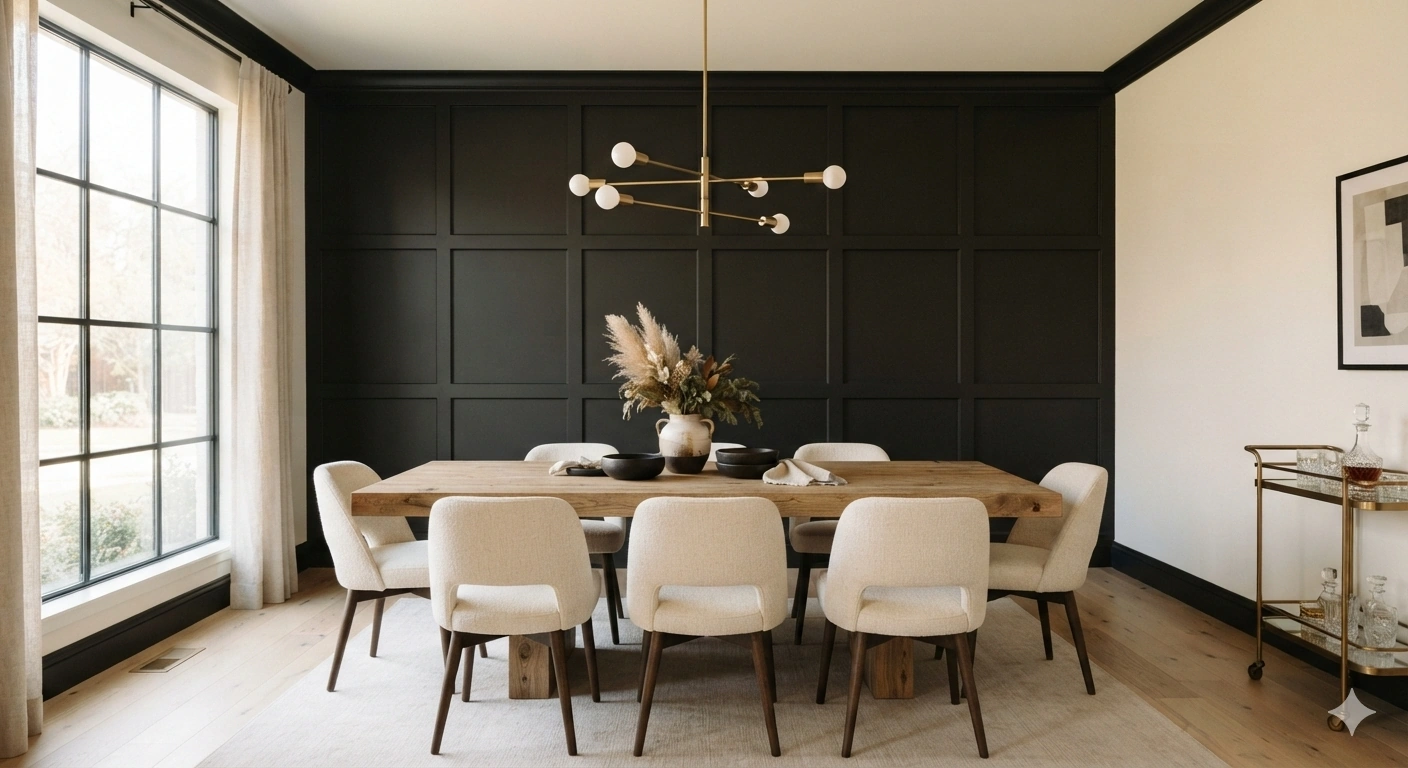
For homeowners who love a transitional or modern traditional aesthetic, a classic board and batten accent wall painted in a rich, warm black is the ultimate way to marry historic charm with contemporary drama. The raised wooden trim pieces break up the expansive dark surface, casting delicate shadows that add instant architectural character to a standard builder-grade room.
This style works exceptionally well in dining rooms and primary bedrooms, where you want to create an intimate, upscale atmosphere. You can opt for a traditional grid pattern for a formal, paneled look, or choose clean, vertical-only battens for a more modern, height-boosting effect.
When executing this look, the biggest mistake is using cheap, thin molding that lacks substance. Opt for sturdy MDF or solid wood boards with a depth of at least half an inch to ensure the shadows are pronounced and luxurious. Paint the entire wall—including the baseboards, crown molding, and the battens themselves—in the same warm black matte finish. This monochromatic approach unifies the woodwork, making the accent wall feel like an expensive, custom architectural installation rather than a quick DIY project. For more molding profiles and heights, see our wainscoting ideas.
Board and batten earns its place on a black wall because the battens add the shadow play that flat paint lacks. Vertical strips over a black-painted wall create lines that move with the sun, and painting the battens the same black as the wall keeps the look monochrome and modern, while leaving them in a warm wood tone suits a transitional or modern traditional room.
8. Modern Black Shiplap: A Contemporary Twist on Rustic Design
While white shiplap will always be synonymous with classic farmhouse style, painting shiplap in a deep, moody black completely reinvents the material, transforming it into a sleek, contemporary design element. The horizontal or vertical grooves of shiplap introduce subtle lines that break up the flat surface of a wall, offering a relaxed yet incredibly sophisticated vibe.
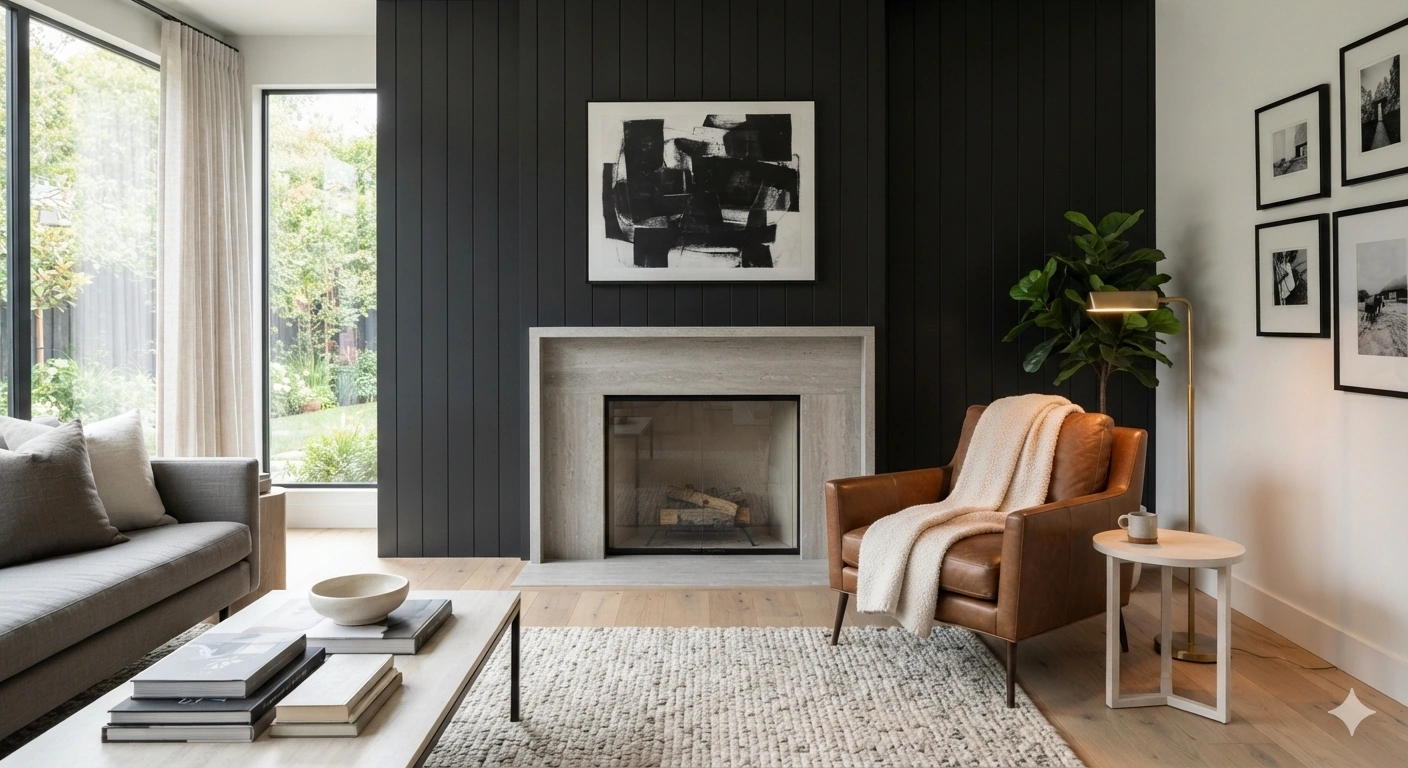
Horizontal black shiplap works wonders in making narrow spaces feel wider, making it a brilliant choice for an entryway or a cozy den. Vertical black shiplap, on the other hand, draws the eye upward, creating the illusion of taller ceilings. This looks spectacular behind a modern fireplace or as a feature wall in a powder room.
To keep this look firmly rooted in modern luxury rather than rustic country, steer clear of heavily distressed wood finishes. Instead, choose smooth, clean-lined pine or MDF planks and paint them in a rich, warm black like charcoal or obsidian. Balance the dark wood with organic textures: a natural stone mantel, a cognac leather armchair, and a soft, textured boucle throw. This curated mix of materials ensures your modern shiplap wall feels warm, layered, and effortlessly chic.
Shiplap direction changes the mood: vertical boards read contemporary, horizontal boards read rustic. On a black wall, a warm charcoal keeps the look soft rather than severe, and the thin shadow gaps between boards give the wall the texture that flat paint cannot. It is a good choice for a living room wall that needs interest without adding colour.
9. Incorporating Organic Textures: Plaster and Limewash Black Feature Walls
A common hesitation with black accent walls is the fear of a flat, sterile finish that absorbs all light and highlights every wall imperfection. To bypass this, we look to organic textures like plaster, Roman clay, or limewash (see our modern textured wall ideas for more finishes). These materials introduce a tactile, suede-like movement that catches the light beautifully, transforming a stark black surface into a living, breathing architectural feature.
This technique works exceptionally well in spaces with abundant natural light, such as open-concept living rooms or sun-drenched bedrooms. As the sun shifts throughout the day, the subtle tonal variations within the plaster create a mesmerizing play of shadows. To style this look, pair the textured wall with minimalist, clean-lined furniture to let the craftsmanship of the plaster shine.
When choosing your product, opt for a warm charcoal or soft obsidian shade rather than a harsh, blue-toned black. This keeps the atmosphere cozy and inviting. Complement the wall with low-profile bouclé seating and linen drapery to enhance the tactile experience.
A classic designer mistake is using standard flat latex paint on a poorly prepped wall, which can look chalky and show scuffs. Instead, investing in a high-quality mineral paint or lime wash provides a durable, breathable finish that actually conceals minor surface flaws. To complete the look, install low-glare, warm-toned LED art lights to highlight the rich texture when night falls.
Plaster and limewash are the softest way into a black wall. The textured, hand-applied finish has movement in it, so the wall never reads as a flat void, and the grey-black mottling softens the effect just enough — especially with fresh greenery in front of it. It suits rooms where you want mood without the hard edge of a painted wall.
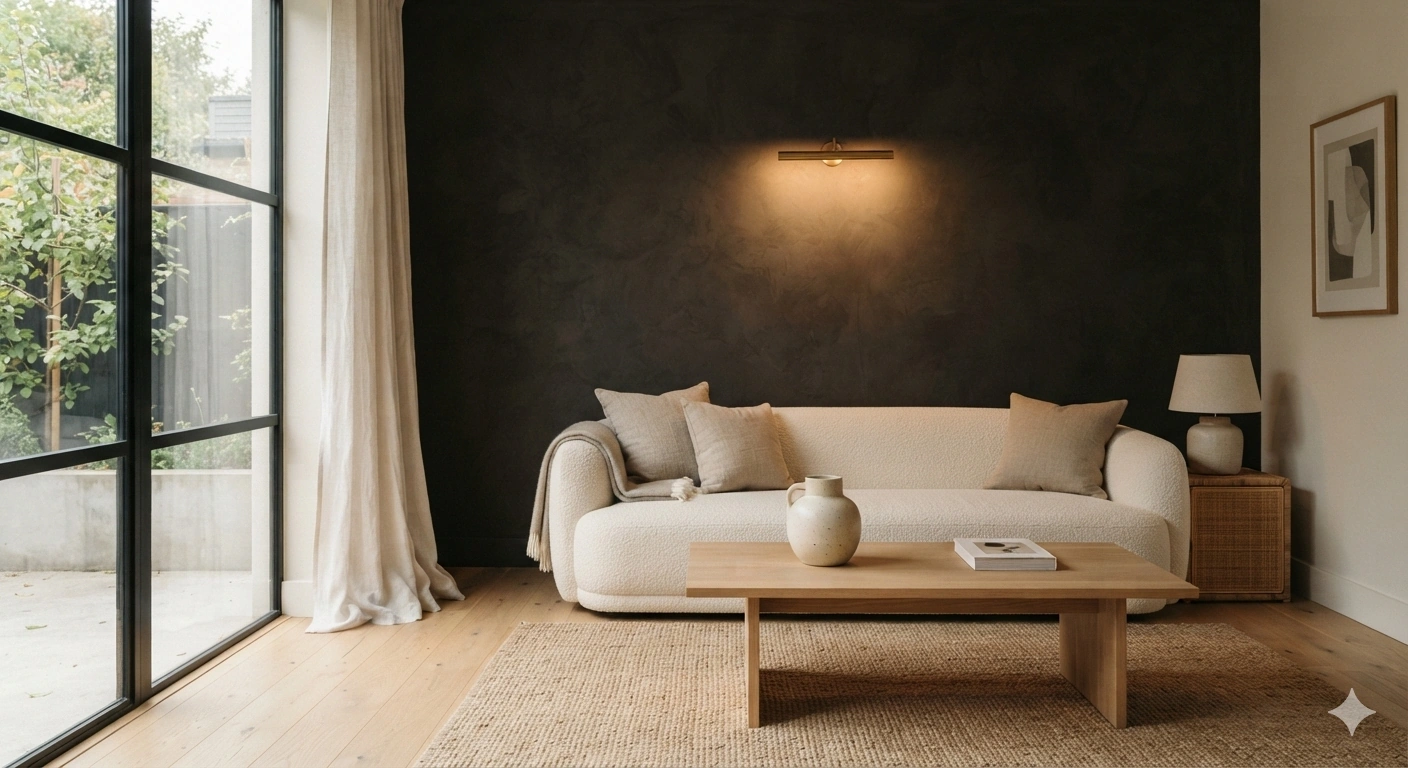
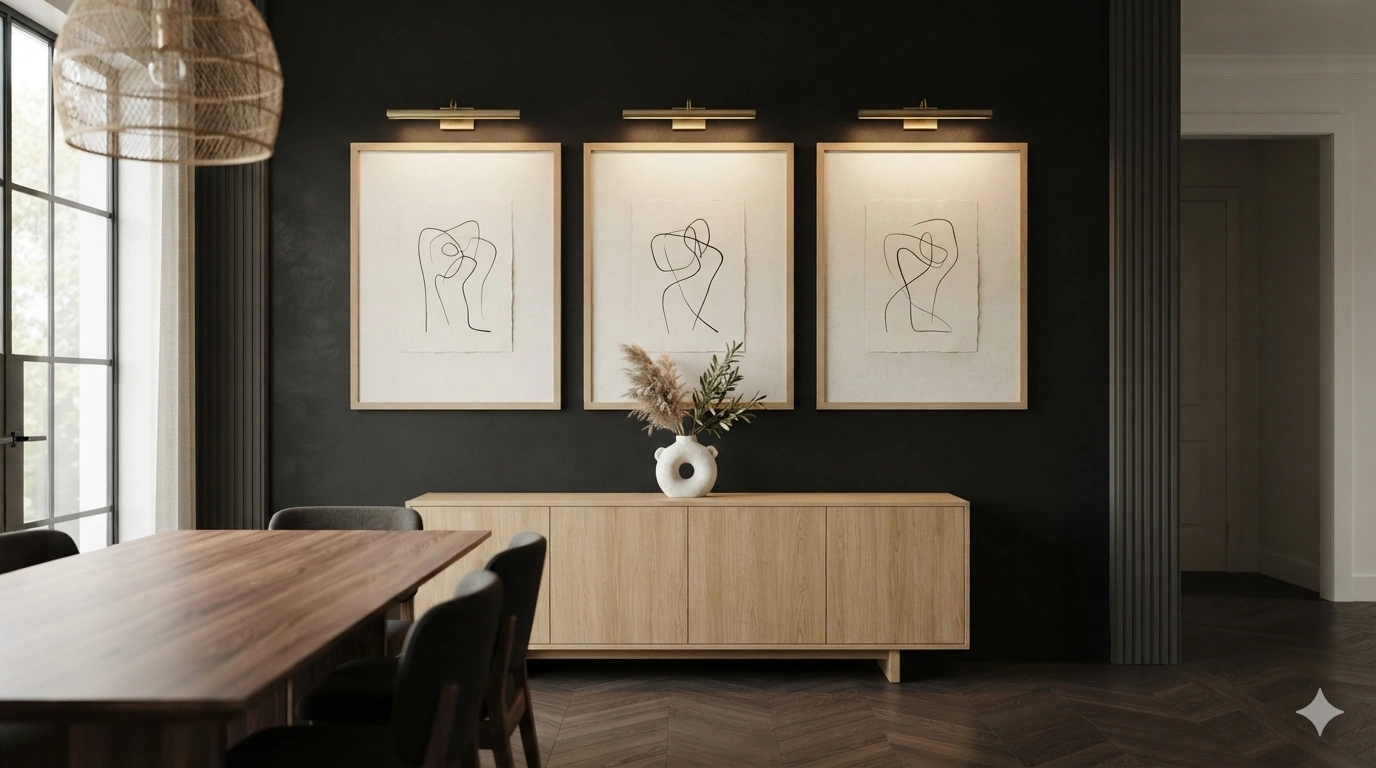
10. High-Contrast Art Styling: How to Select and Arrange Frames Against a Dark Backdrop
Hanging artwork on a black accent wall is one of the most effective ways to break up the dark expanse, but it requires a deliberate curatorial strategy. A dark backdrop acts as a high-contrast stage, making whatever you place on it instantly pop. The key is to leverage this contrast to create a sophisticated focal point rather than a chaotic visual distraction.
This styling method is perfect for dining rooms or long hallways where you want to establish an art-gallery vibe. To make the artwork stand out, select frames that offer a clear contrast. Light oak, natural maple, or warm brushed brass frames work beautifully against a dark backdrop. For the art itself, opt for oversized white or off-white matting; this creates a visual buffer that allows the artwork—whether it is a minimalist line drawing or a vibrant abstract—to breathe.
Avoid the temptation to use thin, dark frames, as they will completely disappear into the wall, leaving your art looking unanchored. Instead, create a balanced gallery wall or hang a single, massive statement piece. Our living room wall decor ideas cover gallery wall layouts in more depth.
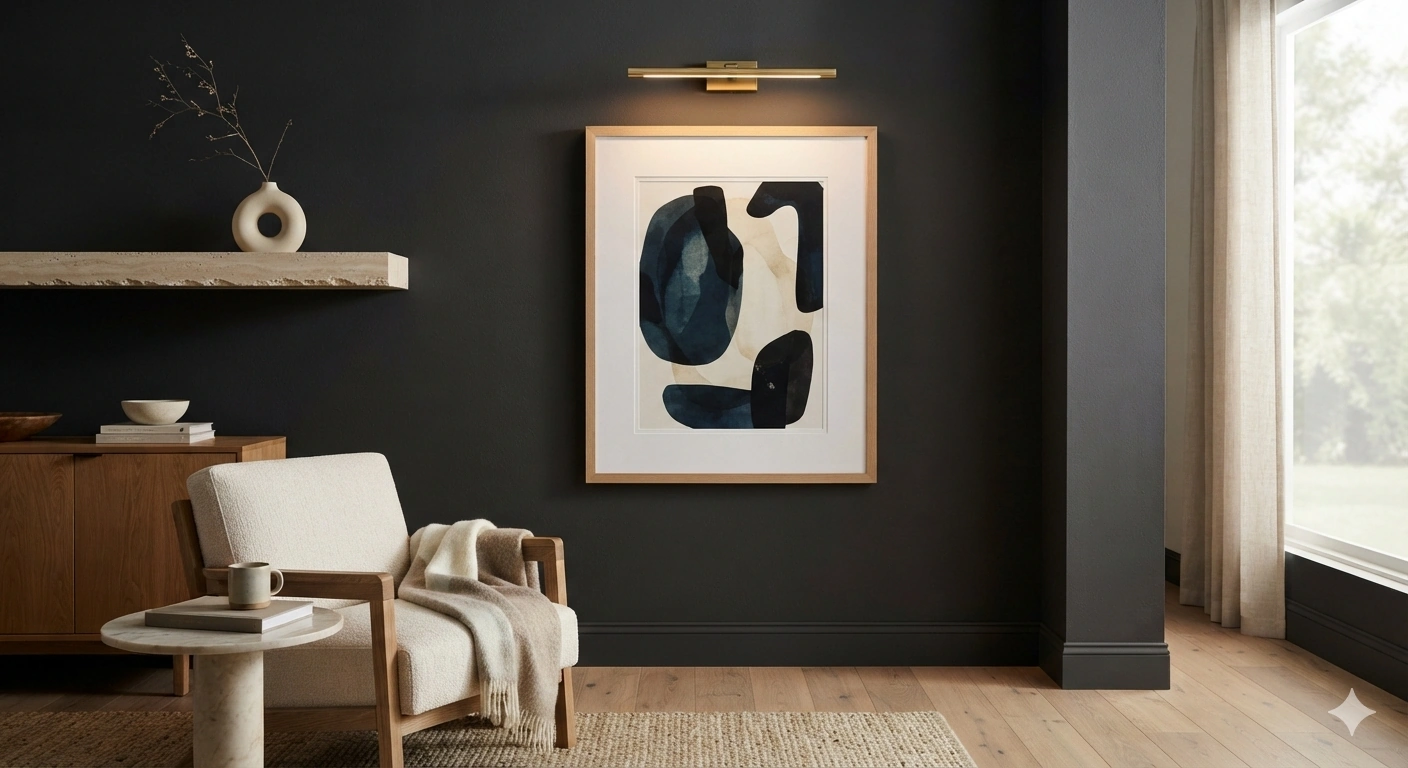
To elevate the presentation, install brass picture lights directly above the frames. The warm glow casting downward not only illuminates the artwork but also bathes the black wall in a soft, atmospheric light, softening its intensity and adding an undeniable layer of luxury.
Art on a black wall wants scale and breathing room. One large piece beats a cluster of small frames, and light oak, warm brass or slim black framing all work — choose the frame that echoes another metal or wood in the room. Leave generous empty black around the art; the contrast is the point, and crowding the wall kills it.
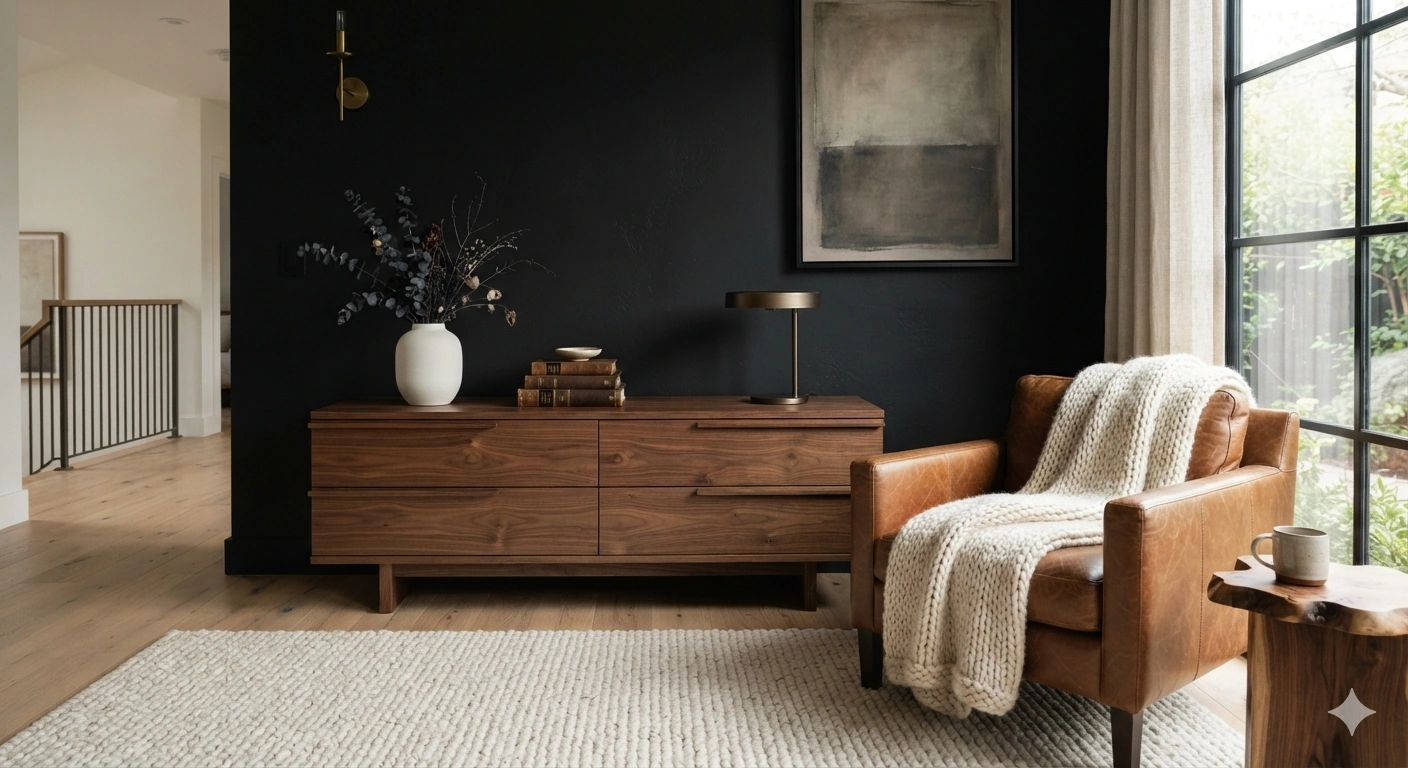
11. Warming Up the Dark: Integrating Natural Wood Tones and Leather Accents
To prevent a black feature wall from feeling cold or intimidating, you must introduce elements that bring warmth and organic soul back into the room. The secret weapon here is the strategic layering of natural wood tones and rich leather accents. The juxtaposition of deep black against warm, earthy materials creates a balanced, high-end look that feels grounded and intentional.
This approach works wonders in family rooms, dens, and home libraries where comfort is the primary goal. When choosing wood species, look for mid-to-dark tones with visible grain, such as white oak, walnut, or reclaimed elm. A floating white oak shelf or a walnut credenza placed against a black wall instantly softens the stark contrast, making the space feel curated over time.
Incorporate leather through accent seating, like a cognac leather armchair, or smaller decorative details like leather-bound books and trays. The amber and caramel undertones of the leather naturally complement the warm black paint, adding a luxurious tactile dimension to the room.
A common pitfall is pairing a black wall with cool-toned grey woods or overly yellow pine, which can clash and look dated. Stick to warm, neutral wood stains. To tie the look together, introduce cream-colored textiles, such as a chunky knit throw or a wool area rug, to bridge the gap between the dark wall and the warm wood elements.
Warmth is what keeps a black wall from feeling cold, and wood and leather do it best. Oak, walnut, medium-toned wood and cane all sit beautifully against black, and cognac leather — a chair, a cushion, a tray — adds a lived-in warmth that metal cannot. The rule is one warm material at minimum; two, wood plus brass, is better.
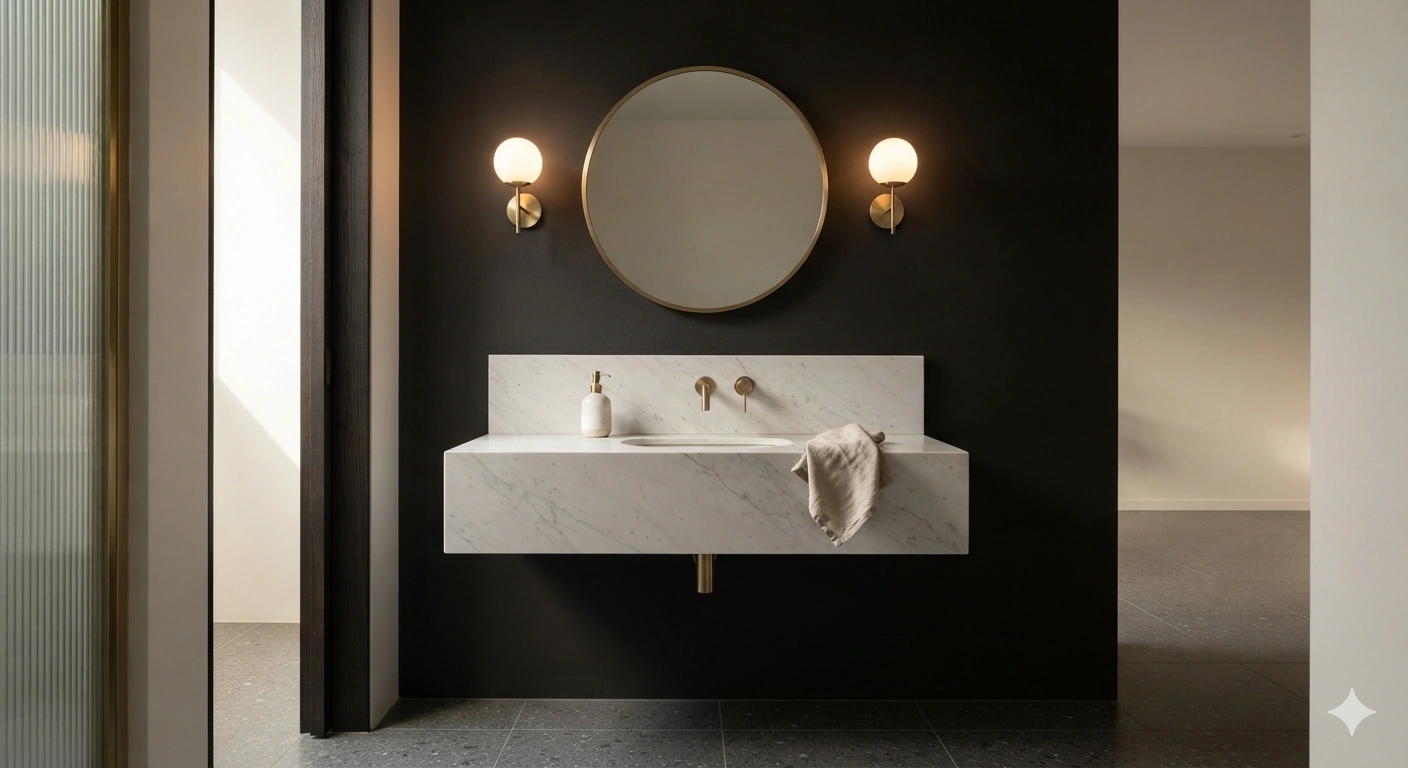
12. Metallic Magic: Pairing Brass, Gold, and Chrome Fixtures with Black Walls
Think of metallic fixtures as the jewelry of your room. When set against a dramatic black accent wall, metals lose their subtlety and become striking design statements. The high-contrast pairing of metallic finishes with a dark backdrop adds an instant touch of glamour and modern sophistication.
This combination is particularly striking in powder rooms, wet bars, and master suites. Brushed brass and satin gold are the gold standards for warming up a black wall, offering a classic, mid-century modern or transitional aesthetic. If your style leans more contemporary, polished chrome or nickel provides a sleek, industrial contrast that feels incredibly fresh and crisp.
When styling, consistency is key. If you install brushed brass sconces on the black wall, echo that finish in nearby hardware, like cabinet pulls or a mirror frame. This creates a cohesive narrative throughout the space.
The mistake to avoid here is over-accessorizing. Because the contrast is so high, a few well-placed metallic elements go a long way; too many can make the wall look cluttered and gaudy. For lighting, choose fixtures with frosted or opal-glass globes to cast a soft, diffused light that bounces off the metallic surfaces, creating a beautiful, ambient shimmer against the dark paint.
Metal choice changes the temperature of the whole wall. Brass and gold warm a black wall and suit warm blacks; chrome and polished nickel cool it and suit blue-blacks. Unlacquered brass is the safest warm choice because it develops a patina that suits daily use, and matching the metal to the mirror frame or sconces makes the wall read as one considered design.
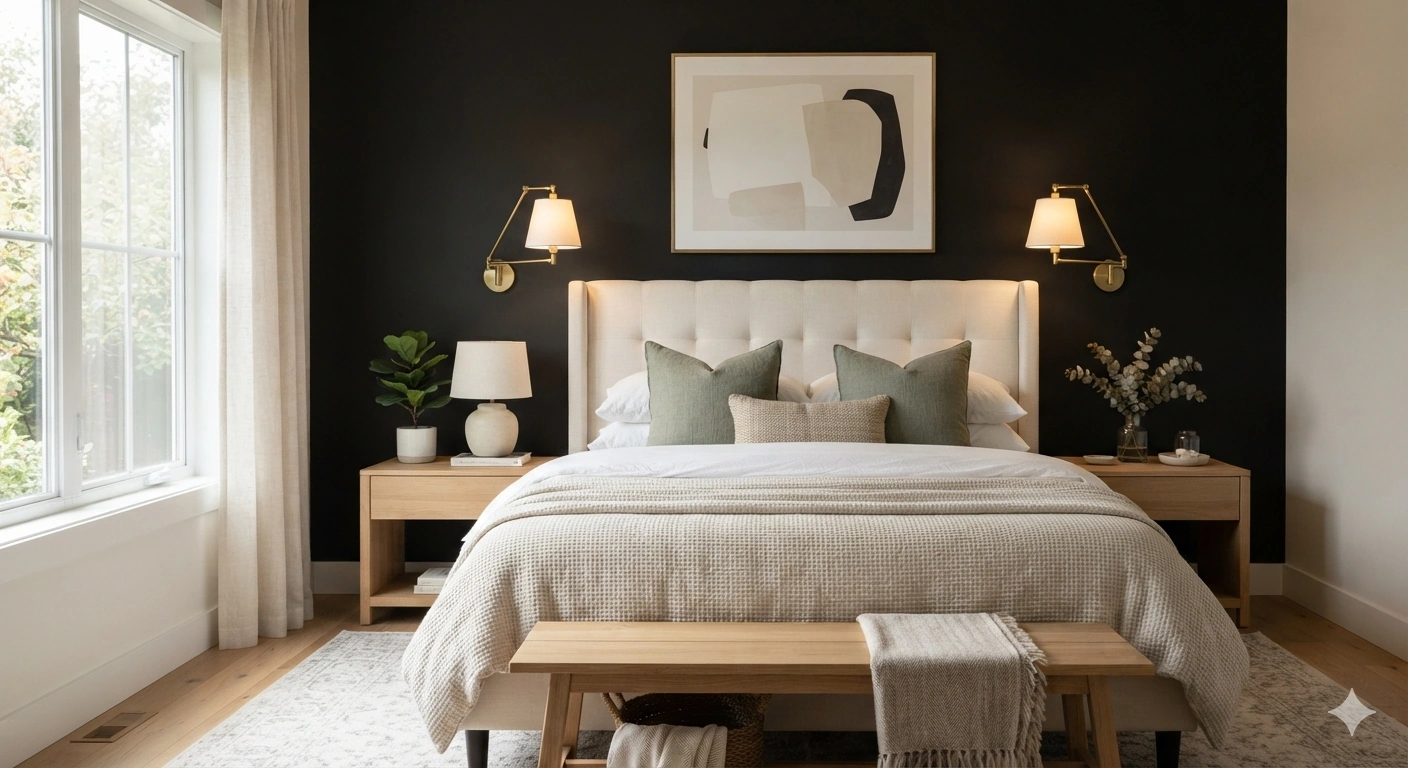
13. Cozy Bedrooms: Creating a Moody Sanctuary with a Black Headboard Wall
The bedroom should be a sanctuary, and a black headboard wall is the ultimate way to create a cozy, cocoon-like retreat. By painting the wall behind your bed black, you instantly establish a clear focal point while making the boundaries of the room visually recede, promoting a sense of restfulness and deep comfort.
This design works beautifully in both spacious master bedrooms and snug guest rooms. To keep the space from feeling gloomy, balance the dark wall with plush, light-toned bedding. Think layers of crisp white linen, a waffle-weave duvet, and textured throw pillows in soft oatmeal or sage green.
A velvet or upholstered headboard in a contrasting shade, like olive green, rust, or cream, looks exceptionally luxurious against a black backdrop. Alternatively, a spindle wooden headboard allows the black wall to peek through, highlighting the bed’s architectural silhouette.
Avoid using high-gloss paint in the bedroom, as it reflects light harshly and can feel cold. Instead, opt for a flat or matte finish that absorbs light and feels velvety to the touch. Flank the bed with low-profile nightstands and install dimmable, fabric-shaded wall sconces to cast a warm, gentle glow that enhances the moody, romantic atmosphere. For more bedroom inspiration, browse our modern bedroom ideas.
The wall behind the bed is the safest place to try a black wall, because the bed is already the focal point — the black simply strengthens it. Pair it with lighter bedding rather than making the whole bedroom dark: a warm ivory duvet, an oatmeal throw, natural wood nightstands and brass lighting keep the room calm. The same warm-wood-and-soft-textile layering that makes cozy Japandi bedroom ideas feel serene works here too.
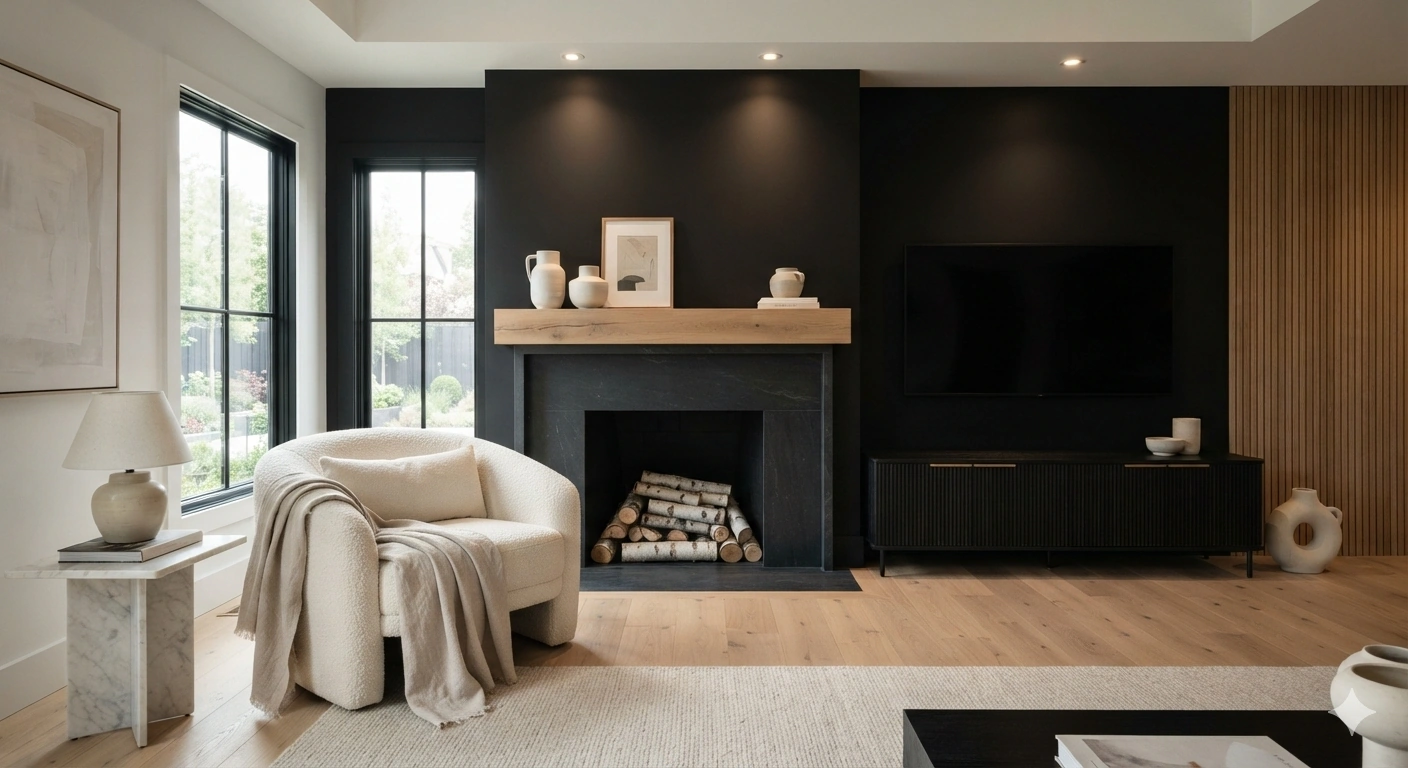
14. Dramatic Living Rooms: Framing Your Media Console and Fireplace in Black
In modern living rooms, the television and the fireplace often compete for attention. A black accent wall is a brilliant design solution that harmonizes these elements, turning a potential eyesore into a seamless, high-end architectural feature. By painting the fireplace wall black, you can visually camouflage a dark TV screen while accentuating the warmth of the flames.
This setup works best in main living areas where the fireplace serves as the natural gathering point. To execute this look with designer flair, consider using a matte black paint or a dark charcoal soapstone for the fireplace surround. If you have a mantel, opt for a thick piece of natural white oak to break up the dark surface and provide a perch for styled objects.
For your media console, choose a piece that matches the wall’s depth, such as a fluted black wood console, to make the unit blend in, or a contrasting light wood console to ground the space. For more ways to style the wall around a screen, see our TV wall ideas.
A common mistake is neglecting the interior of the fireplace box. If it is a non-working fireplace, paint the interior black as well, and fill it with birch logs or pillar candles for contrast. For a working fireplace, use only heat-rated paint and materials approved for use around a firebox, and follow the manufacturer’s clearance guidance for mantels, wall finishes and decor. Soft, ambient lighting from recessed ceiling lights or directional spotlights will highlight the fireplace’s texture without casting glare on your television screen. Our modern fireplace ideas cover surrounds, materials and TV placement in more depth.
A black wall behind the television makes the screen disappear, which is both stylish and practical — the room reads as a designed living space instead of a media room. Use a slim media console in warm wood, light oak or muted walnut to keep the wall from feeling heavy, and let the fireplace surround in soapstone or dark marble anchor the other end of the room.
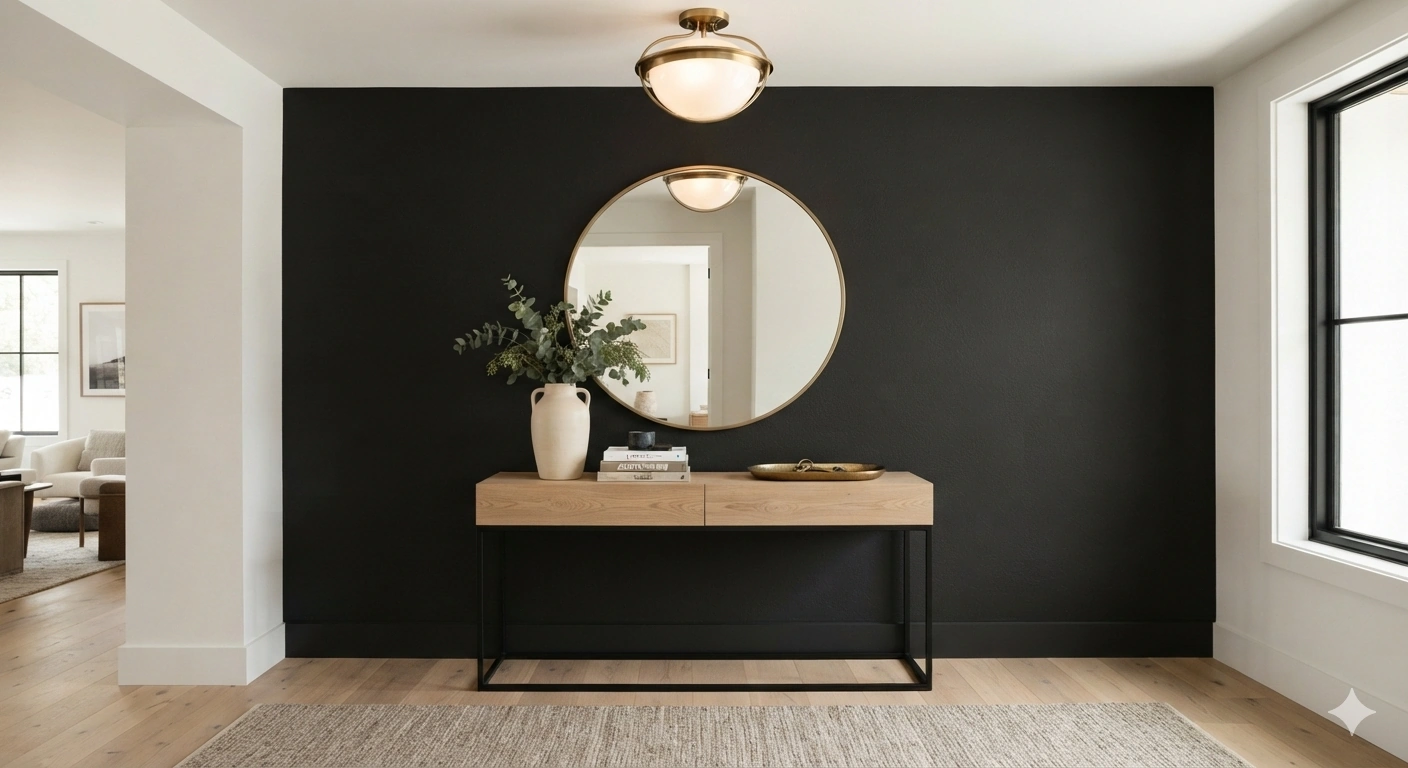
15. Chic Entryways: Making a Bold First Impression with a Dark Feature Wall
Your entryway sets the tone for your entire home, and a black feature wall makes a bold, unforgettable first impression. It signals a home that is confident, stylish, and deeply curated. Far from making an entry feel small, a dark wall adds instant depth, making the transition into the rest of the house feel bright and expansive.
This application works beautifully in foyers of all sizes, especially those that open directly into a living space. To style this area, place a sleek console table against the black wall. A table made of light oak, a console with a marble top, or a minimalist iron frame works best. Above the console, hang a large round mirror with a thin brass frame; this not only breaks up the black expanse but also bounces light around the entry, keeping it feeling open.
Style the console with a mix of organic shapes: a tall ceramic vase filled with fresh branches, a stack of art books, and a small catchall tray. For more ideas, see our entryway console table ideas.
Be sure to avoid clutter in this zone, as a dark backdrop will amplify any disorganization. Ensure the entryway is well-lit with a statement flush-mount or semi-flush ceiling fixture that casts a warm, welcoming glow, ensuring your guests feel invited the moment they step through the door.
An entryway is a small space with a big job, and a black wall makes the first impression memorable. Pair it with an oak and iron console, a round mirror to bounce light back into the hall, and warm white on the adjacent walls so the dark reads as drama rather than gloom. Keep the floor pale — light wood or a pale runner — so the room still feels open.
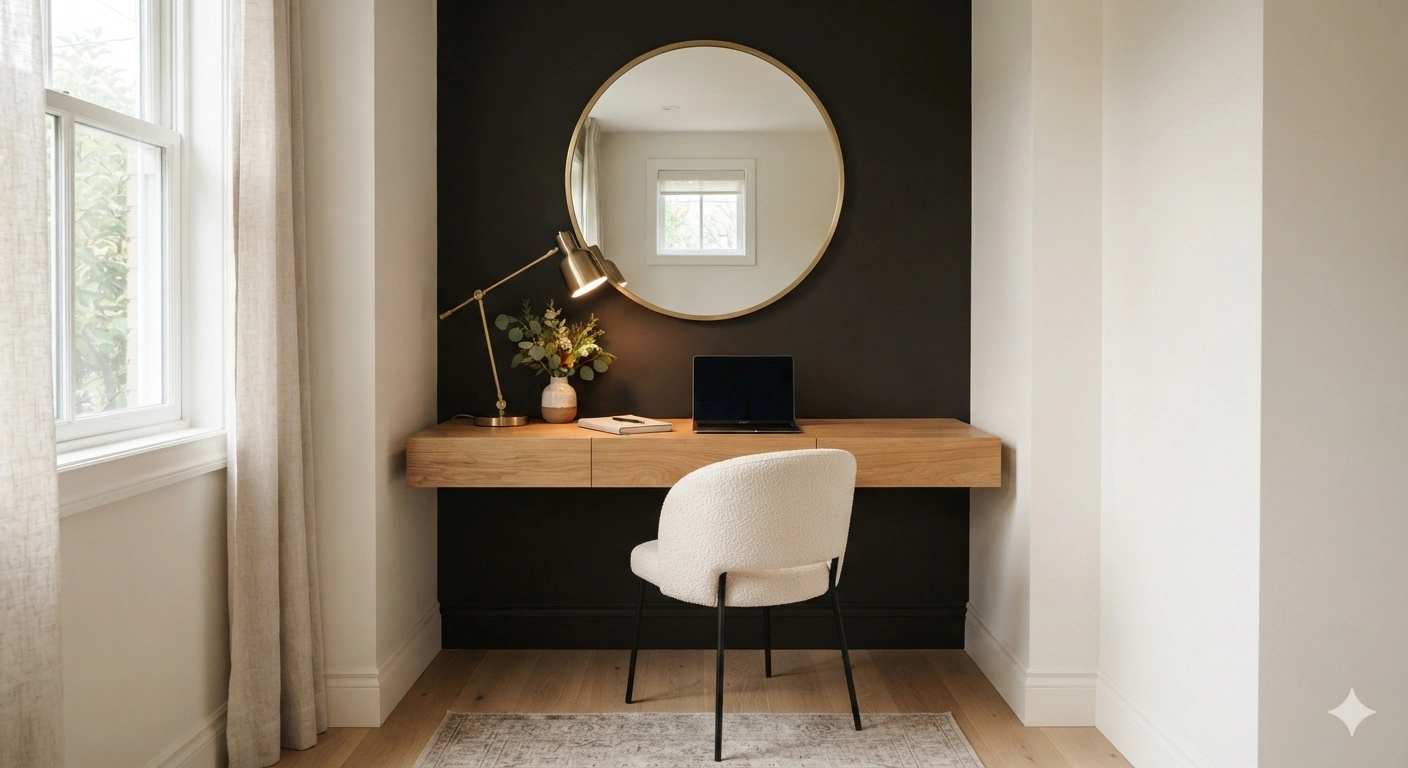
16. Small Space Solutions: How to Style a Black Accent Wall in a Tiny Room
Small rooms are where the fear of dark color is strongest, yet a black accent wall can make a tiny room feel less boxed in. Because black absorbs light, the wall’s boundaries become less defined, which can create the impression of depth—a design trick known as receding space.
This technique works exceptionally well in powder rooms, compact home offices (our office interior design ideas cover layout and lighting), or cozy reading nooks. To successfully execute this in a small room, keep the remaining walls light and airy—think soft alabaster, warm beige, or pale gray. This high-contrast boundary line draws the eye inward, making the room feel more dynamic.
When styling, choose furniture with a light footprint. A floating desk or a wall-mounted sink keeps the floor space clear, enhancing the feeling of spaciousness. Incorporate reflective materials like glass, polished metals, and mirrors to bounce light across the small room.
The biggest mistake in a small space is using poor lighting, which can turn the room into a dark cave. Avoid this by layering your light sources: pair a bright overhead fixture with a task light or a pair of wall sconces. This ensures the black wall feels like a deliberate, cozy design choice rather than a gloomy afterthought.
Small rooms are where a black wall surprises people most. Place it behind a light-coloured sofa — cream, oatmeal, warm beige or light taupe — and the contrast creates an immediate focal point without shrinking the room. Keep the adjacent walls warm white, the curtains light, the rug pale and the lighting warm, and the room feels cosy and intentional, as the best tiny bedroom ideas prove in even smaller spaces.
17. Balancing the Room: Distributing Dark Accents to Prevent a Lopsided Layout
A singular black accent wall is undeniably dramatic, but without proper distribution, it can make your room feel visually lopsided—as if the entire space is tilting toward that one dark plane. To create a harmonious, cohesive environment, you must distribute smaller black and deep charcoal accents throughout the rest of the room. This technique, which designers call ‘visual weight distribution,’ coaxes the eye to move naturally around the entire space rather than getting stuck on a single heavy wall.
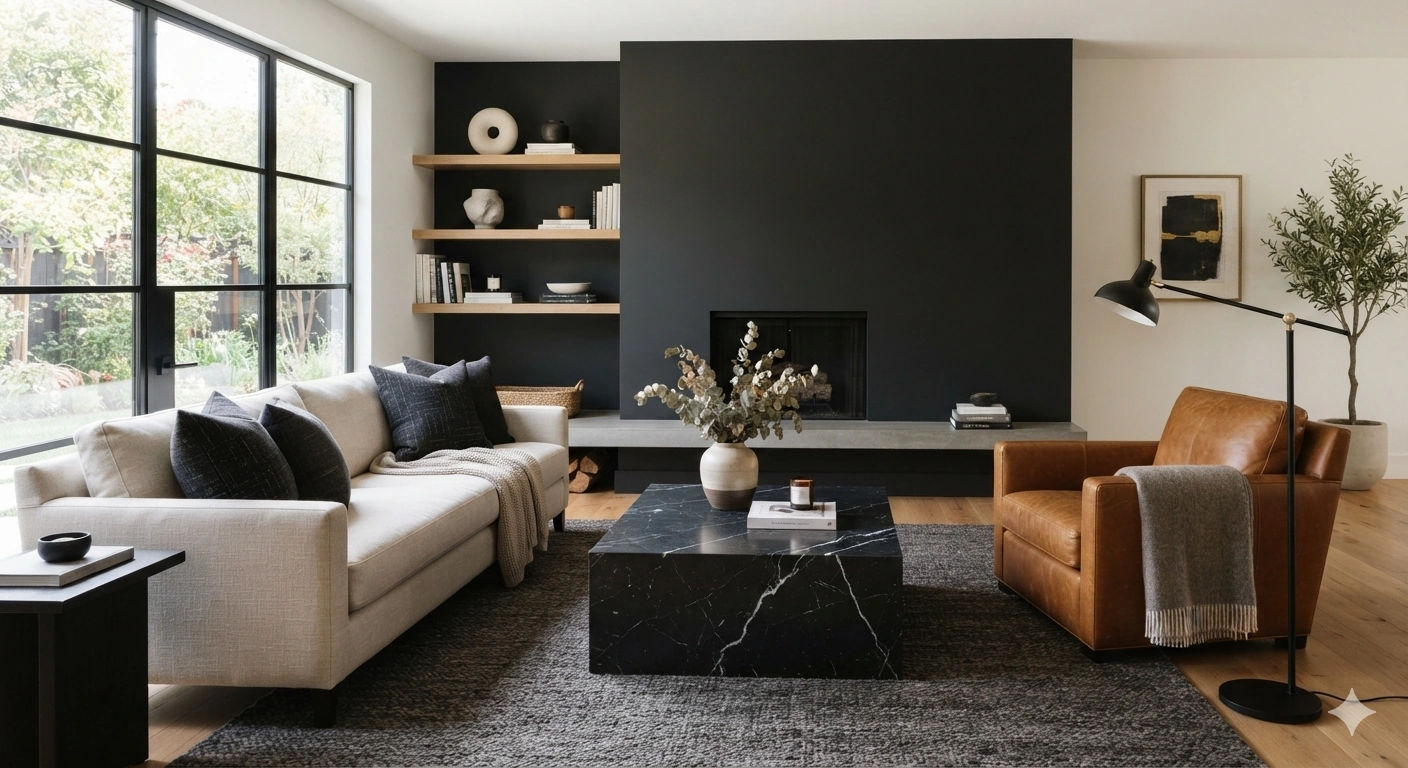
This approach works beautifully in living rooms and bedrooms where the furniture arrangement naturally faces or opposes the accent wall. Start by introducing dark elements on the opposite side of the room. For example, if your black wall sits behind the bed, balance it with an ebonized oak dresser or a pair of matte black metal lamps on the opposite wall. In a living room, a charcoal-toned wool rug, a dark marble coffee table, or even throw pillows with deep, graphic patterns can anchor the surrounding seating group.
The key is to use varied textures to keep the dark accents from feeling flat. Blend matte metals, rich leathers, and nubby textiles to create a layered, organic feel. Avoid the common mistake of using too many small, matching black knick-knacks, which can look cluttered. Instead, opt for three to four substantial, high-quality pieces that carry enough visual weight to counter the scale of the accent wall. When lit with soft, warm ambient light from well-placed table lamps, these distributed accents will tie the entire room together, turning a single feature wall into a fully integrated, high-end design scheme. For more ways to balance dark and light in a living room, see our black and white living room ideas.
One black wall only works if the darkness is distributed. Without a second dark note somewhere — a dark marble coffee table, black picture frames, dark cushions or a charcoal throw — the room feels lopsided, as if all the visual weight sits on one side. Repeat the black in two or three small places and the wall reads as part of a balanced composition.
18. The Greenery Contrast: Using Houseplants to Bring Life to a Dark Backdrop
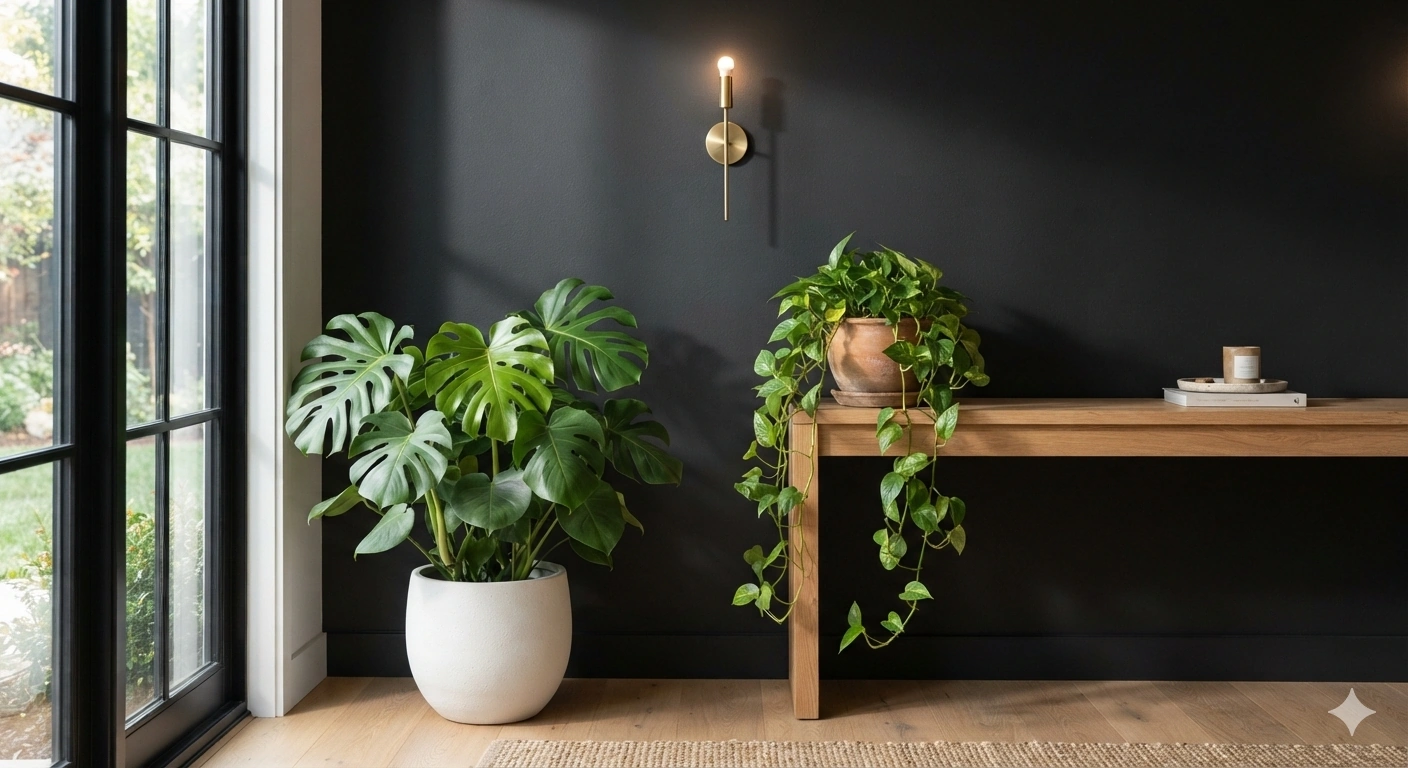
There is perhaps no design pairing more striking than the organic, vibrant green of live foliage against a deep, moody black backdrop. A black accent wall acts as a dramatic canvas, making the natural silhouettes and varied green tones of houseplants pop with extraordinary intensity. Where a plant might get lost against a standard white wall, it becomes a living work of art against a dark charcoal or soft black surface, instantly breathing life, movement, and freshness into the space.
This styling technique works wonders in sun-drenched living rooms, dining areas, or home offices where natural light can dance across the leaves. To maximize this contrast, choose plants with architectural shapes and large, textured leaves, such as a Fiddle Leaf Fig, a split-leaf Philodendron, or a dramatic Monstera Deliciosa. For more on choosing and styling them, see our indoor plants ideas for living rooms. Several of these, including philodendron, monstera and pothos, are listed as toxic to cats and dogs by the ASPCA, so check before placing them in a home with pets. For shelves mounted directly onto the black wall, trailing plants like Pothos or Heartleaf Philodendron create a beautiful, cascading waterfall of green that softens the hard lines of the architecture.
When styling, pay close attention to your planters. Natural terracotta pots offer a gorgeous earthy contrast, while raw concrete or matte white ceramic vessels provide a clean, modern aesthetic. Avoid using dark or black pots, as they will disappear into the background and lose their definition. Ensure your plants receive adequate indirect sunlight, as the dark wall will absorb light rather than reflect it. Position a warm brass picture light or a low-profile spotlight to cast gentle shadows of the foliage onto the black wall at night, adding an enchanting, layered dimension to your evening ambiance.
Plants are the cheapest way to warm a black wall. A large Monstera, a trailing pothos or a potted olive tree pops against the dark backdrop in a way it never does against white, and the green keeps the room feeling alive. Keep the pots warm — terracotta, cream ceramic or woven baskets — so the greenery and the wall feel like one intentional pairing.
19. Step-by-Step Preparation: How to Prep Drywall to Prevent Imperfections on Dark Walls
The secret to a designer-grade black accent wall lies entirely in the preparation. Dark paint behaves like a magnifying glass; its deep pigments absorb light in a way that highlights every minor drywall seam, nail pop, and texture inconsistency. To achieve that coveted, velvety smooth finish that looks like a custom architectural feature rather than a DIY project, meticulous surface preparation is non-negotiable.
This preparation phase is critical in spaces with strong directional lighting, such as entryways with high windows or bedrooms with bedside sconces, where raking light will expose any flaws. Begin by thoroughly cleaning the wall to remove dust, oils, and cobwebs. Next, patch every nail hole, dent, and hairline crack with a high-quality spackling compound. Once dry, sand the entire wall smooth using a fine-grit sanding block, paying extra attention to blended areas.
The most crucial, often overlooked step is applying a tinted primer. Always ask your paint store to tint your primer to a deep gray. A dark primer ensures rich, uniform color depth and prevents the bright white drywall or previous light paint from peeking through minor scuffs. After priming, do a quick light sanding to knock down any raised wood grain or paint bumps before applying your topcoat. Let the primer and each coat of paint dry for the time listed on the can before recoating. For the ultimate luxury finish, opt for a flat, matte, or eggshell sheen. These low-luster finishes absorb light beautifully, minimizing the appearance of surface imperfections while delivering a sophisticated, ultra-modern look.
Preparation is where black walls succeed or fail, because dark paint shows every imperfection. Fill and sand the drywall, then prime — one coat of grey-tinted primer evens out how patched areas absorb paint, so the black goes on uniformly. Two coats of black over primer is the standard; skipping the primer is the fastest route to a patchy, blotchy wall.
20. Common Mistakes to Avoid When Designing and Decorating a Black Accent Wall
While a black accent wall can elevate a room’s design instantly, there are several common pitfalls that can easily derail your vision. The first major misstep is selecting a black paint with the wrong undertone. Many homeowners grab a generic black only to find it looks navy blue, forest green, or deep purple once applied to their walls. To avoid this, always test paint swatches in your room’s unique light. Opt for warm, charcoal-based blacks with brown or gray undertones, which feel much softer and more inviting than stark, cold blacks.
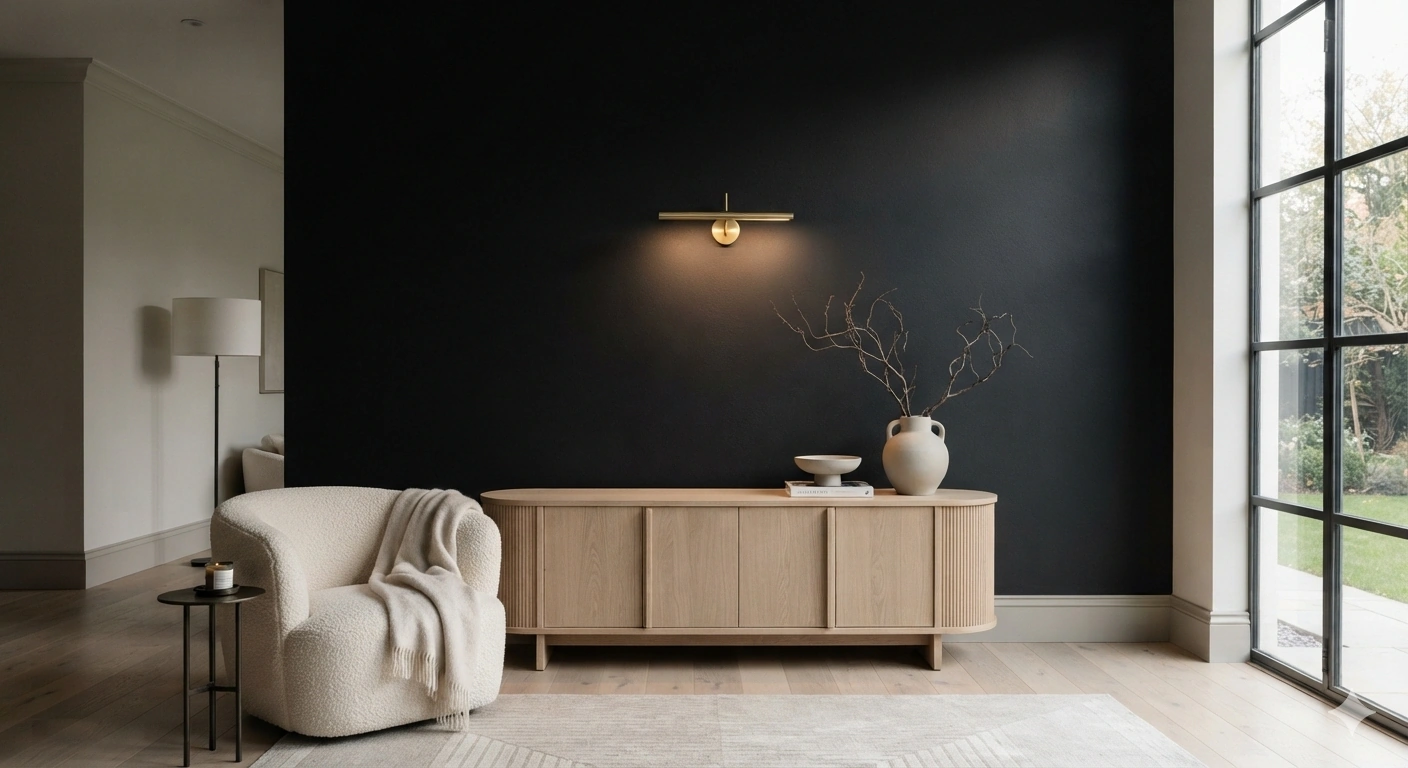
Another frequent error is choosing the wrong paint sheen. High-gloss or semi-gloss finishes reflect light harshly, creating distracting glares and exposing every fingerprint and drywall wave. Stick to flat, matte, or low-luster eggshell finishes to achieve a sophisticated, velvet-like texture. Furthermore, do not make the mistake of leaving the wall bare or hanging dark, low-contrast artwork against it. A black wall demands high-contrast decor. Frame your art in warm wood, bright brass, or clean white mats to make the pieces pop, and use light-colored oak or travertine shelving to break up the dark expanse.
Finally, never neglect your lighting plan. A black wall absorbs light, which can make a room feel small and cave-like if left in the dark. Avoid harsh overhead lighting, which casts gloomy shadows. Instead, layer your lighting with warm brass sconces, picture lights, and floor lamps to wash the wall in a soft, inviting glow. This transforms the dark surface from a cold barrier into a cozy, deeply sophisticated architectural feature.
The most common mistake is painting the wrong wall. A black wall needs furniture with presence against it — a bed, a sofa, a dining table — so the colour has a job. A bare floating wall with nothing on it makes the black feel random, and no amount of styling afterwards fully fixes a wall that was chosen for its emptiness rather than its role.
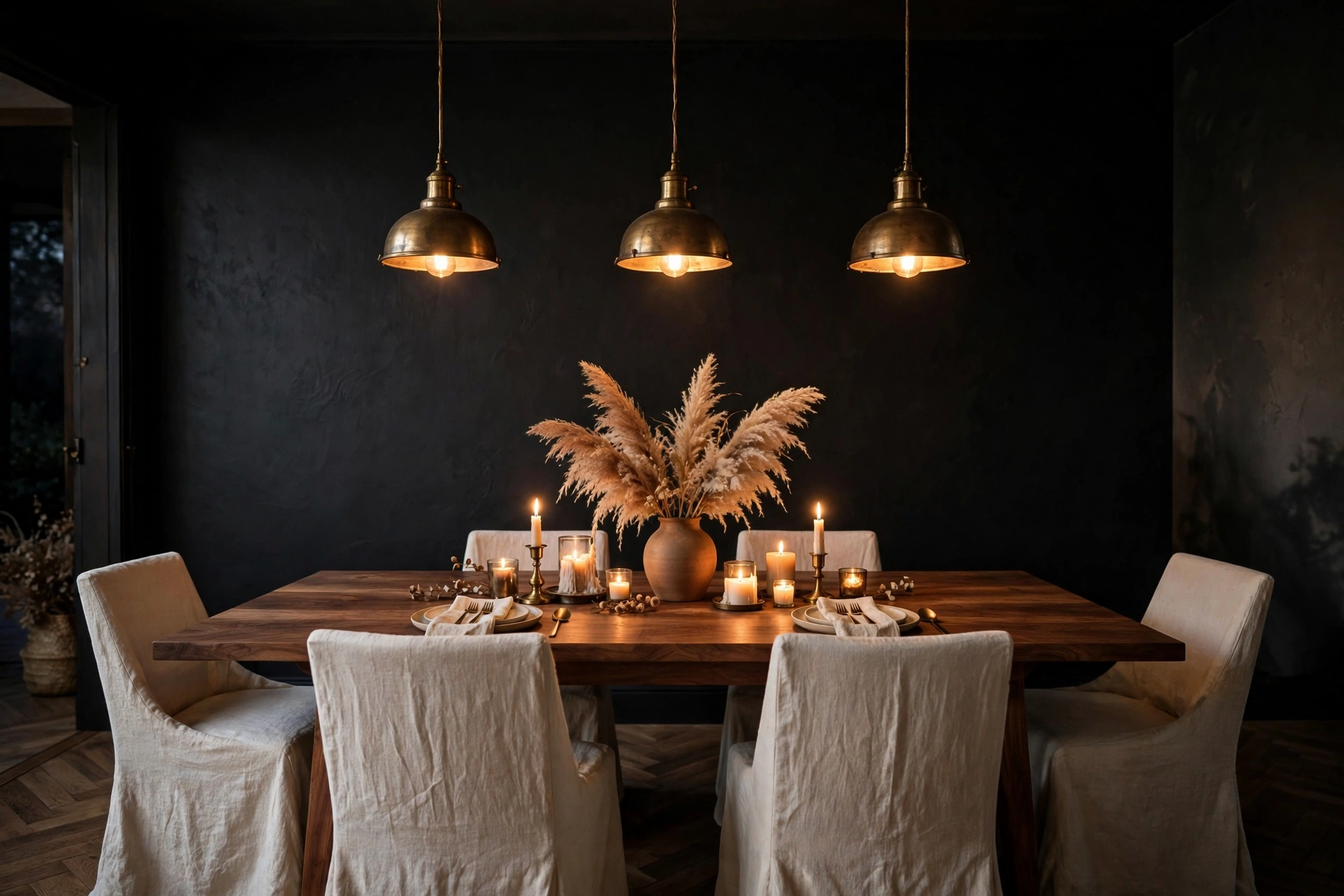
21. The Dining Room Black Wall: Frame the Table for Evenings That Feel Intentional
A dining room is one of the best places for a black accent wall, because the room is used mostly in the evening, when dark paint reads at its richest. Paint the wall behind the dining table — ideally the wall you face as you walk in — and the table becomes a stage: candlelight, brass pendants and warm wood all glow against the dark backdrop.
In an open-plan apartment, a black dining wall does a second job: it marks the dining zone so the table no longer blends into the living room. Keep the rest of the palette warm — a walnut or oak table, cream linen chairs, a pale rug — and the black reads as intention, not as a dark corner.
Choose a warm black for dining rooms, where the light is usually low and warm. A deep warm black such as Benjamin Moore Black Beauty in a matte finish absorbs the glare from overhead lights and makes the room feel intimate at dinner, while a washable eggshell version survives the inevitable splashes of a family table.
Dining rooms suit black walls because they are used mostly in the evening, when dark paint reads at its richest. The wall behind the table, faced as you enter, turns dinner into an occasion — and in an open-plan apartment it marks the dining zone so the table stops blending into the living room. Candlelight and brass pendants do the rest.
22. Black Textured Wallpaper: Pattern and Depth Without a Paintbrush
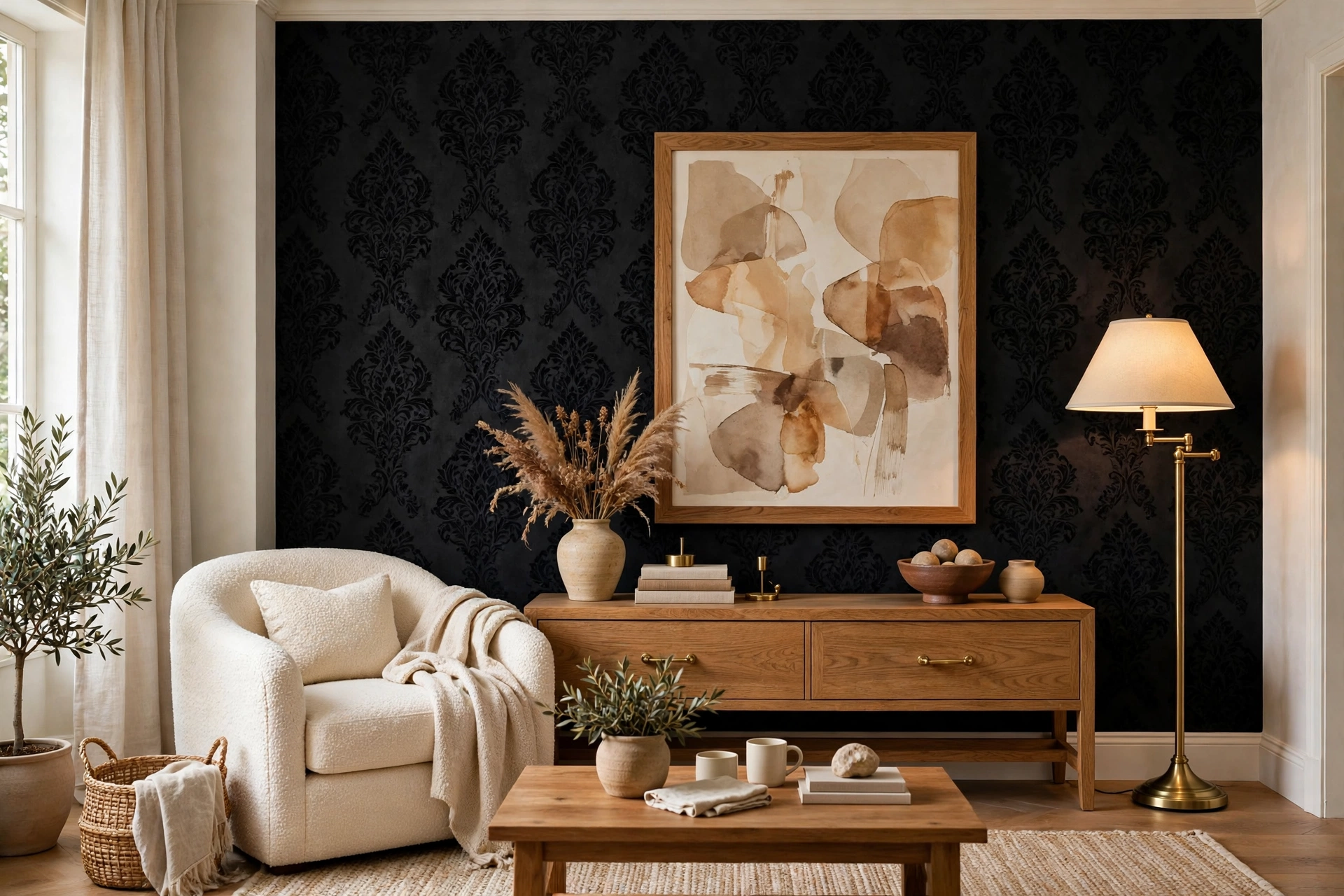
If paint feels too permanent — or you rent — textured black wallpaper gives you the drama without the commitment. A tonal black-and-grey pattern, a grasscloth with visible weave, or a subtle geometric print adds the dimension a flat painted wall cannot, and the texture catches the light differently through the day.
Wallpaper also solves the problem of an imperfect wall: the pattern and texture forgive bumps and tape lines that flat black paint would expose. Hang it on one wall only, keep the adjacent walls warm white, and anchor it with a warm wood console and brass lighting so the black reads as depth instead of a flat void.
Peel-and-stick versions make the look fully reversible, which is why this is the best first black wall for a rental or for anyone who wants to test the look for a season. Choose a paper with a warm undertone — a charcoal with brown or olive in it — so the wall stays inviting under warm evening light.
Textured wallpaper is the reversible route to a black wall, and it forgives imperfect plaster in a way flat paint never will. The pattern adds the dimension a painted wall lacks, and peel-and-stick versions let renters test the look for a season. Keep the undertone warm — a charcoal with brown or olive in it — so the wall stays inviting under evening light.
Black Paint Colors at a Glance
| Paint | Undertone | Best sheen | Best for |
|---|---|---|---|
| Sherwin-Williams Tricorn Black (SW 6258) | True neutral black | Matte / Eggshell | Modern living rooms |
| Sherwin-Williams Iron Ore (SW 7069) | Warm soft black-gray | Eggshell | Bedrooms, low-light rooms |
| Benjamin Moore Black Beauty (2128-10) | Deep warm black | Matte | Dining rooms, dramatic walls |
| Benjamin Moore Wrought Iron (2124-10) | Soft warm black | Matte / Eggshell | Living rooms, calm drama |
| Sherwin-Williams Black Magic (SW 6991) | Warm brown undertone | Matte | Bright rooms, doors and trim |
| Farrow & Ball Railings (No. 31) | Soft blue-black | Estate Emulsion | Sophisticated, classic rooms |
5 Mistakes to Avoid with Black Accent Walls
- Skipping primer: dark paint shows every patch and filler difference — one grey-tinted primer coat first, then two coats of black.
- Choosing a cool black for a north-facing room: blue-blacks turn heavy by afternoon; test swatches at different times of day and pick a warm black instead.
- Painting the wrong wall: a floating wall with nothing against it makes the colour feel random — paint the wall behind furniture with presence.
- Flat finish in a high-traffic spot: matte shows fingerprints — use eggshell or satin where walls get touched.
- Letting black take over: without the 60-30-10 balance and at least one warm material, the room reads as a cave, not a sanctuary.
Frequently Asked Questions
Will a black accent wall make my small room look smaller?
No — a dark wall recedes visually, so it can make a room feel deeper rather than smaller. Balance it with a light sofa or pale bedding, warm white adjacent walls, a pale rug, and layered lighting. A warm black reads softer than a jet black.
Which wall should I paint black as an accent wall?
Paint the wall behind furniture with presence — the bed, the sofa, or the dining table — ideally the wall you face as you enter. That gives the black a job. Avoid a bare floating wall with nothing against it, which makes the colour feel random rather than intentional.
How do I choose the right paint finish for a black accent wall?
Matte or flat finishes hide bumps and tape lines beautifully, so they suit bedroom accent walls. They show fingerprints more readily, though, so choose eggshell or satin for hallways, kitchens and mudrooms, where walls get touched. You trade a little flat depth for a surface you can wipe clean.
Can I have a black accent wall if my trim and ceiling are bright white?
Yes — crisp white trim and ceilings are the classic partner for a black wall, and the contrast makes the look feel intentional rather than heavy. Keep the white warm, not blue-white, and repeat it in the bedding or rug so the black reads as a deliberate choice.
How do I touch up a black wall without it looking patchy?
Keep the leftover paint and touch up with the same applicator and the same sheen — a roller touch-up on a brushed wall will flash. Feather the edges thinly, work in the same light the wall was painted in, and use two thin coats rather than one thick one.
What colors pair best with a warm black accent wall?
Warm neutrals are the safest partners: ivory, beige, taupe and natural wood, plus cognac leather and warm brass. Greenery pops beautifully against black, and deep teal or navy sit close enough on the colour wheel to feel harmonious. Avoid cool greys, which can make the wall look flat and cold.
Do I need to prime my wall before painting it black?
Yes — primer stops a black wall looking patchy. It evens out how patched drywall and fresh filler absorb paint, so the colour goes on uniformly. Use one coat of primer, ideally tinted grey, followed by two coats of black. Skipping primer is the fastest way to a blotchy finish.
Conclusion
Embracing a warm black accent wall can be one of the most transformative design choices you make for your home. By understanding how to balance the deep, rich tones with strategic lighting, natural wood textures, and the right paint finish, you can easily avoid the dreaded ‘black hole’ effect. Instead, you will create a sophisticated, cozy sanctuary that exudes modern elegance and architectural depth.
If you are feeling hesitant, remember that you do not have to redesign your entire home overnight. Start small by swatching a few warm black paint samples in your room’s unique lighting, or commit to a single feature wall in a cozy bedroom or entryway. Once you see how beautifully your favorite artwork, plants, and metallic fixtures pop against the dark backdrop, you may feel ready to make the bold choice.
Your home should be a reflection of your personal style, and taking a design risk is the ultimate way to make it feel uniquely yours. Grab those paint swatches, trust your creative instincts, and enjoy the process of turning your space into a stunning, high-contrast masterpiece.
