
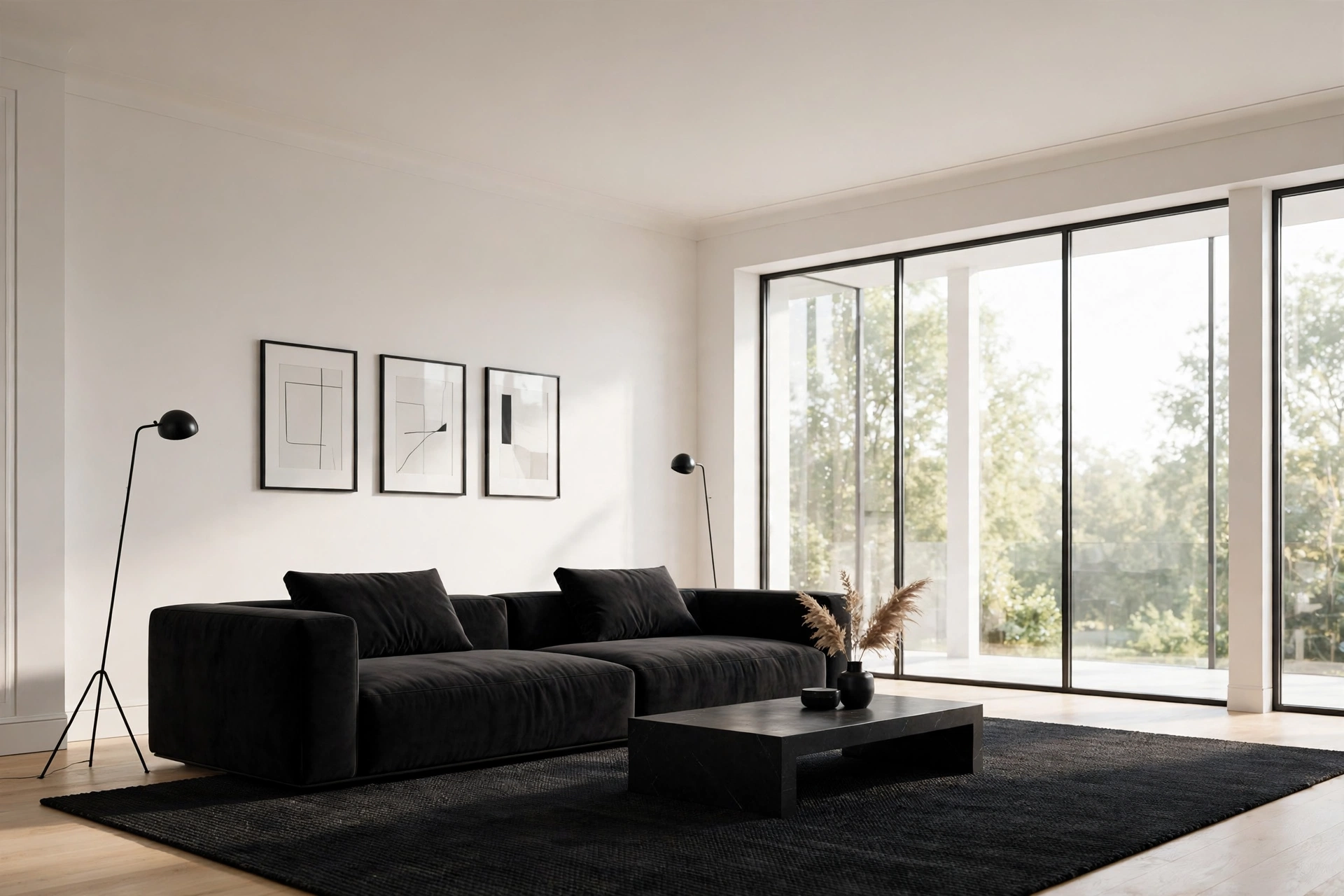
These black and white living room ideas show how a monochrome palette can feel calm, collected and effortlessly on-trend — not cold or stark. Achieving a perfectly balanced monochrome space is the ultimate exercise in interior restraint. While the allure of a high-contrast palette is undeniable, many homeowners struggle to execute the look without the result feeling clinical, cold, or disconnected. Mastering a black-and-white living room requires more than just alternating shades; it demands a thoughtful approach to scale, texture, and light to ensure the room feels like a curated sanctuary rather than a stark gallery.
The secret to a successful monochromatic design lies in the interplay of materials. When you strip away the distraction of color, the focus shifts entirely to the quality of your furnishings and the tactile nature of your decor. By layering diverse textures—from raw wood grains and soft linens to polished metals—you can add depth and warmth that prevents the space from feeling flat or one-dimensional.
In this guide, we explore sophisticated black-and-white living room ideas designed to help you strike that elusive balance. We will walk you through the professional techniques needed to anchor your space with confidence, ensuring your home feels both modern and deeply inviting. Read on to discover how to transform high-contrast design into a timeless foundation for your living area.
Key Takeaways
- Pick one anchor first: a black sofa, a black wall, dark built-ins or a black fireplace — everything else supports it.
- Let white lead: roughly two-thirds white and light surfaces, one-third black; small rooms lean even lighter.
- Warmth comes from texture, not colour: linen, bouclé, wool, oak and walnut do more than a bright accent pillow.
- Keep the temperature consistent: warm whites with warm blacks, cool whites with cool blacks — never mix.
- Layer three tones of black: jet, charcoal and soft black keep a monochrome scheme from feeling flat.
Measure First: Light, LRV and the 70/30 Balance
A black wall reflects about 5 percent of the light that hits it, while a white wall reflects about 85 percent — check the light reflectance value (LRV) on the back of the paint chip before you buy. A black near LRV 5 and a white near LRV 85 sit at the far ends of the scale, and every grey in between tells you how much light the room keeps. In a dim room, a black wall needs extra lamps planned before you paint, not after.
Set the balance before you buy anything: let white and light surfaces do roughly two-thirds of the work — walls, sofa, rug — with black as the defining third, around 30 percent. Small or low-light rooms should lean even lighter, keeping black to furniture legs, frames, lighting and one larger piece. One gallon of paint covers a 12-by-8-foot wall in two coats at 350 to 400 square feet per gallon, so a single feature wall is a one-gallon job — buy matte or eggshell, because gloss shows every bump.
1. Applying the 60-30-10 Rule for Perfect Monochrome Proportions
The secret to a sophisticated black-and-white living room lies not in an even split, but in precise, intentional ratios. The 60-30-10 rule serves as your roadmap: 60 percent of the room should be a dominant neutral—usually a soft white or cream—to maintain an airy, expansive feeling. Use black for 30 percent of the space, typically through larger furniture pieces like a velvet sofa or a substantial area rug to ground the room. The final 10 percent is your ‘jewelry,’ reserved for high-impact black accents like picture frames, hardware, or decorative objects.
This approach prevents the common pitfall of a space feeling chaotic or visually overwhelming. If you lead with too much black, the room can quickly feel like a dark cavern; if you use too much white without contrast, it feels clinical. By keeping the majority of your surface area in lighter tones, you ensure the room remains inviting. When selecting your pieces, look for matte black finishes to keep the aesthetic modern and grounded. This method works best in open-plan living areas where you want to create a cohesive, designer-curated look that feels balanced rather than accidental.
The rule is simple: white does about 60 percent of the work — walls, sofa, rug — black does about 30 percent as the shape and the drama, and the final 10 percent is the warmth: wood, brass, linen or a plant. With only two colours, a 70/30 split works too: 70 percent white, 30 percent black, and no accent at all. The point is that one colour clearly leads while the other follows.
2. Selecting Warm White Paint Shades to Avoid a Sterile Finish
One of the most frequent mistakes in monochromatic design is choosing a ‘true’ or ‘cool’ white paint, which can leave a room feeling like a hospital corridor. To achieve a high-end, gallery-like finish, you must opt for warm whites that possess subtle undertones of yellow, greige, or cream. These shades react beautifully to natural light, shifting throughout the day to provide depth and a cozy, lived-in atmosphere that stark white simply cannot replicate.
When testing paint, observe how your chosen white interacts with your black elements. A warm white will bridge the gap between high-contrast surfaces, preventing the black from looking harsh or ‘floating’ in the space. I recommend applying large-scale swatches on multiple walls to see how they behave under your specific lighting conditions. If your living room receives a lot of northern light, lean toward a slightly creamier white to counteract the blue-toned shadows. If you have southern exposure, a crisp greige-white will keep the space from feeling too yellow. Remember that lighting is the final component of this equation; pair your warm white walls with 2700K to 3000K warm-toned bulbs to maintain that soft, golden-hour glow long after the sun goes down.
Warm whites have a creamy yellow undertone that keeps a monochrome room inviting; cool whites lean grey or blue and can read sterile against black. Two reliable starting points are Benjamin Moore Chantilly Lace and Sherwin-Williams Pure White — both read as clean whites with enough warmth to suit a living room. Whichever you choose, stay consistent: warm with warm, cool with cool, never mixed. These black and white living room paint pairings from Learn California show how the right white changes the whole room.
3. Using Black as an Architectural Anchor for Spatial Definition
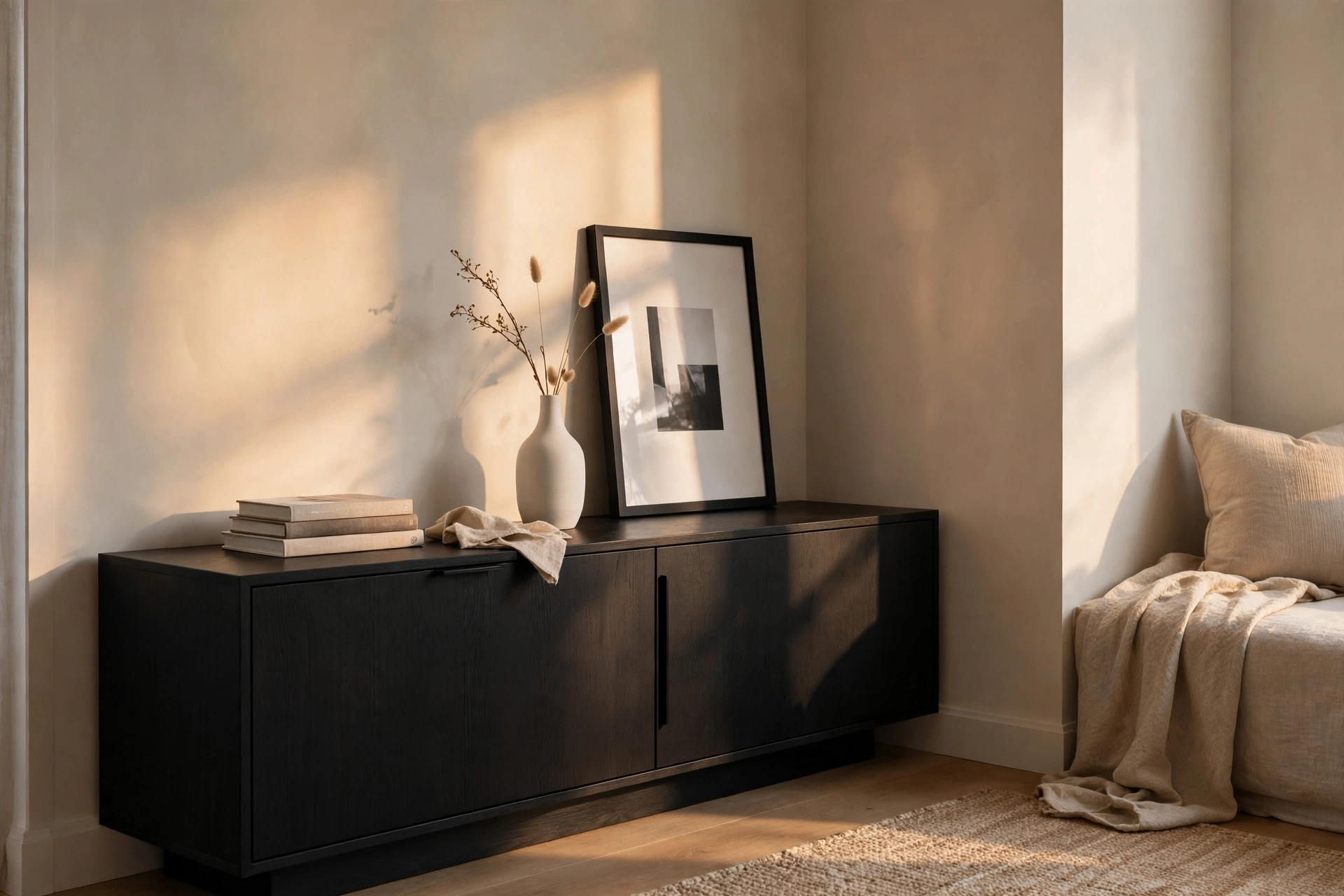
Black is not just a color in a monochromatic scheme; it is an architectural tool used to define the boundaries of your space. By strategically placing black, you can highlight the best features of your home, such as a fireplace mantel, arched doorways, or window frames. Using black to frame a view draws the eye outward, creating a sense of drama and intentionality that makes a room feel custom-designed rather than furnished from a catalog.
For a truly elevated look, consider painting built-in bookshelves or a feature wall in a deep, matte charcoal. This anchors the room and provides a sophisticated backdrop for your art and curated decor. If you are hesitant about bold paint, use black through large-scale furniture pieces like a sleek console table or a pair of high-backed chairs. The key is to distribute these anchors throughout the room so that the eye is constantly moving, rather than getting stuck in one corner. Avoid cluttering these anchored areas; let the negative space surrounding the black elements do the work. This technique works exceptionally well in large, cavernous rooms where you need to create intimacy, or in smaller rooms where you want to add a sense of luxury and weight.
Every successful black and white room has one thing doing the heavy lifting: a dark sofa, a dark wall, dark built-ins, or a dark fireplace. Everything else supports it. If you already own a black sofa, your anchor is chosen — keep the walls and large rugs light. If your sofa is white or cream, your anchor can be a black accent wall, a pair of black chairs, or a black media wall, as these black and white living room ideas from Livingetc show.

4. Integrating Natural Wood Tones to Soften High-Contrast Edges
A common critique of black-and-white interiors is that they can feel cold or overly rigid. The most effective antidote is the introduction of organic wood tones. Natural wood—whether it is light white oak, warm walnut, or rustic reclaimed timber—acts as a bridge between the stark contrast of black and white. It introduces a tactile, earthy element that invites warmth into the space and softens the sharpness of the monochromatic palette.
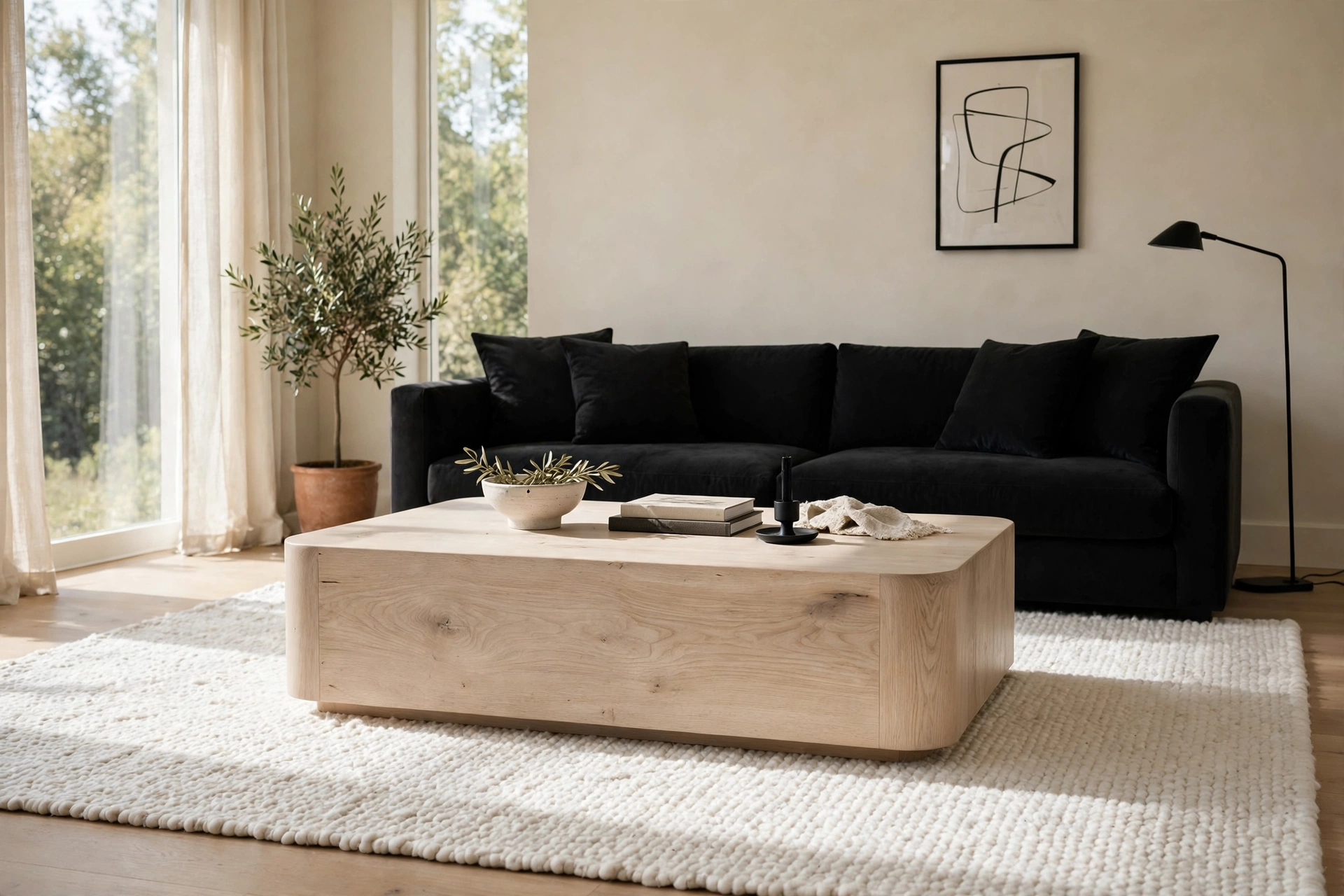
Consider incorporating wood through furniture legs, a coffee table, or floating shelves. A raw-edge wood coffee table, for instance, provides a stunning focal point that breaks up the severity of a black sofa and a white rug. When choosing wood tones, aim for a consistency in the grain or stain if you want a modern look, or mix them for a more eclectic, collected vibe. Avoid high-gloss lacquered woods, as these can look too synthetic; instead, prioritize matte or oil-rubbed finishes that feel grounded. This strategy works best in rooms with plenty of natural light, where the wood grain can be fully appreciated. It also adds a layer of depth that prevents the room from looking flat, making the space feel like a sanctuary rather than a showroom.
Wood is the fastest way to warm a monochrome room, but keep it to one tone. Oak, walnut, medium-toned wood and cane all sit beautifully against black and white — but mixing several wood tones in one room breaks the calm the palette is trying to create. Pick one wood, repeat it in two or three places, and let the black and white do the rest.
5. Layering Textures with Linen and Bouclé Textiles
When color is stripped away, texture becomes the primary language of your design. If your living room is strictly black and white, you must rely on tactile variety to prevent the space from feeling one-dimensional. Layering textiles is the secret to creating a room that feels expensive and cozy. Combine the crisp, clean lines of linen curtains or upholstery with the nubby, soft comfort of bouclé accent chairs or pillows.
Linen offers a relaxed, breathable quality that keeps the white elements from looking too stiff, while bouclé provides a sculptural, high-end texture that makes black pieces feel approachable and soft. Don’t stop at just two fabrics; add layers with a chunky knit throw, a woven wool rug, or velvet cushions. The interaction between these different surfaces creates shadows and highlights, giving your living room a dynamic personality. A common mistake is using matching fabrics for all upholstery, which makes the room look uniform and dull. Instead, mix your textures to create a ‘collected’ look. This approach is perfect for those who want a minimalist aesthetic that doesn’t sacrifice comfort. Always ensure that the scale of your textures varies—pair a large-scale bouclé sofa with finer-weave linen drapery for a balanced, sophisticated contrast.
Texture is what stops a black and white room feeling flat. Layer linen, bouclé and wool against the hard surfaces, and layer the blacks themselves — jet, charcoal and soft black — so the dark side of the room has depth instead of reading as one flat void. The same warm-wood-and-soft-textile layering that makes cozy Japandi bedroom ideas feel serene works in a monochrome living room too.

6. Incorporating Rattan and Wicker for Organic Visual Interest
If you find that your black-and-white living room is leaning too far into the ‘modern industrial’ style, rattan and wicker are your best friends for injecting a dose of organic warmth. These natural materials have a woven, airy quality that introduces a beautiful rhythm to a room. They are the perfect way to break up the solid, heavy blocks of black and the blank expanses of white, adding a layer of sophisticated, bohemian-inspired texture.
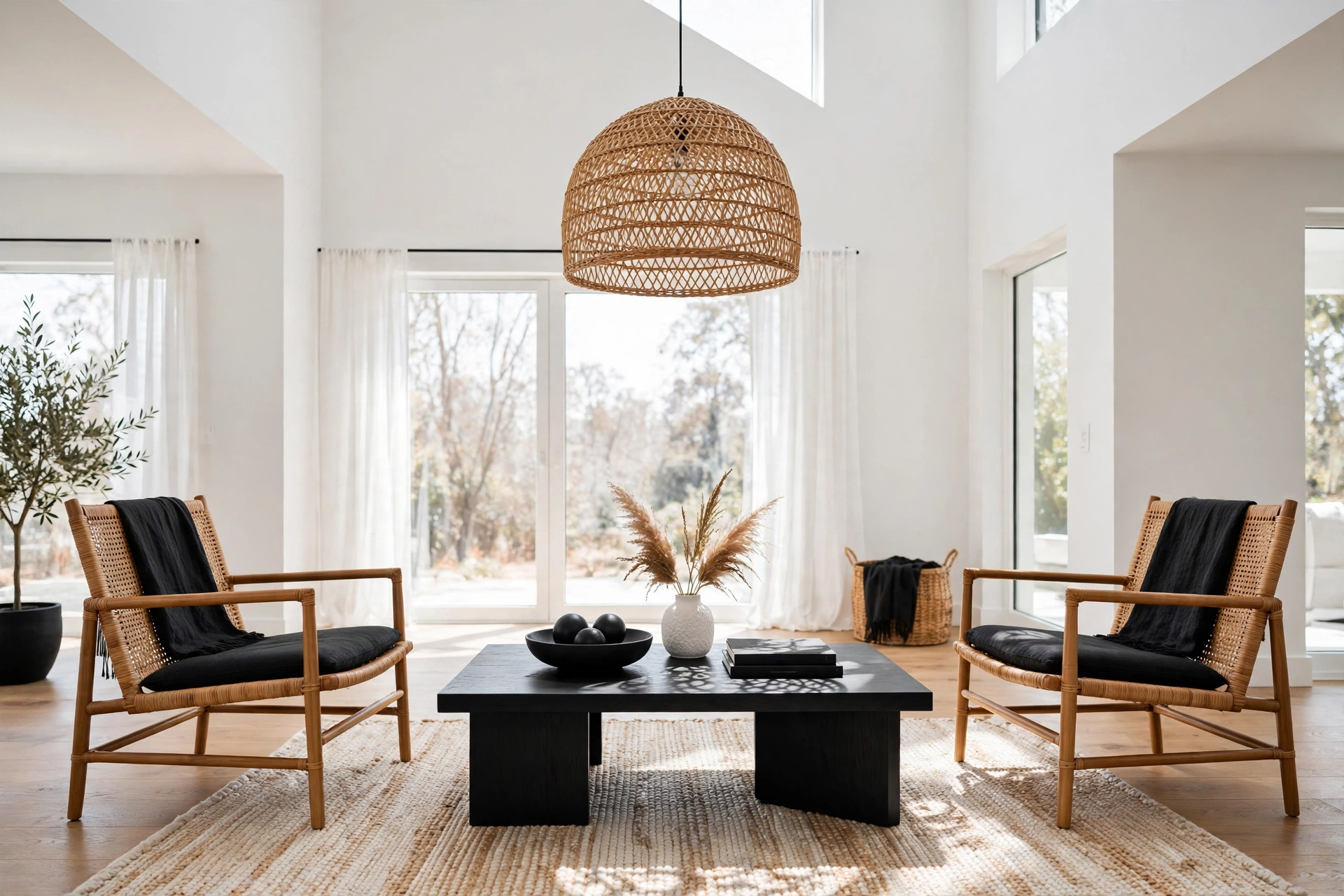
Try incorporating rattan through a pair of accent chairs, a woven pendant light, or even a set of baskets tucked under a console. These pieces act as a neutral bridge that feels less formal than wood but more substantial than fabric. Because rattan is naturally honey-toned, it adds a subtle warmth that prevents the monochromatic scheme from feeling too sterile. When choosing these pieces, look for refined weaves rather than overly rustic ones to maintain that ‘luxury’ feel. Avoid placing too many woven items in one spot; instead, scatter them throughout the room to draw the eye around the space. This is a fantastic way to introduce a sense of ‘global’ or ‘coastal’ influence into a clean, modern design. It works exceptionally well in rooms with high ceilings or large windows, where the lightness of the rattan can really shine.
Rattan and wicker add the organic note a high-contrast room needs. A woven chair, a cane-front credenza or a rattan pendant softens the hard edges of black metal and white lacquer, and the natural variation in the weave keeps the room from feeling machine-made. Keep the rattan to one or two pieces — it is an accent, not a theme.
7. Strategically Placing Indoor Greenery for a Vibrant Pop
In a black-and-white space, living plants provide the only ‘color’ you truly need. The deep, vibrant green of a Fiddle Leaf Fig or the architectural shape of a Snake Plant acts as a natural accessory that pops against a stark backdrop. Plants add a layer of life and movement to an otherwise static palette, making the room feel oxygenated and refreshed. They are the ultimate finishing touch for any monochromatic interior.
Placement is everything. Use a large, sculptural plant in a corner to soften a hard edge, or place a smaller, trailing plant on a shelf to add height and interest. Consider your pots as part of the design; matte black ceramic planters look incredibly chic against a white wall, while white stone planters can create a seamless, minimalist look. Avoid over-populating the space with too many small plants, which can create a cluttered, ‘jungle’ look that fights against a sophisticated aesthetic. Instead, opt for one or two larger, statement-making plants that can stand on their own. This works best when the plant’s silhouette complements the geometry of your furniture. Not only do plants elevate the visual appeal, but they also contribute to the overall well-being of the room, creating a balanced, serene environment that feels connected to the outdoors.
A plant is the cheapest warmth a monochrome room can buy. A large Monstera, a trailing pothos or a potted olive tree pops against black and white in a way it never does against colour, and the green keeps the room feeling alive. One large plant beats five small ones, and a terracotta or cream pot warms the composition further — these indoor plants ideas for living rooms show how to place greenery for maximum effect.

8. Elevating the Aesthetic with Metallic Gold or Brass Accents
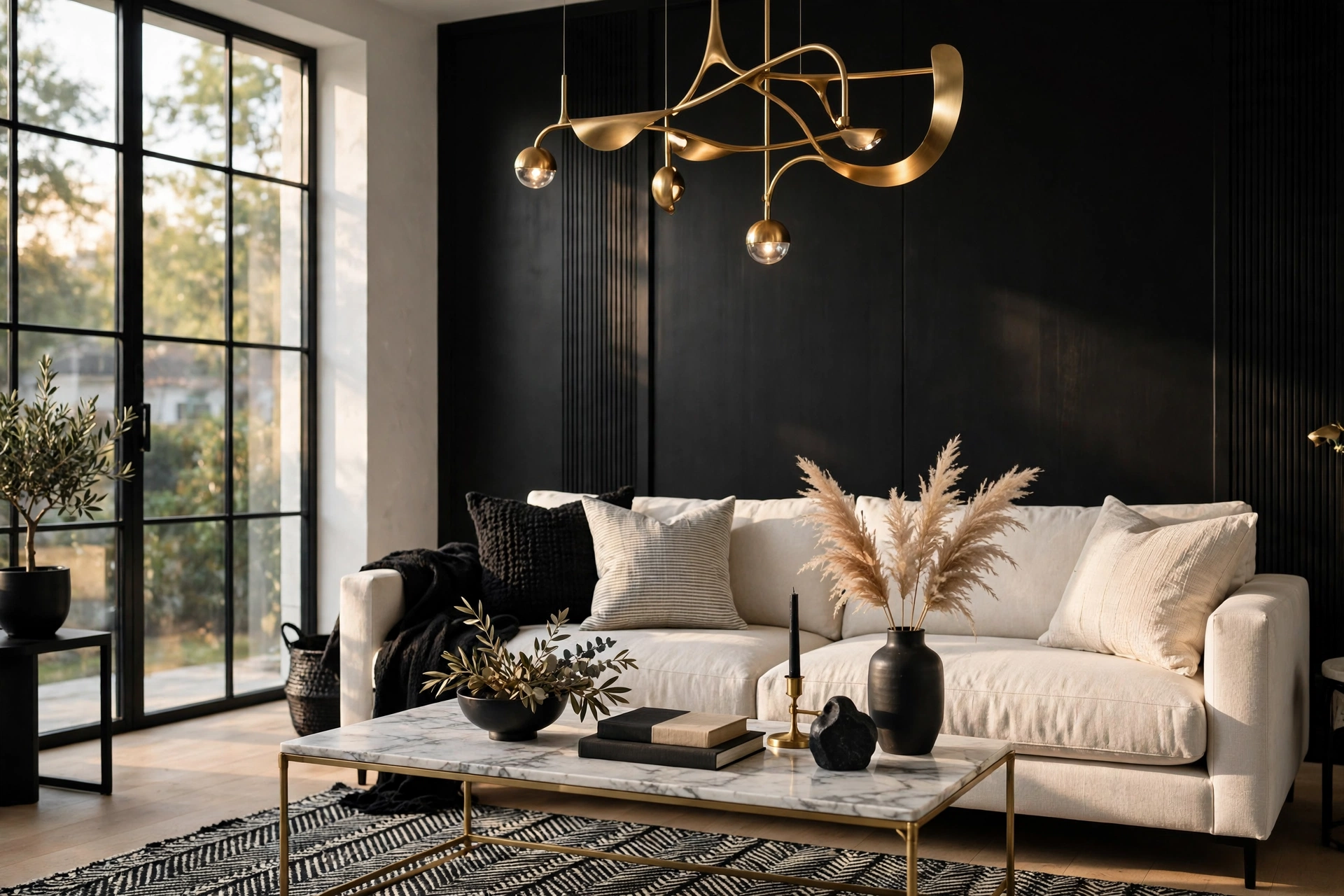
When you are working with a high-contrast palette, metallic finishes act as the perfect ‘neutral’ that adds a touch of glamour and warmth. Gold and brass, in particular, look stunning against black and white, reflecting light and adding a layer of luxury that makes the room feel polished. Think of these metals as the jewelry of your living room—they should be used sparingly but effectively to catch the eye and add a bit of sparkle to the matte finishes.
Incorporate metals through lighting fixtures, coffee table legs, mirror frames, or even the subtle hardware on your cabinetry. A brushed brass chandelier over a black dining area or a gold-framed mirror above a white console table can instantly elevate the perceived value of the room. A common mistake is mixing too many different metal finishes, which can create a disjointed look. Stick to one primary metallic tone—such as aged brass or champagne gold—to maintain a cohesive, high-end feel. If you prefer a cooler look, polished chrome or nickel can also work, but they tend to lean more modern and industrial; brass and gold are generally better at adding that necessary ‘warmth’ to a monochromatic space. This design tip is particularly effective in evening settings, where the metallic surfaces catch the glow of your lamps, creating a sophisticated, ambient atmosphere that feels truly premium.
Metal choice changes the temperature of the whole room. Brass and gold warm a black and white scheme and suit warm whites; chrome and polished nickel cool it and suit blue-whites. For a more industrial feel, black brassware with darker grey accents creates a sleek look. Match the metal to the mirror frames, lamp bases and hardware so the room reads as one considered design.
9. Balancing Visual Weight with Sleek Modern Furniture Silhouettes
The secret to a successful high-contrast living room lies in the intentional distribution of visual weight. When working with a stark black-and-white palette, avoid matching every piece of furniture in the same tone, as this creates a static, rigid environment. Instead, opt for sleek, low-profile silhouettes that allow the eye to move freely across the room. A blackened steel sofa frame paired with ivory linen upholstery provides an immediate sense of equilibrium, preventing the room from feeling too heavy or overly clinical.
To master this balance, consider the ‘rule of thirds’: keep the larger items, like your sofa or media console, in a neutral white or light grey, and use black as a sharp, defining accent for smaller furniture pieces like side tables, lamp bases, or chair legs. This approach grounds the room without overwhelming the architecture. If you have a smaller space, prioritize furniture with exposed legs to maintain a sense of openness and airiness.
Material selection is equally vital. Combine matte black metal with smooth, light-toned wood or bouclé fabric to introduce tactile warmth. A common mistake is choosing furniture that is too bulky; in a high-contrast room, scale is your best friend. By selecting pieces with refined, architectural lines, you ensure that the contrast feels deliberate and curated rather than chaotic. Always aim for a blend of hard and soft materials to ensure the living room remains an inviting sanctuary rather than a showroom display.
Sleek furniture suits a high-contrast palette because clean lines let the colour do the talking. A low-profile black leather sofa with clean lines, paired with a sculptural black armchair, anchors the room without visual noise. Keep the silhouettes simple — a busy, ornate sofa fights the graphic clarity that makes monochrome work.

10. Mixing Geometric and Abstract Patterns Without Creating Clutter
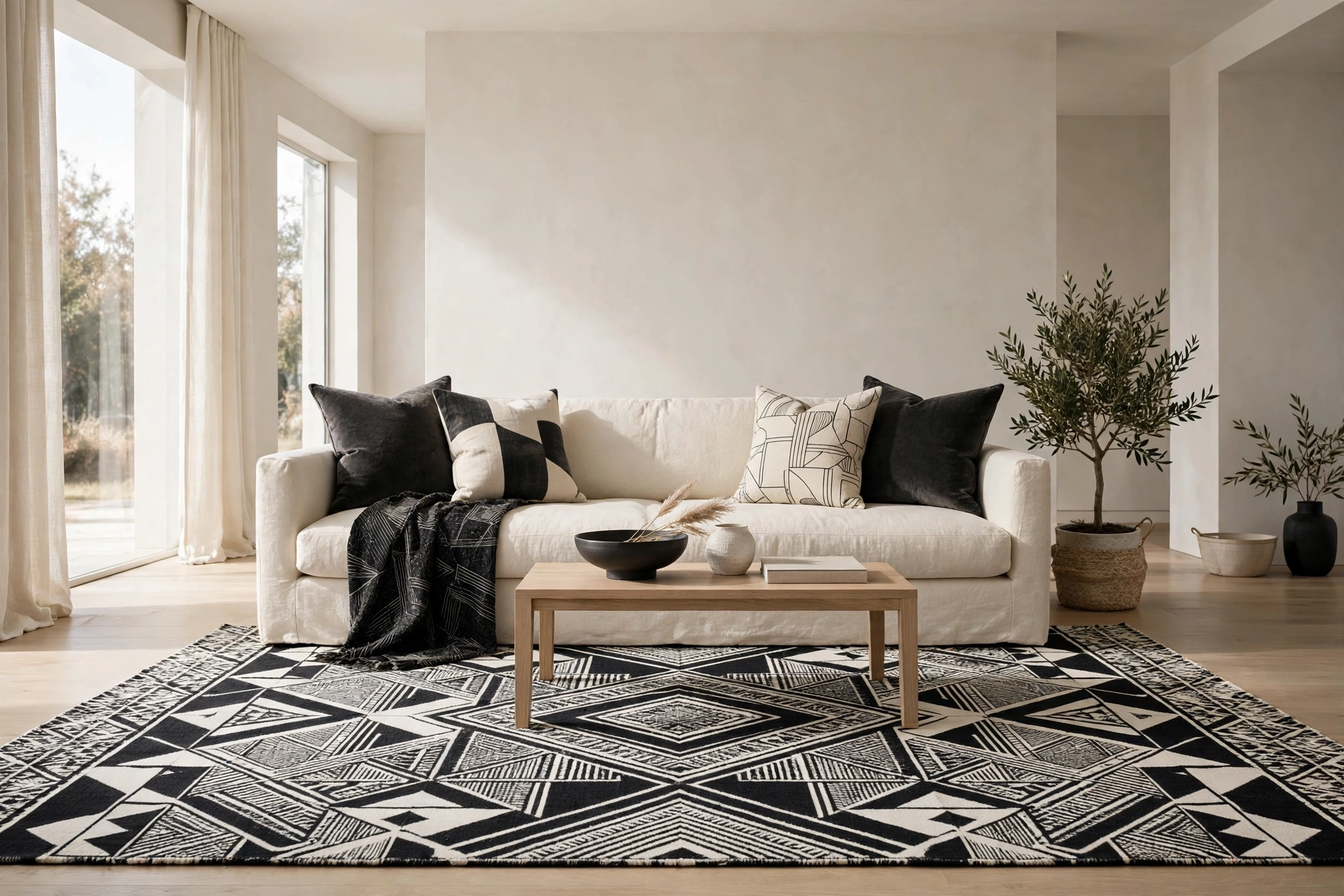
Integrating patterns into a black-and-white living room is an exercise in restraint and scale. The goal is to create visual interest without inviting chaos. Start by selecting one ‘hero’ pattern—perhaps a bold, large-scale geometric rug—and then layer in smaller, more subtle abstract prints through throw pillows or textile accents. When the base color palette is limited to monochrome, patterns take on a sculptural quality, becoming the primary source of personality in the room.
A key design tip is to vary the scale of your patterns. If your rug features a wide, graphic stripe, pair it with pillows that utilize a fine, ditsy print or a soft, watercolor-style abstract motif. This contrast in size prevents the eyes from becoming fatigued. Avoid using too many patterns of the same density, which can make the space feel cluttered and claustrophobic. Instead, use solid-colored cushions in either pure white or charcoal as ‘breathing room’ between patterned pieces.
When choosing textiles, prioritize high-quality natural fibers like cotton, wool, or silk, as these materials hold ink and weave patterns with greater depth. A common pitfall is ignoring the negative space; remember that in a monochrome room, the solid, unpatterned areas are just as important as the prints. They act as a visual anchor, allowing the eye to rest. By curating a mix of sharp geometric lines and fluid, organic shapes, you create a sophisticated tension that defines a high-end interior.
Patterns are the cheapest way to change a monochrome room later, because stripes, checks and bold prints carry the scheme into the soft furnishings. Use one scale at a time: a large geometric rug with small-scale cushions works, while two bold patterns fighting at the same size does not. Keep the palette strictly black and white and leave plain surfaces between patterned pieces.
11. Utilizing Large-Scale Wall Art to Ground the Monochrome Palette
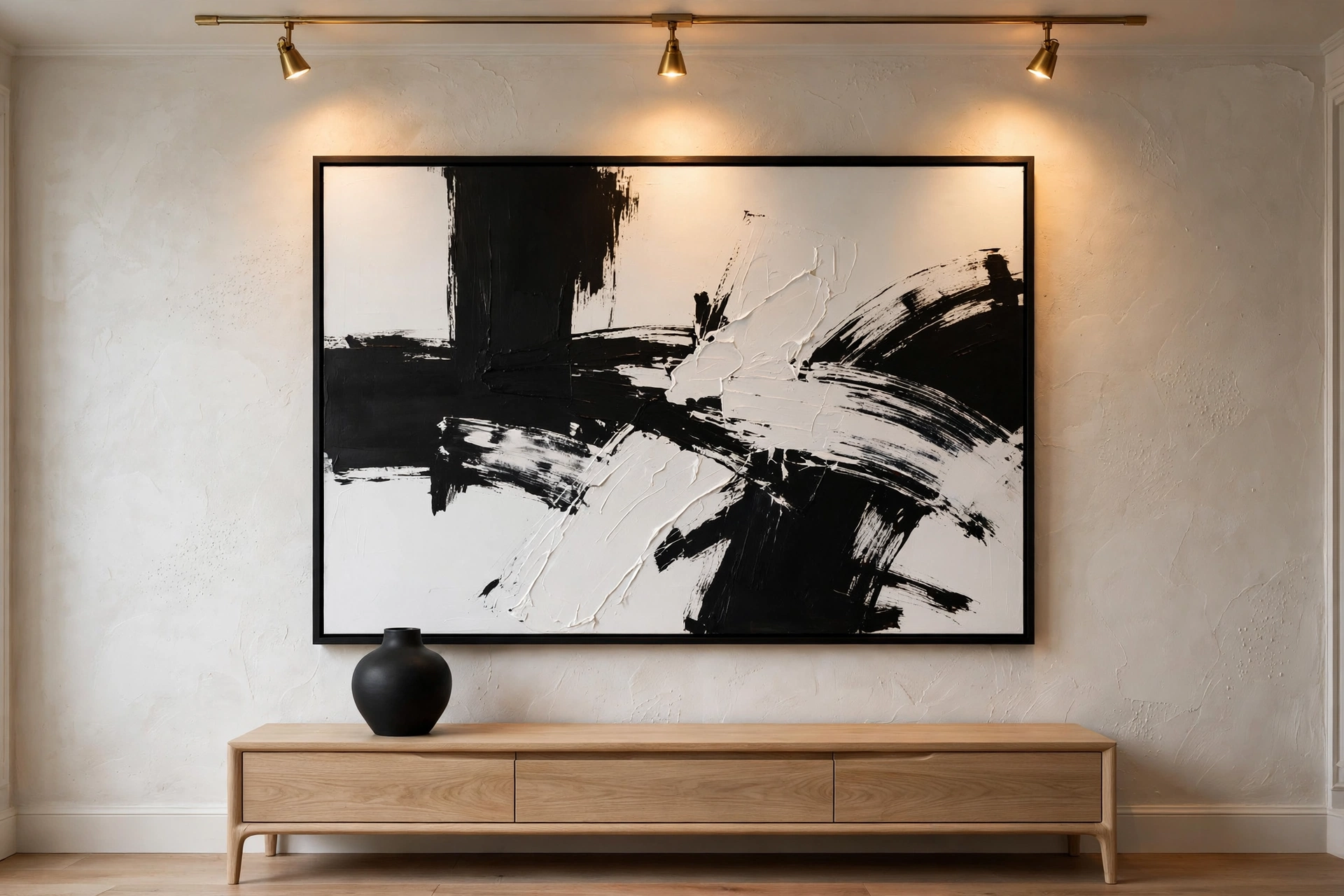
In a living room defined by high contrast, walls can sometimes feel like empty, sterile canvases. Large-scale wall art is the ultimate tool to bridge the gap between black and white, serving as a focal point that anchors the entire design scheme. A single, oversized piece of abstract art or a striking black-and-white landscape can dictate the mood of the room, turning a blank wall into a sophisticated gallery-like feature.
When selecting art, consider the ‘white space’ within the composition. An image that is primarily white with delicate black strokes will feel light and expansive, whereas a predominantly black piece will add depth and drama. For a timeless look, opt for minimalist line drawings or oversized charcoal sketches. These pieces provide movement and emotion, effectively softening the sharp edges of the room’s architecture. Avoid small, fragmented frames that can make a wall look busy; one large, impactful piece is infinitely more powerful in a monochromatic environment.
Lighting is critical when displaying large art. Use recessed ceiling lights or picture lights with a warm color temperature to illuminate the artwork, which prevents the black ink from looking flat or dull. This also helps to bridge the gap between the cold wall color and the artwork, creating a cohesive look. If the room feels too stark, choose a frame in a warm wood tone or brushed brass to introduce a subtle metallic element, which adds a layer of refinement without disrupting the monochrome theme.
One large piece of art grounds a monochrome palette better than a cluster of small frames. A single oversized abstract in black, white and one warm neutral, hung above the sofa, gives the eye a destination and the room a focal point. Black frames echo the dark side of the palette, and a large mirror in the same spot bounces light around the room — living room wall decor ideas show how scale changes the whole wall.
12. Choosing Statement Lighting Fixtures to Soften Room Architecture
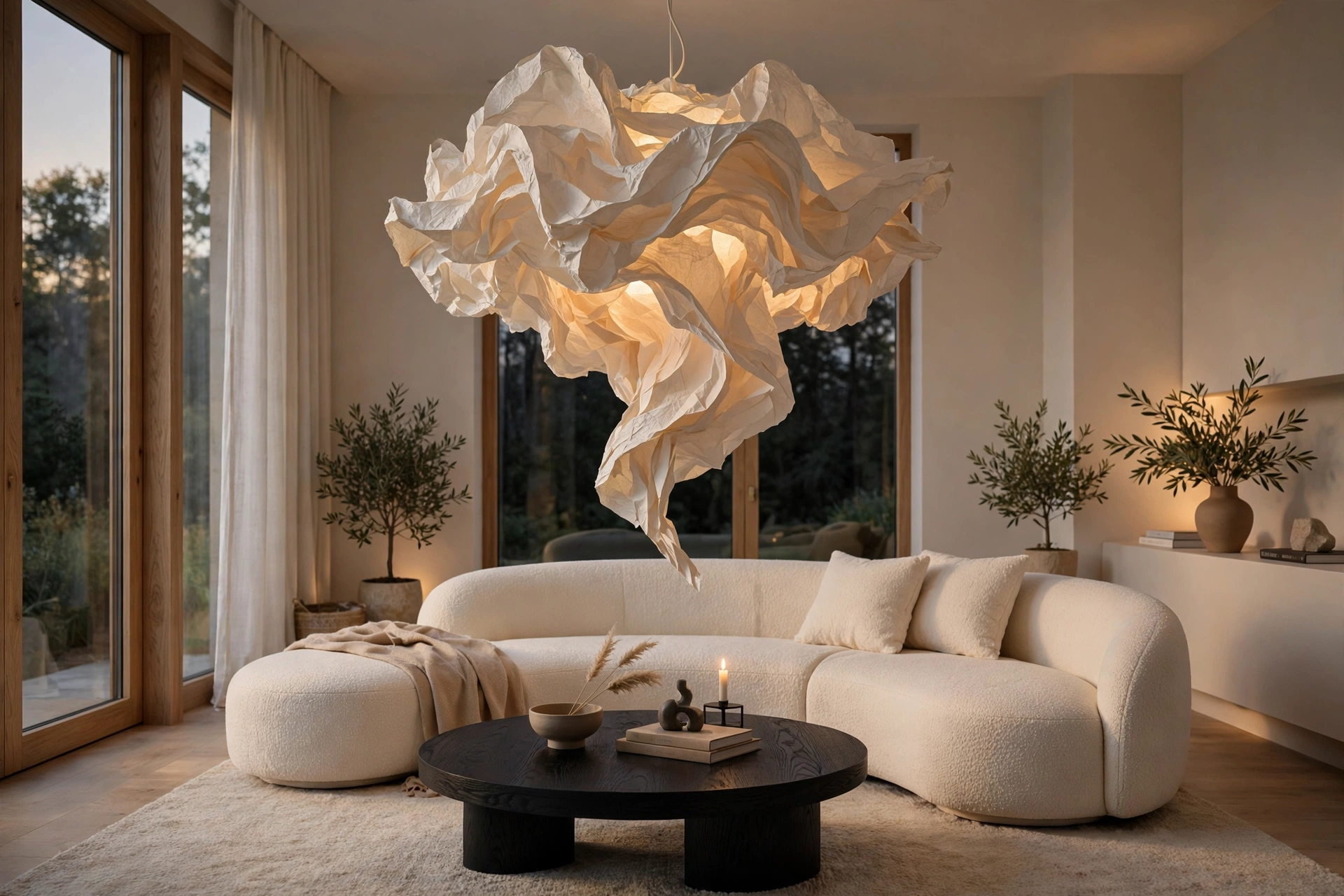
Lighting is the secret weapon of the interior designer, especially in a black-and-white living room where the stark contrast can sometimes feel unforgiving. Statement lighting fixtures serve a dual purpose: they provide necessary task and ambient light, and they act as sculptural elements that break up the linear geometry of the space. To soften the room, look for fixtures with organic, rounded, or asymmetrical shapes that contrast against the rigid lines of the furniture.
Consider the finish of your lighting carefully. While matte black fixtures are a classic choice for a monochromatic room, introducing a touch of warm brass or bronze can provide an essential layer of warmth. These metallic accents catch the light and reflect it back into the space, preventing the high-contrast surfaces from feeling cold. For a truly elevated look, place a large, curved chandelier or a dramatic arc lamp over the seating area to draw the eye upward and add a sense of height.
Avoid overly utilitarian, bright white lighting, which will only exacerbate the clinical feel of a monochrome scheme. Instead, prioritize warm-toned bulbs (2700K to 3000K) to ensure the space feels inviting and cozy once the sun goes down. A common mistake is relying on a single light source; incorporate layered lighting—including floor lamps, table lamps, and dimmable overhead fixtures—to create a soft, diffused glow that highlights the textures in your fabric and furniture. By treating lighting as a piece of art, you transform the room from a stark display into a warm, liveable retreat.
Statement lighting softens a room’s architecture because the fixture itself becomes sculpture. An arched matte black floor lamp with an adjustable head creates dramatic shadow play, while a slim black linear pendant over the coffee table draws the eye up. Layer the light — ambient, task and accent — so the room glows after dark instead of going flat. These statement wall light fixtures show how to light a high-contrast room.
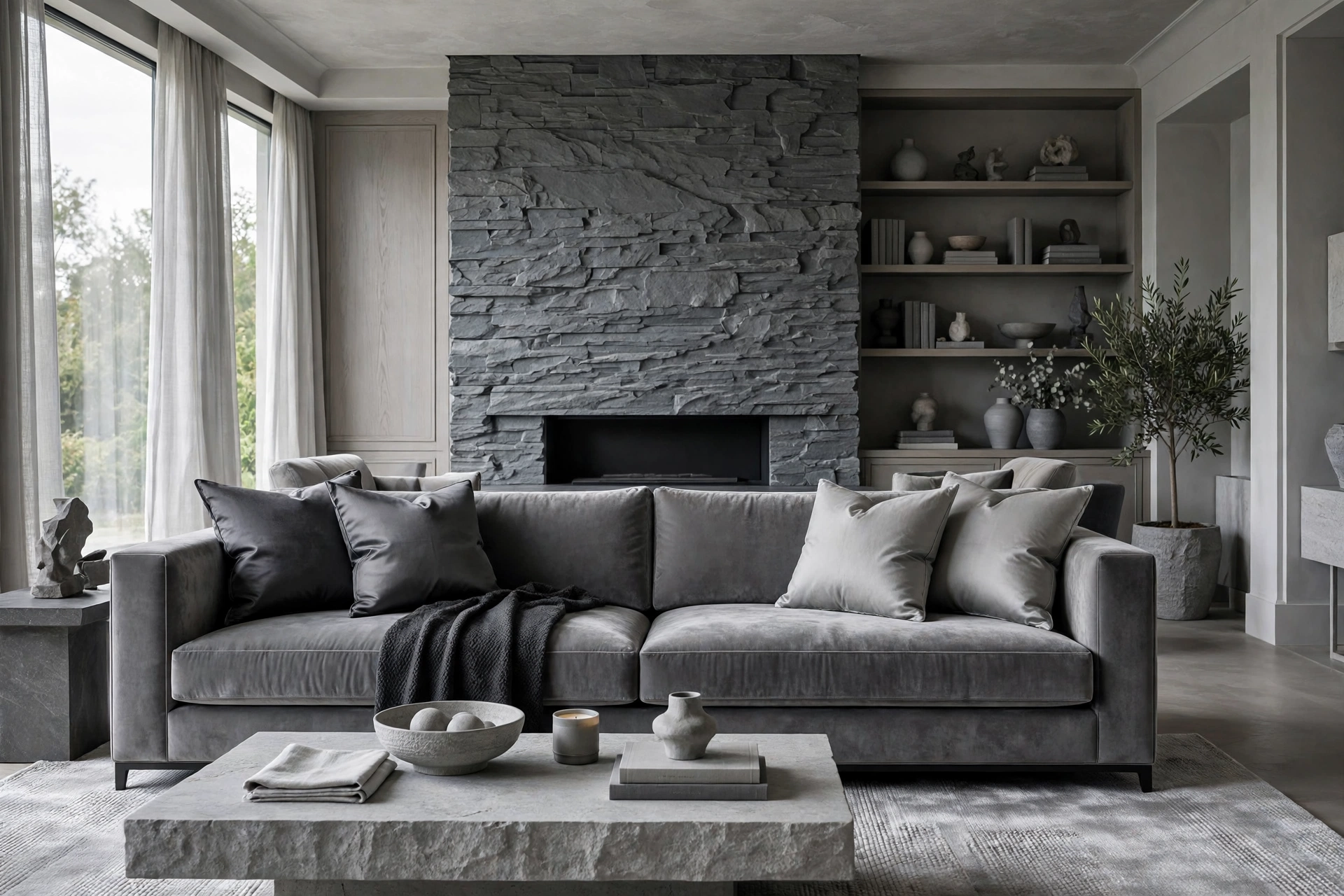
13. Layering Shades of Grey to Bridge the Gap Between Black and White
The most sophisticated black-and-white rooms are rarely just black and white. They are, in fact, masterclasses in the use of grey. By introducing a spectrum of greys—from pale, misty silver to deep, moody slate—you can effectively bridge the visual gap between your darkest and lightest elements. This layering technique prevents the room from feeling like a harsh, binary puzzle, instead creating a nuanced, multi-dimensional space that feels intentional and curated.
Start by incorporating grey through soft furnishings. A mid-grey sofa acts as a perfect neutral base, allowing you to use black pillows for definition and white throws for brightness. When selecting your greys, pay attention to the undertones. Cool, blue-based greys can feel modern and crisp, while warm, taupe-based greys add an immediate sense of comfort and softness. Don’t be afraid to mix these tones; a variety of shades adds depth to the room and makes it feel lived-in rather than staged.
Texture is the key to making grey look expensive. Use grey in different materials to create variety: a slate-grey velvet chair, a silver-grey wool rug, or a light-grey linen curtain. This prevents the color from looking flat and allows the light to hit each surface differently throughout the day. A common mistake is using too many matching tones of grey, which can result in a ‘muddy’ look. Aim for high contrast within your grey palette itself—pair your darkest charcoals with your lightest dove greys to maintain the high-impact aesthetic of the room.
Pure black and white is bold, and it can feel stark — so bridge the gap with greys. Charcoal, greige and soft grey sit between the two extremes and give the eye somewhere to rest, which is why layering shades from off-white through grey to charcoal creates a softer, more liveable room. A grey sofa, a grey rug or grey curtains are the easiest bridges.
14. Creating a Cozy Atmosphere with Plush Area Rugs and Throws
A common criticism of the black-and-white aesthetic is that it can feel cold or unapproachable. The antidote to this is texture, specifically through plush area rugs and layered throws. When you strip away color, your senses rely more heavily on touch. By incorporating high-pile rugs, chunky knit blankets, and velvet cushions, you create a tactile environment that invites you to linger, effectively counteracting the starkness of the monochrome palette.
For an area rug, choose one with a high-low pile or a deep, shaggy texture in a soft cream or off-white. This provides a warm foundation that feels luxurious underfoot. If you prefer a black rug, opt for a material like wool or viscose, which has a natural sheen that prevents the color from absorbing all the light. Layering a smaller, patterned throw blanket over the arm of a sofa is an easy way to introduce comfort. Look for materials like cashmere, mohair, or heavy-weight cotton to add visual weight and warmth.
When styling, don’t be afraid to mix your textures. A smooth leather chair paired with a fuzzy, oversized throw creates a beautiful contrast that feels both modern and comfortable. The goal is to make the room feel as good as it looks. Avoid synthetic, shiny fabrics that can look cheap in high-contrast light; natural fibers always drape and wear better, contributing to an elevated, timeless feel. By focusing on the ‘cozy factor,’ you ensure your high-contrast living room remains the heart of the home.
A plush rug is what makes a monochrome room feel cosy rather than gallery-like. A deep-pile black and white rug under the coffee table adds softness underfoot and warmth to the eye, and long flowing curtains in a warm white do the same on the walls. Choose a pale rug with soft grey movement under a dark sofa — the rug is already the pattern, so it should stay quiet. These modern living room rug ideas show how rug size and placement change the room.

15. Maximizing Natural Light to Enhance High-Contrast Surfaces
Natural light is the best friend of a monochromatic living room. It acts as a prism, highlighting the subtle differences in texture and tone that might otherwise be missed. To maximize this, keep your window treatments simple and functional. Sheer white linen drapes allow light to filter into the space while providing privacy, and their soft, movement-filled nature balances the hard, structured lines of black furniture or decor.
Placement is key when dealing with light in a high-contrast space. Position your darker furniture pieces in areas where they will receive the most natural light; this prevents them from looking like ‘black holes’ in the room and allows the details of the fabric or material to shine. Conversely, use white surfaces near windows to bounce light back into the darker corners of the room. This interplay of light and shadow is what gives a monochromatic room its drama and depth. If your room is naturally dark, use large, floor-to-ceiling mirrors with thin black frames to reflect light and expand the perceived size of the space.
Avoid heavy, dark curtains that block light, as they will make a black-and-white room feel cave-like and cramped. If you need blackout capabilities, opt for a double-rod system: a sheer layer for daytime and a heavier, neutral-toned layer for the evening. By choreographing how light enters and moves through your living room, you ensure that the high-contrast elements feel balanced and airy, rather than heavy and oppressive. The goal is to create a space that feels bright, clean, and endlessly sophisticated.
Light is the ingredient that makes high contrast work. A white wall reflects about 85 percent of the light that hits it, while a black wall reflects only about 5 percent — so a room with a black wall needs larger windows, sheer curtains and more lamps than the same room in all white. Maximise the daylight first, then layer warm artificial light for the evening.

16. Curating a Gallery Wall with Monochromatic Photography
A gallery wall is a classic design element, but in a black-and-white living room, it becomes a powerful narrative tool. To keep the look refined and modern, focus on monochromatic photography that shares a similar aesthetic or theme—such as architectural details, candid street scenes, or macro nature shots. The uniformity of the color palette allows you to mix different frame sizes and orientations without the wall feeling chaotic or cluttered.
When curating, consistency in your framing is essential. Use identical matte black frames for a sharp, graphic look, or mix brushed metal and white wood frames for a more collected, eclectic feel. The frames themselves become part of the design, so consider the weight of the frame profile. A thin, delicate frame keeps the focus on the art, while a thicker, chunky frame adds a sense of importance and gravity. Ensure that the white matting is consistent across all pieces; this creates a ‘frame within a frame’ effect that draws the eye into the center of each photograph.
Spacing is the secret to a professional-looking gallery wall. Maintain a consistent gap between each frame—usually two to three inches—to create a unified block of art. Before you start nailing, lay your art out on the floor to experiment with different arrangements. A common mistake is hanging the art too high; keep the center of the gallery at eye level, roughly 57 to 60 inches from the floor. By curating your photography with a cohesive vision, you turn a blank wall into an evocative centerpiece that adds soul and depth to your monochrome living space.
A gallery wall in black and white photography is the most forgiving art a monochrome room can have: the prints match the palette by definition, and black frames tie the whole wall together. Keep the frames identical and the spacing even, hang the wall above the sofa or along a hallway, and let one larger print anchor the arrangement. These feature wall ideas show how a gallery wall can carry a whole room.

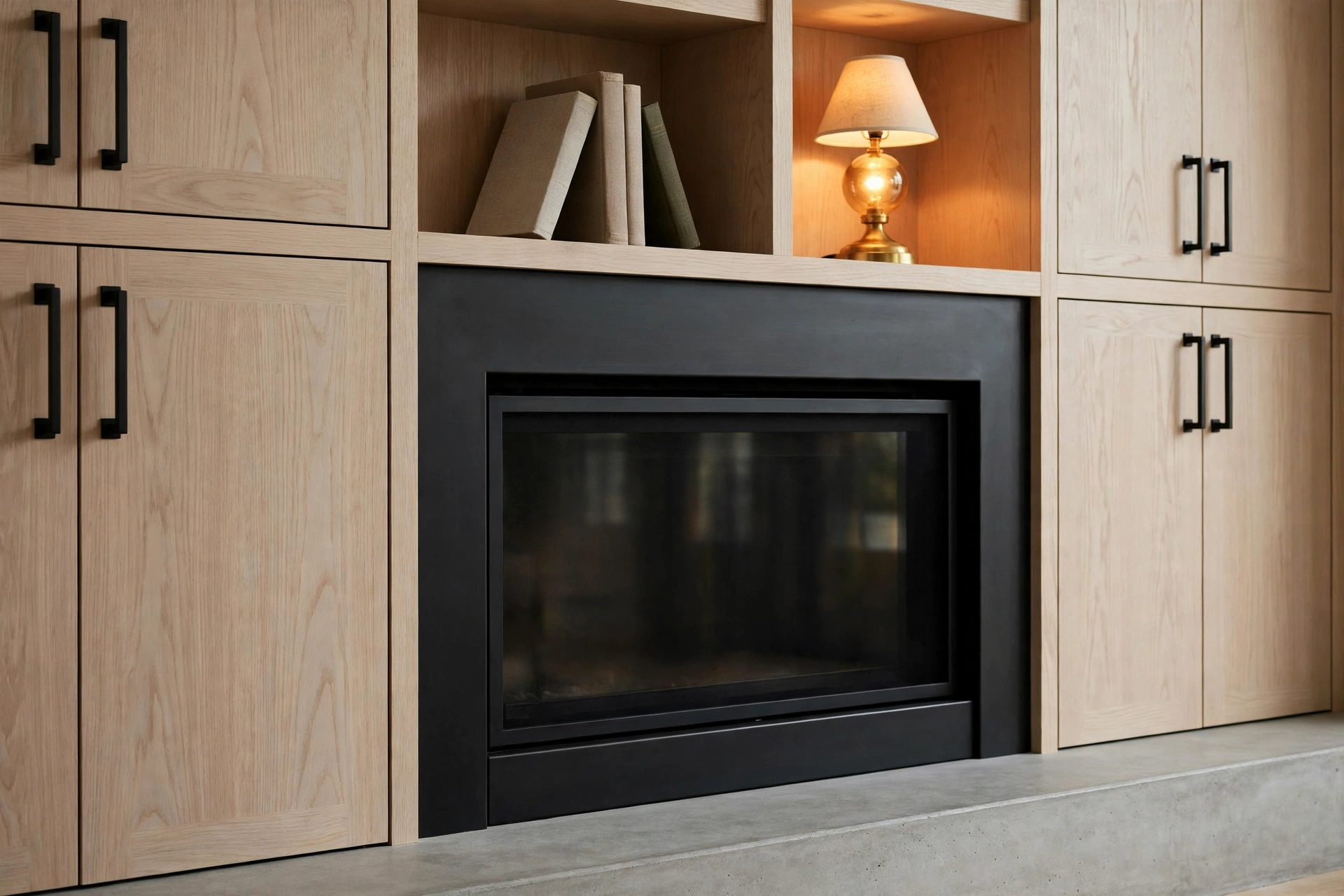
17. Using Matte Black Hardware for a Contemporary Refined Look
Incorporating matte black hardware is an effortless way to ground a high-contrast living room. Unlike polished metals that can feel overly flashy, a matte finish absorbs light, adding a sophisticated, velvety weight to your cabinetry, built-ins, or even window frames. This choice works best in spaces where you want to emphasize clean lines without creating a distracting shine.
To style this effectively, consider replacing generic cabinet pulls or fireplace inserts with sleek, matte black alternatives. These pieces act as the jewelry of the room, providing a sharp visual anchor against white walls or light-toned millwork. If your living room features a fireplace, a matte black screen or mantel detail can instantly transform a tired hearth into a contemporary focal point.
When working with this finish, avoid mixing too many different metal tones. Keep the hardware consistent throughout the space to maintain a cohesive, designer-curated appearance. If you are worried about the room feeling too sterile, pair these dark accents with natural wood shelving or soft linen textiles. This contrast between the industrial feel of the hardware and organic materials creates a perfect equilibrium, ensuring the space feels both sharp and inviting. Lighting is equally crucial here; use warm, ambient lamps nearby to soften the dark edges of the hardware, preventing them from appearing too harsh during evening hours.
Matte black hardware is the small detail that makes a monochrome room feel contemporary and refined. Matte finishes absorb light for a soft, velvety effect, while glossy black reflects it — so matte handles, hinges and light switches keep the dark side of the room quiet. Use it consistently across the room: mixed finishes read as an accident.
18. Implementing Task Lighting to Define Functional Living Zones
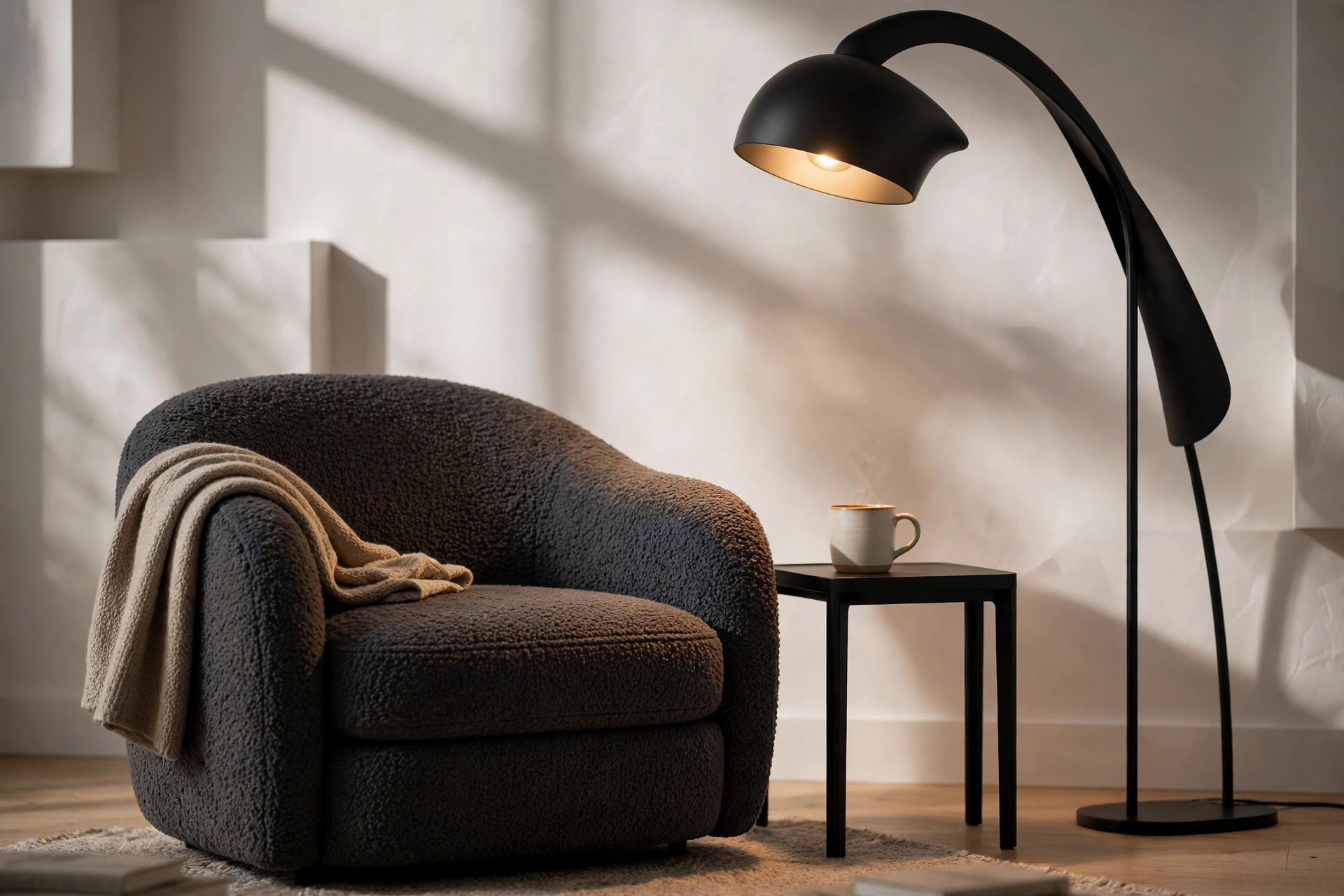
In a monochromatic living room, lighting is not just a utility; it is a vital tool for defining zones and softening the visual intensity of black and white surfaces. Because high-contrast rooms can sometimes feel flat or overly dramatic, task lighting—such as a sculptural floor lamp by a reading nook or a directional wall sconce—helps to layer the space and create intimate pockets of warmth.
Place these fixtures where functional activities occur, such as beside a lounge chair or over a side table. A matte black floor lamp with a warm-toned bulb serves as a functional sculpture, bridging the gap between art and utility. This is especially effective in open-concept living rooms where you need to delineate the seating area from the rest of the home without using rugs or furniture placement alone.
Avoid relying solely on overhead recessed lighting, which can cast harsh shadows that make high-contrast interiors feel cold or clinical. Instead, prioritize fixtures with dimmable capabilities to adjust the mood. When selecting materials, look for fixtures that incorporate brass or brushed metal accents to introduce a subtle glow. This prevents the room from feeling monolithic. By focusing the light downward or inward, you draw the eye toward specific vignettes, making the room feel layered and intentional rather than stark. Remember, the goal is to create a soft, diffused glow that makes the black elements look rich and grounded rather than imposing and heavy.
Task lighting defines how a living room is actually used. A reading lamp beside the sofa, a floor lamp by the armchair and a small lamp on the console each mark a functional zone, and together they keep a dark wall glowing after sunset. Without task lighting, a black and white room can feel dramatic at noon and flat by eight in the evening.
19. Selecting Statement Seating to Serve as the Room Focal Point
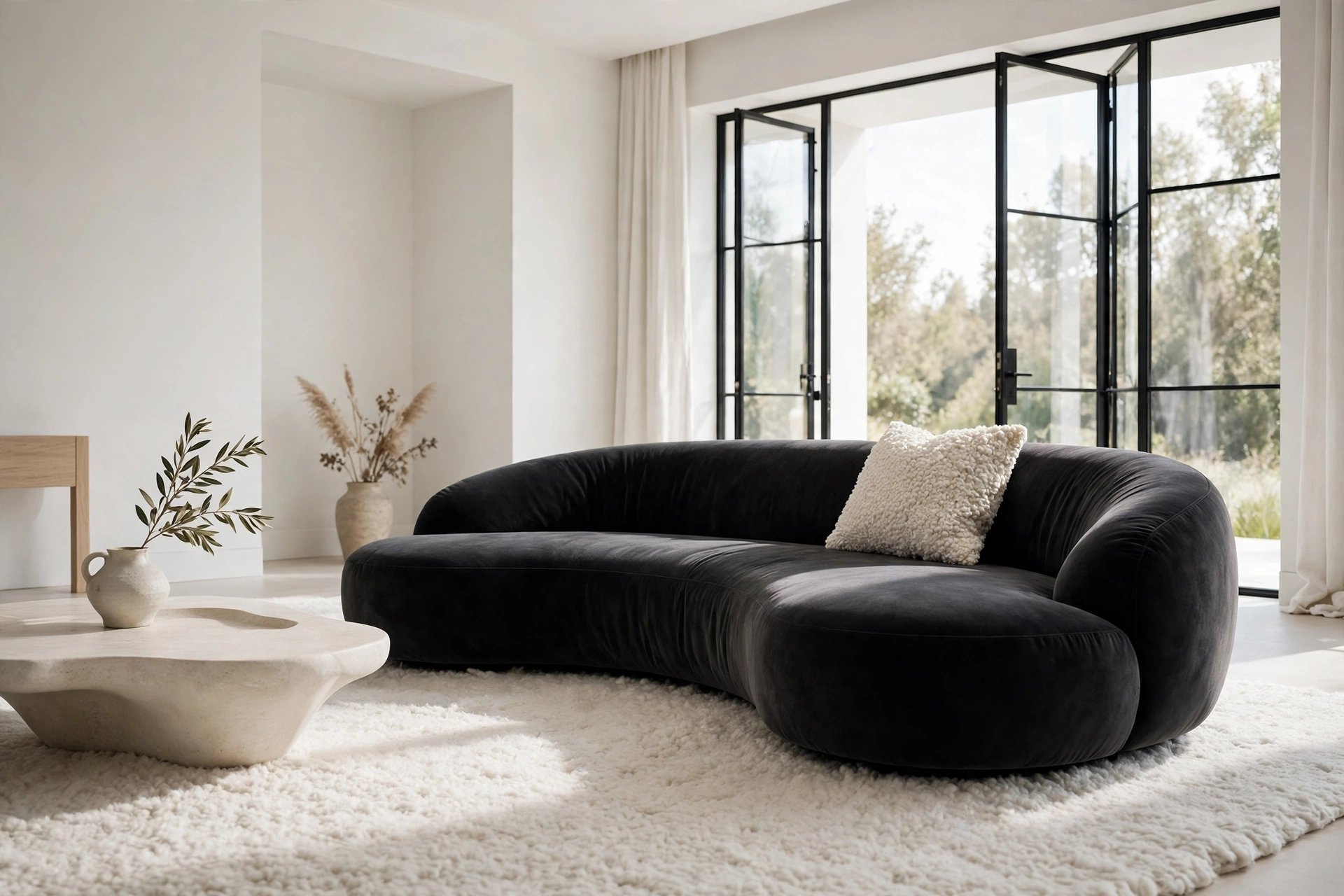
When working with a black-and-white palette, your furniture silhouettes carry more weight than in a colorful room. A statement chair or sofa acts as the anchor, dictating the energy of the entire space. To avoid a sterile look, opt for pieces with rounded, organic forms that provide a visual reprieve from the sharp straight lines often found in monochromatic architecture.
A deep, charcoal-toned velvet sofa is a timeless choice, offering a luxurious texture that feels soft to the touch while maintaining a bold presence. Alternatively, a pair of crisp white armchairs with black piping adds a tailored, high-fashion look. The key is balance; if your walls and rugs are predominantly white, let the seating take on the darker hues to prevent the room from feeling like an empty gallery.
Styling your statement seating requires careful consideration of scale. In a smaller living room, a low-profile sofa in a deep black fabric can actually make the room feel larger by blending into the shadows, whereas a bulky white sofa might feel overwhelming. Avoid cluttering the seating area with too many throw pillows. Instead, choose two or three high-quality textiles in varying shades of grey or oatmeal to bridge the gap between black and white. This creates a sophisticated, tonal transition that feels intentional. Always ensure the upholstery fabric has depth—think bouclé, linen, or mohair—to catch the light and prevent the furniture from looking like a flat silhouette against the background.
Statement seating is the room’s focal point, so choose it like one. A low-profile black leather sofa with clean modern lines, or a sculptural white bouclé chair against a black wall, gives the eye somewhere to land. Everything else in the room — rug, art, lighting — should support the seating, not compete with it.
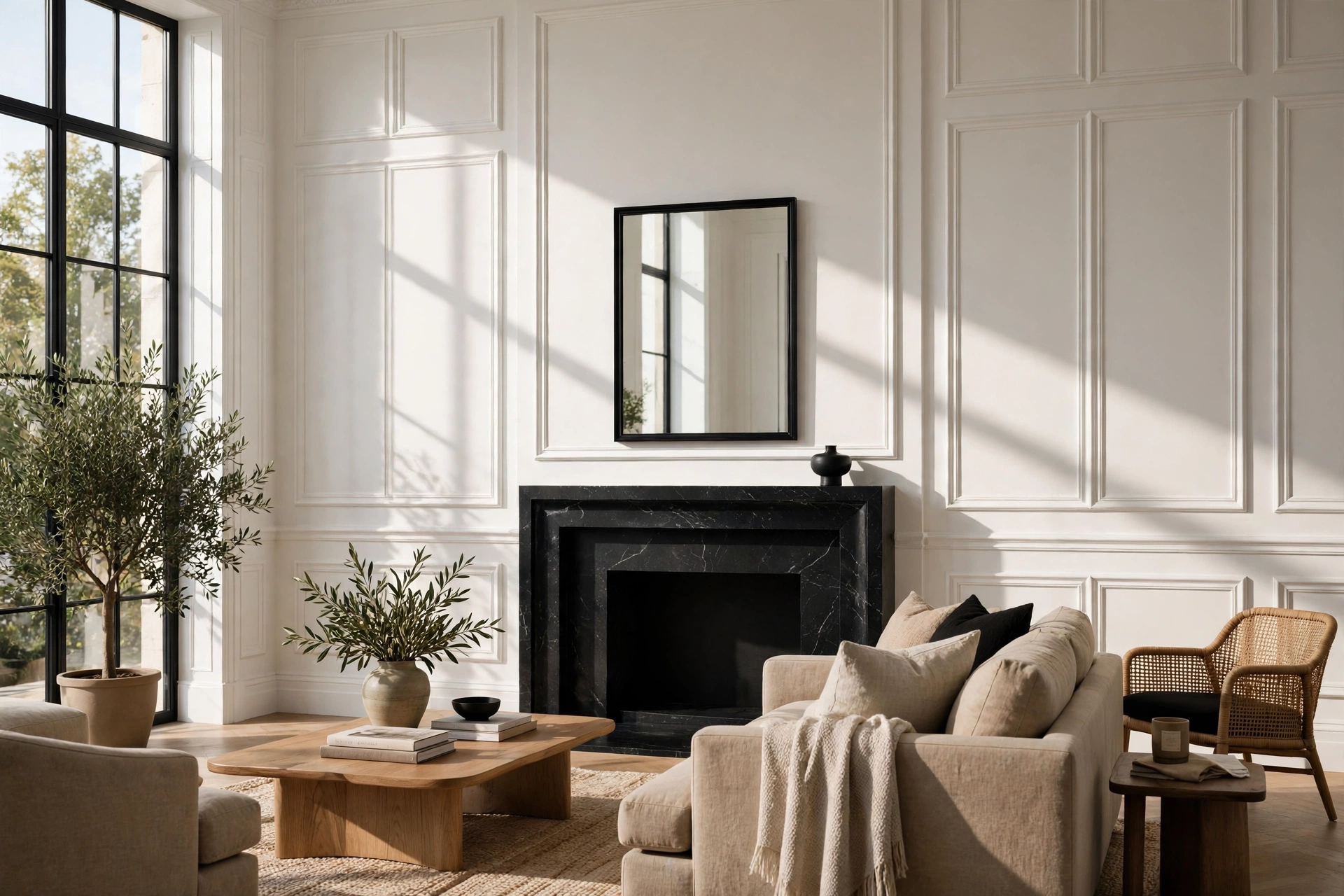
20. Adding Depth with Architectural Moulding and Trim Details
Architectural moulding is the secret weapon for preventing a black-and-white room from feeling like a hollow box. By adding dimension to your walls through wainscoting, crown moulding, or simple picture frame trim, you create a play of light and shadow that changes throughout the day. This is particularly effective in rooms with high ceilings or large, blank walls that risk feeling cold.
Consider painting your trim in a slightly different finish than the walls. For example, use a semi-gloss black on dark wainscoting paired with matte white walls to create a subtle, sophisticated textural shift. If you prefer a lighter look, keep the walls and trim white but use the moulding to create intricate geometric patterns. This adds a layer of heritage and craftsmanship that elevates the room beyond simple paint choices.
When styling these spaces, use the moulding as a frame for art or mirrors. A black-framed mirror mounted on a white-trimmed wall creates an immediate, high-impact focal point. Avoid over-complicating the decor; the architecture itself should be the star. If you are working in a contemporary space without existing trim, consider adding vertical slats or shiplap to one wall. This adds linear interest and a sense of movement that draws the eye upward. The key is to ensure the scale of the moulding matches the scale of the room—dramatic, oversized moulding works beautifully in large living areas, while delicate trim is better suited for more intimate, cozy spaces.
Moulding and trim add the architecture a flat monochrome wall lacks. Black panelling or trim on a white wall makes a real statement in a small space, and white moulding on a black wall does the same in reverse. The shadow lines the trim creates shift through the day, so the wall never reads as a flat plane.
21. Balancing Minimalism with Curated Personal Decor Objects
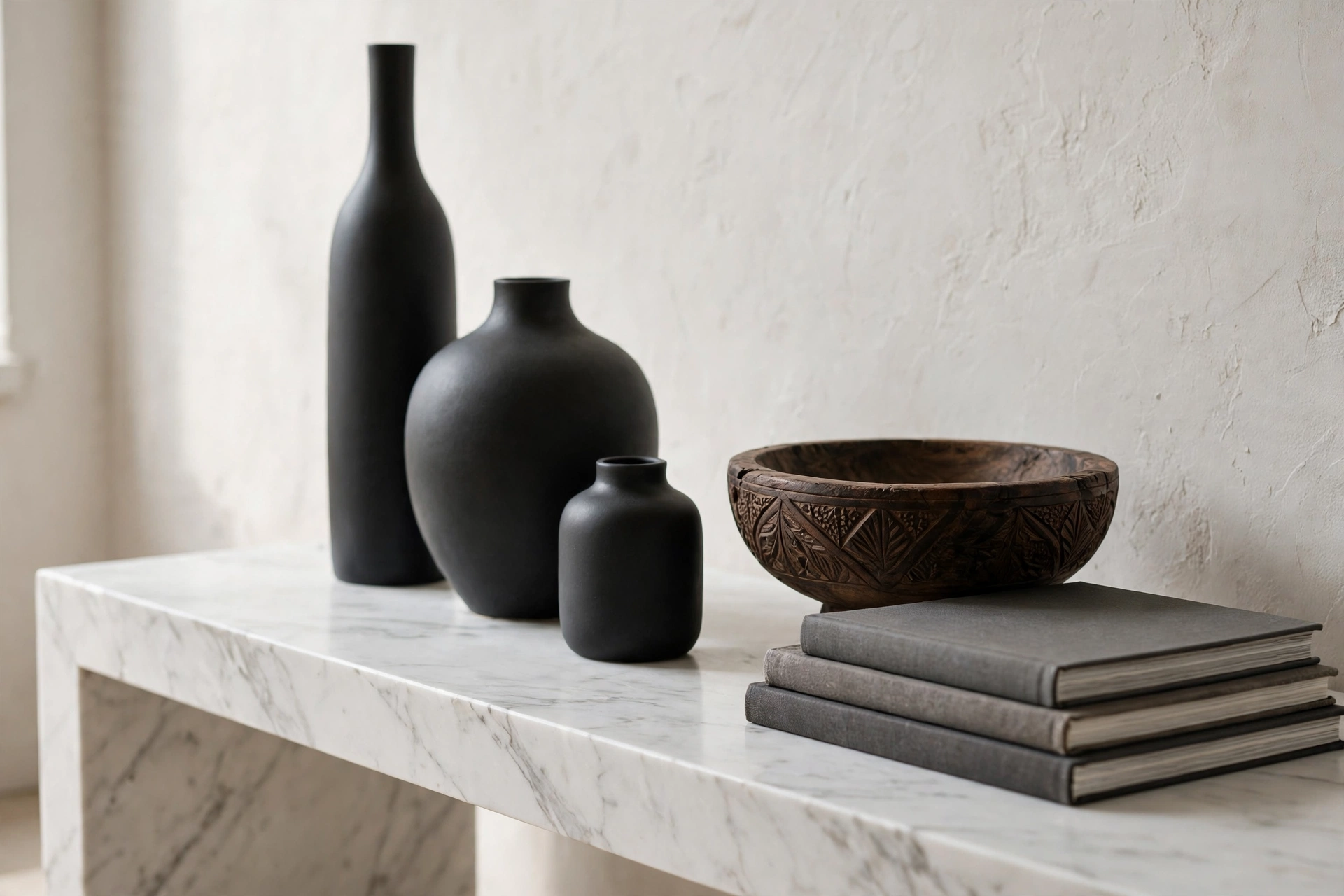
The biggest risk in a monochromatic living room is it feeling like a showroom rather than a home. To bridge this gap, you must introduce curated personal objects that tell a story. Minimalism does not mean empty; it means intentional. In a black-and-white space, your decor objects—vases, sculptures, coffee table books, and ceramics—become the primary source of personality.
Choose objects that have a strong sculptural quality. A collection of matte black ceramic vases of varying heights on a white marble console table creates an instant visual rhythm. Conversely, white marble or alabaster objects placed on a dark surface pop with a sense of luxury. Avoid the mistake of scattering too many small items, which can create visual clutter. Instead, group your objects in odd numbers on trays or shelves to create distinct, high-impact displays.
When selecting decor, think about texture as much as color. A rough, hand-thrown clay vessel in black feels infinitely more interesting than a smooth, mass-produced plastic one. Introduce wood elements, such as a hand-carved decorative bowl or a wooden side table, to bring in a natural, earthy tone that softens the severity of the black-and-white palette. Lighting plays a crucial role here as well; use a small spotlight or a well-placed table lamp to highlight your curated display. This turns your decor into a gallery-like installation, giving the eye a place to rest and appreciate the craftsmanship of each piece while maintaining a clean, modern aesthetic.
Minimalism fails when clutter creeps in, so keep surfaces about 70 percent clear. Store remotes and cables in the credenza, not on display, and let one or two curated objects — a vase, a stack of books, a sculptural bowl — earn their place on each surface. A personal object with a story beats five matching accessories every time.
22. Designing a Feature Wall with Bold Black and White Wallpaper
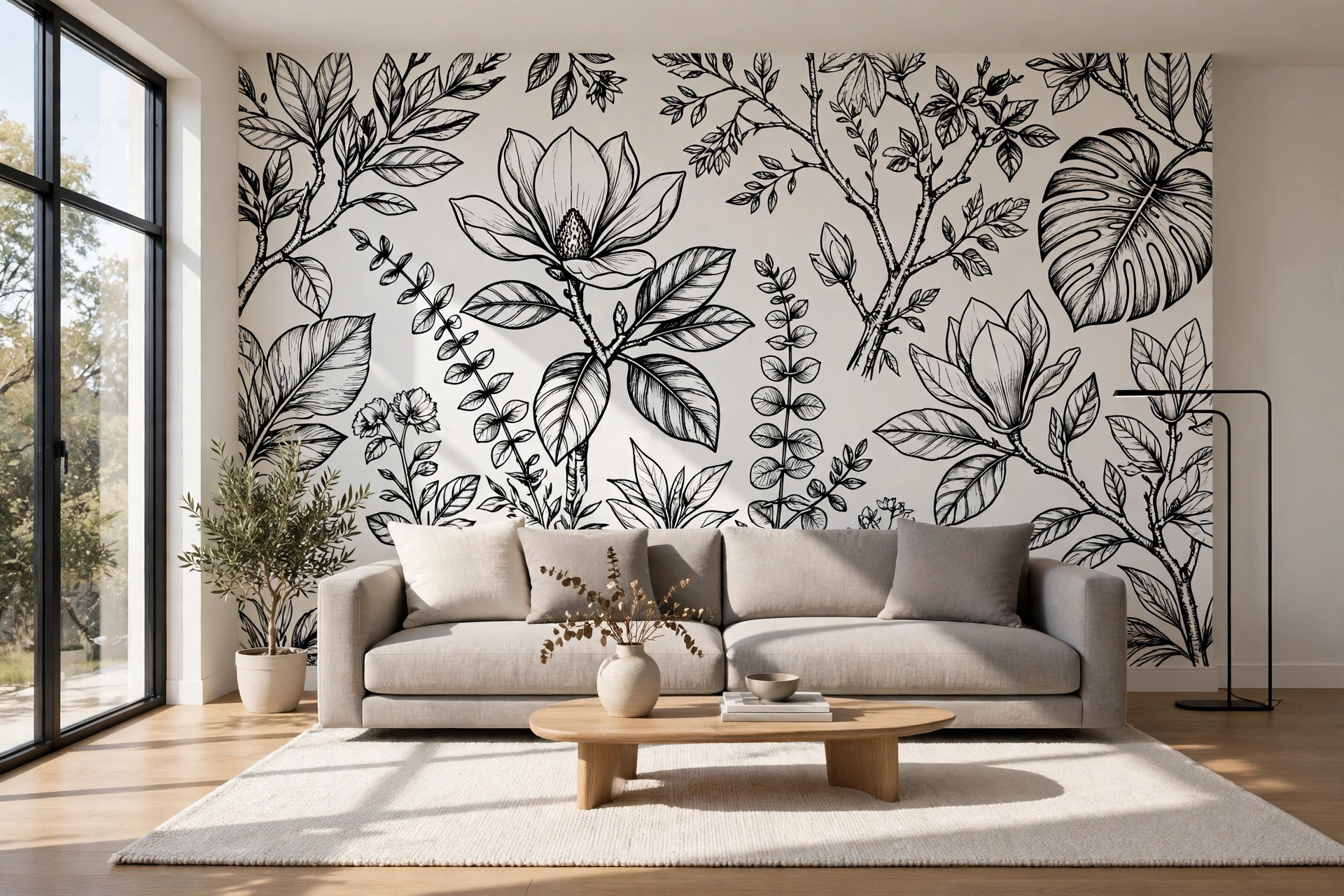
A feature wall is the perfect opportunity to inject movement into a static room. In a monochromatic living room, wallpaper is often the most effective way to introduce pattern without resorting to color. Whether you choose a bold, large-scale botanical print or a subtle, geometric graphic, wallpaper immediately establishes the room’s character and provides a backdrop that feels finished and expensive.
When selecting a pattern, consider the scale of your living room. A large-scale, high-contrast pattern can make a small room feel cozy and jewel-box-like, while a delicate, fine-line sketch wallpaper can make a large room feel expansive and airy. Place this feature wall behind a major piece of furniture, such as the sofa or a fireplace, to ground the design. This creates a natural focal point that anchors the rest of the furniture arrangement.
To keep the look sophisticated, ensure the rest of the room remains relatively neutral. Avoid competing patterns in your rugs or curtains. Instead, pull one of the tones from the wallpaper—perhaps the softer grey or the pure white—and carry it through your textiles and upholstery. This creates a cohesive flow. If you are worried about the wall feeling too heavy, select a pattern with plenty of ‘negative space’ or white background. This ensures the room retains a light, fresh feel while still benefiting from the dramatic visual interest that only a bold wallpaper can provide. Always use professional installation for a seamless look, as precision is key to maintaining a high-end, editorial finish.
A feature wall is the fastest way to make a bold monochrome statement on a manageable scale — a fantastic wallpaper or a black paint colour, applied to one wall only. Bold black and white wallpaper adds the pattern and texture that flat paint cannot, and because it is only one wall, it is easy to change later. These modern textured wall ideas show how texture changes a feature wall.
23. Focusing on Tonal Layering to Prevent a Flat Appearance
The secret to a successful black-and-white living room lies in the shades between the extremes. If you rely only on pure white and jet black, the room will inevitably feel flat and uninviting. The solution is tonal layering: incorporating a spectrum of greys, charcoals, creams, and off-whites to create depth and dimension.
Think of your room like a painting. Start with a dark base, such as a charcoal rug, and layer it with lighter grey upholstery, then add cream-colored cushions and white accessories. This transition of tones prevents the eye from jumping abruptly from dark to light, creating a much more harmonious and comfortable visual experience. The use of varied textures is equally important here; a chunky knit wool throw in cream, a velvet sofa in charcoal, and a smooth marble coffee table all interact with light differently, adding layers of interest even within a limited color palette.
Avoid using identical shades of black throughout the room, which can make the space feel like a uniform block. Mix matte, glossy, and textured blacks to create subtle variations. When choosing paints, look for whites with warm undertones rather than stark, hospital-grade white. This small shift makes a world of difference in how the room feels during the evening. By embracing these nuances, you move away from a ‘stark’ aesthetic and toward a layered, sophisticated environment that feels lived-in, cozy, and timeless. The goal is a room that feels like it has been collected over time, rich in character and depth.
Tonal layering is the difference between a monochrome room and a flat one. Layer shades from off-white through grey to charcoal — a cream sofa, a grey rug, a charcoal throw, a black frame — so the eye travels through the room instead of stopping at the contrast. The blacks and whites stay, but the greys in between do the quiet work of making the room feel deep.

24. Paint the Floor Black: Checkerboard Floors and Dark Joinery
Most black and white rooms stop at the walls, but the floor is the largest surface in the room — and black underfoot changes everything. A checkerboard floor gives a smart, graphic edge to a living room, and against it every accessory looks brighter and more pronounced, because the dark ground makes light objects pop.
If a full checkerboard feels too bold, paint the floorboards or the joinery black instead: a black skirting board, a black-painted door, or black built-in shelving anchors the room without touching the walls. Keep the rug pale and the sofa light so the floor reads as a deliberate design choice rather than a dark expanse.
Black floors do ask for more upkeep — dust and footprints show more readily on dark surfaces — so choose a durable finish and keep a soft rug in the highest-traffic spot. In return you get a room that feels grounded and intentional, where even a simple white sofa looks like a considered statement.
Black floors act as a foil for everything above them: against a dark floor, every accessory looks brighter and more pronounced. A checkerboard floor gives a smart edge to a living room, while black-painted floorboards or joinery anchor the room more quietly. Keep the rug pale and the sofa light so the floor reads as a deliberate choice, and choose a durable finish — dust shows more readily on dark surfaces.

25. Add One Bold Accent Colour: Yellow, Blue or Red Against Monochrome
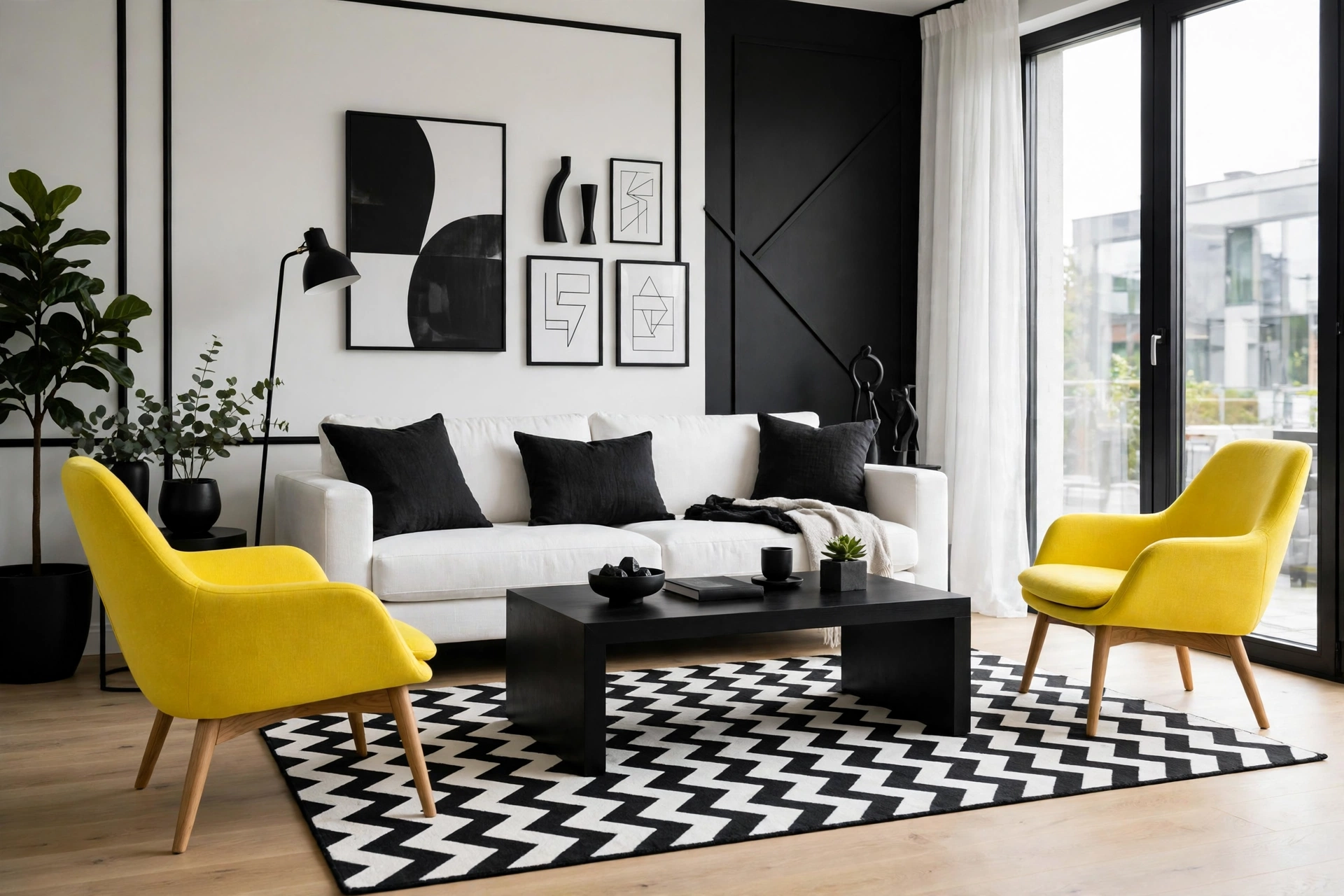
A black and white room is the perfect base for one bold accent colour, because the monochrome palette makes a single colour sing. Primary colours work best: acid yellow chairs, a cobalt blue vase, or a red throw against stark black and white feels playful and mid-century, and the colour reads far stronger than it ever would against a busy palette.
Keep the accent to the 10 percent — pillows, throws, art and one piece of furniture at most — so the monochrome base stays in charge. One yellow chair and a matching cushion is a statement; yellow chairs, a yellow rug and yellow curtains is a different room entirely, and not the one you wanted.
If a primary colour feels too loud, try a calmer accent instead: deep teal, warm terracotta or sage green all sit comfortably with black and white. The rule is the same either way — one accent colour, repeated in two or three small places, and everything else stays black, white or wood.
A black and white room is the perfect base for one bold accent colour, because the monochrome palette makes a single colour sing. Primary colours such as yellow, blue and red work particularly well with stark black and white — acid yellow chairs with a black and white zigzag rug is the classic move. Keep the accent to the 10 percent and let these black and white living room ideas from Homes & Gardens guide the proportions.
Black and White Living Room Styles at a Glance
| Style | Anchor | Key materials | Best for |
|---|---|---|---|
| Elegant Monochrome | Low-profile black leather sofa | Carrara marble, velvet, blackened steel | Formal living rooms |
| Minimalist Modern | White sectional, black metal legs | Matte black metal, white lacquer, light oak | Small, calm spaces |
| Striking Contrast | Black sofa against white rug | Sculptural velvet, white bouclé | Bold, dramatic rooms |
| Warm Layered | Wood and texture first | Linen, bouclé, wool, oak, walnut | Family living rooms |
| Industrial | Black brassware, dark grey accents | Concrete, black metal, leather | Loft-style spaces |
| Parisian Chic | Black and white art and moulding | Plaster moulding, gilt frames, marble | Classic, elegant rooms |
5 Mistakes to Avoid with Black and White Living Rooms
- No single anchor: a black sofa, a black wall and a bold checkerboard rug all at once turns the room loud and flat — pick one anchor first.
- Mixing warm and cool whites: the temperatures fight and make blacks look blue or browns look yellow — stay consistent.
- Cluttered surfaces: minimalism fails when clutter creeps in — keep surfaces about 70 percent clear.
- All black and white, zero texture: without linen, wool, wood or weave, the room reads flat and cold.
- Forgetting the 10 percent: with no wood, brass, linen or plant to warm it, monochrome stays stark instead of inviting.
Frequently Asked Questions
How do I keep a black and white living room from looking too cold?
Warmth comes from texture and wood, not from a third colour. Layer linen, bouclé and wool, add oak or walnut, and choose warm white walls rather than icy blue-white. A plant and brass accents help too. Keep the black to about a third of what you see, so white leads.
Is it better to have more black or more white in a small living room?
More white, always. Let white and light surfaces do roughly two-thirds of the work, with black as the defining third — furniture legs, frames, lighting and one larger piece. Small or low-light rooms should lean even lighter, keeping black to accents so the room feels open, not boxed in.
What are the best accent colors to pair with a black and white theme?
Primary colours work best: a bold yellow, blue or red against stark black and white feels playful and mid-century. For a calmer room, try deep teal, warm terracotta or sage green. Keep the accent to 10 percent — pillows, throws and art — so the monochrome base stays in charge.
How can I mix patterns without making the room look cluttered?
Use one scale at a time and repeat it. A large geometric rug with small-scale cushions works; two bold patterns at the same size fight. Keep the palette strictly black and white, leave plain surfaces between patterned pieces, and let one pattern lead.
Should I choose cool or warm white paint for my walls?
Warm white, in most living rooms. A warm white with a creamy undertone keeps a monochrome room inviting, while a cool blue-white can read sterile against black. Stay consistent — warm with warm, cool with cool — and test the shade on the wall in your room’s light first.
Conclusion
Mastering the art of a black and white living room is about finding the delicate balance between high-contrast drama and comfortable, livable design. By focusing on the interplay of textures, thoughtful lighting, and the strategic placement of warm, organic elements, you can create a space that feels both modern and timeless. Remember that the goal is to curate a sanctuary that reflects your personal style through the lens of sophisticated, monochromatic restraint.
Start by selecting one or two elements to implement, such as introducing a new texture through textiles or grounding a corner with a piece of matte black furniture. As you layer these pieces, you will see how easily this classic palette transforms a room into an elevated, cohesive retreat. Trust your instincts, embrace the power of contrast, and enjoy the process of crafting a home that feels perfectly balanced and enduringly beautiful.
