

The best bathroom plant decor ideas pair humidity-tolerant plants, such as Boston ferns, Pothos, orchids, ZZ plants and Snake Plants, with smart placement on shelves, hanging planters, wall-mounted pots and a tub-side statement plant, all in containers that drain properly. Match the plant to your light first, keep bathroom humidity under about 60 percent, and check pet safety before you buy.
A bathroom should be more than a functional space; it should serve as a personal sanctuary that promotes restoration and calm. Bringing nature indoors is one of the most effective ways to elevate a sterile environment, yet many homeowners struggle to balance the unique humidity and light requirements of a washroom with a cohesive aesthetic vision. Whether you are dealing with limited square footage or a lack of natural light, integrating greenery is a sophisticated way to introduce texture, life, and a spa-like atmosphere to your daily routine.
Mastering bathroom plant decor ideas requires more than simply placing a potted fern on the vanity. It involves a thoughtful selection of species that thrive in moisture-rich environments and a strategic approach to styling that maximizes your available space without creating clutter. From vertical installations that draw the eye upward to clever placement techniques that protect your fixtures, the right approach can turn even the most modest powder room into a lush, biophilic retreat.
In the following guide, we will walk you through the essential principles of designing a plant-forward bathroom that is both beautiful and sustainable. We have curated a selection of resilient, humidity-loving plants and practical styling techniques designed to help you overcome common spatial challenges. Read on to discover how to cultivate a flourishing wellness oasis that reflects your personal style and enhances your home’s interior design.
Jump to: Best plants at a glance | The 24 sections | Choosing by bathroom type | Pet safety | FAQ
Key Takeaways
- Start with the shadow test: sharp shadow means bright indirect light, soft shadow means medium, no shadow means low light — and match the plant to the result.
- Most tropical bathroom plants want 40–60% humidity, which a regularly used bathroom reaches naturally; the fan matters as much as the steam.
- Every pot needs drainage holes — the most common reason bathroom plants die is root rot, not dryness.
- Pothos, snake plants, ZZ plants, Boston ferns and spider plants cover almost every bathroom: low light, windowless, bright, pet-safe and trailing.
- Plants do not measurably purify indoor air (Drexel) — buy them for humidity, beauty and calm, and group them so they humidify each other.
Measure First: Light, Humidity and Drainage Before You Buy
Before you buy a single plant, test the room. At midday, hold your hand a foot above a white surface: a sharp shadow means bright indirect light, a soft shadow means medium light, and no shadow means low light. Windowless bathrooms can drop below 50 foot-candles, while even low-light plants need 100 to 200 to grow — so a dark room needs a full-spectrum LED grow bulb of 150 to 200 lumens on a 12-hour timer, or a rotation plan that moves plants to a brighter room every few weeks. Check humidity too: most tropical bathroom plants prefer 40 to 60 percent relative humidity, which a regularly used bathroom reaches during showers, while a guest bathroom may stay much drier. Pick the pot with the plant — terracotta breathes and suits plants that hate wet feet, glazed ceramic holds moisture for ferns — and never buy a pot without drainage holes. The Royal Horticultural Society puts it plainly: bathrooms with no windows are not suitable for growing live plants long-term, so light comes before plant choice. Patch Plants compares 33 bathroom plants by light, use and care level if you want to match a species to your exact conditions, and our clever small bathroom ideas show the same measure-first thinking applied to the room itself.
Best Bathroom Plants at a Glance
Start with light, then choose the plant. This table summarizes the plants used throughout the guide.
| Plant | Light it tolerates | Best bathroom spot | Pet note |
|---|---|---|---|
| Boston fern | Bright, indirect | Shelf or hanging planter near the tub | Commonly listed as non-toxic; confirm before buying |
| Pothos | Low to bright, indirect | High shelf or hanging pot with trailing vines | Toxic if chewed (ASPCA) |
| Peace Lily | Low to medium | Floor or vanity beside the tub | Toxic if chewed (ASPCA) |
| ZZ Plant | Low | Corner or counter in a dim or windowless room | Toxic if chewed (ASPCA) |
| Snake Plant | Low to bright | Corner or vanity, minimalist rooms | Check ASPCA before buying if you have pets |
| Monstera | Medium to bright, indirect | Large floor planter near a window | Toxic if chewed (ASPCA) |
| Orchid and Hoya | Bright, indirect | Vanity, window ledge or shower-adjacent hanging pot | Check ASPCA before buying if you have pets |
Selecting Humidity-Loving Species for Your Bathroom
The secret to a flourishing bathroom garden lies in choosing plants that naturally crave moisture. Ferns are quintessential choices because they thrive in the damp, steamy conditions created by your shower. Boston ferns are the dependable option, while Maidenhair ferns are lovelier but fussier and need steady moisture. Their delicate, feathery fronds add an organic softness to the hard, reflective surfaces typically found in bathrooms, like glass and chrome.
Beyond ferns, consider the lush, waxy leaves of a Pothos or the dramatic, architectural silhouette of a Peace Lily. These varieties are highly adaptable and appreciate the ambient humidity that often leaves other houseplants struggling. If you share your home with a cat or dog, note that Pothos and Peace Lily are both toxic when chewed; see the pet-safety section below. When styling these, place them on open shelving or near the vanity where they can enjoy the moisture without sitting in standing water.
One common mistake is over-watering these plants. Even though they love humidity, their soil still needs to dry out slightly between waterings. Use pots with proper drainage holes to ensure the roots don’t suffer from rot. For a designer touch, group plants of varying heights together to create a multi-layered, verdant display that mimics a natural rainforest floor.
Use the shadow test to match the plant to the room: a sharp, defined shadow means bright indirect light for orchids and calatheas, a soft shadow means medium light for ferns and peace lilies, and no visible shadow means low light — perfect for snake plants and ZZ plants. Within three feet of the shower, steam exposure runs 30 to 60 minutes a day, which is ideal for calatheas and orchids.
Thriving Plants for Low-Light Bathroom Environments
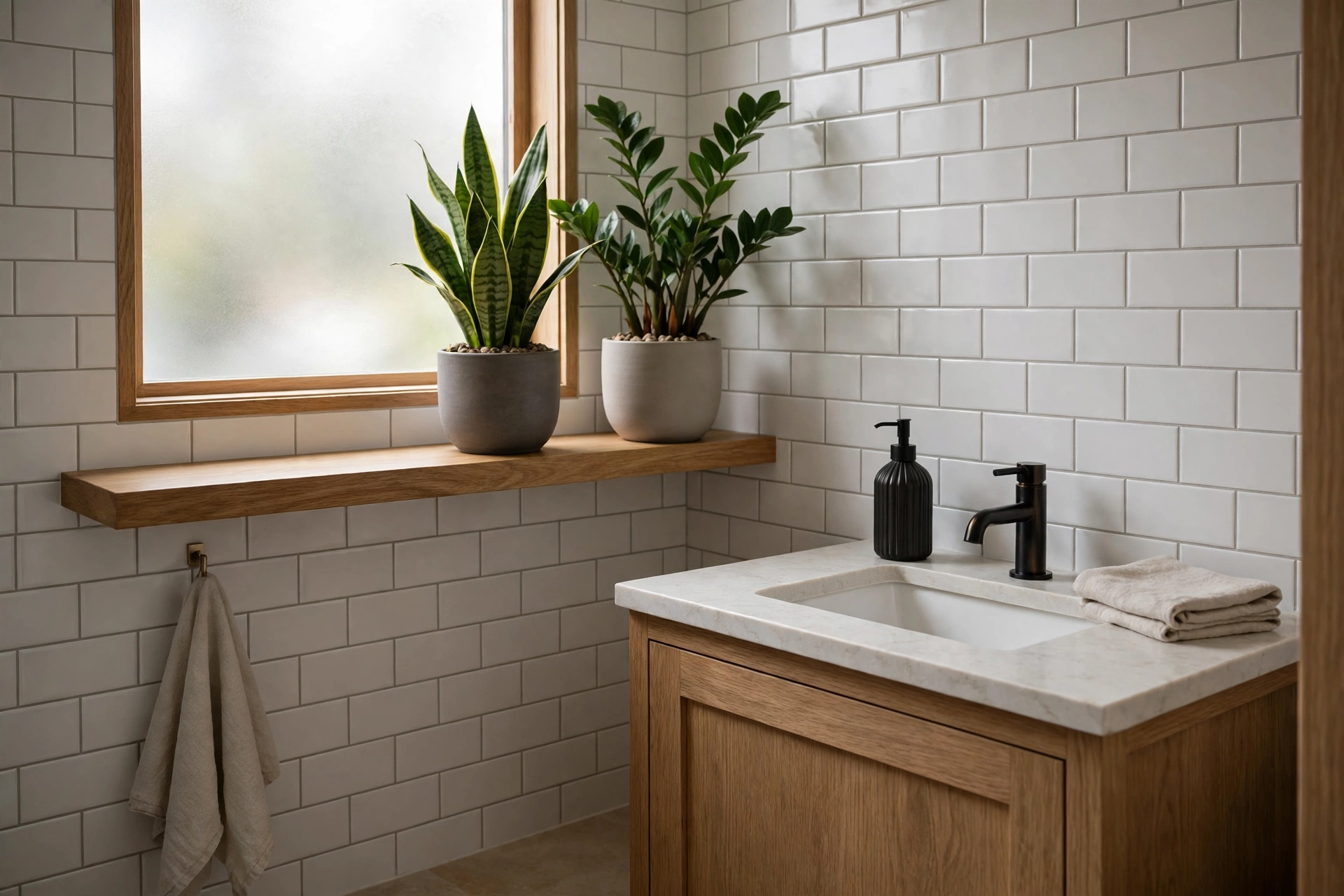
Many bathrooms lack expansive windows, which can make plant selection feel restrictive. However, several resilient species are perfectly content in lower light conditions. The Snake Plant and ZZ Plant are the ultimate low-light champions and among the best low light bathroom plants, offering sculptural, upright forms that add height and interest to otherwise dim corners. Their architectural presence works exceptionally well in modern, minimalist spaces.
These plants are also incredibly forgiving, making them ideal for the busy homeowner who wants a high-end look with minimal maintenance. Because they grow slowly, they won’t quickly outgrow their designated spot on your windowsill or countertop. They handle fluctuating temperatures well and don’t require the constant attention that more temperamental tropicals might demand.
To elevate the look, place these plants in matte black or charcoal ceramic planters to provide a sharp, contemporary contrast against lighter tile work. Avoid placing them in absolute darkness; even a sliver of natural light or a well-placed vanity light can help them maintain their deep green pigment. If your bathroom is windowless, rotate your plants every few weeks with others kept in brighter rooms to ensure they stay healthy and vibrant over time.
Light is the real limit in a bathroom, not humidity: windowless rooms can drop below 50 foot-candles, while even so-called low-light plants need 100 to 200 foot-candles to grow. If your bathroom has no window, fit a full-spectrum LED grow bulb of 150 to 200 lumens on a 12-hour timer — it turns a dark room into a workable home for snake plants, ZZ plants and pothos.
Vertical Gardening Solutions for Compact Bathrooms
In a compact bathroom, floor and counter space are precious commodities. Vertical gardening allows you to introduce greenery without sacrificing utility. Wall-mounted planters, floating shelves, or tension-rod systems are excellent ways to draw the eye upward, making the room feel larger and more architectural.
Consider installing a series of reclaimed wood shelves above the toilet or next to the vanity mirror. This creates a gallery-like display for trailing plants like English Ivy or String of Hearts. The cascading vines provide a beautiful, organic contrast to the rigid lines of faucets and towel bars. It turns a functional wall into a living piece of art.
When choosing hardware, opt for materials that complement your existing fixtures, such as brushed brass or matte nickel brackets. This creates a cohesive, custom-designed look. A common mistake is overcrowding the shelves; leave enough breathing room between plants to showcase their individual shapes. This approach not only maximizes space but also introduces a sense of tranquility that is essential for a wellness-focused bathroom retreat.
Self-watering wall planters are the practical choice above a toilet or vanity, because you cannot easily reach them every week. A corner shower caddy repurposed as a plant holder works the same way — ferns sit in the steam zone but out of the direct spray — and the top of a medicine cabinet takes a shallow pot without stealing counter space.

Styling Hanging Planters for a Lush Shower Canopy
Creating a shower canopy with hanging plants is perhaps the most immersive way to bring the outdoors in. By suspending plants from the ceiling or mounting them near the shower curtain rod, you transform the act of bathing into a sensory, spa-like experience. The humidity from the shower acts as a natural misting system, keeping tropical varieties like Orchids or Hoya in peak condition.
Use high-quality, weather-resistant macramé or sleek, minimalist leather hangers to support your pots. If your shower area is enclosed, ensure the plants are securely mounted away from direct water spray to prevent soil saturation. The goal is to create a soft, green veil that filters light and provides a sense of privacy and enclosure.
For a sophisticated aesthetic, stick to a monochrome palette for the planters—think white ceramic or natural terra cotta—to keep the focus on the lush foliage. Avoid heavy, bulky pots that might feel oppressive in a small shower space. Instead, opt for lightweight materials that keep the overall look airy and refined. This canopy effect is a hallmark of high-end biophilic design, instantly elevating the bathroom into a private, restorative sanctuary.
Keep hanging planters inside the steam zone but out of the direct spray: within three feet of the shower is humid enough, while soap and shampoo splashes burn leaves. A pothos vine trained along a shower rod grows six to ten feet if you let it, so prune stems just above a leaf to keep it full and bushy.

Coordinating Planters with Contemporary Bathroom Fixtures
The dialogue between your plant containers and your bathroom hardware is what separates a cluttered room from a curated space. To achieve a high-end look, treat your planters as you would any other piece of decor. If your bathroom features polished chrome faucets, consider cool-toned stone or sleek white porcelain planters to maintain a clean, crisp palette.
Conversely, if your space is defined by warm metals like unlacquered brass or copper, look for planters in earthy, matte textures such as terracotta, concrete, or even woven seagrass baskets. These materials bridge the gap between the industrial nature of the hardware and the softness of the plants. The goal is to create a sense of harmony where the pots feel like they belong to the room’s permanent architecture.
Avoid plastic nursery pots at all costs, as they can quickly cheapen the overall aesthetic. If you prefer to keep your plants in their original plastic containers for drainage, simply nest them inside a decorative cachepot. This allows you to swap out plants easily while maintaining a consistent style. Always consider the scale of the planter relative to the vanity or shelf; oversized pots on small surfaces can make the room feel cramped, while tiny pots on large counters might look lost.
Terracotta breathes and dries fast, which suits plants that hate wet feet, while glazed ceramic holds moisture longer and suits ferns. Whichever you choose, the pot must drain — a cachepot without holes is only safe if the nursery pot inside it has holes and you empty the saucer after every watering.

Creating a Spa-Like Aesthetic with Stone and Greenery
The combination of natural stone and lush greenery is the cornerstone of a luxury spa aesthetic. Whether your bathroom features marble, travertine, or slate, these materials provide a cool, grounded foundation that makes greenery pop. The juxtaposition of the cold, smooth stone against the warm, soft textures of leaves creates a balanced, tactile environment.
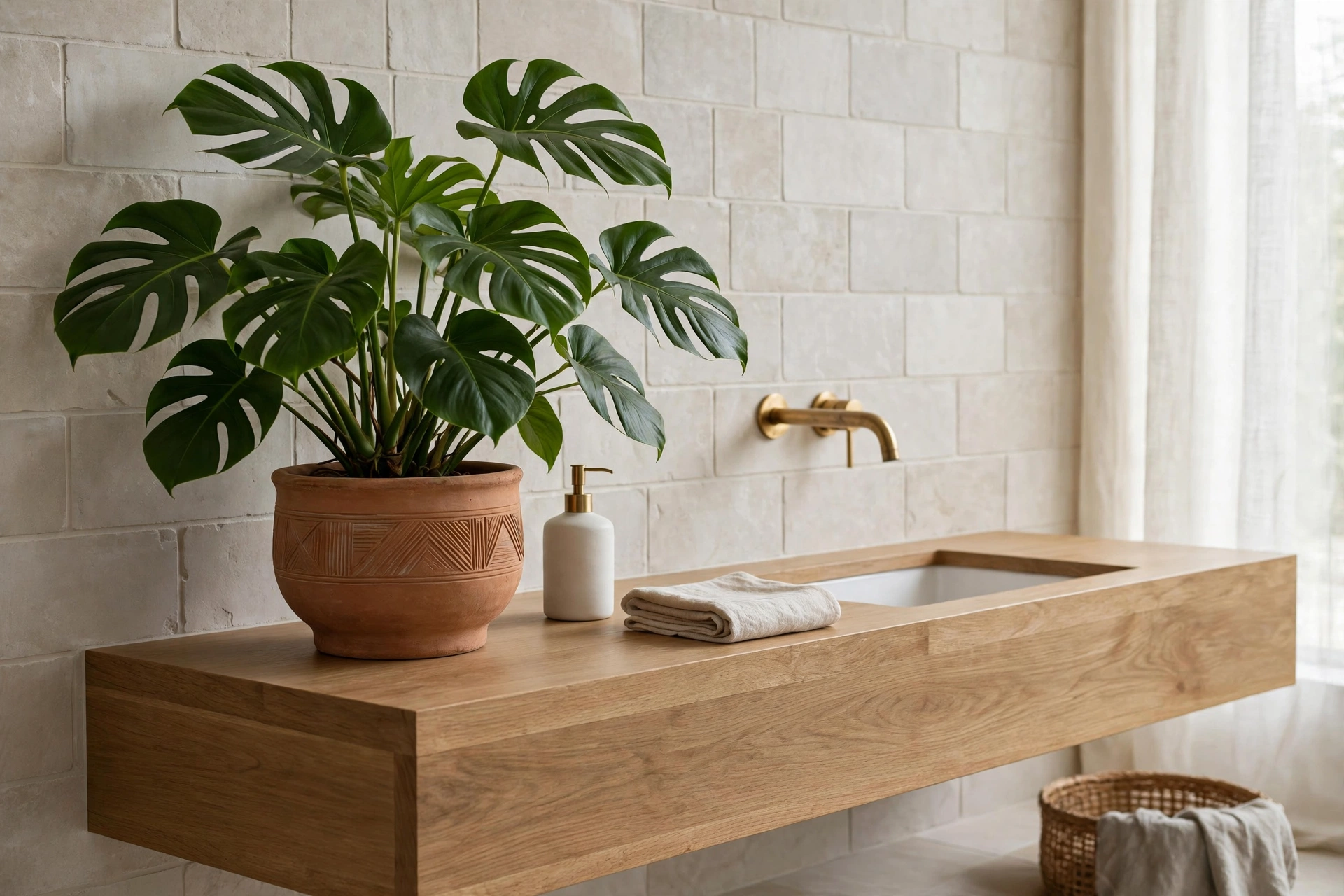
To lean into this look, place larger, floor-dwelling plants like a Monstera (or, if the room gets bright light, a Fiddle Leaf Fig) in a stone-composite planter near your bathtub. The large, deep green leaves provide a dramatic contrast to the veining in marble or the texture of stacked stone walls. This creates a visual anchor that draws the eye and encourages a slow, meditative pace.
Lighting is critical here; use warm, dimmable LED sconces to highlight the texture of the stone and the silhouette of the plants in the evening. This creates a moody, intimate atmosphere that is perfect for unwinding. A common mistake is introducing too many colors; keep the palette tight—think shades of forest green, charcoal, and stone-grey—to maintain that serene, high-end spa vibe. Focus on the raw beauty of the materials to create a space that feels timeless and deeply connected to nature. For more natural material pairings, see our earthy bathroom ideas.
The Royal Horticultural Society’s rule is right plant, right place: a bathroom recreates the jungle humidity many tropical plants evolved in, but only if the light is there too. Use collected rainwater where possible, and watch out for underfloor heating — it dries pots standing on the floor far faster than you expect.

Strategic Placement for Optimal Plant Health and Growth
Optimal plant placement is about understanding the intersection of light, humidity, and airflow. While bathrooms are naturally humid, they can also have cold drafts from windows or stagnant air pockets. Avoid placing delicate plants directly in the path of a heating or cooling vent, as these fluctuations can cause leaves to brown and drop prematurely.
Instead, position your plants where they can receive indirect, ambient light throughout the day. If you have a skylight or a frosted window, these are ideal spots. If your bathroom is prone to mold or mildew, ensure your plants are placed in areas with good air circulation. A pedestal stand is a fantastic tool for elevating plants off the cold floor, improving airflow around the foliage and preventing the base of the pot from trapping moisture against your tile.
Regularly dusting the leaves is a designer-approved practice that is often overlooked. In a bathroom, dust can mix with humidity to create a film that blocks light absorption. Wipe leaves down with a damp cloth every few weeks to keep them vibrant and healthy. By being strategic about where you place each species, you ensure that your bathroom garden is not just a passing trend, but a thriving, long-term feature of your home.
Steam rises, so the sweet spot for most bathroom plants is three to five feet above the floor, near the mirror or vanity where light reflects. Keep pots six inches away from tiles to prevent moisture damage, and rotate each plant weekly so it grows evenly instead of leaning toward the window.

Maximizing Counter Space with Miniature Potted Plants
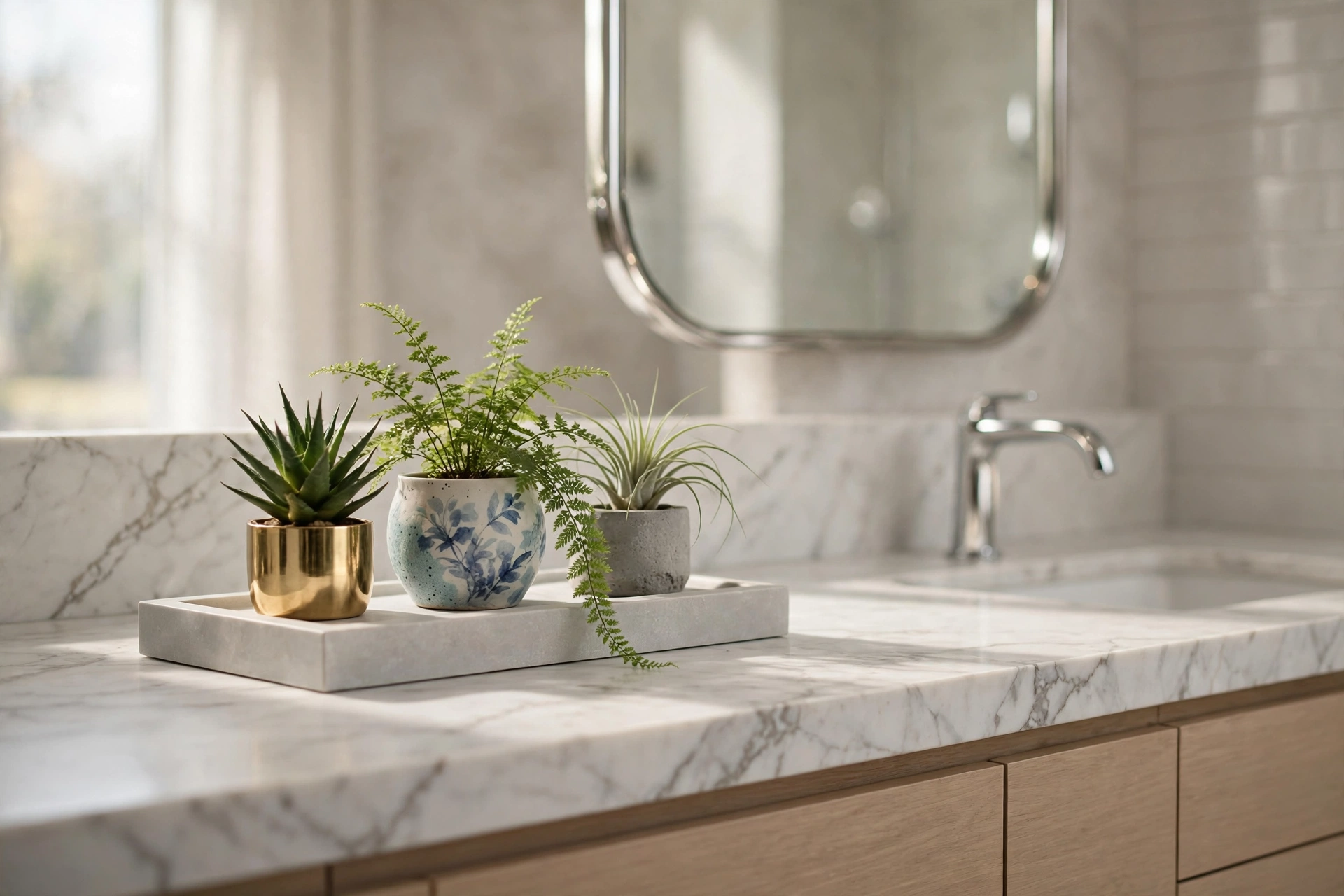
For those with limited surface area, miniature potted plants are the ultimate solution. Tiny air plants, miniature ferns, or, in a bright and well-ventilated bathroom, small succulents (constant humidity can rot them) can be arranged in small groupings that add character to a vanity without impeding your daily routine. The beauty of these small specimens lies in their intricate detail and the ability to cluster them in interesting ways.
Try arranging a trio of small, varying pots on a decorative tray. This creates a cohesive focal point that is easy to move if you need extra counter space for grooming essentials. Using a tray also protects your vanity surface from water rings and soil debris, keeping your bathroom looking pristine and organized. It is a simple, effective way to introduce life into a small, functional space.
When styling these miniatures, vary the shapes and heights. A spiky succulent paired with a soft, trailing air plant creates a dynamic visual balance. Because these plants are small, you can afford to be more experimental with your planter colors and textures—perhaps choosing a pop of metallic gold or a hand-painted ceramic to add a touch of personality. Just remember that smaller pots dry out faster than larger ones, so keep a close eye on their moisture levels to ensure they stay lush and healthy in the humid bathroom environment.
Air plants are the easiest miniature option because they need no soil at all — mount them on driftwood or in a glass terrarium and soak them once a week. For potted miniatures, a shallow dish with pebbles and water underneath raises local humidity without waterlogging the roots.
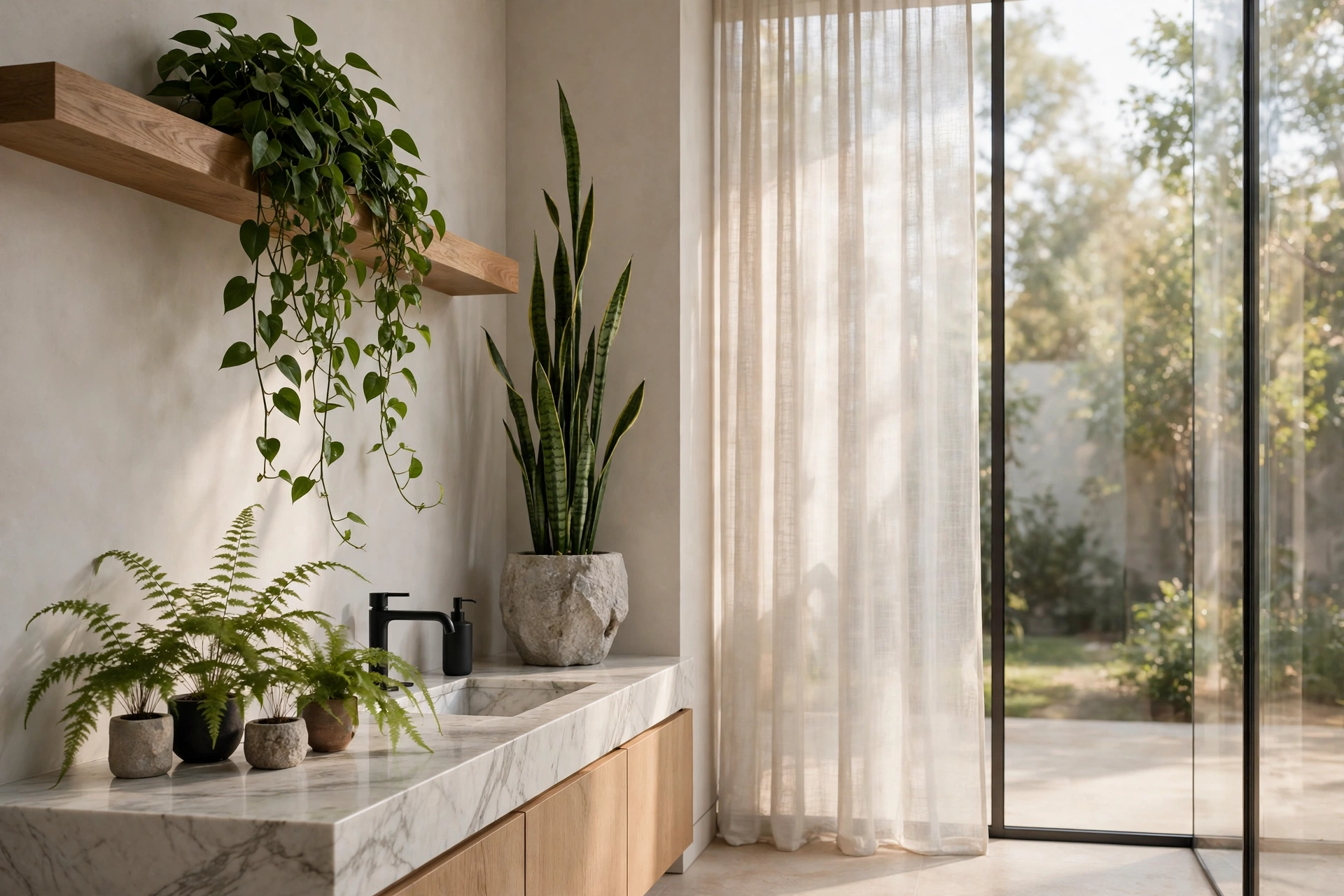
Incorporating Trailing Vines on Floating Shelves
Floating shelves are the ultimate canvas for bathroom plant decor, offering a vertical solution that keeps precious counter space clear. When you introduce trailing vines like Pothos or Philodendron, you instantly soften the hard, clinical lines of tile and porcelain. The cascading foliage draws the eye upward, creating a sense of height and lushness that feels intentional rather than cluttered.
For a sophisticated look, opt for matte ceramic or terracotta vessels that complement your bathroom’s color palette. If your hardware is brushed brass, pair it with earthy, unglazed pots to ground the space. For chrome or nickel fixtures, crisp white or charcoal planters offer a cleaner, more contemporary contrast. Always ensure your shelves are installed securely to support the weight of damp soil and foliage.
Placement is key for visual balance. Arrange your vines on the highest shelf to allow the tendrils to drape naturally, creating a living curtain effect. Avoid overstuffing the shelves; leave breathing room between pots to let the architectural lines of the shelving shine. This approach works exceptionally well in bathrooms with high ceilings or narrow wall segments that feel otherwise empty. To elevate the aesthetic, consider installing a dedicated picture light above the shelf to highlight the texture and vibrant green hues of the leaves once the sun goes down.
Trailing vines are what make a floating shelf look designed rather than cluttered: pothos, heartleaf philodendron and English ivy all trail gracefully, and a single vine pruned regularly becomes fuller than three leggy ones. Keep the shelf out of the shower’s splash line or the wood swells.

Designing a Biophilic Focal Point Around the Bathtub
Turning your bathtub into a biophilic sanctuary is the pinnacle of bathroom luxury. By clustering various plant heights and textures around the tub, you create a private garden retreat that invites deep relaxation. This design choice works best with freestanding tubs, where you can arrange greenery in a tiered formation to mimic the layered look of a natural forest floor.
Select moisture-loving varieties like Ferns or Peace Lilies to thrive in the inevitable steam of the bath. Use oversized planters for a dramatic statement on the floor, while smaller, sculptural plants can sit on a waterproof teak bath tray. The juxtaposition of dark, glossy leaves against a crisp white tub creates a high-contrast, high-end look that feels like a boutique hotel.
To prevent a chaotic appearance, stick to a cohesive color story. Use pots in varying shades of stone, concrete, or warm wood to maintain a grounded, organic feel. Lighting is crucial here; if natural light is limited, a low-profile, water-resistant LED light tucked behind the plants can create a moody, ethereal glow in the evening. A common mistake is crowding the tub edge to the point of impracticality; ensure you leave enough clearance for your bath products and ease of entry. This focal point transforms a utilitarian zone into a restorative wellness center, emphasizing a connection to nature that feels both refined and grounding.
A large plant by the tub needs bright indirect light to earn its place — bird of paradise and monstera give a resort feel, but both sulk in a dark room. If your tub sits under a window, that is the one spot in the bathroom where a big tropical can genuinely thrive.

Essential Drainage Practices for Damp Bathroom Conditions
In the humid environment of a bathroom, proper drainage is not just a suggestion—it is a necessity for plant health. Because bathrooms retain moisture, soil can stay saturated for longer than in drier rooms, leading to root rot. The most effective way to manage this is by ensuring every planter has a drainage hole, paired with a saucer that complements your decor style.
For an elevated look, use hidden saucers tucked inside decorative cachepots. This allows you to easily remove the inner pot for watering and drainage without ruining your aesthetic. If you are using planters without holes, create a drainage layer at the bottom using expanded clay pebbles or horticultural charcoal. This acts as a reservoir for excess water, keeping the roots elevated and preventing them from sitting in a stagnant pool.
When styling, choose saucers made of natural slate or stone to match high-end vanity materials. This adds a layer of texture that feels intentional rather than like an afterthought. A frequent mistake is assuming that because a plant loves humidity, it enjoys wet feet; always check the top inch of soil before watering. UConn Extension’s watering guidance agrees: feel for moisture about an inch below the surface, and empty any saucer or cachepot holding water within an hour or so of watering. If you notice a damp, musty smell, it is a sign that your drainage system is failing or the soil is too dense. Incorporating a well-draining, airy potting mix with perlite or orchid bark is a designer-approved trick to ensure your plants thrive while looking effortlessly chic in their decorative vessels.
Drainage is not optional in a bathroom: without holes, water pools at the roots and rot follows, even in a steamy room. A layer of pebbles under the pot helps, but it is no substitute for a hole — always lift the nursery pot out of its cachepot to empty it after watering.

Balancing Greenery with Minimalist Bathroom Decor
Achieving a minimalist aesthetic doesn’t mean sacrificing the warmth of nature. In fact, greenery is the perfect antidote to the cold, sterile feeling that can sometimes plague minimalist bathrooms. The secret lies in restraint; rather than creating a jungle, choose one or two high-impact, sculptural plants that serve as living art.
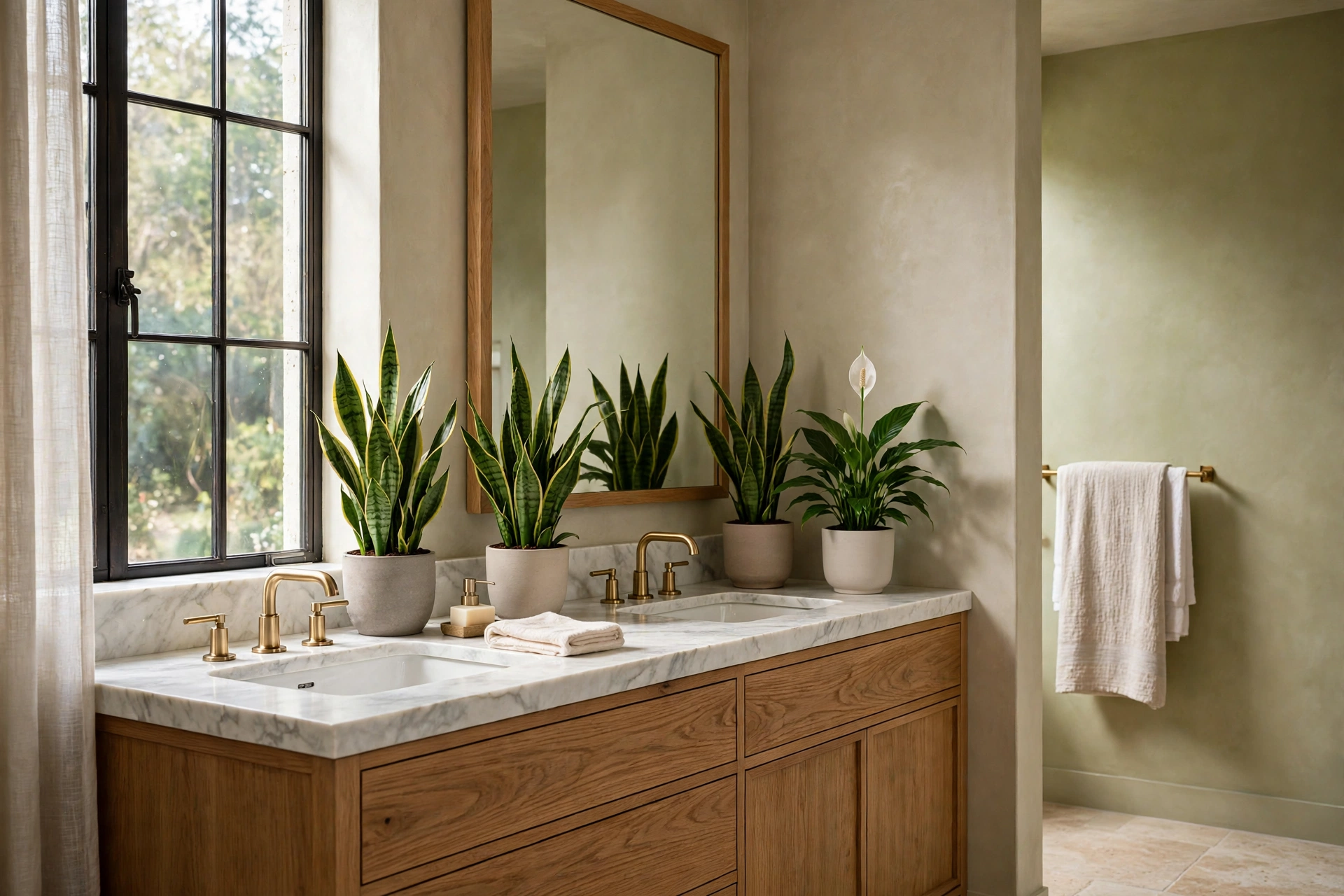
In a minimalist space, the planter itself becomes as important as the plant. Opt for sleek, monochromatic vessels in matte white, concrete grey, or black to maintain the clean lines of the room. A single, tall Sansevieria or a neatly pruned Fiddle Leaf Fig can anchor a corner, providing a vertical element that complements modern fixtures without adding visual clutter. The goal is to let the plant’s natural form—its architectural leaves or intricate patterns—be the focal point.
Avoid over-accessorizing around the plants. Let the greenery stand alone against a backdrop of subway tile or polished concrete. If your bathroom features a neutral color palette of whites, creams, and greys, the vibrant green of the foliage provides the only necessary pop of color. Lighting should be soft and diffused to accentuate the shadows cast by the leaves against the walls, adding depth to the room. By limiting your selection to high-quality, healthy specimens, you maintain an airy, uncluttered environment that feels sophisticated, intentional, and deeply restful.
One statement plant beats five small ones in a minimalist bathroom: a single cast-iron plant or a sculptural ZZ plant in a matte ceramic pot reads as intentional, while a crowd of small pots reads as clutter. The cast-iron plant is the honest choice here — it survives neglect, shade and temperature swings.

Utilizing Wall-Mounted Planters for Small Footprints
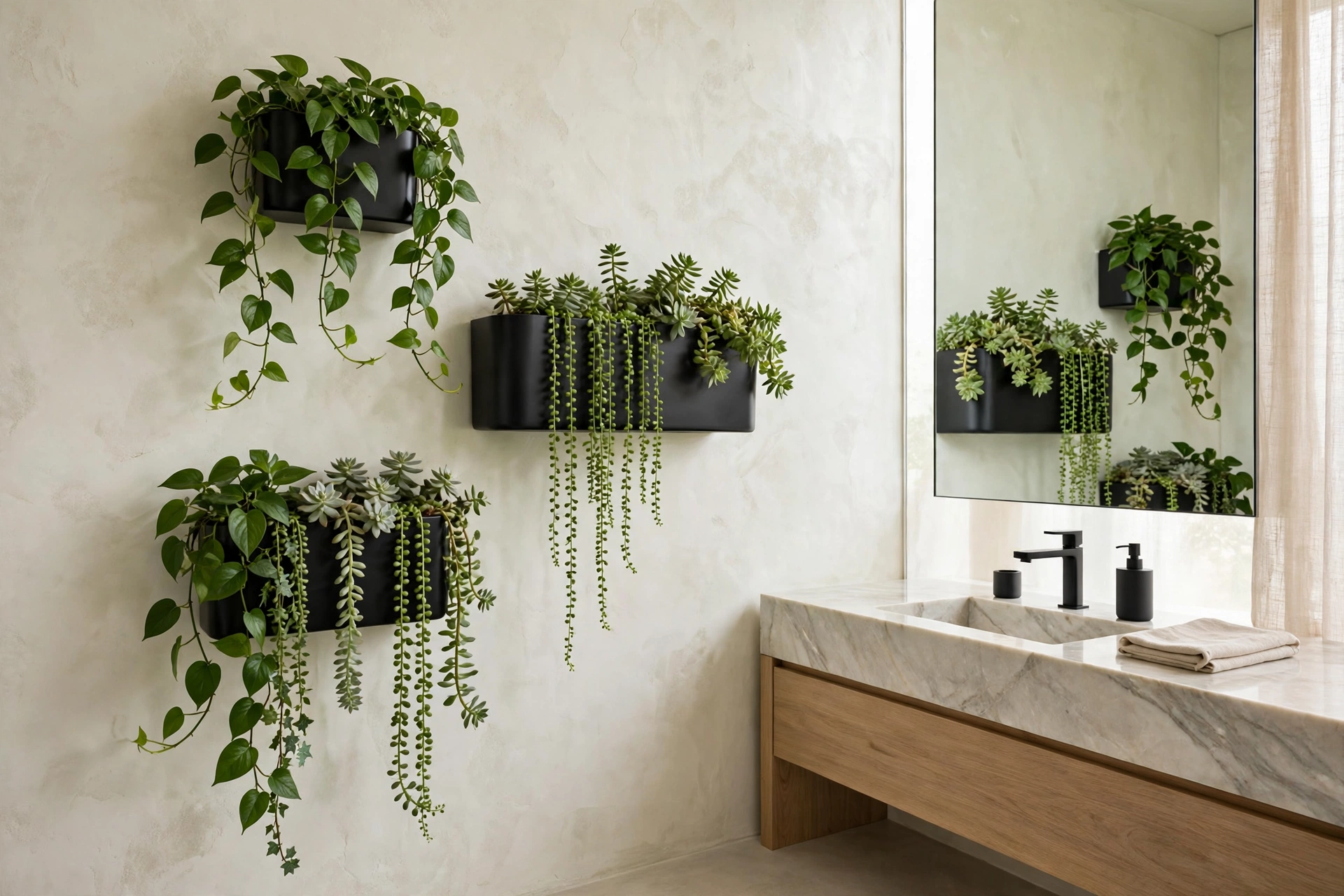
When floor and counter space are at a premium, look to your walls to introduce greenery. Wall-mounted planters are a sophisticated way to add depth and personality to a bathroom without sacrificing functionality. They act as vertical interest, drawing the eye up and making a small room feel significantly more expansive and thoughtfully designed.
For a high-end, gallery-like effect, choose wall planters made from polished brass, matte black metal, or organic ceramics. These materials elevate the hardware of the room, creating a cohesive design language. Grouping three or five planters in an asymmetrical arrangement can turn a blank wall into a living installation. This works beautifully above a vanity or alongside a mirror, where the reflection of the plants doubles the visual impact.
When selecting plants for wall planters, opt for trailing varieties or succulents that do not require deep soil beds. The weight of the planter is a primary consideration; ensure your mounting hardware is heavy-duty and appropriate for your wall surface, especially in high-humidity areas where adhesives may fail. A common mistake is placing wall planters too close to the shower spray, which can lead to overwatering. Aim for a spot that receives ambient humidity but stays relatively dry. This styling technique is particularly effective in powder rooms, where you can afford to be a bit more adventurous with your plant choices, creating a surprising and delightful moment of nature in an unexpected place.
Moisture-resistant wall planters above the toilet or vanity turn dead wall space into a garden, but choose self-watering models for anything you cannot reach weekly. Shallow containers prevent tipping on narrow surfaces, and a felt pocket planter needs a waterproof backing or the wall stains.
Caring for Plants in Windowless Bathroom Spaces
A windowless bathroom is not a death sentence for your plant decor. While natural light is ideal, many shade-tolerant species can thrive in lower-light conditions if managed correctly. The key is to select plants that are naturally adapted to the understory of a forest, such as ZZ plants, Snake plants, or certain varieties of Ferns, which are accustomed to limited sunlight.
To compensate for the lack of windows, you must be strategic with artificial lighting. Full-spectrum LED bulbs are a game-changer; they mimic natural sunlight and can be installed in vanity lights or recessed fixtures to provide the energy your plants need to photosynthesize. Position your plants as close to these light sources as possible without risking heat damage. If your bathroom has absolutely no light, consider a rotation system: keep two sets of plants and swap them every two weeks, allowing one set to recover in a brighter room while the other serves its duty in the bathroom.
Another designer-inspired tip is to use mirrors to amplify whatever light is available. Placing a plant in front of a large mirror can help bounce ambient light back onto the foliage, effectively doubling the light exposure. Be mindful of watering, as plants in windowless rooms grow more slowly and consume less water than those in sunlight; always check the soil moisture before reaching for the watering can. By selecting resilient varieties and using clever lighting hacks, you can maintain a lush, vibrant bathroom regardless of the architectural constraints.
The Royal Horticultural Society is blunt about this: bathrooms with no windows are not suitable for growing live plants long-term, because no plant thrives indefinitely in total darkness. The workable compromise is rotation — move plants to a brighter room every few weeks to recharge — plus a full-spectrum LED on a 12-hour timer.

Pairing Natural Textures with Modern Bathroom Hardware
The juxtaposition of organic textures against sleek, modern hardware is what gives high-end bathroom design its depth. To master this, pair the raw, earthy feel of plant life with your choice of metal finishes. If your bathroom features polished chrome or matte black hardware, look for planters with smooth, refined finishes like glazed ceramic or polished stone to create a polished, cohesive look.
Conversely, if your space leans into warmer tones like unlacquered brass or copper, embrace textures that celebrate the handmade. Woven seagrass baskets, terracotta pots, or carved wooden planters add a layer of warmth that prevents the bathroom from feeling too cold or industrial. The contrast between the cool, hard metal of a faucet and the soft, organic veins of a leaf is a classic design tension that works every time.
When styling, ensure the scale of your plant is proportional to the hardware. A delicate, spindly plant may look lost next to heavy, oversized vanity pulls, while a massive, leafy plant could overwhelm a petite faucet. Balance is found by repeating the color of your metal hardware within the plant’s container. For instance, a brass-rimmed planter ties perfectly into brass cabinet hardware, creating a sense of intentionality that feels curated by a professional. Avoid mixing too many different metal finishes in one room; pick one hero metal and let your plant decor support that choice through subtle material cues. This thoughtful layering of textures creates a space that feels lived-in, luxurious, and timeless.
Brass and terracotta warm a bathroom in a way chrome never does, and both look better against green: a brass faucet beside a trailing pothos, or a terracotta pot under a matte black sconce, gives the room a layered, collected feel. Keep the metal finish consistent across faucet, handles and light fittings.
Managing Humidity Levels to Prevent Common Plant Issues
Humidity is the double-edged sword of bathroom gardening. While most tropical plants crave the moisture created by your shower, excessive, stagnant humidity can encourage mold on the soil surface and invite pests like fungus gnats. The secret to success lies in air circulation. Even in a small bathroom, keeping the air moving is the best way to keep your plants healthy and your space fresh.
The EPA’s mold guidance recommends keeping indoor humidity between 30 and 60 percent and venting bathrooms to the outside. If your bathroom has an exhaust fan, running it for about 20 minutes after each shower is a common rule of thumb to keep moisture from lingering on the leaves. If you don’t have a fan, leave the door cracked to encourage natural airflow. When you notice signs of mold on the soil, simply scrape off the top layer and replace it with fresh, dry soil or a decorative layer of pebbles, which helps the soil surface dry out faster.
To prevent pests, avoid overcrowding your plants. When they are jammed together, humidity gets trapped in the foliage, creating the perfect breeding ground for insects. Give each plant its own breathing room. If you notice any signs of infestation, act quickly by wiping the leaves with a mild neem oil solution. A common mistake is misting plants in a bathroom; it is rarely necessary and often leads to fungal issues on the leaves. Instead, let the natural steam do the work. By prioritizing airflow and maintaining clean, well-spaced plants, you create a healthy, thriving ecosystem that adds beauty to your daily routine without the burden of constant maintenance issues.
Aim for 40 to 60 percent relative humidity — a regularly used bathroom reaches it naturally during showers, but a guest bathroom may stay much drier. Run the exhaust fan at 50 cfm for at least 20 minutes after a shower: still, damp air is what turns a bathroom into a mold problem, not the plants themselves.

Creating a Cohesive Look with Layered Botanical Heights
To achieve a professional, layered look in your bathroom, you must think vertically. Staggering the heights of your plants creates visual movement and prevents the space from feeling static. I recommend placing a tall, architectural plant like a Snake Plant or a Fiddle Leaf Fig in a corner to draw the eye upward, then pairing it with trailing Pothos on a higher shelf and smaller, delicate ferns on the vanity. This variety in height mimics the natural stratification of a forest floor, making the space feel organic rather than cluttered.
When styling, aim for a sense of balance. If your bathroom features a minimalist aesthetic, choose one statement plant to serve as the focal point, then layer in smaller, unified pots to anchor the look. If you prefer a maximalist, lush vibe, use varying textures of leaves—such as the waxy sheen of a Philodendron against the feathery texture of a Maidenhair fern—to add depth. Avoid placing too many plants of the same height, as this disrupts the visual rhythm of the room. Always consider your lighting; use elevated stands for plants that need closer proximity to windows, and let trailing varieties cascade from wall-mounted hooks or high shelves. This approach creates a sophisticated, curated sanctuary that feels intentionally designed.
Three heights make a display look designed: a floor plant, a shelf plant and a hanging plant, with the tallest at the back. Repeat one pot colour across all three levels and the grouping reads as a single composition instead of three separate purchases.
Safe Integration of Greenery Near Shower Spray
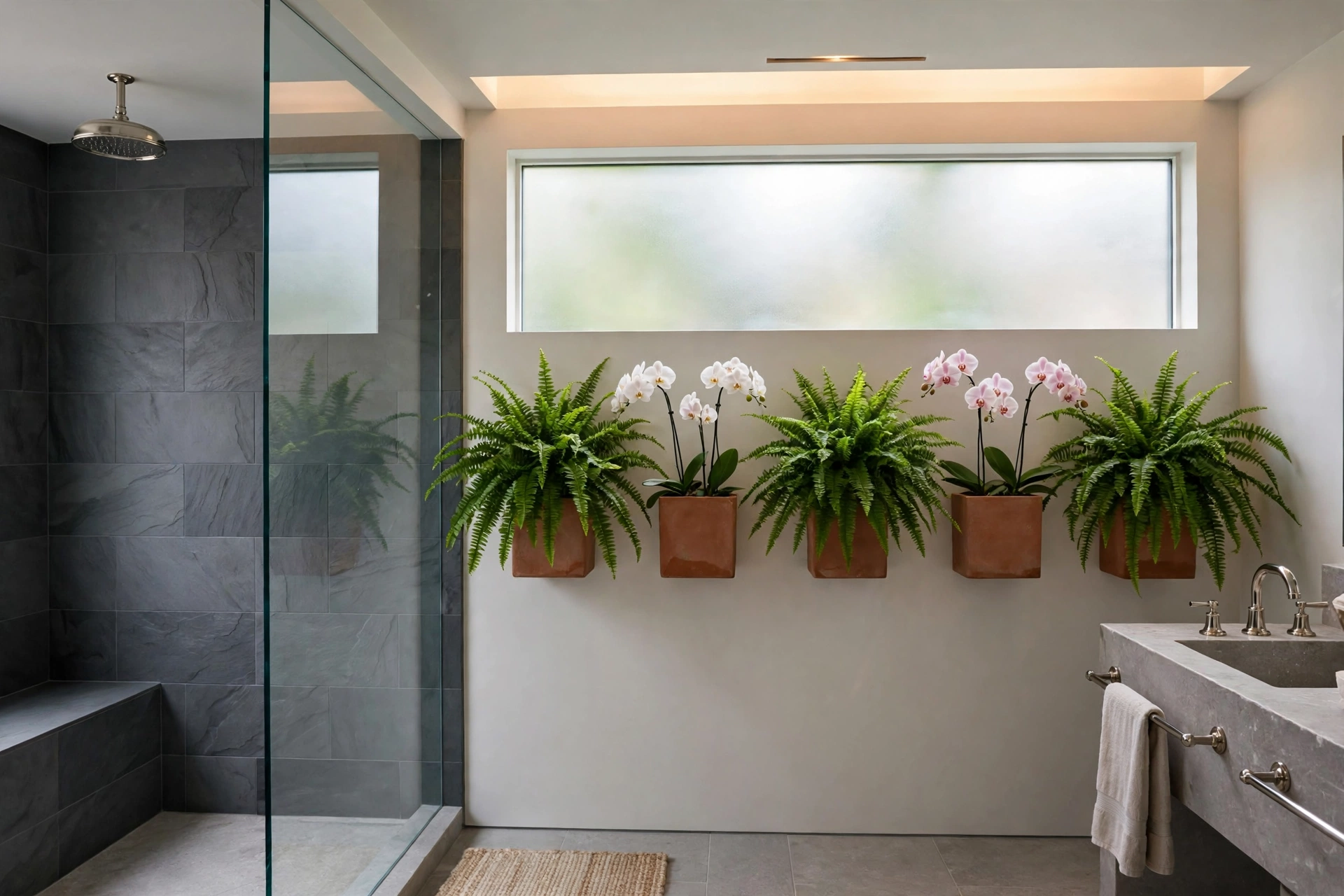
Bringing nature into the shower zone is the ultimate way to create a spa-like retreat, but it requires careful species selection. Plants situated near the shower spray must be true moisture-lovers that thrive in high humidity and can handle the occasional splash of water. Ferns, such as the Boston or Bird’s Nest, are ideal candidates because they crave the damp, indirect-light environment typical of a shower area. Orchids also perform beautifully here, as they enjoy the steam and mimic their natural tropical habitats.
To ensure success, avoid placing plants directly in the path of a high-pressure shower head, as constant water accumulation on leaves can lead to fungal issues or root rot. Instead, mount them on the wall opposite the spray or utilize a tension rod to suspend them safely away from the direct water stream. Use breathable, moisture-wicking pots made of terracotta or unglazed ceramic to allow the soil to dry out between showers. A common mistake is over-watering plants in this zone; remember that the humidity provides significant hydration, so check the soil moisture frequently before adding more water. If your shower area lacks natural light, consider installing a full-spectrum grow light tucked discreetly into the ceiling or wall sconces to keep your foliage vibrant and healthy year-round. If you are planning the shower itself, our luxury rain shower ideas cover fixtures and layouts that pair well with greenery.
Keep greenery six inches clear of the spray line and rinse leaves weekly to wash off soap residue. A shower caddy planter is the safest bet — the plant gets steam without standing water — while anything planted directly in the shower floor will drown.
Selecting Breathable Decorative Pots for Bathroom Use
In the bathroom, the container is just as important as the plant itself. Because of the high-moisture environment, you need pots that facilitate proper airflow to the root system. Terracotta is a designer favorite for this reason; its porous nature allows the soil to breathe and excess moisture to evaporate, preventing the dreaded root rot that often plagues bathroom greenery. If you prefer the look of glazed ceramic or stone for a more polished, luxury aesthetic, ensure you use a plastic nursery liner inside the decorative pot. This allows you to easily remove the plant for watering and ensures the outer vessel doesn’t trap standing water.
For a cohesive design, match your pots to your bathroom hardware. If you have matte black faucets and fixtures, consider charcoal-toned concrete or dark ceramic pots to create a refined, modern look. For spaces with brushed brass or polished nickel, warm stone or white ceramic containers provide a classic, airy contrast. Avoid plastic pots that lack adequate drainage holes, as these are the primary culprits for plant failure in bathrooms. If you fall in love with a beautiful, non-draining vessel, use it as a cachepot and keep the plant in its original nursery pot, placing a layer of rocks at the bottom of the decorative container to elevate the plant above any potential water accumulation. This simple styling trick ensures your decor remains both beautiful and functional. For handmade options, browse our unique clay pottery ideas.
Terracotta is the most breathable pot material and the best defence against root rot in a humid room, while glazed pots suit moisture-lovers like ferns. The umbrella plant is the exception that proves the rule: it likes its pot standing in a centimetre of water, topped up only as needed.

Do Bathroom Plants Improve Air Quality? What the Research Says
Plants make a bathroom feel fresher and more restful, but they are not air purifiers. Drexel University researchers who reviewed a dozen published studies concluded that potted plants remove airborne compounds far too slowly to compete with the normal air exchange in a building, which is why they describe the air-purifying claim as a misconception. The practical takeaway is to buy plants for beauty, texture and the calm they create, and to rely on ventilation for the air itself.
That still leaves plenty of design value. A small grouping of three to five plants near the vanity or the bathroom door reads as a deliberate green focal point, and in a smaller space a single large-leafed Monstera can make a bold statement on its own. Place plants where they receive at least some indirect light, since photosynthesis keeps them healthy, and if your bathroom is completely windowless, rotate them every few weeks into a brighter room to recharge. For fresher air, run the exhaust fan and keep humidity in check, as covered in the humidity section above.
The Drexel University review is worth repeating because it surprises most people: potted plants do not measurably clean indoor air in real rooms — you would need hundreds per room. Buy bathroom plants for humidity, beauty and the calm they bring to a morning routine, not for purification.
Curating a Wellness-Focused Sanctuary with Foliage
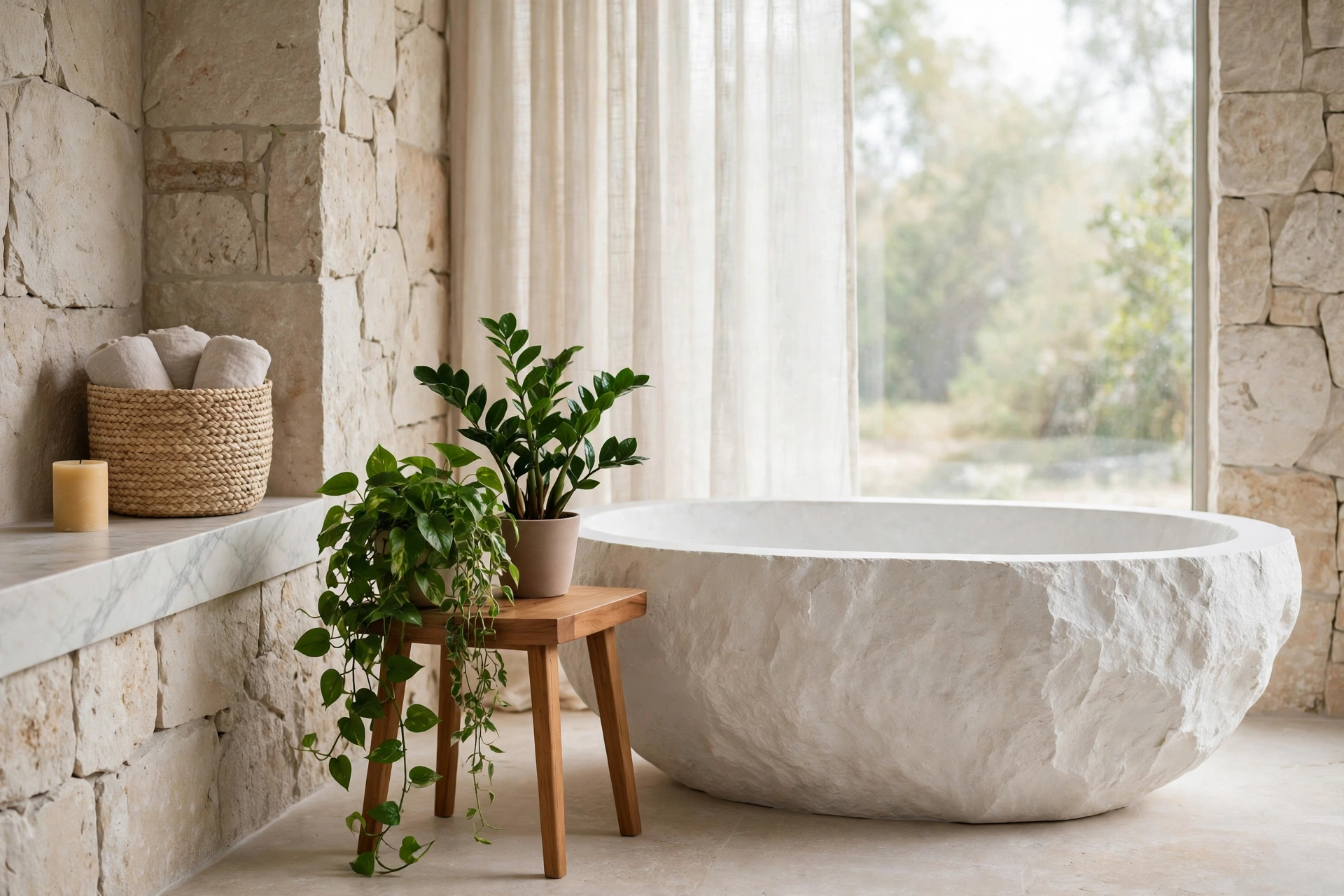
Transforming a functional bathroom into a wellness sanctuary is all about intention. The goal is to create a space that promotes relaxation, and foliage is the essential bridge between the sterile nature of tiles and the softness of a living home. Start by grouping plants with similar care needs to create ‘micro-climates’ that feel like a private garden. Adding a touch of greenery near the bathtub—perhaps a trailing ivy or a sturdy ZZ plant on a stool—softens the hard edges of the porcelain and creates a calming focal point while you soak.
Color plays a vital role in this curation. Green acts as a neutral in design, pairing beautifully with almost any palette, whether you have a moody, dark-tiled room or a bright, white-washed space. For a serene, spa-like atmosphere, stick to monochromatic green tones and pair your plants with natural textures like teak wood, woven baskets, or raw stone. These elements reinforce the biophilic connection, grounding the space in nature. Avoid introducing too many vibrant, artificial colors in your pots or accessories, as this can distract from the soothing presence of the plants. Instead, let the varied shades of emerald, lime, and forest green take center stage. When you treat your bathroom like a living room, adding a small piece of artwork or a candle alongside your plants, you elevate the experience from a routine chore to a daily ritual of renewal. For more ways to warm up the room around your greenery, see our cozy bathroom ideas.
Scent is the missing layer in most bathroom gardens: a eucalyptus bundle hung from the shower head releases its oil in the steam, and a lavender plant on a sunny sill perfumes the room without any plug-in. Both are low-effort additions that make the sanctuary claim real.
Maintenance Tips for Long-Term Bathroom Plant Success
The secret to long-term success with bathroom plants lies in observing their behavior rather than following a strict watering schedule. Because humidity levels fluctuate with your daily routine, you should always check the soil moisture with your finger before adding water. Most tropical plants prefer to have the top inch of soil dry out between waterings. Additionally, bathrooms can be magnets for dust; regularly wipe the leaves with a damp cloth to allow the plant to breathe and photosynthesize efficiently. This simple habit also keeps your plants looking vibrant and prevents pests from settling in.
If you notice yellowing leaves or wilting, it is often a sign of poor drainage or insufficient light. Since bathrooms are often darker than living rooms, don’t be afraid to supplement with high-quality LED grow lights that are designed to look like standard bulbs; they are a game-changer for plant health. Another common mistake is neglecting to fertilize. Your plants are in a confined environment and rely on you for nutrients, so use a gentle, organic liquid fertilizer during the growing season. Finally, be mindful of temperature. If your bathroom gets very cold at night, move your more delicate tropicals to a warmer spot. By monitoring these small details, you ensure that your botanical decor remains a thriving, lush feature of your home rather than a temporary accent. Consistent, gentle care is the hallmark of a true design enthusiast. For deeper light and care guidance, our indoor plant styling and care guide goes further.
Feed only in the growing season, from spring to early autumn, and halve the label dose for bathroom plants — the steam already slows evaporation, so fertiliser salts build up faster. Repot when roots circle the pot, usually once a year, and always use fresh, free-draining mix.

Which Bathroom Plant Setup Fits Your Space? A Quick Decision Guide
Choose by light and layout first, then style. This table points each common bathroom situation to the most relevant sections above.
Budget note: spend on one good statement planter and on drainage, and save by keeping plants in inexpensive nursery pots inside decorative cachepots, as described in the drainage section.
| Your bathroom | Best approach | Go to |
|---|---|---|
| Windowless or very dim | ZZ or Snake Plant with a full-spectrum LED, rotated into brighter rooms | Windowless care, Low-light plants |
| Small bathroom or powder room | Wall planters, floating shelves and a few miniatures | Vertical gardening, Wall planters, Miniatures |
| Bright bathroom with a window | Ferns, orchids or a Monstera on a pedestal stand | Placement, Humidity lovers |
| Freestanding tub | Tiered planting beside the tub | Tub focal point, Stone and greenery |
| Walk-in shower | Hanging plants kept clear of direct spray | Shower canopy, Near the spray |
| Minimalist design | One sculptural plant in a plain vessel | Minimalist balance |
| Pets in the home | Out-of-reach placement and pet-aware plant choices | Pet safety |
Are Bathroom Plants Safe for Cats and Dogs?
Many of the most popular bathroom plants are not pet-safe. The ASPCA lists Pothos, Peace Lily, ZZ plant, Philodendron and Monstera among common houseplants that contain insoluble calcium oxalate crystals. If a pet chews them, the crystals cause mouth irritation, drooling and sometimes vomiting, though the ASPCA describes the severity as low and says many exposures can be managed at home.
If pets can reach your bathroom, place these plants on high shelves, in wall-mounted or hanging planters, or in a room your pets cannot enter, or favor plants commonly listed as non-toxic, such as Boston fern, after confirming each one with the ASPCA or your veterinarian. If your pet has chewed a plant, contact your veterinarian or ASPCA Poison Control at (888) 426-4435.
Propagating Bathroom Plants for Free
The fastest way to fill a bathroom with plants is to grow your own from the ones you already have. Pothos and heartleaf philodendron root in a glass of water within two weeks — snip a stem just below a leaf node, strip the lower leaves, and set it in water on the windowsill. Spider plants are even easier: the plantlets dangling from a mother plant root the moment they touch soil. Snake plants propagate from a single leaf cut into three-inch sections, left to callus for a day, then pushed into moist mix — slow, taking two months, but one leaf becomes five plants. Division works for peace lilies and ferns: split the root ball when you repot, and each half becomes a full plant within a season. The Angi guide to bathroom plants lists the species that propagate most reliably, and our indoor plant ideas for living rooms show where the spare cuttings can go once the bathroom is full.
Start cuttings in spring, when growth is fastest, and keep the water fresh — change it weekly or it turns cloudy and the stem rots. Once roots reach two inches, pot the cutting in free-draining mix and keep it humid for the first fortnight. A propagated plant is already adapted to your bathroom’s light and humidity, which is why cuttings from a thriving bathroom plant outperform shop-bought ones.
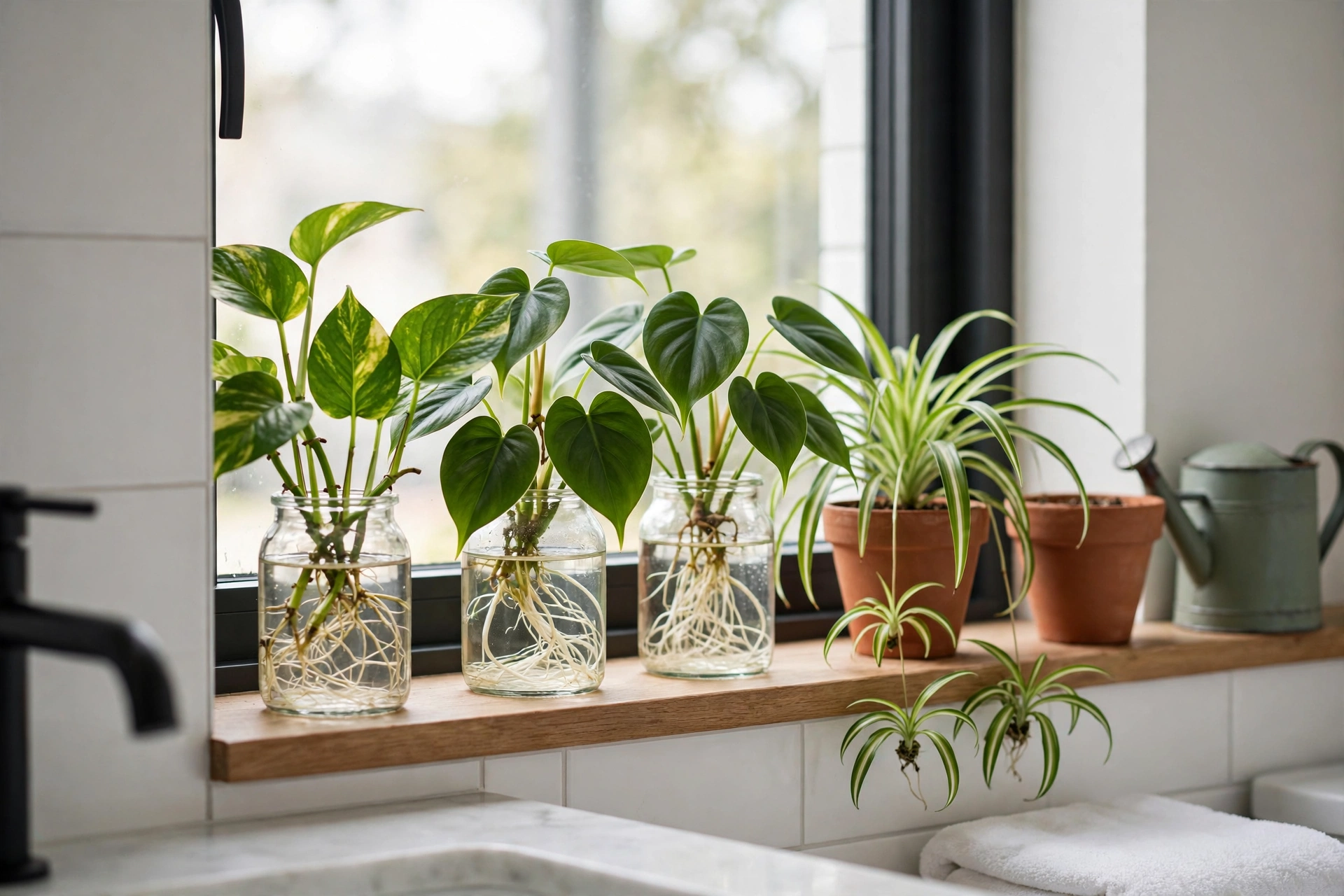
Grouping Plants to Create a Humid Microclimate
Plants grouped together raise the humidity around themselves: each leaf transpires moisture, and a tight cluster traps it, creating a microclimate several percent more humid than the room around it. That is why a shelf of five plants thrives where a single plant on the same shelf struggles. Group three to five plants with similar needs — ferns, calatheas and peace lilies together, snake plants and ZZ plants together — and the group becomes self-supporting. Set the group on a pebble tray filled with water just below the pot bases, and the evaporation adds another few percent. Keep the grouping near the shower’s steam zone but out of the direct spray, and leave a hand’s width between pots so air still circulates — a packed cluster without airflow is where mold starts. The Royal Horticultural Society explains why matching a plant to its wild habitat matters more than any gadget, and our cozy bathroom ideas show grouped greenery warming a whole room.
Start with the tallest plant at the back and the trailing one at the front, so every leaf gets light. If one plant in the group starts dropping leaves, move it out before it stresses its neighbours — a struggling plant in a humid cluster is the first place pests settle.

Bathroom Plants by Light: A Quick Comparison
| Plant | Light it needs | Watering | Pet-safe? |
|---|---|---|---|
| Snake plant | Low to bright | Every 3–6 weeks | No (ASPCA) |
| ZZ plant | Very low | Every 4–6 weeks | No (ASPCA) |
| Pothos | Low to bright indirect | Every 1–2 weeks | No (ASPCA) |
| Peace lily | Low to medium | Weekly | No (ASPCA) |
| Boston fern | Bright indirect | 2–3 times a week | Yes |
| Spider plant | Medium to bright indirect | Weekly | Yes |
| Bird’s nest fern | Medium indirect | Weekly | Yes |
| Calathea | Bright indirect | Weekly, keep moist | Yes |
5 Mistakes to Avoid with Bathroom Plants
- Buying for looks, not light. A plant that needs bright indirect light will die in a windowless bathroom no matter how much you water it — test the light first, then choose.
- Pots without drainage. The most common killer in a steamy room is root rot from standing water, not dryness. Every pot needs a hole, and every saucer needs emptying.
- Watering on a schedule. Water by soil moisture, not by calendar — push a finger an inch into the soil and water only when it feels dry.
- Believing the air-purifying claim. Potted plants do not measurably clean indoor air in real rooms (Drexel University). Enjoy them for humidity, beauty and calm instead.
- Forgetting the fan. Still, damp air grows mold faster than any plant does. Run the exhaust fan for at least 20 minutes after every shower.
Frequently Asked Questions
How do I know if my bathroom has enough light for plants?
Try the shadow test at midday: a sharp shadow means bright indirect light, a soft shadow means medium light, and no shadow means low light. Most bathrooms sit in the low-to-medium range, so snake plants, ZZ plants and pothos are the safe first picks.
Will bathroom plants attract pests or mold?
Healthy plants in a ventilated bathroom rarely cause pests or mold, but soggy soil and still air invite both. Always use pots with drainage holes, empty saucers after watering, and run the fan for at least 20 minutes after a shower to keep surfaces dry.
Should I use decorative pots with or without drainage holes?
Always choose pots with drainage holes, or use a plain nursery pot with holes inside a decorative cachepot. Without drainage, water pools at the roots and causes rot — the most common reason bathroom plants die, even in a room full of steam.
Can I place plants directly inside the shower area?
Only plants that love constant moisture belong near the shower, and even they should sit just outside the direct spray. A hanging fern or pothos in the steam zone thrives, but soap and shampoo splashes damage leaves, so rinse the foliage weekly.
How do I keep my bathroom plants looking clean and dust-free?
Wipe large leaves with a damp cloth every two weeks and rinse small-leafed plants under the shower on a gentle setting. Dust blocks light and invites pests, so clean leaves are not cosmetic — they are how the plant breathes and photosynthesises.
Which bathroom plants are safe for cats and dogs?
Boston ferns, spider plants, parlor palms and calatheas are non-toxic to cats and dogs according to the ASPCA. Snake plants, ZZ plants, pothos and peace lilies are toxic if chewed, so keep those on high shelves or in rooms your pets cannot reach.
Do bathroom plants purify the air?
No — a Drexel University review found that potted plants do not measurably improve indoor air quality in real rooms, because you would need hundreds of plants per room. Their real benefits are humidity, beauty and wellbeing, not air purification.
How humid should a bathroom be for plants?
Most tropical bathroom plants prefer 40 to 60 percent relative humidity, which a regularly used bathroom reaches naturally during showers. Below 40 percent, leaf tips brown; above 70 percent for long periods, mold risk rises, so ventilation matters as much as steam.
How often should I water bathroom plants?
Water by soil moisture, not by calendar: push a finger an inch into the soil and water only when it feels dry. In a steamy bathroom that may mean every two to three weeks for snake plants and ZZ plants, and weekly for ferns and peace lilies.
Can succulents live in a bathroom?
Most succulents struggle in bathrooms because they need bright light and dry air, the opposite of a steamy room. Aloe vera can work on a sunny windowsill with fast-draining soil, but in a windowless bathroom a snake plant or ZZ plant is the safer choice.
Conclusion
Transforming your bathroom into a lush, spa-like sanctuary is an achievable goal that blends natural beauty with sophisticated interior design. By selecting the right humidity-loving species and utilizing vertical space, you can create a refined environment that promotes daily wellness and relaxation. Whether you choose to start with a single trailing vine on a floating shelf or a curated collection of potted plants around the tub, the addition of greenery will instantly elevate the atmosphere of your space.
We encourage you to begin by assessing your bathroom’s specific light and moisture levels, then selecting one or two plants that align with those conditions. As you become more comfortable with their care, these bathroom plant decor ideas let you layer in more textures and heights to build your own personal oasis. With a thoughtful approach to placement and maintenance, your bathroom will soon become the most serene and restorative room in your home.