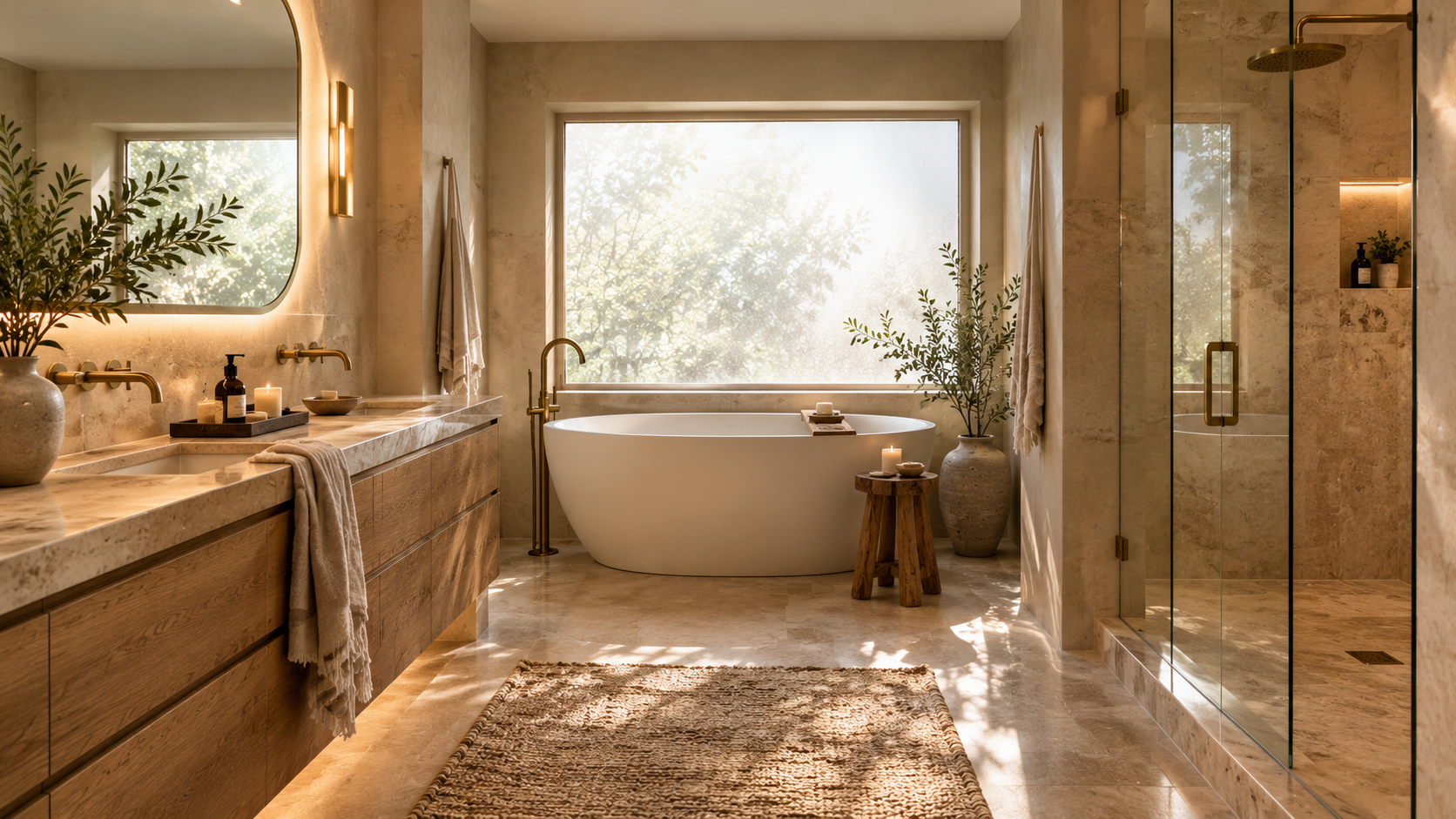
Cozy bathrooms in 2026 are moving beyond the traditional idea of softness created by candles, fluffy towels, and neutral tiles. The more compelling approach is architectural: warmth comes from tactile stone, timber, softly curved forms, layered lighting, quieter colors, and layouts that make everyday routines feel considered rather than purely functional. Contemporary bathrooms are increasingly being treated as intimate rooms with atmosphere and personality rather than purely service spaces.
The strongest cozy schemes also avoid looking overly decorated. A restrained material palette, furniture-like vanity, sculptural mirror, warm metal, and carefully positioned lighting can create considerably more character than a room filled with accessories. Natural materials such as wood, stone, travertine-inspired surfaces, textured porcelain, and mineral-toned finishes are particularly effective because they soften the inherently hard surfaces of a bathroom.
Lighting is equally important because coziness depends as much on atmosphere as appearance. Instead of relying on a single bright ceiling fixture, contemporary schemes benefit from a combination of functional illumination, diffused mirror lighting, recessed accent lighting, and warmer ambient sources that can be dimmed when the bathroom becomes a place to unwind.
The following ideas take that approach in different directions, ranging from compact bathrooms and Japanese-inspired retreats to richly colored spaces, character-filled vintage schemes, sculptural stone rooms, and highly practical small-space solutions.
Idea 1: A Warm Oak Vanity Against Soft Limestone
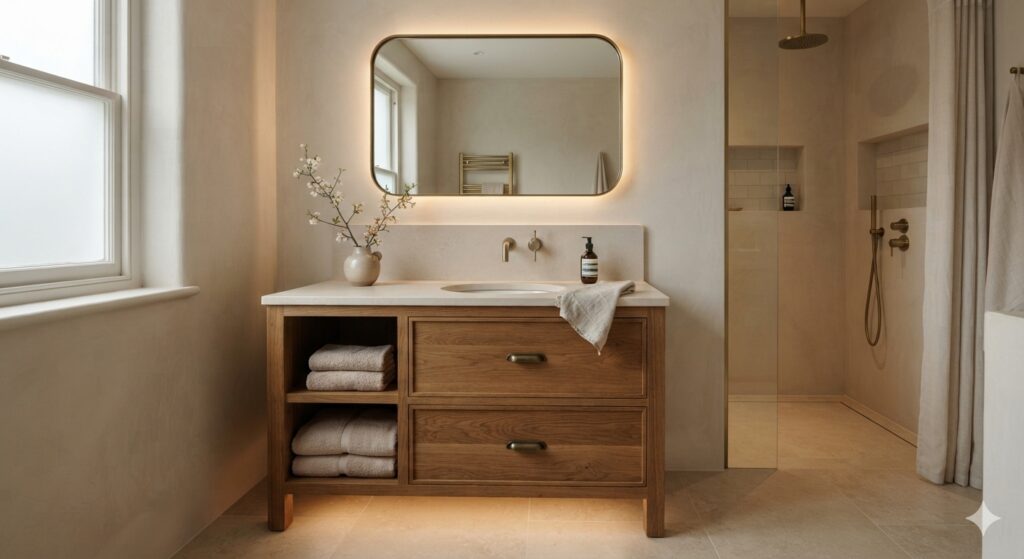
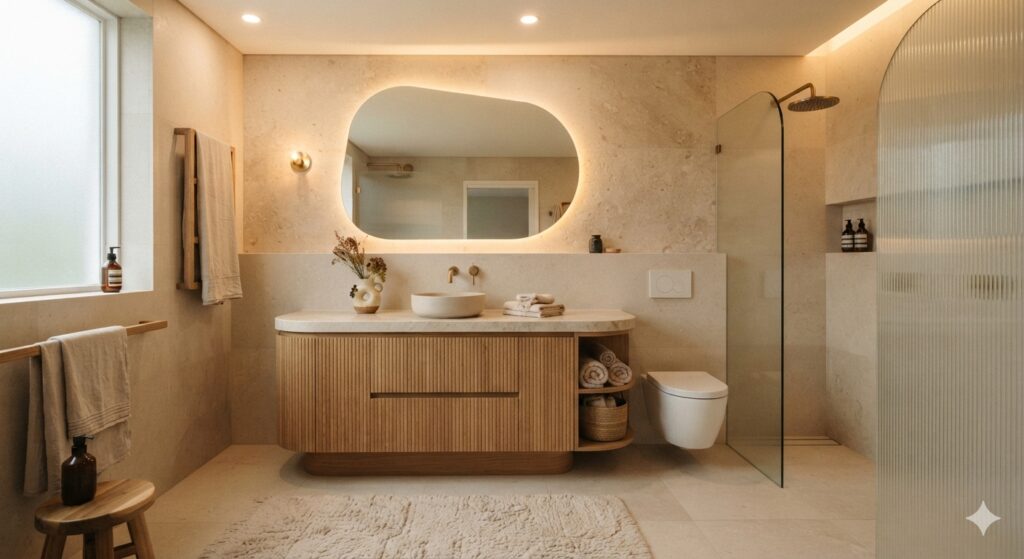
Natural oak immediately changes the emotional temperature of a bathroom by introducing the visual language of furniture into a room dominated by ceramic, glass, and metal. Pair a simple oak vanity with creamy limestone-look porcelain, softly veined stone, and an off-white wall finish to create a quiet palette that feels warmer than conventional white bathrooms. A slightly rounded vanity profile can soften the geometry further while brushed brass or aged-bronze hardware adds a subtle crafted detail.
Keep the countertop visually quiet so the timber remains the main source of warmth. Install diffused lighting beneath the vanity and around the mirror rather than relying exclusively on bright overhead illumination. Choose a durable wood finish designed for humid environments and keep decorative objects limited to a ceramic vessel, folded linen towels, and one small branch.
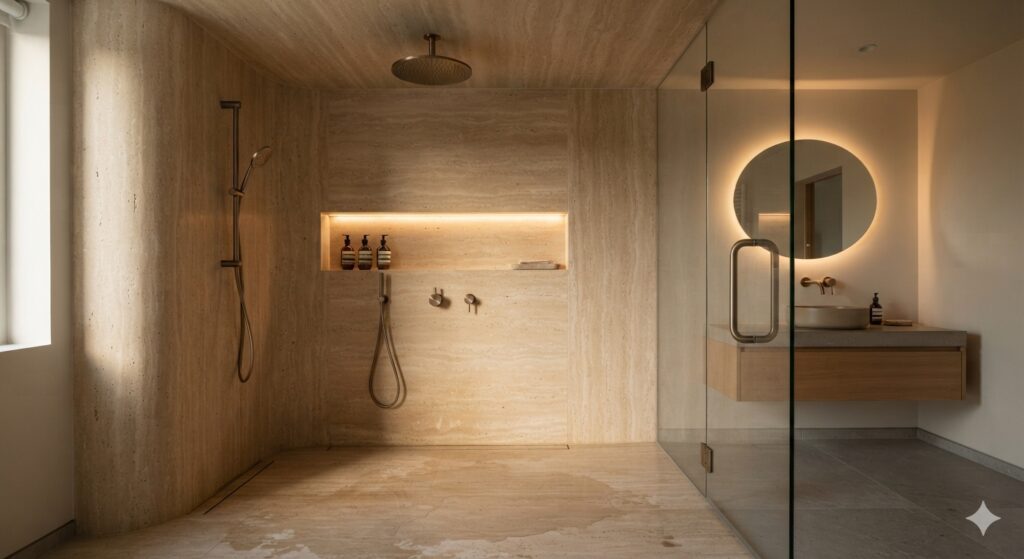
Idea 2: The Cocooned Shower Niche
Turn the shower into a visually enclosed retreat by wrapping its walls and ceiling in the same warm-toned stone or textured porcelain. A recessed niche with integrated lighting can create a small architectural focal point without adding shelves or unnecessary accessories. Soft beige, mushroom, sand, and pale taupe tones make the enclosure feel more like a calm architectural chamber than a conventional shower cubicle.
Use frameless glass only where necessary so the material continuity remains visible from outside the shower. A rainfall shower paired with a handheld fitting improves functionality while maintaining the clean composition. Keep the niche deliberately edited with only the products used every day, because visual clutter quickly undermines the cocooning effect.
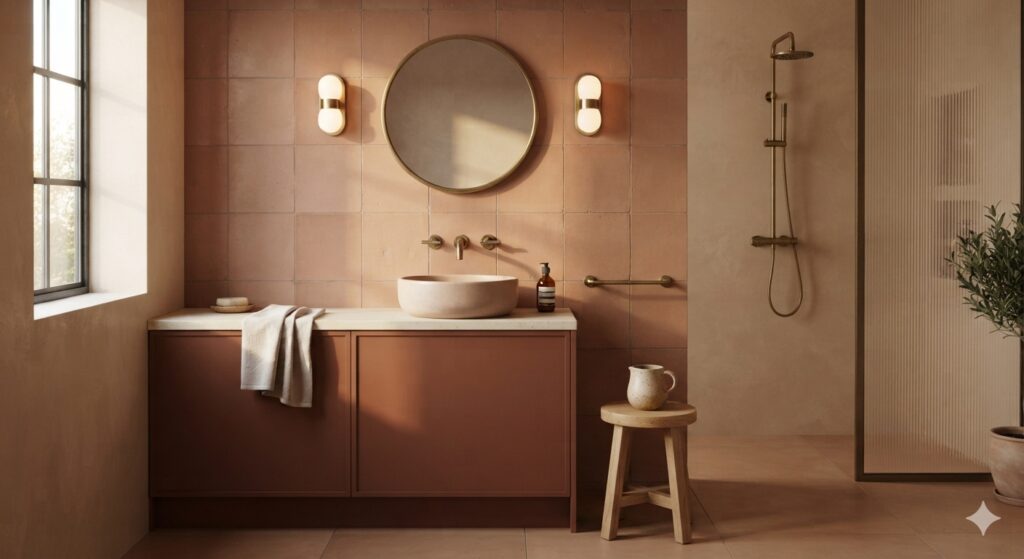
Idea 3: A Deep Terracotta Bathroom
Terracotta can make a bathroom feel surprisingly intimate when used as a sophisticated mineral color rather than a rustic theme. Use muted clay tiles, warm plaster-colored walls, and a darker terracotta vanity to create depth while keeping the overall scheme contemporary. Pale limestone, ivory ceramics, and aged brass provide enough contrast to prevent the room from becoming visually heavy.
Introduce the color through large-format tile or a carefully selected wall rather than covering every surface with small decorative tiles. Warm lighting will intensify the earthy character, so use dimmable fixtures and concealed illumination around architectural details. Natural wood accessories and woven textiles can reinforce the palette without turning the bathroom into a themed space.
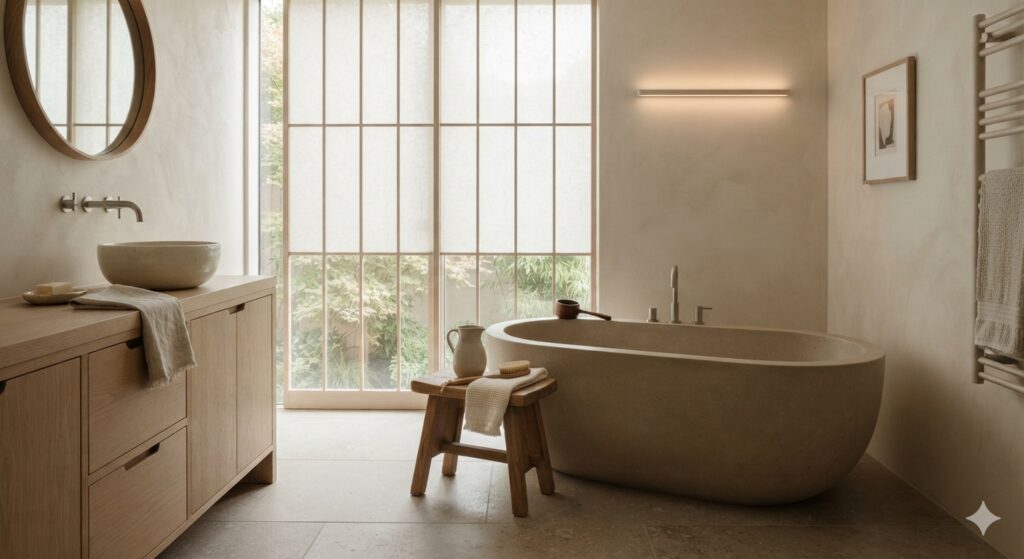
Idea 4: A Japandi Soaking Retreat
A Japandi-inspired bathroom can create coziness through restraint, proportion, and tactile materials rather than decoration. Combine pale oak, honed stone, warm gray plaster, a simple freestanding soaking tub, and a low wooden stool to establish a calm composition with plenty of visual breathing room. Rounded forms and natural textures prevent the minimalist architecture from feeling severe.
Position the bathtub where natural daylight can reach it without compromising privacy. Use a combination of soft wall lighting and concealed illumination to create a more intimate evening atmosphere. Storage should be almost entirely concealed so towels, toiletries, and cleaning products do not interrupt the room’s quiet visual rhythm.
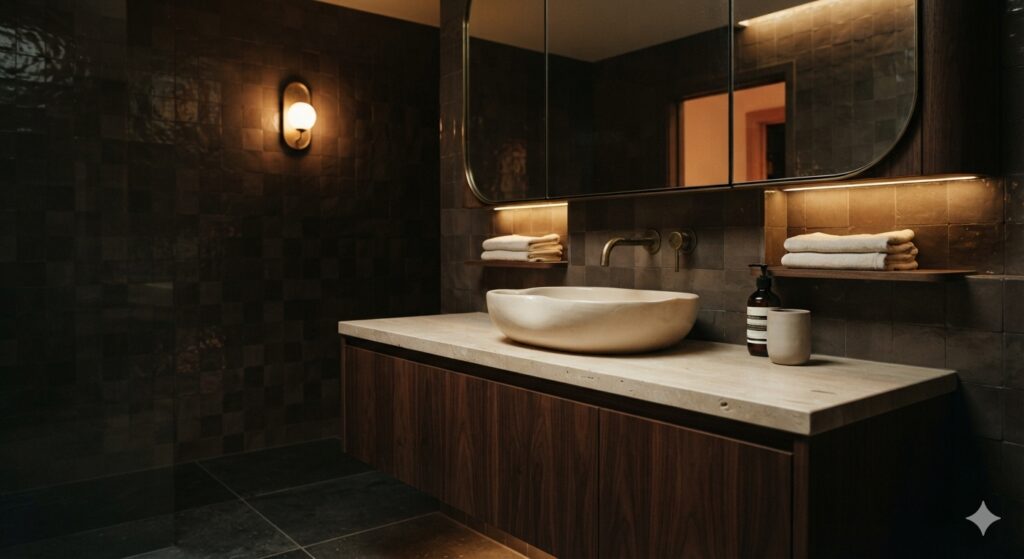
Idea 5: The Moody Chocolate Bathroom
Deep chocolate brown can make a bathroom feel enveloping when balanced with reflective surfaces and warm illumination. Use chocolate-colored tile or mineral paint with walnut cabinetry, creamy stone, and antique brass fittings to create a sophisticated cocoon rather than a dark cave. The combination works particularly well in bathrooms with limited natural light because the darkness becomes an intentional part of the atmosphere.
Introduce contrast through a pale countertop, softly glowing mirror, or light-colored ceiling. Use several small pools of warm light instead of attempting to brighten the entire room uniformly. Keep the accessories restrained and allow the material contrast between stone, wood, metal, and ceramic to provide most of the visual interest.
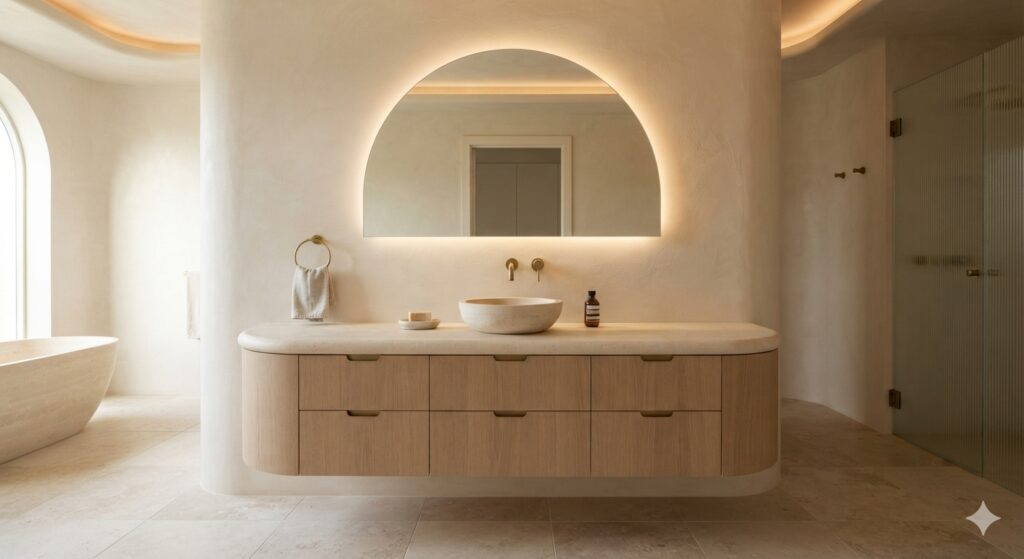
Idea 6: A Curved Vanity Wall
Curved architecture can make a compact bathroom feel softer and more enveloping without requiring additional decorative objects. Build a gently rounded vanity wall with a curved stone countertop, an arched mirror, or a softly bowed plaster niche to create a strong architectural gesture. Pair the curves with natural stone, warm ivory walls, and muted timber for a contemporary but approachable atmosphere.
The curved vanity should still provide practical storage through drawers and concealed compartments. Use vertical lighting beside or behind the mirror to avoid shadows across the face while maintaining a gentle glow. Rounded forms should be repeated selectively rather than everywhere, allowing one or two architectural curves to become recognizable focal points.
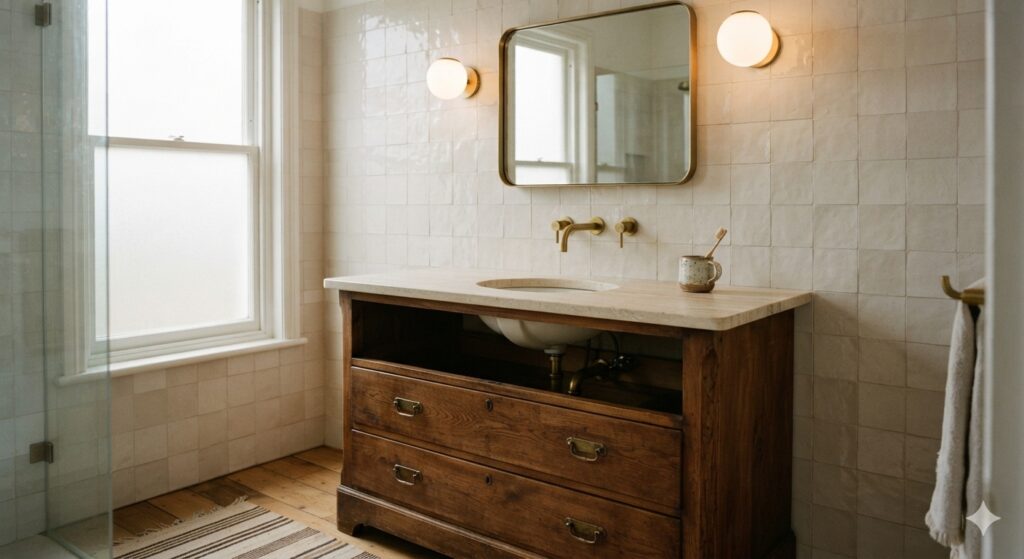
Idea 7: A Bathroom with a Vintage Dresser Vanity
Replacing a conventional bathroom cabinet with a furniture-like vanity can give the room an immediate sense of character. A vintage timber dresser, carefully adapted for plumbing, can become the centerpiece when paired with a simple stone countertop and understated basin. The contrast between old wood and contemporary sanitaryware creates a layered interior that feels collected rather than newly manufactured.
Choose a piece with enough depth for practical plumbing and reinforce its finish against humidity where necessary. Keep the mirror contemporary if the furniture already carries strong historical character, creating tension between old and new. Warm sconces, linen towels, and one handmade ceramic accessory can complete the composition without making the bathroom feel theatrical.
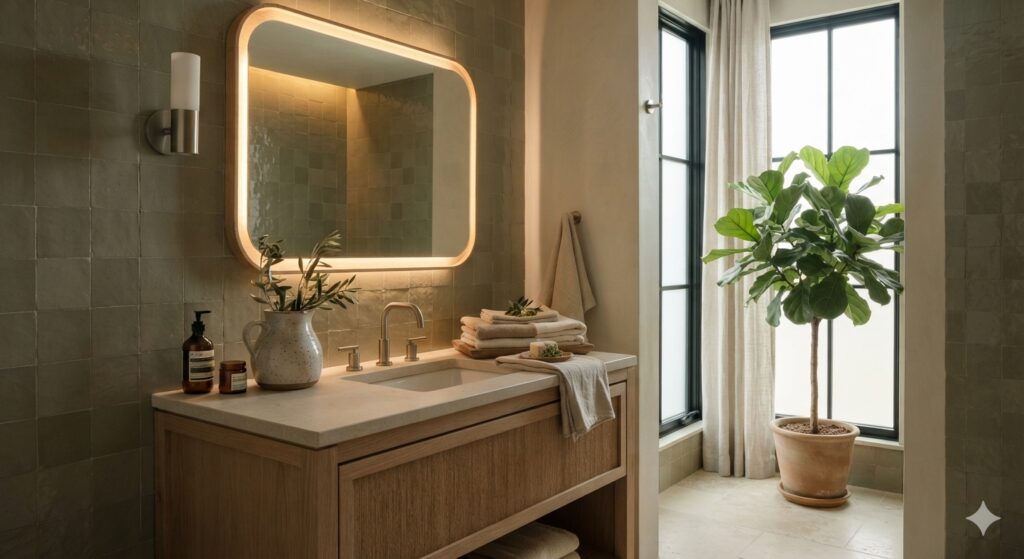
Idea 8: Soft Green with Natural Stone
Muted olive, sage, and mineral green can create a cozy bathroom that feels connected to the natural world without becoming overly botanical. Use green tile or paint with creamy stone, pale oak, and brushed nickel to establish a fresh but subdued palette. The result is especially effective when the green has a slightly gray or earthy undertone rather than a bright saturated appearance.
Use greenery sparingly because the color itself already provides a natural reference. A stone basin, oak stool, or handmade ceramic vessel can provide additional texture without competing with the walls. Diffused daylight and warm evening lighting will make the green shift subtly throughout the day, giving the room more visual depth.
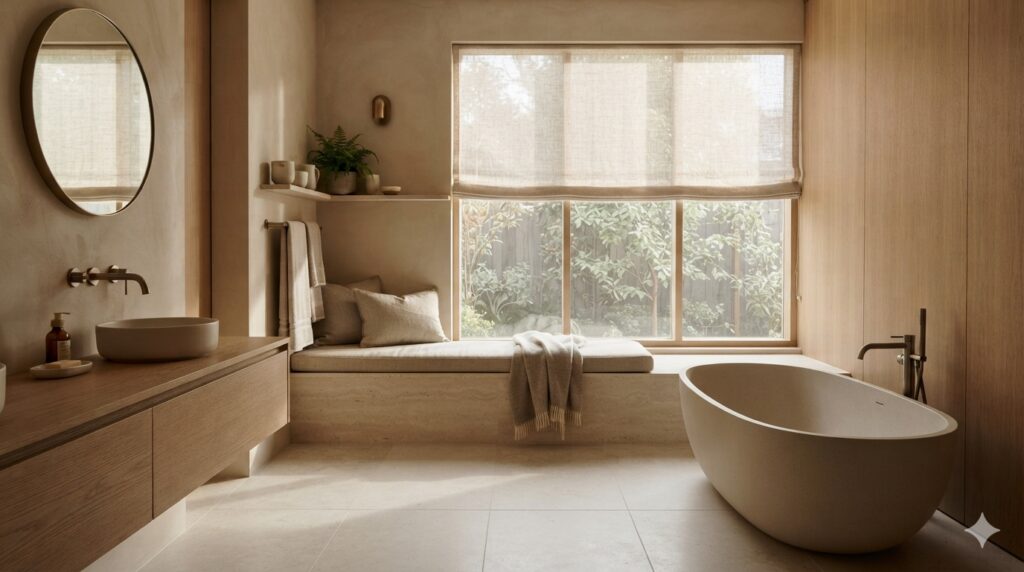
Idea 9: A Built-In Window Seat Bathroom
A window seat can transform an unusually wide bathroom window into a genuine architectural feature. Create a deep stone or tiled ledge beneath the window with a slim upholstered cushion, turning an otherwise unused area into a quiet place for sitting, drying off, or keeping folded towels. Combine it with warm walls, natural wood, and soft daylight to make the bathroom feel more residential.
Moisture-resistant upholstery and washable textiles are important if the seat is exposed to humidity. Keep the surrounding architecture simple so the window remains the visual destination. If privacy permits, use textured or translucent window treatment rather than heavy curtains to preserve daylight while adding softness.
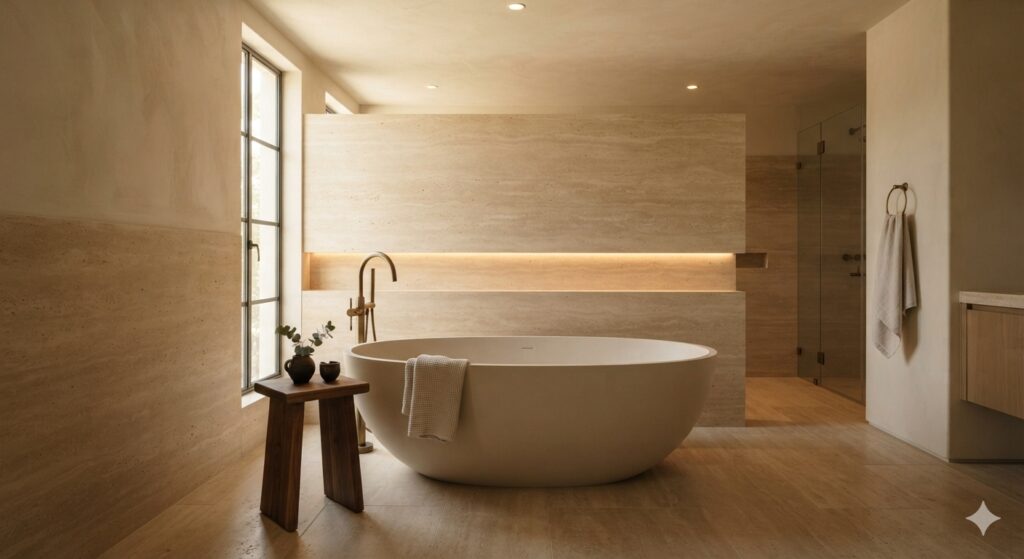
Idea 10: A Stone-Wrapped Freestanding Tub
Make the bathtub the architectural centerpiece by surrounding it with a restrained envelope of warm stone. A freestanding oval or gently sculptural tub can sit against a limestone, travertine-look, or softly veined porcelain backdrop that visually anchors the bathing zone. The effect is luxurious without relying on excessive ornament because the material itself provides the drama.
Leave enough circulation around the tub for cleaning and comfortable movement. A narrow wooden stool can hold towels or bath essentials without introducing bulky storage. Concealed lighting beneath a ledge or behind the tub can create a soft evening glow while maintaining the clean architectural silhouette.
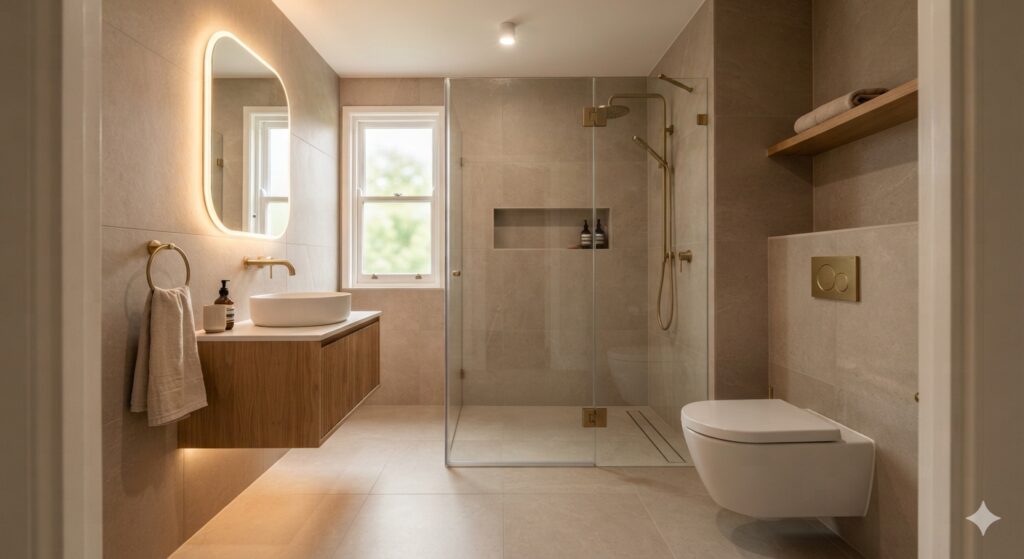
Idea 11: A Tiny Bathroom with Full-Height Warm Tile
Small bathrooms can feel cozy when their limited dimensions are treated as an advantage rather than disguised with excessive visual fragmentation. Covering the walls in one continuous warm-toned tile can reduce visual breaks and make the room feel more enveloping. A compact wall-mounted vanity, frameless glass, and concealed storage preserve valuable floor area.
Choose a tile with subtle texture rather than a busy pattern so the continuous surface remains calming. A large mirror can visually expand the room, while vertical lighting helps compensate for the restricted width. Use one distinctive material or fitting as the focal point rather than attempting to fit multiple decorative features into a small footprint.
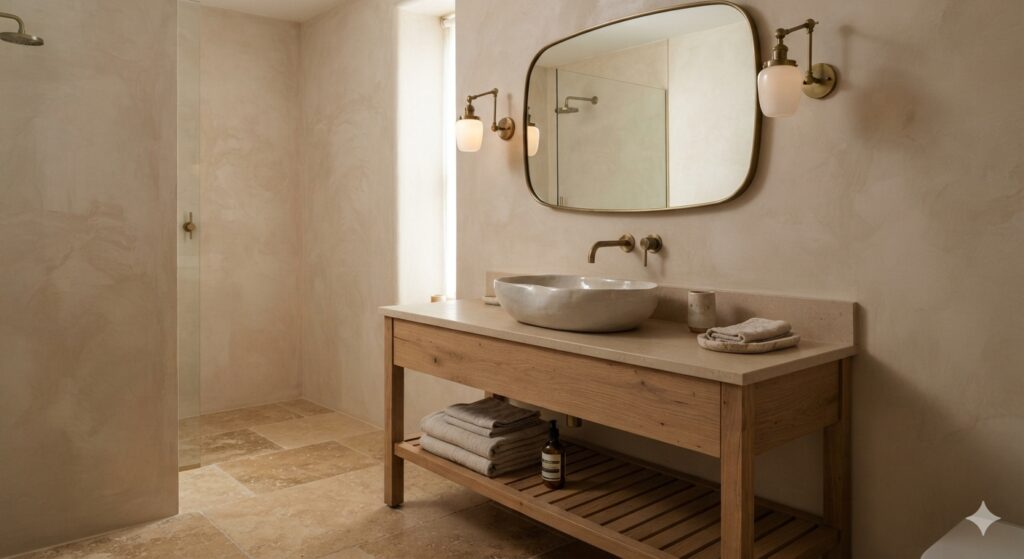
Idea 12: A Textured Plaster Bathroom
Textured plaster-style walls can introduce the softness normally associated with living spaces into a bathroom. Use a warm mineral finish with a lightly irregular surface alongside simple stone, timber, and sculptural sanitaryware to create an understated handmade character. The subtle variation in the wall catches light differently throughout the day and prevents a neutral bathroom from looking flat.
Because actual plaster products vary in their moisture suitability, select a system specifically appropriate for the bathroom environment. Keep the remaining surfaces relatively calm so the wall texture remains legible. Warm wall sconces or concealed illumination grazing across the surface can make the material particularly atmospheric after dark.
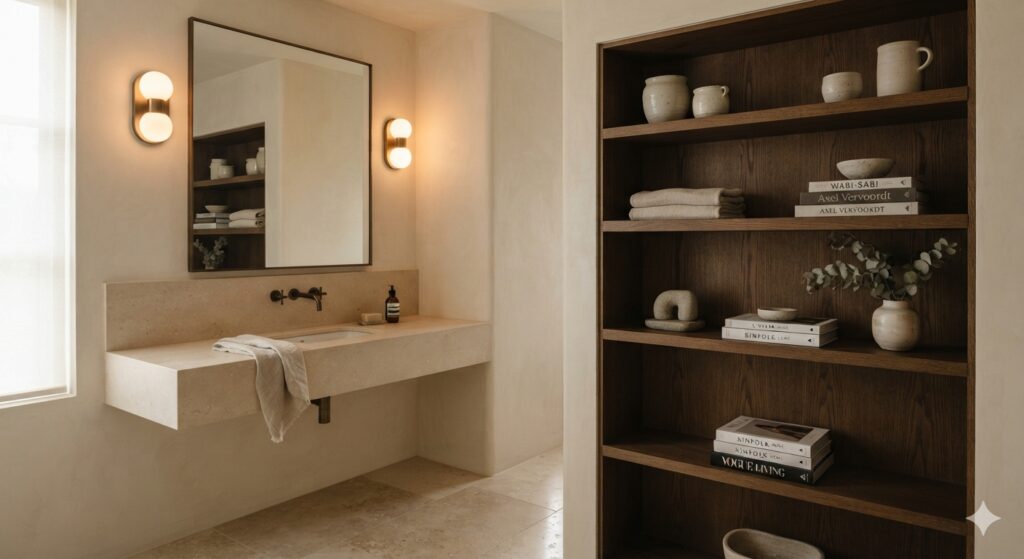
Idea 13: The Cozy Bathroom Library Wall
For a bathroom large enough to accommodate furniture, a shallow open shelving wall can introduce the feeling of a private reading room. Use dark or medium timber shelving with a few carefully chosen books, ceramics, folded towels, and sculptural objects rather than filling every compartment. The juxtaposition of books and bathroom materials makes the room feel personal and residential.
Keep shelves away from direct shower spray and provide adequate ventilation to protect books and timber. A closed cabinet at the lower level can conceal practical bathroom supplies. Warm directional lighting aimed toward the shelving can create depth while keeping the main vanity and bathing areas comfortably illuminated.
Idea 14: A Small Wet Room with a Warm Stone Palette
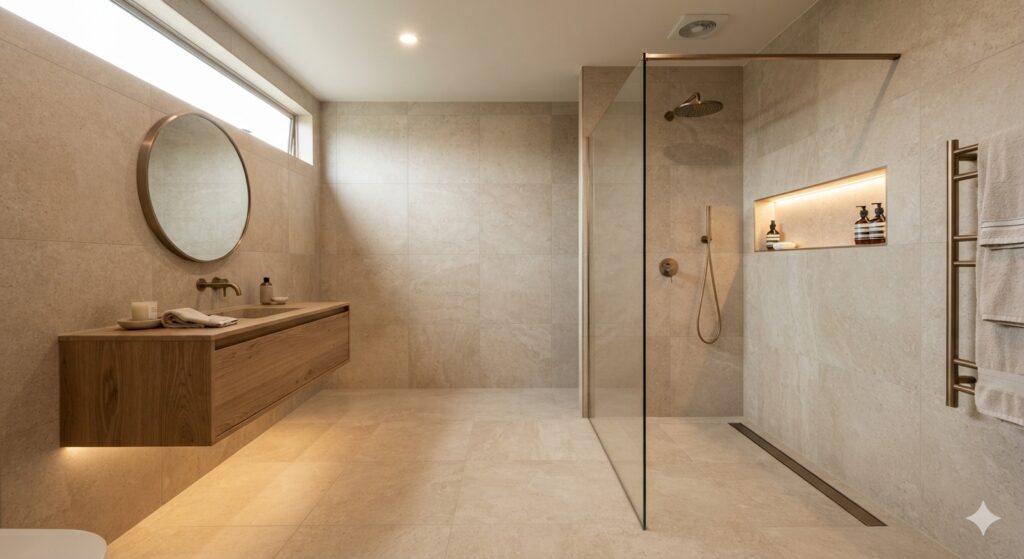
A wet-room layout can feel exceptionally cozy when the entire floor and shower zone are visually unified. Use large-format warm stone-effect porcelain, a simple linear drain, and a frameless glass screen to reduce visual interruption. A compact timber vanity and one sculptural mirror can then introduce the warmth needed to balance the hard surfaces.
Pay particular attention to drainage falls, waterproofing, and slip resistance because visual minimalism should never compromise performance. A recessed shower niche keeps bottles off the floor and preserves the uninterrupted material palette. Under-vanity illumination can provide a gentle nighttime glow without requiring the full bathroom lighting system.
Idea 15: Warm White with Antique Brass
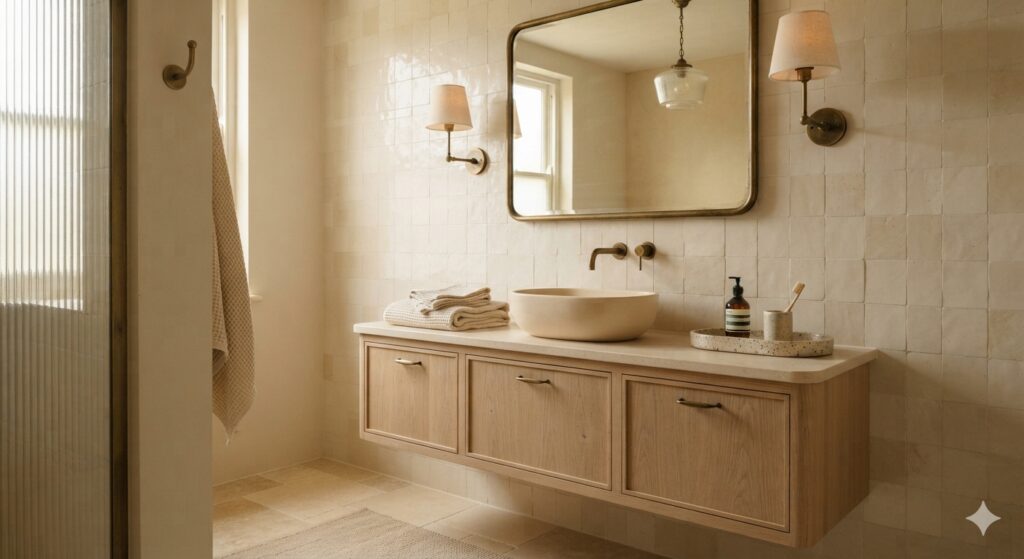
Warm white bathrooms can feel incredibly cozy when the white is softened and combined with aged metal rather than polished chrome. Use creamy wall tile, ivory stone, antique-brass fixtures, and medium-toned timber to create a palette that feels elegant but approachable. A framed mirror can add more character than the oversized frameless mirrors commonly used in minimalist bathrooms.
Avoid using too many brass elements because the finish is most effective when it appears intentionally repeated rather than everywhere. Pair brass with warm lighting so it develops a subtle glow rather than a harsh metallic reflection. A ceramic lamp-like wall sconce, linen towel, or vintage-inspired accessory can reinforce the residential character.
Idea 16: A Cozy Bathroom with a Sculptural Basin
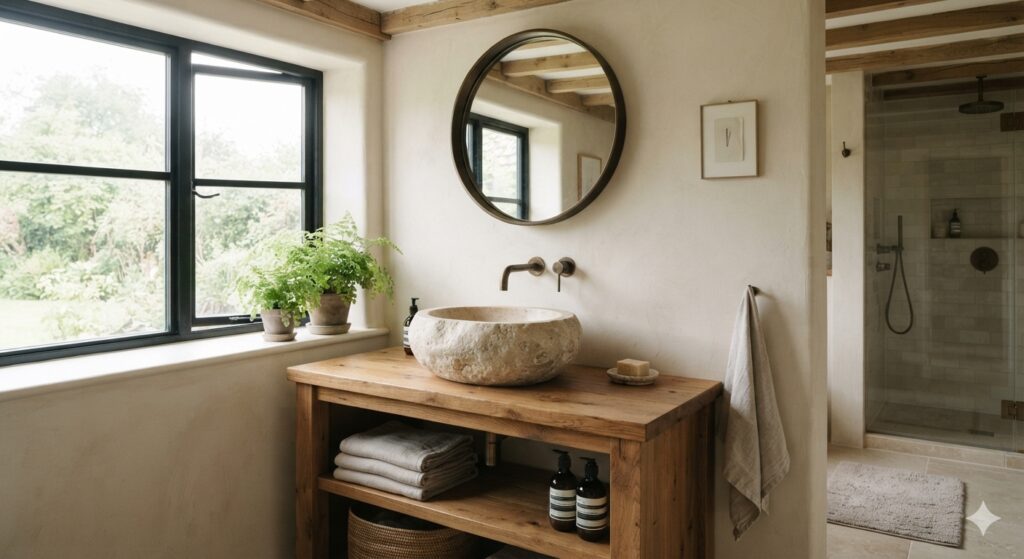
Treat the basin as a piece of functional sculpture rather than simply a plumbing fixture. A rounded stone, ceramic, or solid-surface basin can become the visual centerpiece against a quiet wall of textured tile or plaster. Keep the vanity underneath simple so the silhouette of the basin remains clearly visible.
Choose a faucet with a proportion that matches the basin rather than selecting an oversized statement fitting. Use a wall-mounted mirror with softly rounded corners to echo the basin without creating a repetitive motif. Minimal countertop accessories will preserve the gallery-like quality while still allowing the bathroom to feel warm through timber and textiles.
Idea 17: A Rich Blue Bathroom with Warm Wood
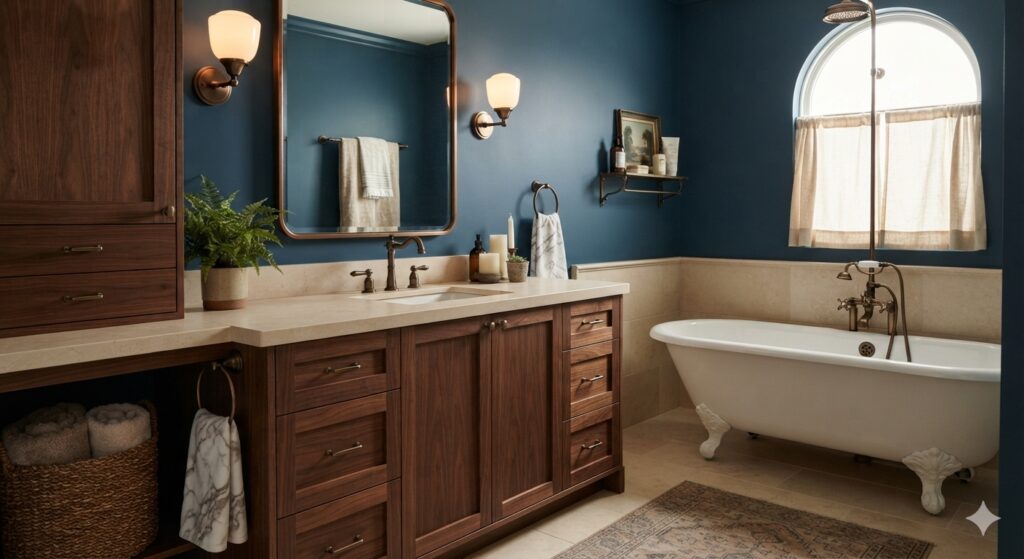
Deep mineral blue can produce an intimate bathroom atmosphere while remaining sophisticated when paired with warm natural materials. Use blue-green or midnight-blue tile with walnut cabinetry, creamy stone, and brushed bronze or nickel fittings for a layered palette. The contrast between cool depth and warm timber prevents the room from feeling either cold or overly rustic.
Use the darkest color selectively around the shower or vanity zone to establish visual depth. Warm indirect lighting should illuminate the wood and stone rather than flattening the blue with excessive brightness. A small artwork or handmade ceramic piece can add individuality while keeping the overall scheme restrained.
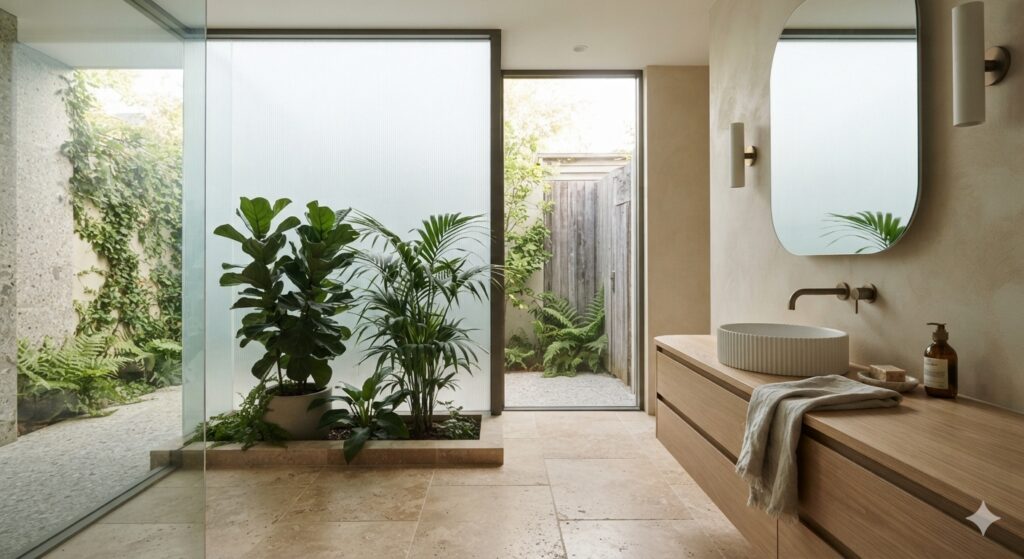
Idea 18: The Indoor-Garden Bathroom
A bathroom can feel considerably more restorative when its architecture deliberately connects to greenery and daylight. Position moisture-tolerant plants near a window, create a stone ledge for greenery, or use a partially enclosed courtyard-style opening where the architecture allows it. Combine these elements with warm stone, timber, and muted green accents so the planting feels integrated rather than decorative.
Select plants according to the actual humidity, light, and ventilation conditions of the room. Keep leaves away from areas where they could interfere with shower circulation or cleaning. The strongest compositions use a small number of substantial plants rather than turning every available surface into a plant display.
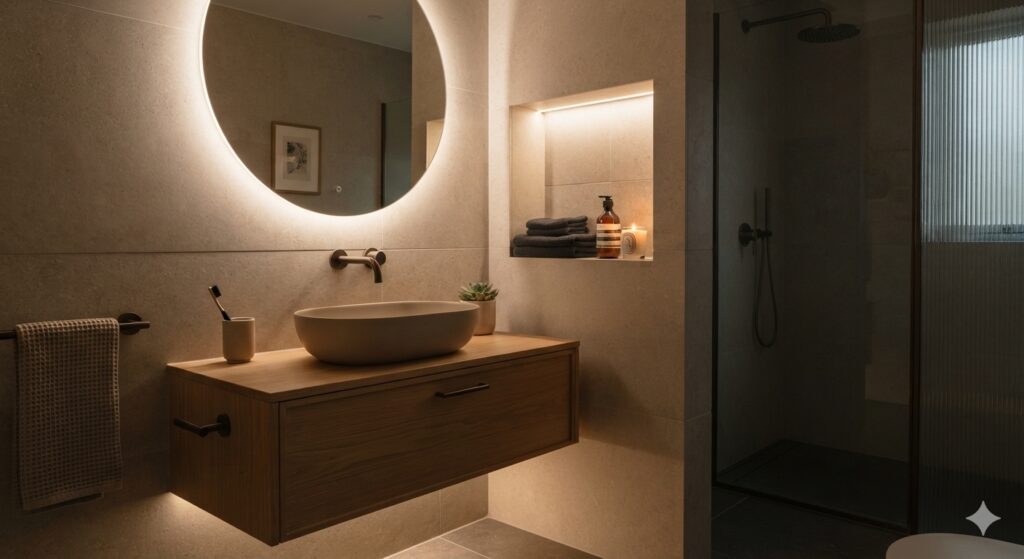
Idea 19: A Low-Lit Evening Bathroom
Designing specifically for nighttime use can make a bathroom feel dramatically more comfortable. Combine functional mirror lighting with low-level floor illumination, concealed shelf lighting, and dimmable warm ambient fixtures so the room can shift from practical to atmospheric. A warm neutral palette of stone, oak, and soft taupe will absorb and reflect this light beautifully.
Keep the brighter task lighting on a separate circuit from the atmospheric sources. Low-level illumination should never replace sufficient lighting around mirrors, shower controls, or other areas where visibility is important. The result is a bathroom that feels almost lounge-like after dark without sacrificing everyday usability.
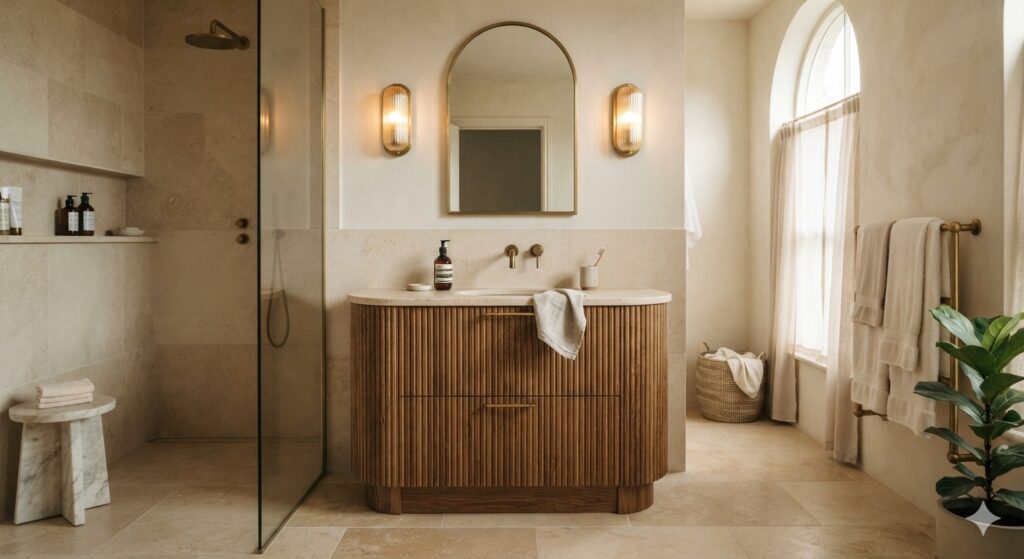
Idea 20: A Tactile Fluted-Wood Vanity
Fluted timber can introduce rhythm and texture without requiring patterned tile or decorative walls. Use vertical grooves across a furniture-style vanity in oak or walnut, then contrast the tactile front with a smooth stone countertop and softly curved basin. The repeated vertical lines also give the vanity a strong architectural presence while keeping the overall palette restrained.
Choose a fluting scale appropriate to the room because very narrow grooves can become visually busy in a compact bathroom. Keep the wall behind the vanity relatively quiet so the cabinetry becomes the focal point. Integrated drawer storage can keep the countertop clear, reinforcing the calm and orderly atmosphere.
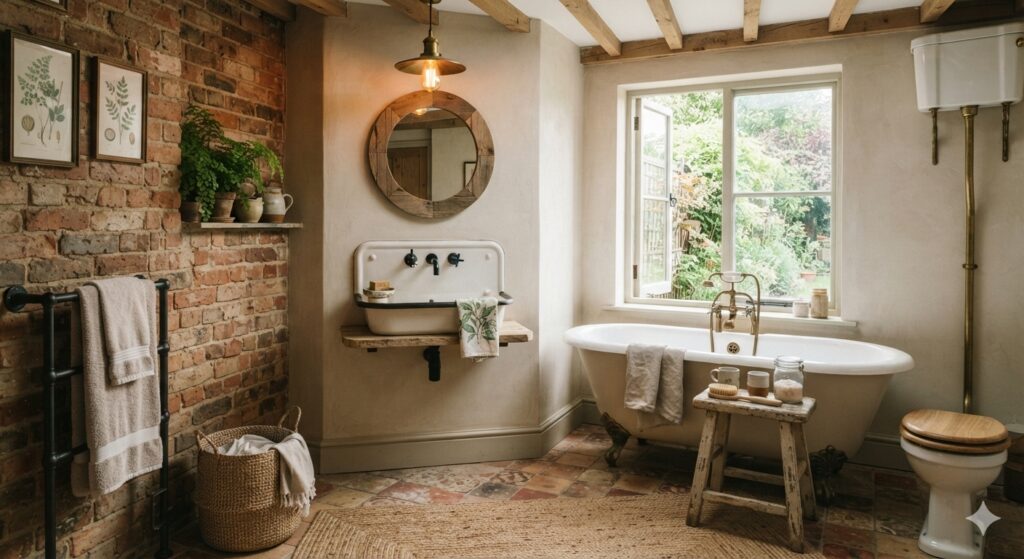
Idea 21: A Character-Rich Bathroom with Collected Pieces
The coziest bathrooms do not always look newly installed because character can come from objects that appear to have accumulated over time. Combine a vintage mirror, aged timber stool, handmade ceramics, framed artwork, and contemporary plumbing fixtures against a restrained stone or tile background. The resulting tension between old and new makes the bathroom feel connected to the rest of the home rather than isolated as a showroom.
Use repetition in color rather than matching every object by style. Choose pieces that can tolerate humidity or position delicate artwork away from direct moisture. Keep the practical components modern and reliable while allowing decorative elements to carry the room’s sense of history.
Idea 22: The Ultimate Warm Minimalist Bathroom
A warm minimalist bathroom brings together the strongest principles of contemporary cozy design without becoming visually busy. Combine a pale stone envelope, natural oak vanity, rounded mirror, sculptural tub or basin, concealed storage, soft textiles, and carefully layered warm lighting. The room should feel almost effortless because every visible element has a clear architectural or functional purpose.
Limit the palette to a few closely related tones and let differences in texture create the visual richness. Use durable porcelain or stone-effect materials in wet areas while reserving genuine timber and softer finishes for carefully protected locations. The final effect should feel calm in daylight, intimate at night, and timeless enough to remain attractive after individual trends have faded.
Practical Design Considerations Before Cozy Bathroom Ideas
Start with the circulation
A cozy bathroom should never feel cramped simply because furniture and fixtures have been pushed together. Maintain comfortable clearance around the toilet, vanity, shower, and bathtub, and make sure doors and shower screens do not interfere with everyday movement.
Prioritize ventilation
Warm materials and atmospheric lighting do not compensate for poor moisture management. Effective mechanical ventilation, appropriate extraction, and adequate air movement are essential for protecting finishes, cabinetry, textiles, and painted surfaces.
Choose bathroom-appropriate timber
Natural wood can add enormous warmth, but not every timber or finish is equally suitable for humid environments. Use properly sealed, moisture-appropriate materials and avoid placing vulnerable wood directly in areas exposed to continuous water.
Think in layers of light
Use ambient, task, and accent lighting rather than depending on a single overhead fixture. Dimmable warm-white sources around roughly 2700–3000K can create a softer atmosphere while brighter task lighting remains available when grooming requires it.
Use texture instead of excessive decoration
If a bathroom feels sterile, adding more accessories is rarely the best first solution. Textured tile, honed stone, timber grain, plaster-like surfaces, fluting, and softly irregular ceramics can create visual richness without creating clutter.
Consider slip resistance
Flooring must be selected for wet conditions, especially in walk-in showers and wet rooms. Attractive stone or porcelain should always be evaluated for its suitability in areas where water regularly reaches the floor.
Plan storage before styling
A cozy bathroom is much easier to maintain when everyday toiletries have dedicated storage. Recessed niches, vanity drawers, mirrored cabinets, and tall storage can keep the surfaces visually calm.
Balance natural and artificial light
Natural light can make warm materials look beautiful during the day, while artificial lighting determines the room’s character after sunset. If the bathroom receives limited daylight, compensate with layered illumination rather than simply increasing the intensity of one ceiling fixture.
Make the budget work visually
Spend strategically on elements that are touched or seen frequently, such as the vanity, basin, lighting, mirror, and hardware. More affordable large-format porcelain can reproduce the visual character of natural stone while allowing the budget to be concentrated on details that create genuine character.
Plan accessibility and long-term use
A beautiful bathroom should remain comfortable as needs change. Walk-in showers, clear circulation, appropriately positioned controls, adequate lighting, and slip-conscious flooring can improve usability without making the room appear institutional.
FAQs
1. How can I make a bathroom feel cozy?
Start with warmer materials, softer lighting, and a restrained color palette rather than adding lots of decoration. Timber, natural stone, textured surfaces, warm neutrals, and layered illumination are particularly effective.
2. What colors make a bathroom feel warm?
Warm whites, taupe, sand, clay, terracotta, muted olive, chocolate brown, mineral green, and warm gray can all create a more intimate atmosphere. The best choice depends on natural light and the materials already present.
3. Is wood suitable for a bathroom?
Yes, when the correct timber, construction, and protective finish are selected for humid conditions. Wood is particularly effective on vanities, shelving, stools, and carefully protected architectural features.
4. How do I make a small bathroom cozy?
Use continuous materials, concealed storage, warm lighting, and carefully scaled fixtures. Instead of filling the room with accessories, create atmosphere through texture, proportion, and one strong focal point.
5. What lighting is best for a cozy bathroom?
A combination of task lighting, ambient illumination, and accent lighting works best. Warm, dimmable sources can create atmosphere while dedicated mirror lighting provides the brightness required for grooming.
6. Are dark bathrooms cozy?
Dark bathrooms can feel extremely cozy when the darkness is intentional and balanced with warm lighting and contrasting materials. Timber, creamy stone, reflective ceramic, and brass or bronze can prevent the room from feeling oppressive.
7. How can I make a bathroom look more like a spa?
Focus on reducing visual clutter and improving sensory comfort rather than simply adding luxury fixtures. Natural materials, concealed storage, layered lighting, a comfortable shower or tub, and a restrained palette can create the spa-like feeling.
8. What materials work best for a cozy bathroom?
Warm timber, limestone-inspired surfaces, travertine, natural stone, textured porcelain, handmade-looking ceramic, brushed metals, and mineral finishes are strong choices. Combining several tactile materials usually creates more depth than relying on one decorative material.
9. Can a bathroom be cozy without a bathtub?
Absolutely. A generous walk-in shower, comfortable bench, warm stone, atmospheric lighting, concealed storage, and tactile materials can create the same restorative feeling without sacrificing valuable floor area.
10. How do I keep a cozy bathroom from looking cluttered?
Give everyday objects concealed storage and leave only a few intentional pieces visible. A simple palette and limited number of decorative objects allow materials, architecture, and lighting to create the atmosphere.
Conclusion
The most successful cozy bathrooms are not necessarily the ones with the most decoration or the most expensive fixtures. They are spaces where material, proportion, light, storage, and architecture work together to create a sense of ease.
Warm timber can soften stone, curved forms can make hard architecture feel approachable, and layered lighting can change the character of the room from bright and functional in the morning to intimate and restorative at night. The strongest designs also leave room for personality, whether that comes from a vintage mirror, handmade ceramic, deep color, artwork, or a carefully chosen piece of furniture.
Ultimately, coziness is less about following a particular bathroom aesthetic and more about creating an environment that feels comfortable to inhabit. When practical performance and visual atmosphere are designed together, even a modest bathroom can become one of the most calming rooms in the home.