There is a common misconception in interior design that dark colors shrink a room. In reality, a deep hue can actually push walls back visually, creating an illusion of endless depth and sophisticated drama. Black accent walls have transitioned from a bold, risky trend into a timeless design staple, offering an effortless way to ground a space and make your favorite decor stand out.
Yet, committing to such a saturated shade can feel incredibly intimidating. It is completely natural to worry that a dark feature wall will make your living room feel like a gloomy cave, or that you will accidentally choose a paint with cold, blue undertones that look harsh in natural light. You might also feel stuck on how to style your existing furniture against such a high-contrast backdrop without the space feeling flat and lifeless.
The secret to mastering this look lies in choosing the right warm undertones, incorporating rich textures, and balancing the wall with strategic lighting. In this guide, we will demystify the design process and share designer-approved techniques to help you execute a stunning black accent wall. Read on to discover how to bring this luxurious, cozy aesthetic into your own home with confidence.
Understanding the Spatial Science: Why Black Accent Walls Add Depth Instead of Shrinking Your Room
There is a persistent myth in interior design that dark colors automatically make a room feel smaller and more cramped. In reality, black behaves as a receding color. Much like the infinite night sky, a deep, saturated black accent wall tricks the eye into perceiving the wall as further away than it actually is, creating an optical illusion of depth. This design science works exceptionally well in narrow entryways or compact bedrooms, where you want to push the boundaries of the room outward.
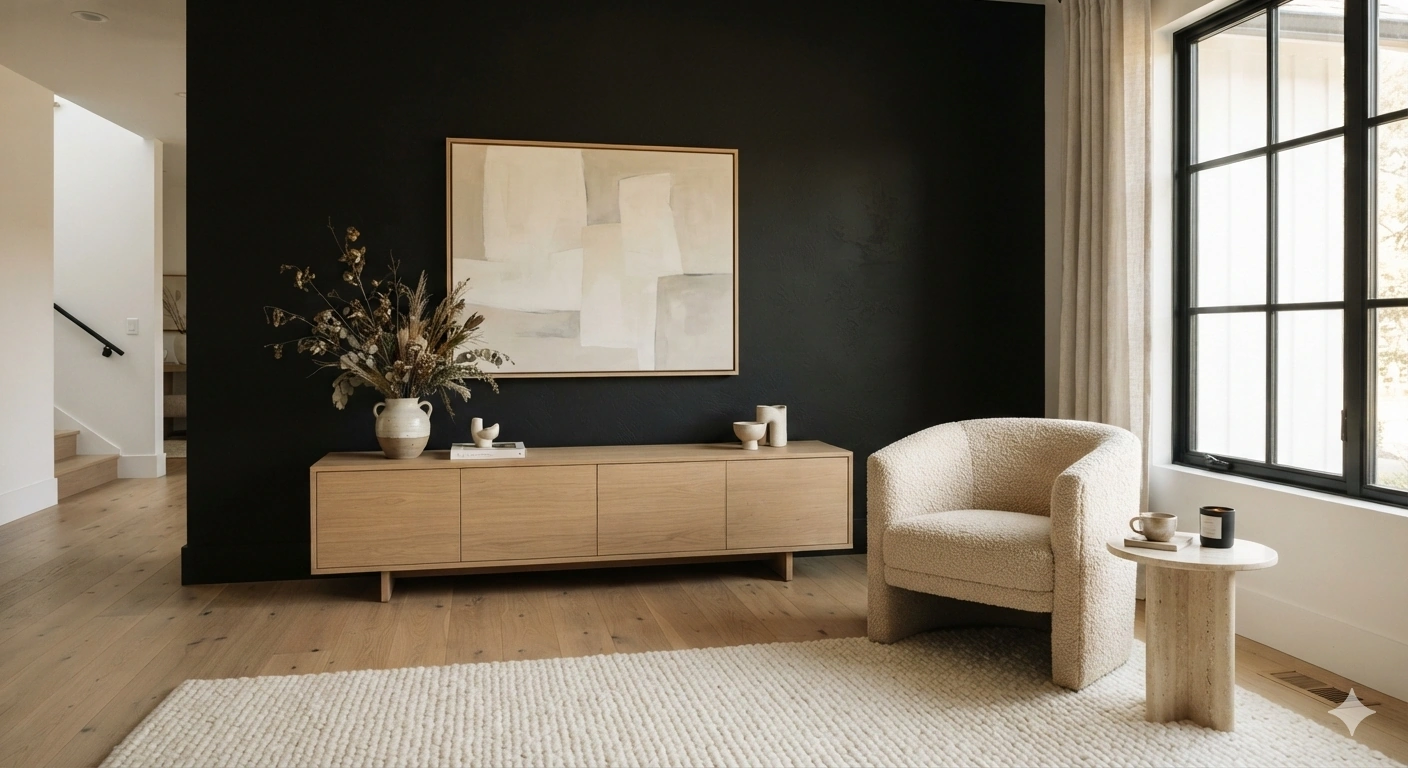
To make this spatial science work in your favor, balance is key. Pair your black feature wall with contrasting elements like a light oak credenza, creamy bouclé accent chairs, or a plush ivory wool rug. This high-contrast juxtaposition prevents the room from feeling cave-like and instead makes the space feel curated, expansive, and incredibly modern. Positioning the accent wall opposite a primary window allows natural light to wash across the surface, softening the intensity of the black and highlighting its subtle textures.
A common mistake is leaving the black wall completely bare, which can make it feel like a cold void. Instead, layer it with oversized, light-toned artwork or a light wood shelving unit to anchor the wall and give the eye a place to rest. For a designer-approved touch, ensure your flooring is a medium-to-light tone, which reflects light upward and beautifully balances the grounding weight of the dark backdrop.
Warm vs. Cool: How to Choose the Perfect Black Paint Undertone for Your Lighting
Choosing the right black paint is never as simple as picking up a generic can of true black. Black paints are highly sensitive to their undertones, which generally fall into two categories: warm (with brown, yellow, or red undertones) and cool (with blue, purple, or green undertones). The direction your room faces and the natural light it receives should dictate your choice.
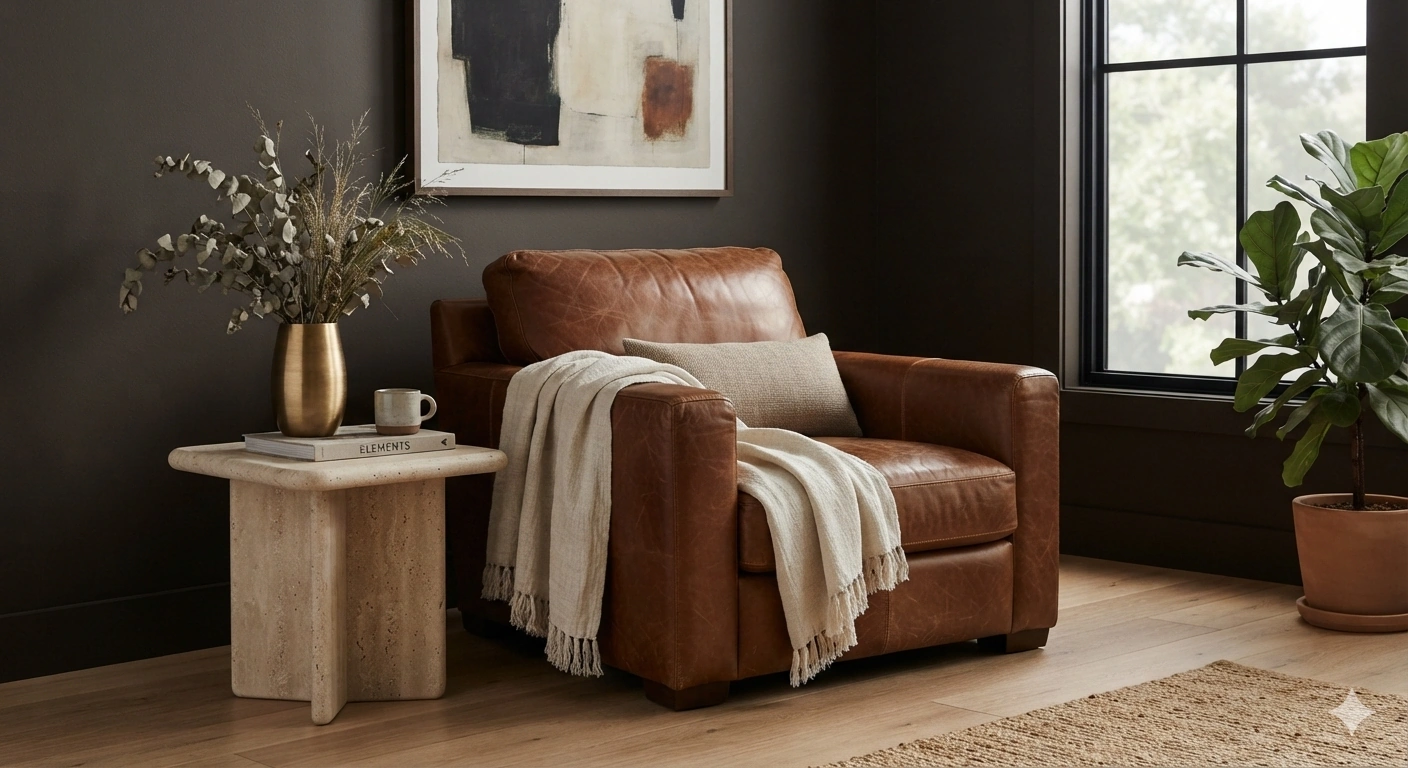
For north-facing rooms, which naturally receive cool, blue-toned light, a cool black will feel icy, stark, and clinical. Instead, opt for a warm, charcoal-leaning black with rich brown undertones to inject instant coziness and comfort. South-facing rooms, flooded with warm golden light, are much more forgiving and can beautifully handle true, deep blacks or those with subtle forest-green undertones.
A classic designer mistake is choosing paint chips under harsh showroom fluorescent lights. Always swatch your top three choices directly onto the designated wall and observe them at morning, noon, and night. To complement a warm black, style the space with cognac leather, brushed brass hardware, and warm travertine stone. This creates a cohesive, organic modern palette that feels incredibly sophisticated, intentional, and inviting.
The Best Designer-Approved Warm Black Paint Colors to Try in 2026
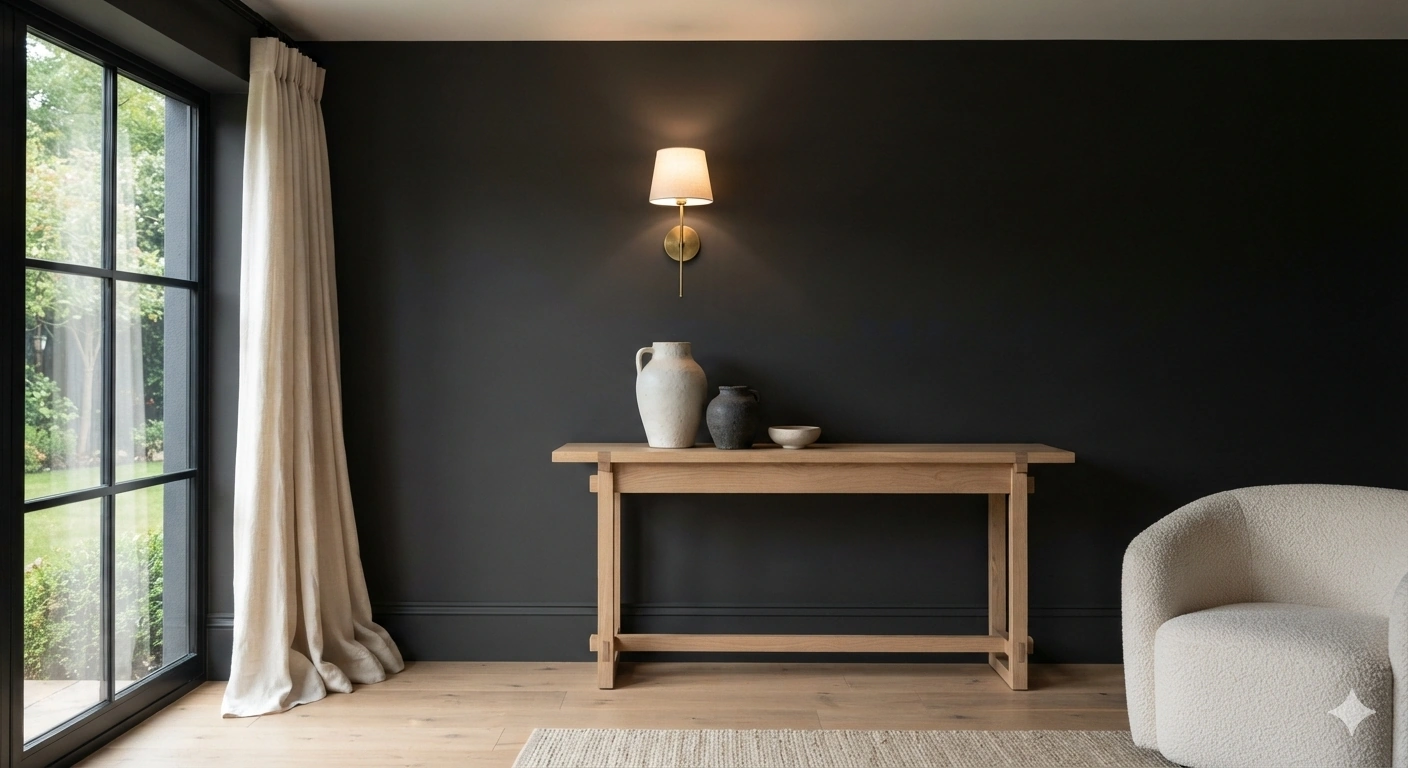
As we embrace organic modernism in 2026, the trendiest black paint colors are those that feel soft, lived-in, and inherently warm. Pure, stark blacks are taking a backseat to complex, muddy hues that offer a gentler transition from light to dark, adding depth without feeling aggressive.
One of our absolute favorites is Sherwin-Williams Iron Ore. This is a deep, charcoal-toned black with soft gray undertones that feels incredibly velvety and forgiving in high-traffic family rooms. If you want something slightly darker but still warm, Benjamin Moore’s Black Beauty is a rich, luxurious option with a subtle brown undertone that pairs beautifully with natural white oak and unlacquered brass. For an ultra-luxurious, moody aesthetic with a hint of blue-gray warmth, Farrow & Ball’s Railings offers an unmatched depth that shifts beautifully throughout the day.
When styling these colors, avoid stark white trim, which can create a jarring, unfinished look. Instead, paint your baseboards and trim in the same black shade for a seamless, high-end floor-to-ceiling look, or opt for a warm, muddy beige like Benjamin Moore’s Revere Pewter to soften the transition. Accentuate the space with natural linen drapery and matte ceramic decor to keep the vibe effortlessly chic.
Choosing the Right Paint Finish: Why Matte and Flat Velvet Reign Supreme
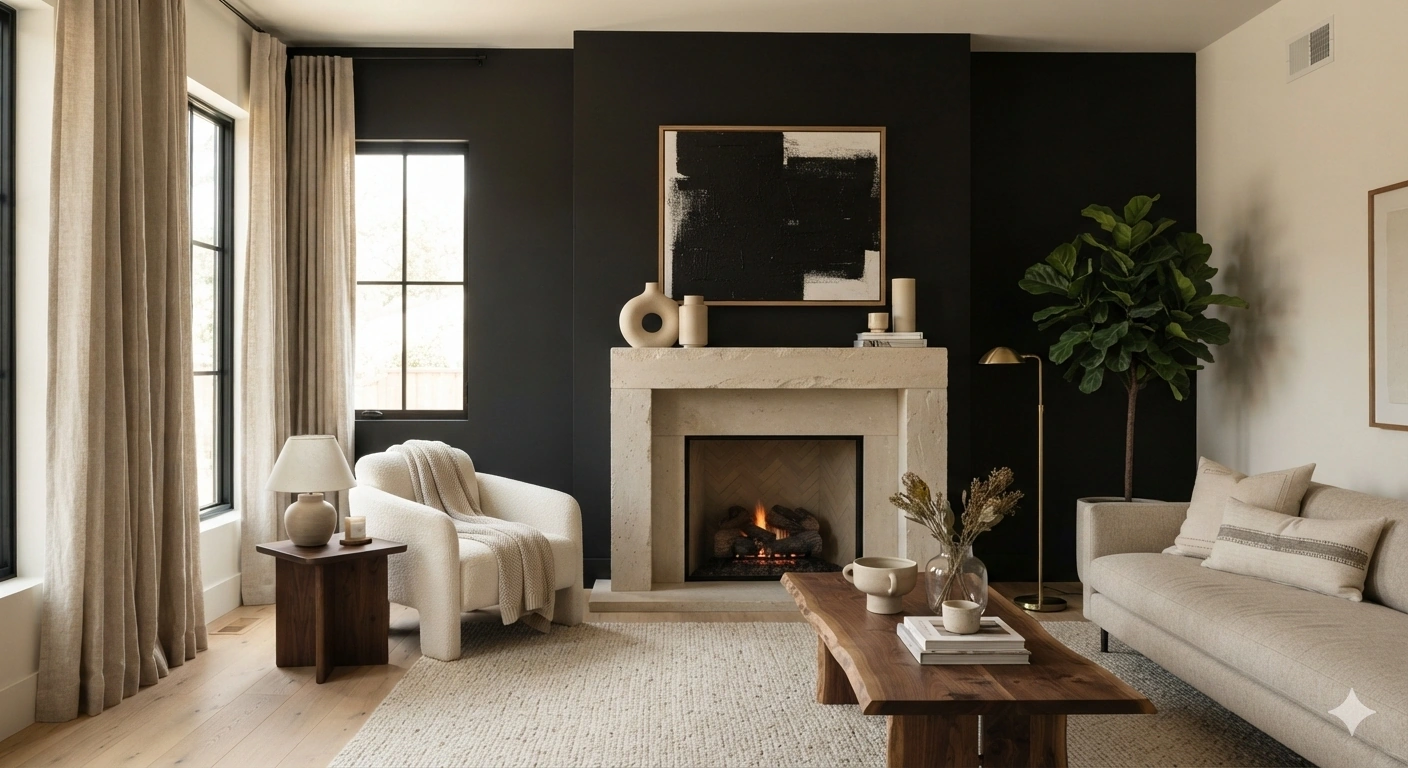
The finish you choose for your black accent wall is just as crucial as the color itself. While high-gloss finishes have their place in high-end lacquered libraries, they are incredibly unforgiving on standard drywall. Glossy dark paint acts like a mirror, catching every ray of light and highlighting every minor bump, joint line, and drywall imperfection.
For a modern, high-end residential aesthetic, matte and flat velvet finishes are the gold standard. These low-luster finishes absorb light rather than reflecting it, resulting in a rich, velvety depth that feels incredibly soft and sophisticated. They minimize visual glare, making your wall look like a cohesive, solid architectural element rather than a painted surface.
If you are worried about durability and fingerprints—especially in homes with children or pets—look for modern, washable matte formulas. These advanced paints offer the gorgeous light-absorbing properties of a flat finish but can be easily wiped clean with a damp cloth. To elevate the tactile experience, pair a matte black wall with highly textured decor elements, such as a rough-hewn stone mantle, ceramic vases, and soft linen drapery. This contrast between the flat wall and textured decor creates a beautiful, designer-approved balance.
How to Avoid the ‘Black Hole’ Effect with Multi-Layered Ambient Lighting
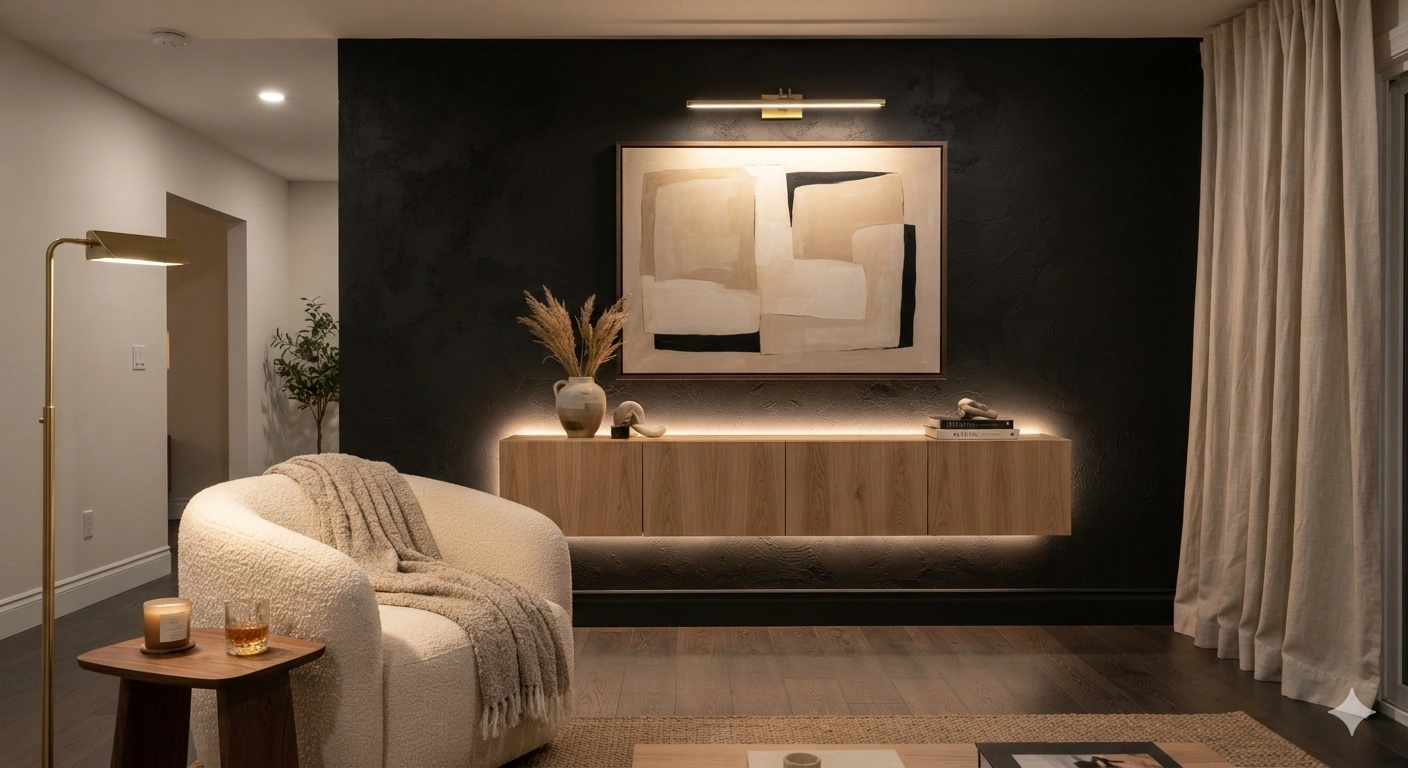
Without a thoughtful lighting plan, a black accent wall can quickly turn into a flat, lifeless “black hole” that drains the energy from your room. The key to unlocking the true luxury of a dark feature wall is multi-layered, warm lighting that accentuates its depth and texture.
Avoid relying solely on overhead recessed can lights, which cast harsh downward shadows and fail to illuminate the wall itself. Instead, introduce vertical layers of light. Install a pair of sleek, low-glare brass picture lights above framed artwork to wash the wall in a warm, targeted glow. Alternatively, mount articulating matte black or brushed bronze sconces on either side of a bed or fireplace to frame the space beautifully.
For a truly modern, architectural feel, consider installing concealed LED strip lighting along the top of the wall or behind a floating media console. This creates a soft, ambient halo effect that makes the dark wall appear to float. Always opt for warm-temperature LED bulbs—ideally between 2700K and 3000K—to keep the atmosphere cozy and inviting rather than cold and industrial. This layered approach ensures your black accent wall glows with warmth and sophistication.
The Wood Slat Black Accent Wall: Adding Modern Architectural Texture
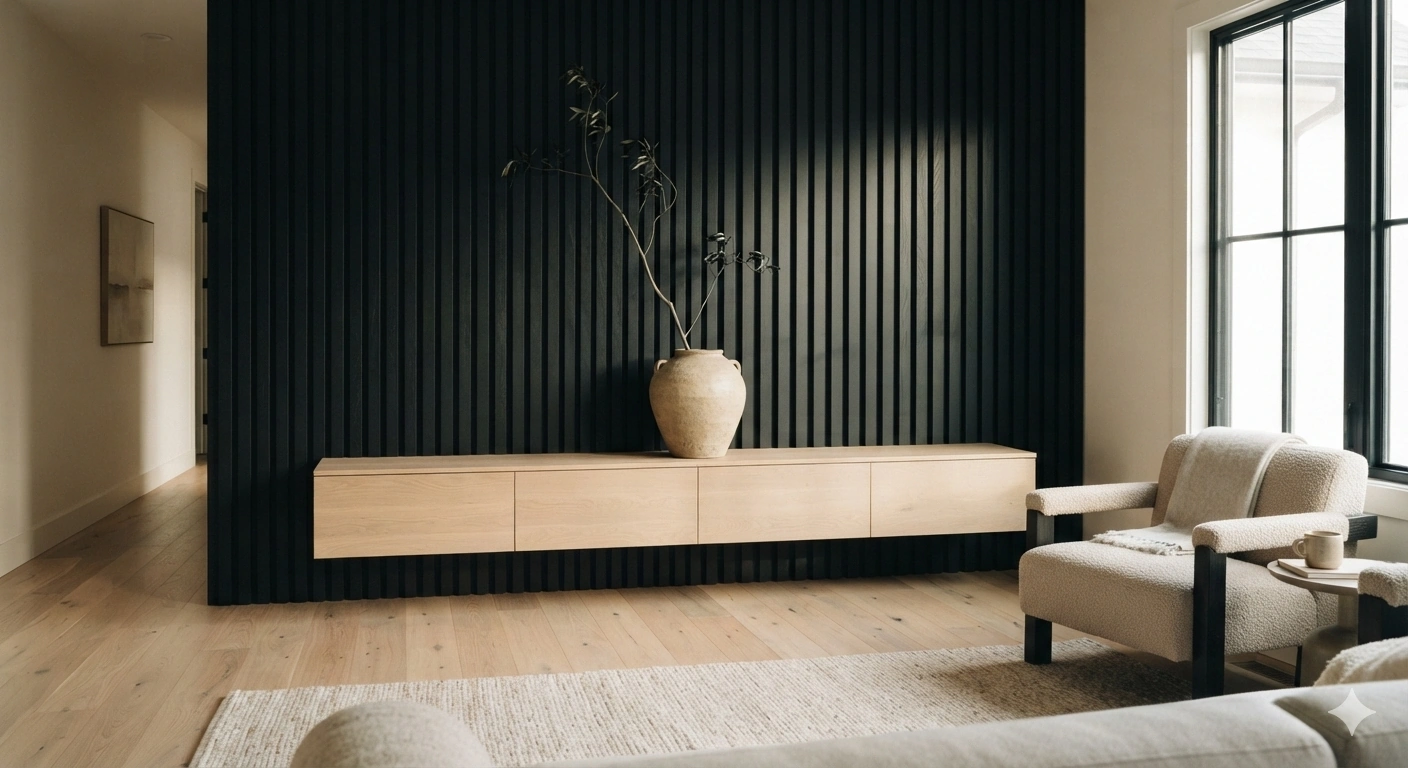
If you are hesitant to paint a flat drywall surface black, introducing architectural texture is the perfect solution. The wood slat black accent wall has become a staple of high-end, organic modern design, offering a beautiful play of light and shadow that flat paint simply cannot replicate.
This look is achieved by mounting vertical wood slats—either in natural white oak or painted a matching matte black—onto a dark felt or painted black backing. The gap between the slats creates a deep shadow line, giving the wall incredible three-dimensional texture and geometric interest. This technique is highly functional, too; the felt backing often provides excellent acoustic absorption, making it an ideal choice for media rooms, home offices, or behind a master bed.
To style this feature, keep the surrounding decor clean and minimal to let the woodwork shine. A low-profile, floating white oak console placed against the slats creates a stunning, high-contrast focal point. Accentuate the vertical lines of the slats by placing a tall, structural branch in an oversized ceramic vessel nearby, and let natural sunlight highlight the rich grain of the wood. This approach delivers an upscale, architect-designed feel to any home.
Classic Board and Batten: Elevating Your Feature Wall with Traditional Molding
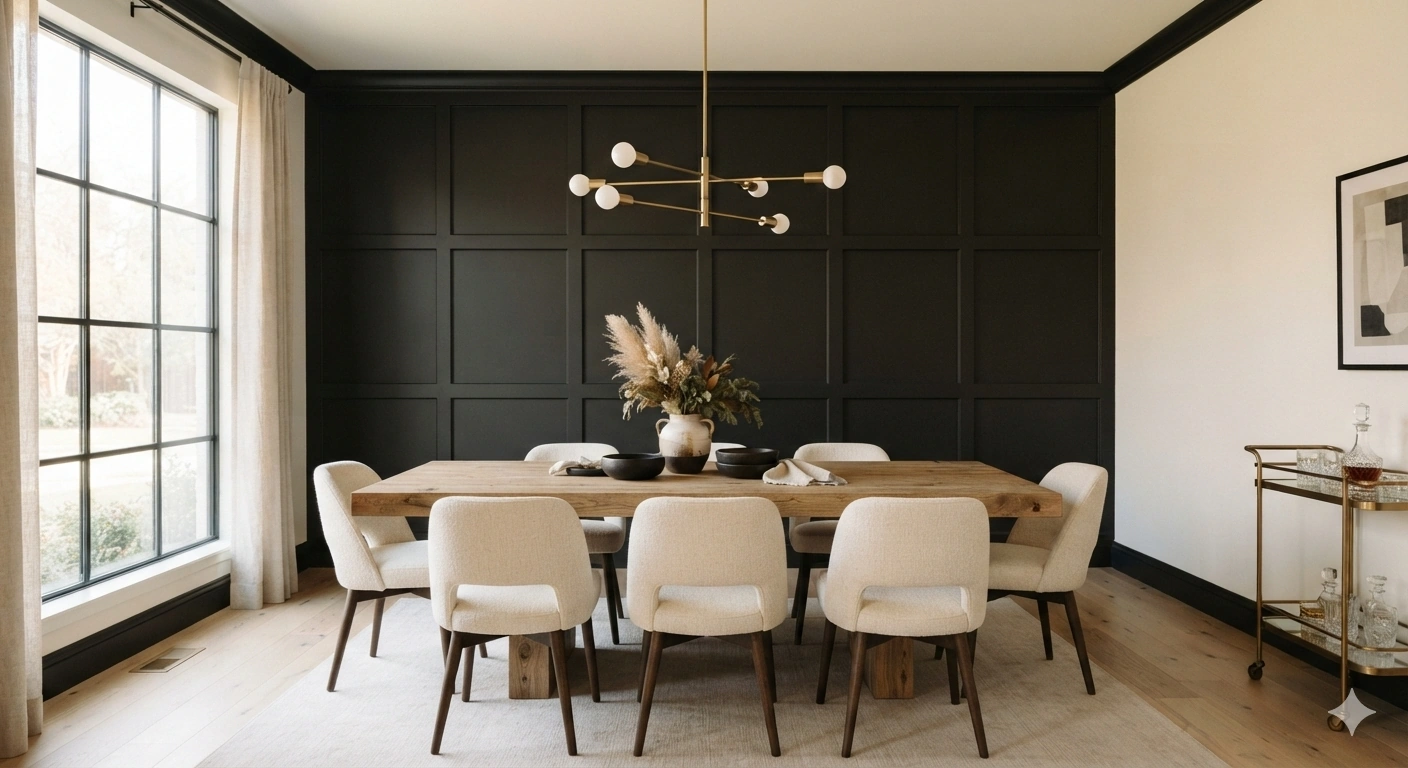
For homeowners who love a transitional or modern traditional aesthetic, a classic board and batten accent wall painted in a rich, warm black is the ultimate way to marry historic charm with contemporary drama. The raised wooden trim pieces break up the expansive dark surface, casting delicate shadows that add instant architectural character to a standard builder-grade room.
This style works exceptionally well in dining rooms and primary bedrooms, where you want to create an intimate, upscale atmosphere. You can opt for a traditional grid pattern for a formal, coffered look, or choose clean, vertical-only battens for a more modern, height-boosting effect.
When executing this look, the biggest mistake is using cheap, thin molding that lacks substance. Opt for sturdy MDF or solid wood boards with a depth of at least half an inch to ensure the shadows are pronounced and luxurious. Paint the entire wall—including the baseboards, crown molding, and the battens themselves—in the same warm black matte finish. This monochromatic approach unifies the woodwork, making the accent wall feel like an expensive, custom architectural installation rather than a quick DIY project.
Modern Black Shiplap: A Contemporary Twist on Rustic Design
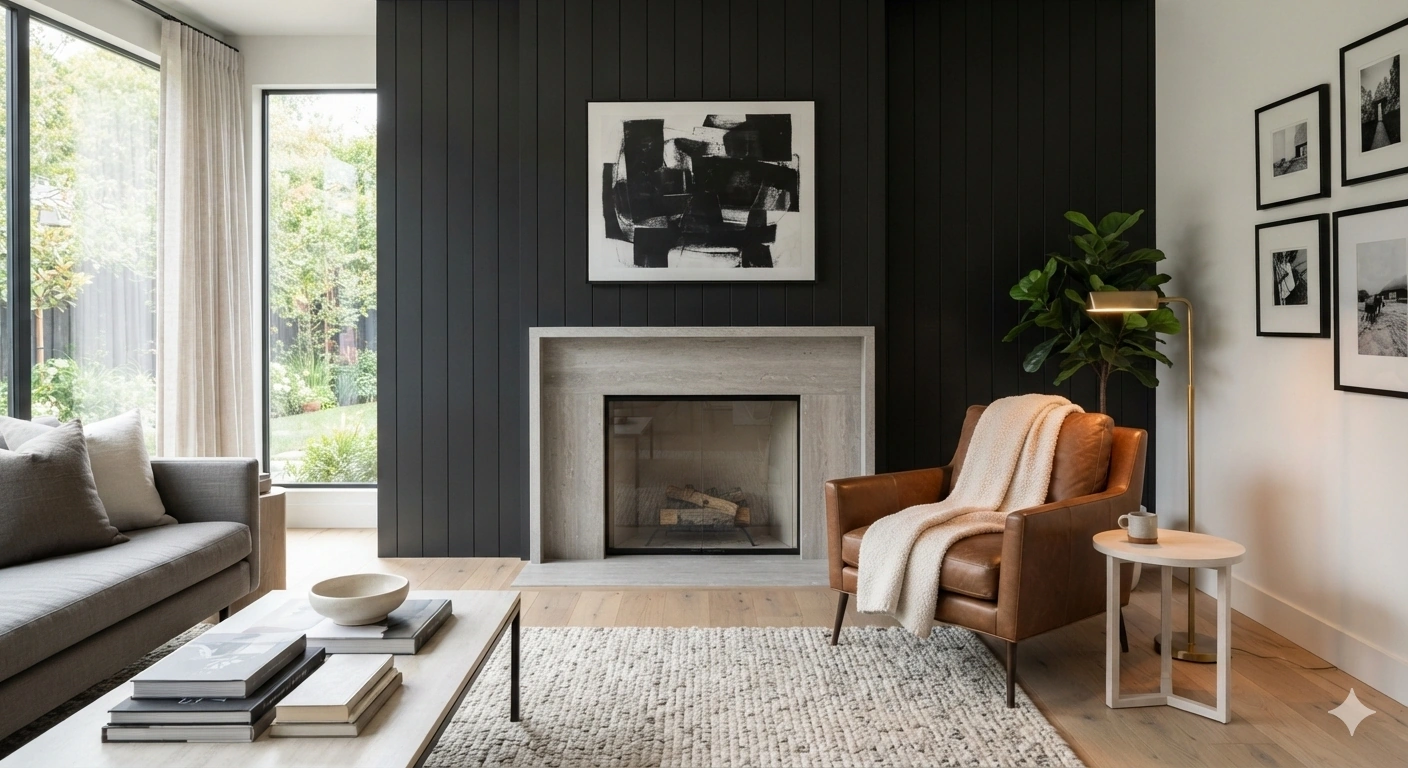
While white shiplap will always be synonymous with classic farmhouse style, painting shiplap in a deep, moody black completely reinvents the material, transforming it into a sleek, contemporary design element. The horizontal or vertical grooves of shiplap introduce subtle lines that break up the flat surface of a wall, offering a relaxed yet incredibly sophisticated vibe.
Horizontal black shiplap works wonders in making narrow spaces feel wider, making it a brilliant choice for an entryway or a cozy den. Vertical black shiplap, on the other hand, draws the eye upward, creating the illusion of taller ceilings. This looks spectacular behind a modern fireplace or as a feature wall in a powder room.
To keep this look firmly rooted in modern luxury rather than rustic country, steer clear of heavily distressed wood finishes. Instead, choose smooth, clean-lined pine or MDF planks and paint them in a rich, warm black like charcoal or obsidian. Balance the dark wood with organic textures: a natural stone mantel, a cognac leather armchair, and a soft, textured boucle throw. This curated mix of materials ensures your modern shiplap wall feels warm, layered, and effortlessly chic.
9. Incorporating Organic Textures: Plaster and Limewash Black Feature Walls
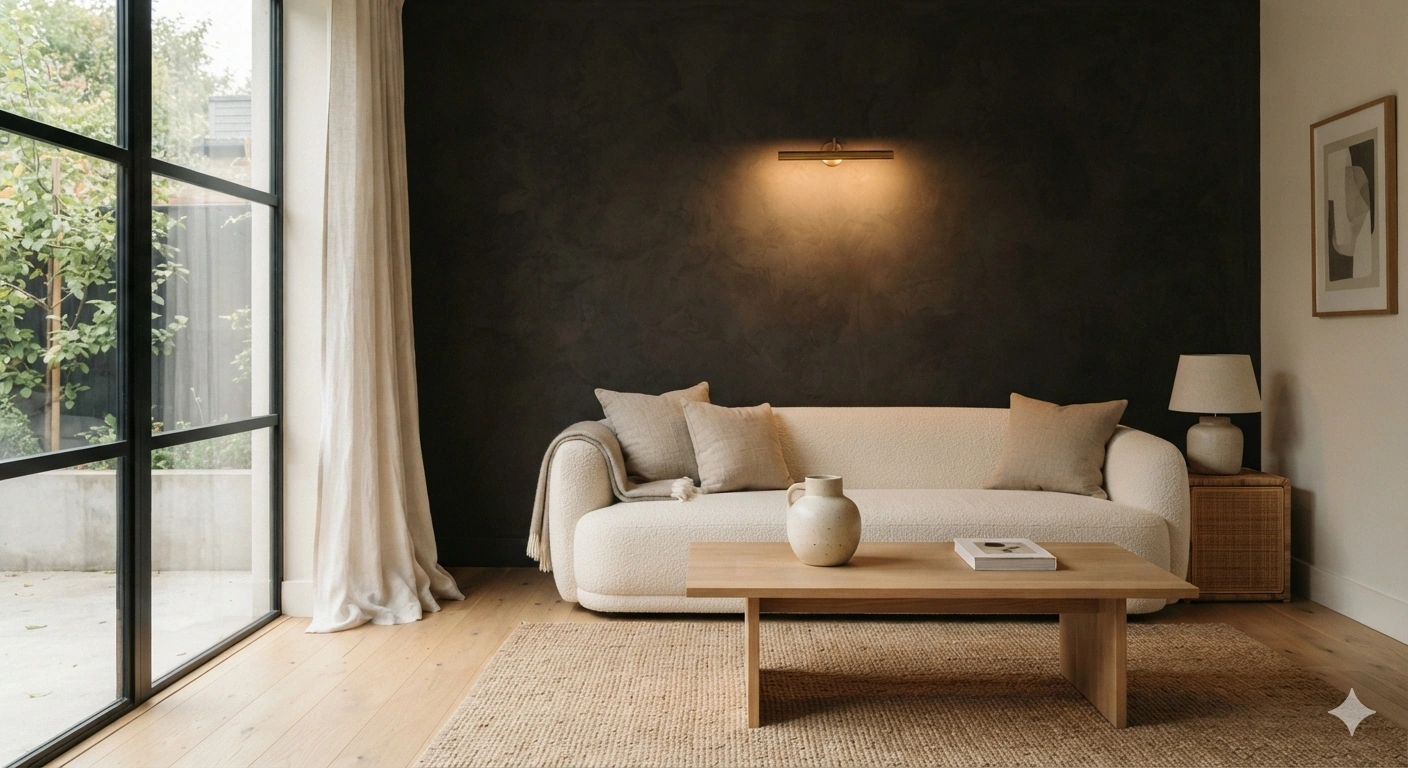
A common hesitation with black accent walls is the fear of a flat, sterile finish that absorbs all light and highlights every wall imperfection. To bypass this, we look to organic textures like plaster, Roman clay, or limewash. These materials introduce a tactile, suede-like movement that catches the light beautifully, transforming a stark black surface into a living, breathing architectural feature.
This technique works exceptionally well in spaces with abundant natural light, such as open-concept living rooms or sun-drenched bedrooms. As the sun shifts throughout the day, the subtle tonal variations within the plaster create a mesmerizing play of shadows. To style this look, pair the textured wall with minimalist, clean-lined furniture to let the craftsmanship of the plaster shine.
When choosing your product, opt for a warm charcoal or soft obsidian shade rather than a harsh, blue-toned black. This keeps the atmosphere cozy and inviting. Complement the wall with low-profile bouclé seating and linen drapery to enhance the tactile experience.
A classic designer mistake is using standard flat latex paint on a poorly prepped wall, which can look chalky and show scuffs. Instead, investing in a high-quality mineral paint or lime wash provides a durable, breathable finish that actually conceals minor surface flaws. To complete the look, install low-glare, warm-toned LED art lights to highlight the rich texture when night falls.
10. High-Contrast Art Styling: How to Select and Arrange Frames Against a Dark Backdrop
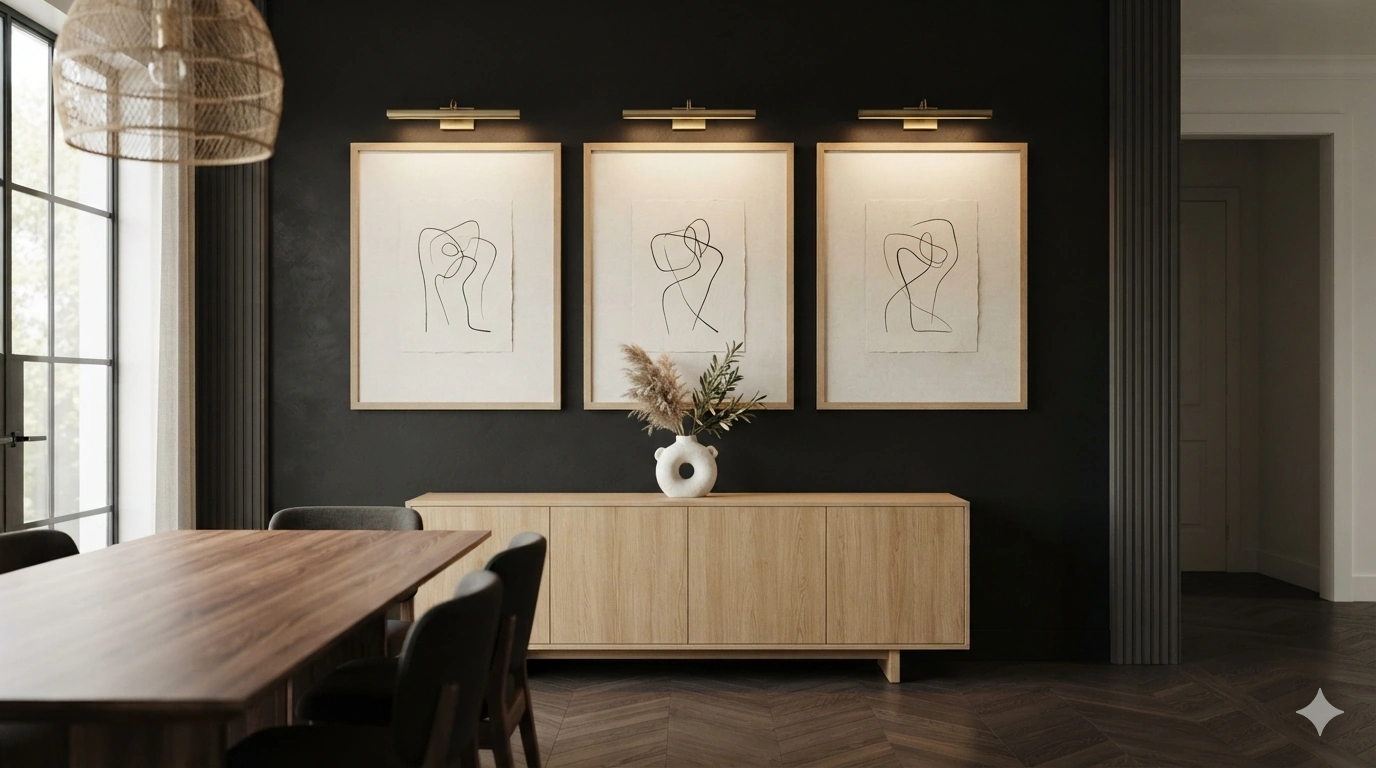
Hanging artwork on a black accent wall is one of the most effective ways to break up the dark expanse, but it requires a deliberate curatorial strategy. A dark backdrop acts as a high-contrast stage, making whatever you place on it instantly pop. The key is to leverage this contrast to create a sophisticated focal point rather than a chaotic visual distraction.
This styling method is perfect for dining rooms or long hallways where you want to establish an art-gallery vibe. To make the artwork stand out, select frames that offer a clear contrast. Light oak, natural maple, or warm brushed brass frames work beautifully against a dark backdrop. For the art itself, opt for oversized white or off-white matting; this creates a visual buffer that allows the artwork—whether it is a minimalist line drawing or a vibrant abstract—to breathe.
Avoid the temptation to use thin, dark frames, as they will completely disappear into the wall, leaving your art looking unanchored. Instead, create a balanced gallery wall or hang a single, massive statement piece.
To elevate the presentation, install brass picture lights directly above the frames. The warm glow casting downward not only illuminates the artwork but also bathes the black wall in a soft, atmospheric light, softening its intensity and adding an undeniable layer of luxury.
11. Warming Up the Dark: Integrating Natural Wood Tones and Leather Accents
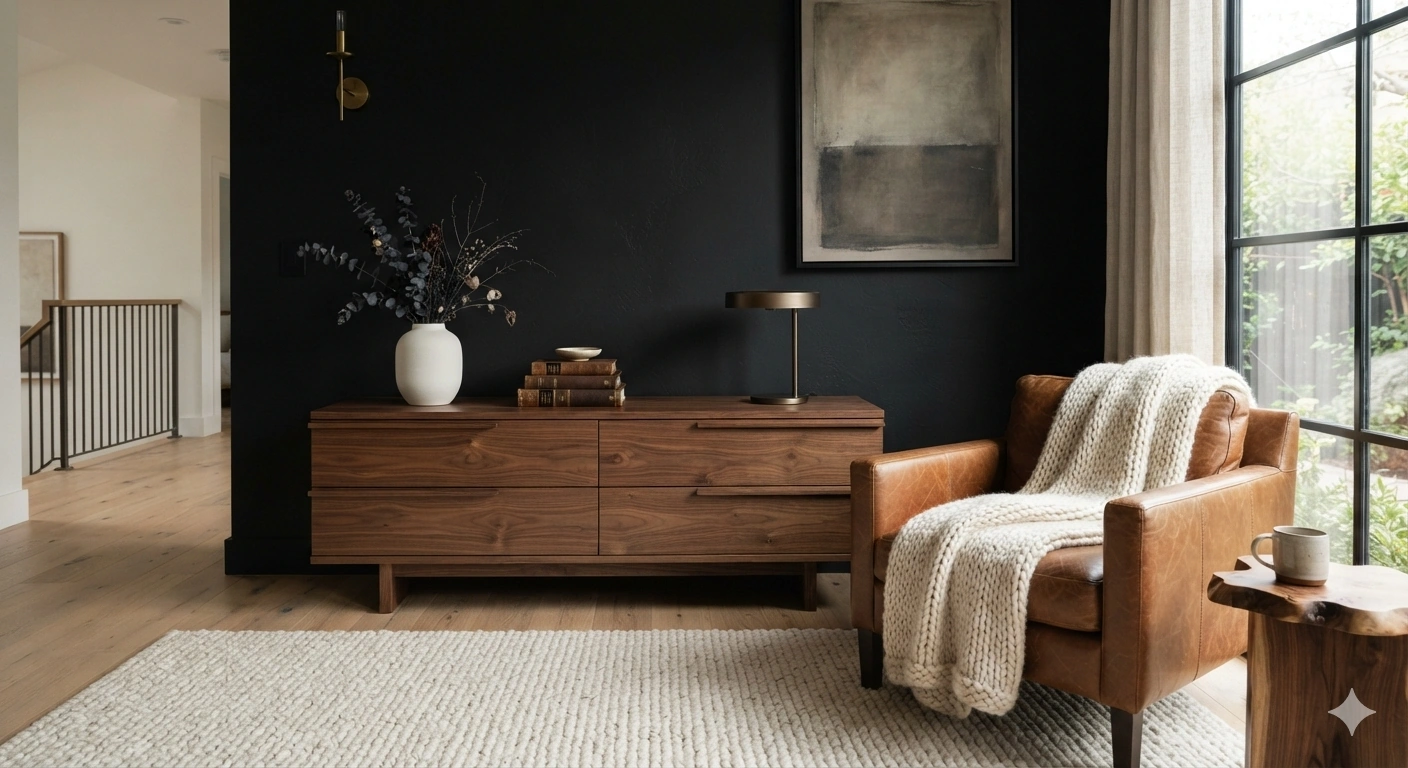
To prevent a black feature wall from feeling cold or intimidating, you must introduce elements that bring warmth and organic soul back into the room. The secret weapon here is the strategic layering of natural wood tones and rich leather accents. The juxtaposition of deep black against warm, earthy materials creates a balanced, high-end look that feels grounded and intentional.
This approach works wonders in family rooms, dens, and home libraries where comfort is the primary goal. When choosing wood species, look for mid-to-dark tones with visible grain, such as white oak, walnut, or reclaimed elm. A floating white oak shelf or a walnut credenza placed against a black wall instantly softens the stark contrast, making the space feel curated over time.
Incorporate leather through accent seating, like a cognac leather armchair, or smaller decorative details like leather-bound books and trays. The amber and caramel undertones of the leather naturally complement the warm black paint, adding a luxurious tactile dimension to the room.
A common pitfall is pairing a black wall with cool-toned grey woods or overly yellow pine, which can clash and look dated. Stick to warm, neutral wood stains. To tie the look together, introduce cream-colored textiles, such as a chunky knit throw or a wool area rug, to bridge the gap between the dark wall and the warm wood elements.
12. Metallic Magic: Pairing Brass, Gold, and Chrome Fixtures with Black Walls
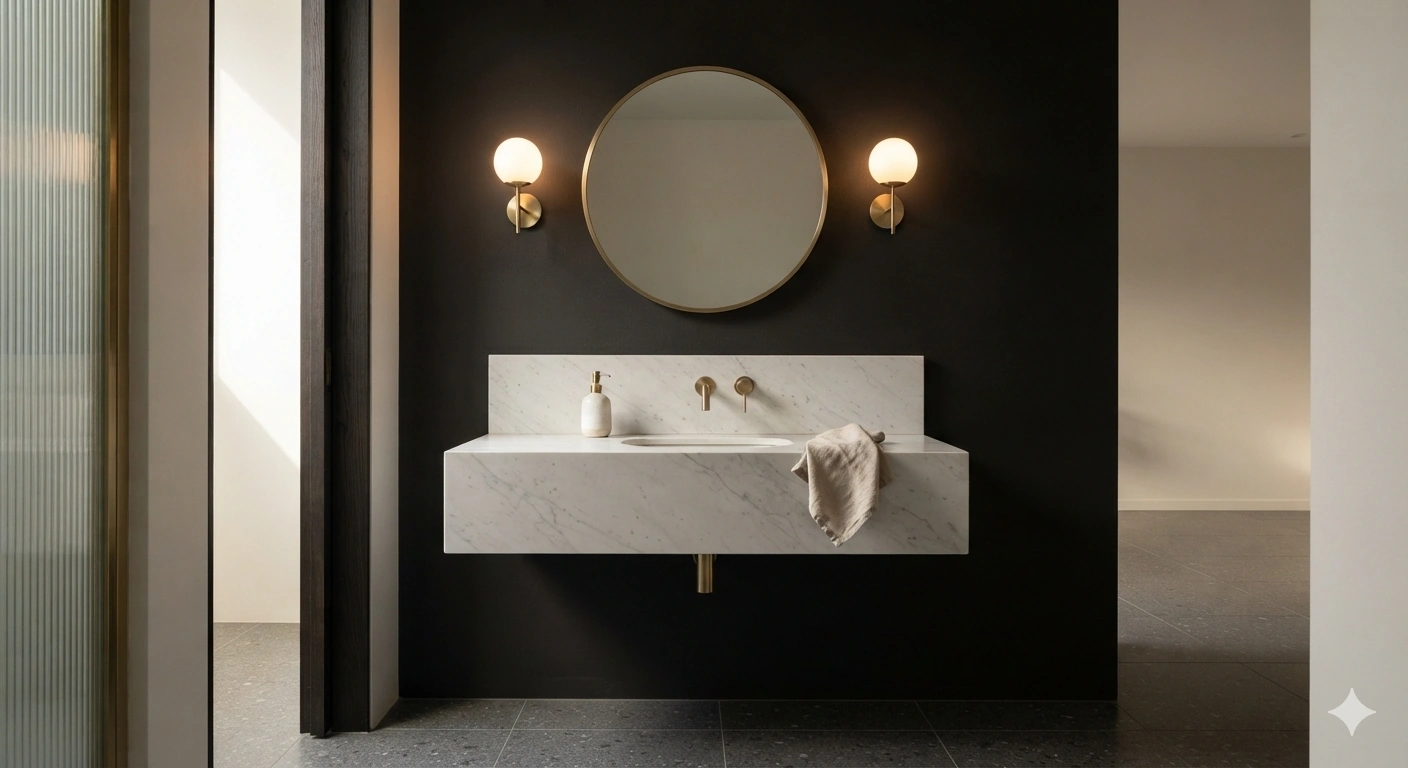
Think of metallic fixtures as the jewelry of your room. When set against a dramatic black accent wall, metals lose their subtlety and become striking design statements. The high-contrast pairing of metallic finishes with a dark backdrop adds an instant touch of glamour and modern sophistication.
This combination is particularly striking in powder rooms, wet bars, and master suites. Brushed brass and satin gold are the gold standards for warming up a black wall, offering a classic, mid-century modern or transitional aesthetic. If your style leans more contemporary, polished chrome or nickel provides a sleek, industrial contrast that feels incredibly fresh and crisp.
When styling, consistency is key. If you install brushed brass sconces on the black wall, echo that finish in nearby hardware, like cabinet pulls or a mirror frame. This creates a cohesive narrative throughout the space.
The mistake to avoid here is over-accessorizing. Because the contrast is so high, a few well-placed metallic elements go a long way; too many can make the wall look cluttered and gaudy. For lighting, choose fixtures with exposed Edison bulbs or frosted globes to cast a soft, diffused light that bounces off the metallic surfaces, creating a beautiful, ambient shimmer against the dark paint.
13. Cozy Bedrooms: Creating a Moody Sanctuary with a Black Headboard Wall
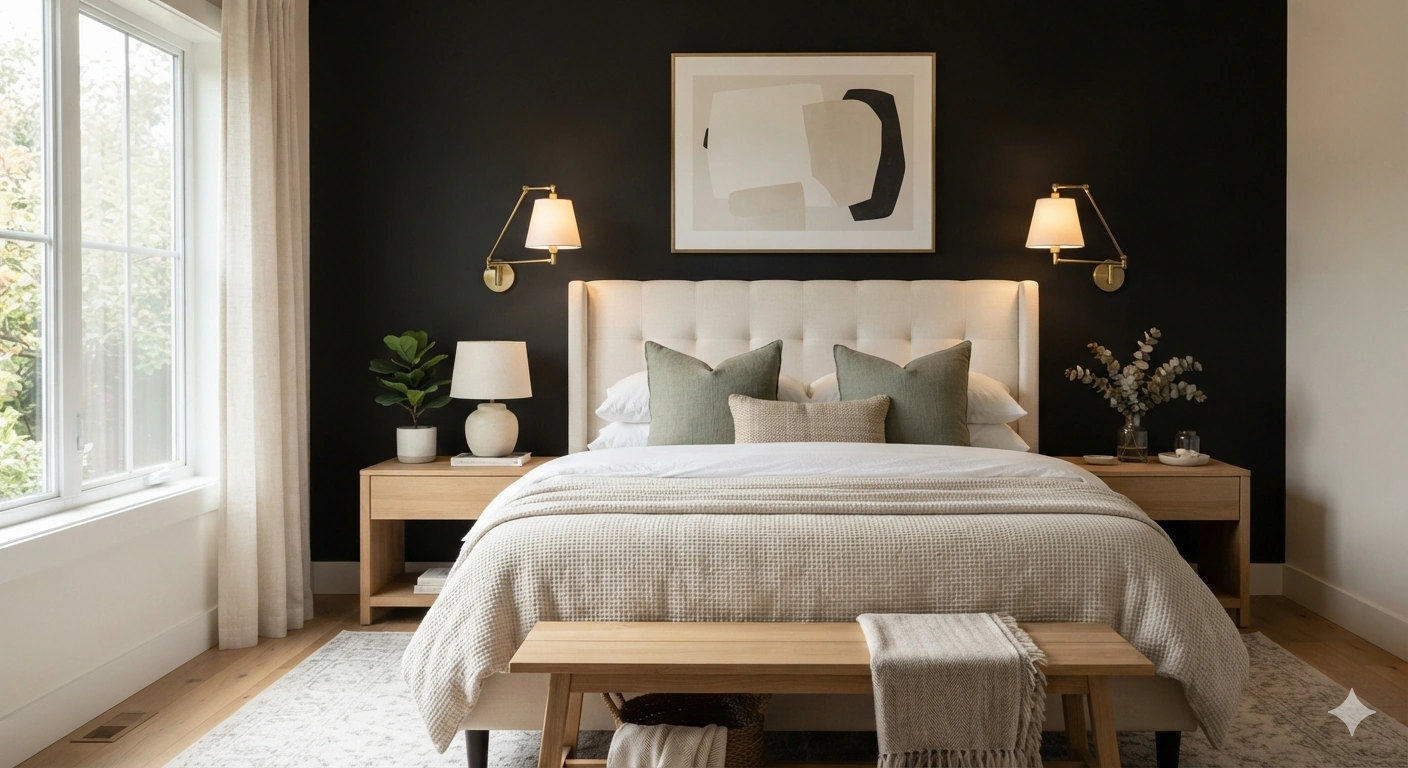
The bedroom should be a sanctuary, and a black headboard wall is the ultimate way to create a cozy, cocoon-like retreat. By painting the wall behind your bed black, you instantly establish a clear focal point while making the boundaries of the room visually recede, promoting a sense of restfulness and deep comfort.
This design works beautifully in both spacious master bedrooms and snug guest rooms. To keep the space from feeling gloomy, balance the dark wall with plush, light-toned bedding. Think layers of crisp white linen, a waffle-weave duvet, and textured throw pillows in soft oatmeal or sage green.
A velvet or upholstered headboard in a contrasting shade, like olive green, rust, or cream, looks exceptionally luxurious against a black backdrop. Alternatively, a spindle wooden headboard allows the black wall to peek through, highlighting the bed’s architectural silhouette.
Avoid using high-gloss paint in the bedroom, as it reflects light harshly and can feel cold. Instead, opt for a flat or matte finish that absorbs light and feels velvety to the touch. Flank the bed with low-profile nightstands and install dimmable, fabric-shaded wall sconces to cast a warm, gentle glow that enhances the moody, romantic atmosphere.
14. Dramatic Living Rooms: Framing Your Media Console and Fireplace in Black
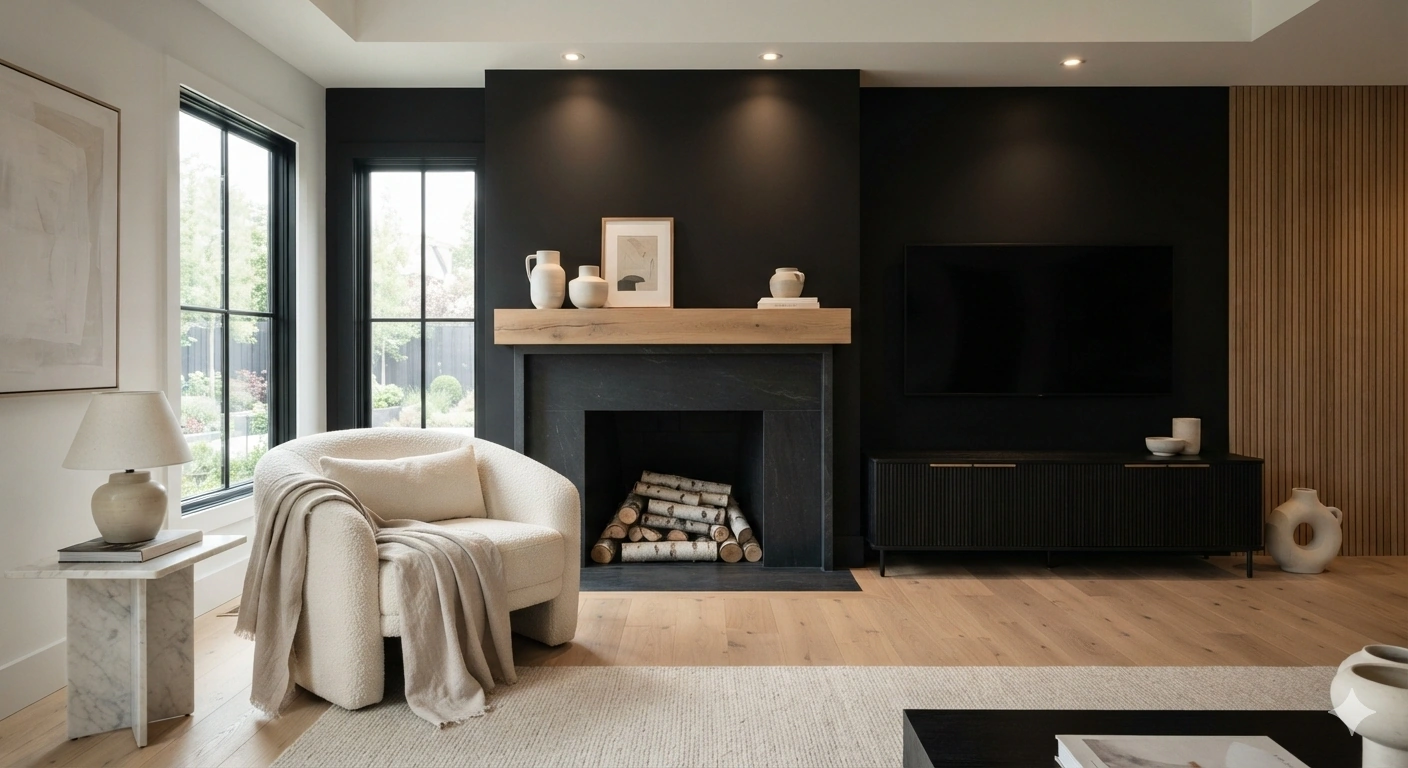
In modern living rooms, the television and the fireplace often compete for attention. A black accent wall is a brilliant design solution that harmonizes these elements, turning a potential eyesore into a seamless, high-end architectural feature. By painting the fireplace wall black, you can visually camouflage a dark TV screen while accentuating the warmth of the flames.
This setup works best in main living areas where the fireplace serves as the natural gathering point. To execute this look with designer flair, consider using a matte black paint or a dark charcoal soapstone for the fireplace surround. If you have a mantel, opt for a thick piece of natural white oak to break up the dark surface and provide a perch for styled objects.
For your media console, choose a piece that matches the wall’s depth, such as a fluted black wood console, to make the unit blend in, or a contrasting light wood console to ground the space.
A common mistake is neglecting the interior of the fireplace box. If it is a non-working fireplace, paint the interior black as well, and fill it with birch logs or pillar candles for contrast. Soft, ambient lighting from recessed ceiling lights or directional spotlights will highlight the fireplace’s texture without casting glare on your television screen.
15. Chic Entryways: Making a Bold First Impression with a Dark Feature Wall
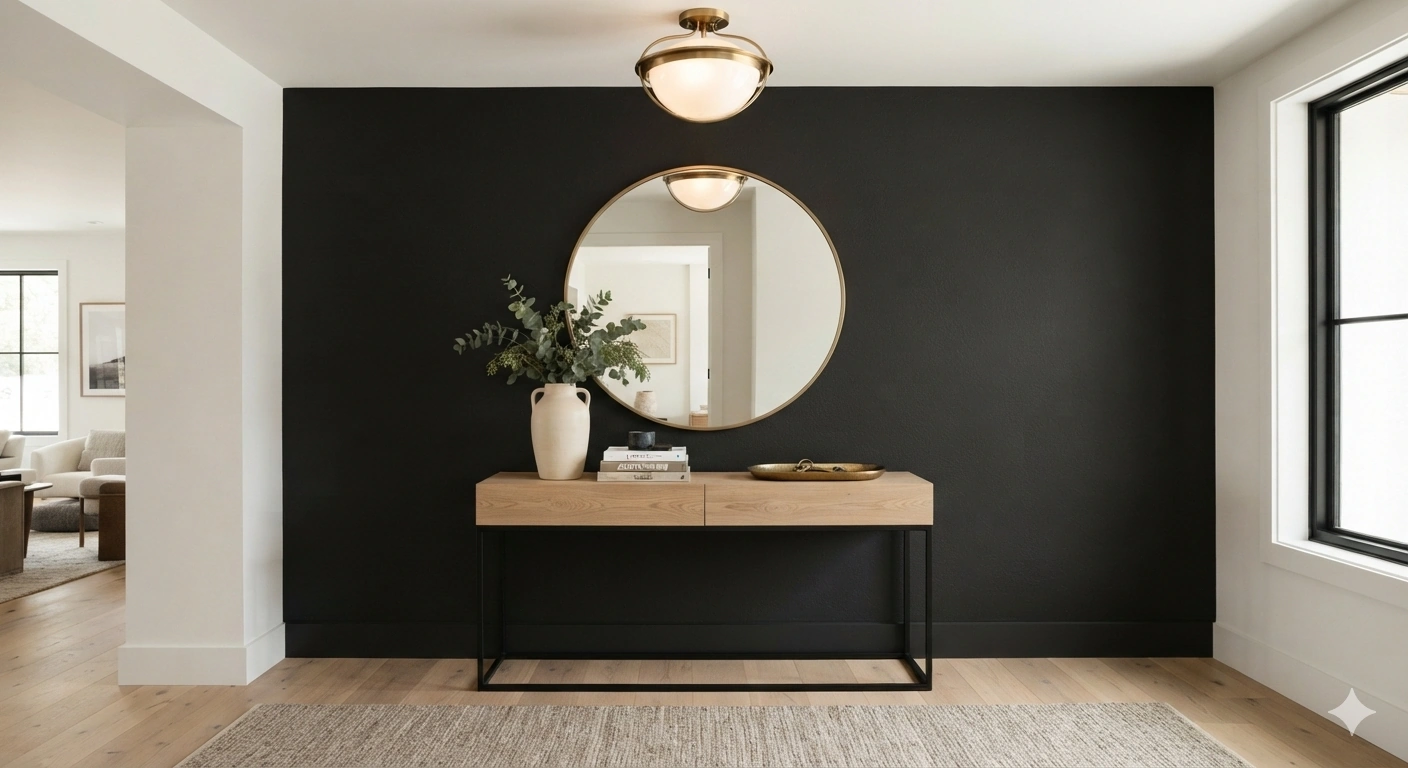
Your entryway sets the tone for your entire home, and a black feature wall makes a bold, unforgettable first impression. It signals a home that is confident, stylish, and deeply curated. Far from making an entry feel small, a dark wall adds instant depth, making the transition into the rest of the house feel bright and expansive.
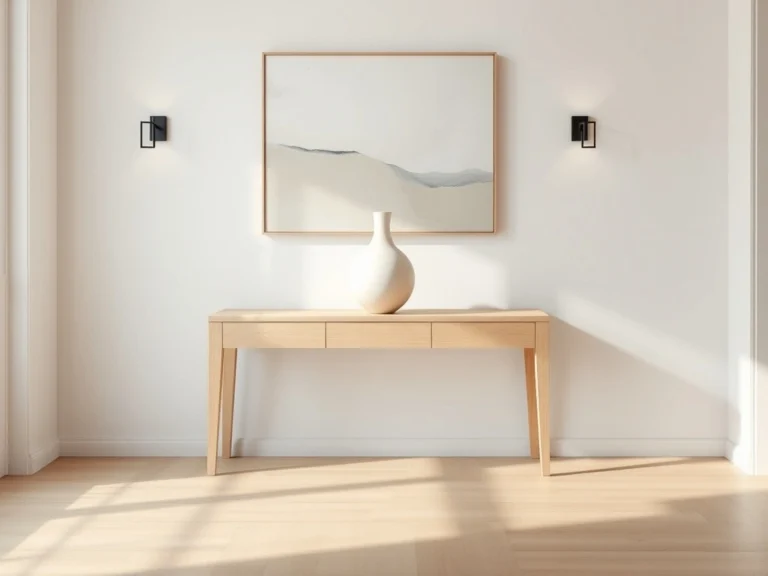
This application works beautifully in foyers of all sizes, especially those that open directly into a living space. To style this area, place a sleek console table against the black wall. A table made of light oak, a console with a marble top, or a minimalist iron frame works best. Above the console, hang a large round mirror with a thin brass frame; this not only breaks up the black expanse but also bounces light around the entry, keeping it feeling open.
Style the console with a mix of organic shapes: a tall ceramic vase filled with fresh branches, a stack of art books, and a small catchall tray.
Be sure to avoid clutter in this zone, as a dark backdrop will amplify any disorganization. Ensure the entryway is well-lit with a statement flush-mount or semi-flush ceiling fixture that casts a warm, welcoming glow, ensuring your guests feel invited the moment they step through the door.
16. Small Space Solutions: How to Style a Black Accent Wall in a Tiny Room
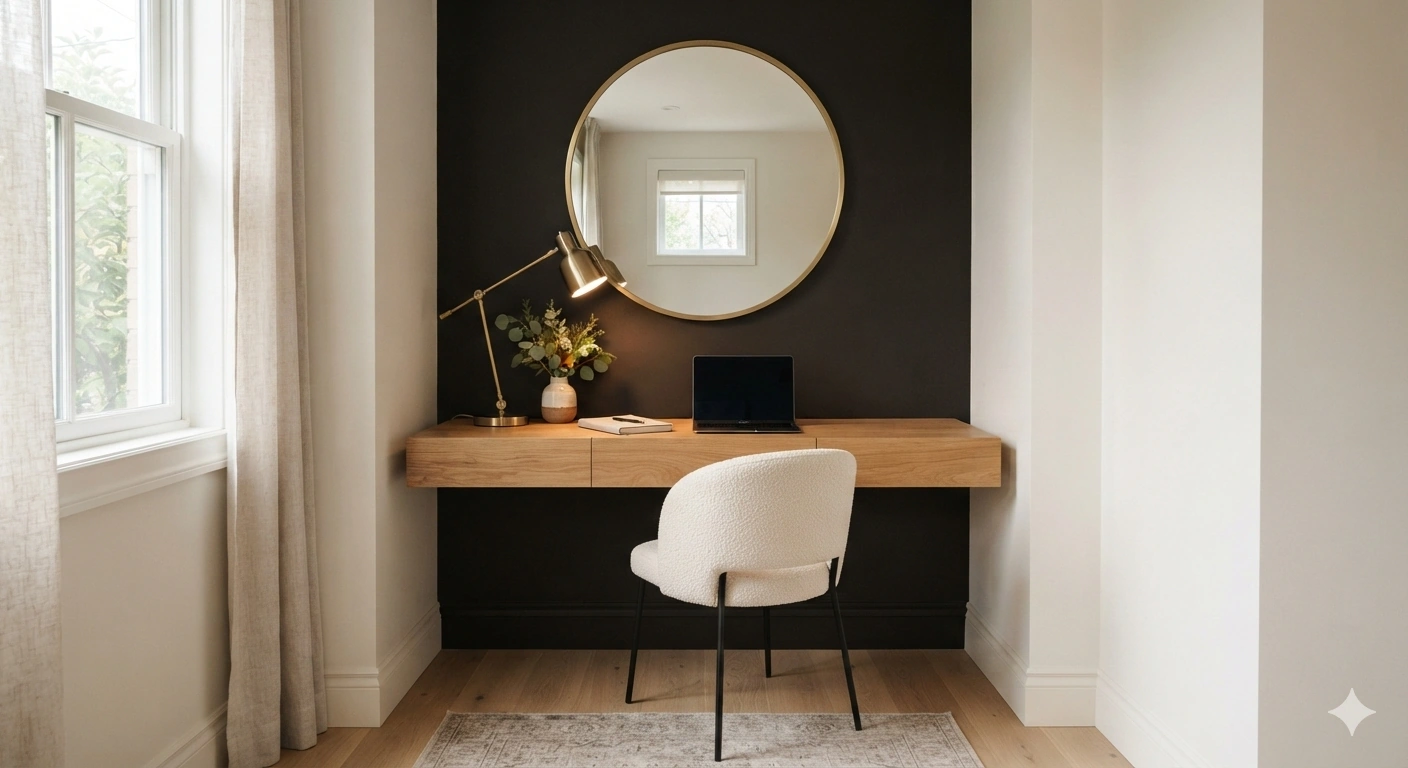
There is a persistent myth in interior design that dark colors should never be used in small spaces. In reality, a black accent wall can actually make a tiny room feel larger. Because black absorbs light, the wall’s boundaries become less defined, creating an optical illusion of endless depth—a design trick known as receding space.
This technique works exceptionally well in powder rooms, compact home offices, or cozy reading nooks. To successfully execute this in a small room, keep the remaining walls light and airy—think soft alabaster, warm beige, or pale gray. This high-contrast boundary line draws the eye inward, making the room feel more dynamic.
When styling, choose furniture with a light footprint. A floating desk or a wall-mounted sink keeps the floor space clear, enhancing the feeling of spaciousness. Incorporate reflective materials like glass, polished metals, and mirrors to bounce light across the small room.
The biggest mistake in a small space is using poor lighting, which can turn the room into a dark cave. Avoid this by layering your light sources: pair a bright overhead fixture with a task light or a pair of wall sconces. This ensures the black wall feels like a deliberate, cozy design choice rather than a gloomy afterthought.
17. Balancing the Room: Distributing Dark Accents to Prevent a Lopsided Layout
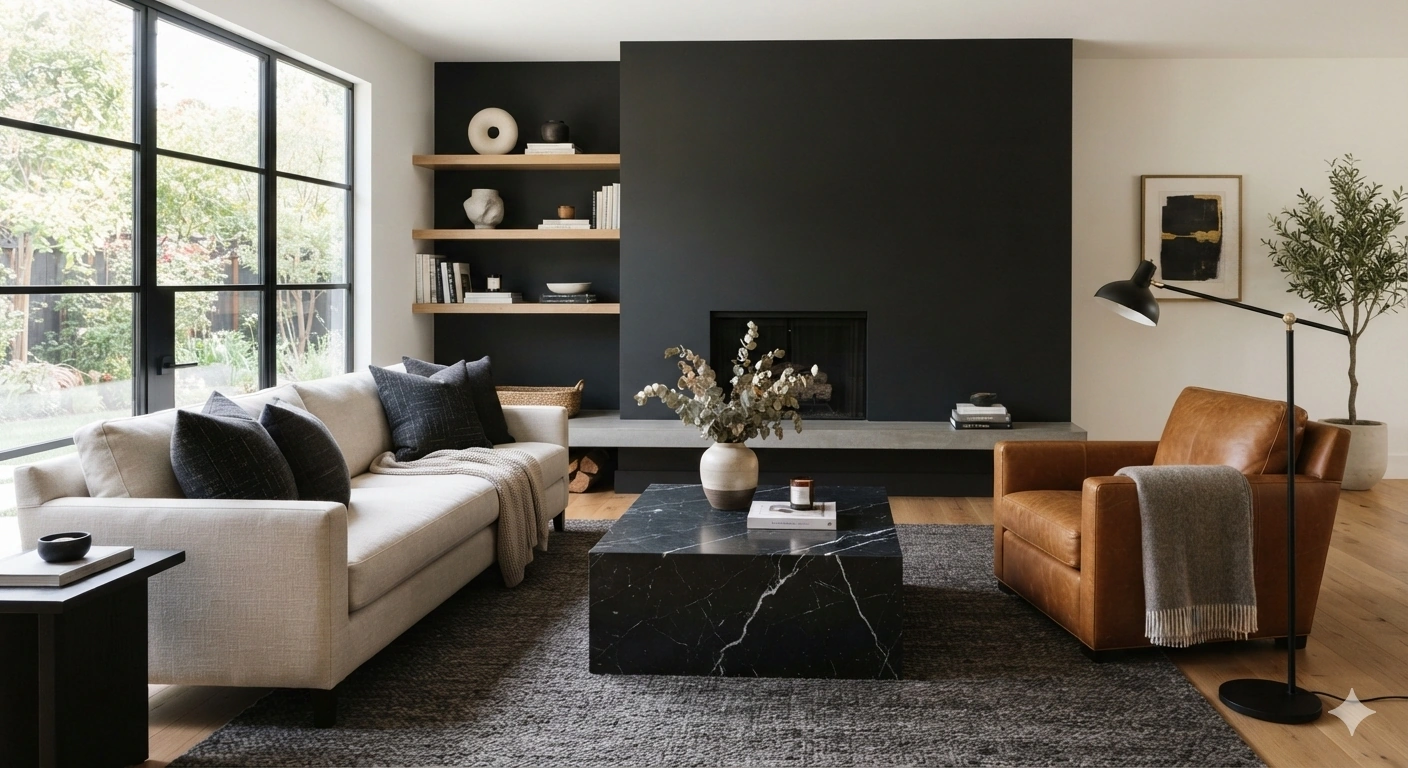
A singular black accent wall is undeniably dramatic, but without proper distribution, it can make your room feel visually lopsided—as if the entire space is tilting toward that one dark plane. To create a harmonious, cohesive environment, you must distribute smaller black and deep charcoal accents throughout the rest of the room. This technique, which designers call ‘visual weight distribution,’ coaxes the eye to move naturally around the entire space rather than getting stuck on a single heavy wall.
This approach works beautifully in living rooms and bedrooms where the furniture arrangement naturally faces or opposes the accent wall. Start by introducing dark elements on the opposite side of the room. For example, if your black wall sits behind the bed, balance it with an ebonized oak dresser or a pair of matte black metal lamps on the opposite wall. In a living room, a charcoal-toned wool rug, a dark marble coffee table, or even throw pillows with deep, graphic patterns can anchor the surrounding seating group.
The key is to use varied textures to keep the dark accents from feeling flat. Blend matte metals, rich leathers, and nubby textiles to create a layered, organic feel. Avoid the common mistake of using too many small, matching black knick-knacks, which can look cluttered and intentional in the wrong way. Instead, opt for three to four substantial, high-quality pieces that carry enough visual weight to counter the scale of the accent wall. When lit with soft, warm ambient light from well-placed table lamps, these distributed accents will tie the entire room together, turning a single feature wall into a fully integrated, high-end design scheme.
18. The Greenery Contrast: Using Houseplants to Bring Life to a Dark Backdrop
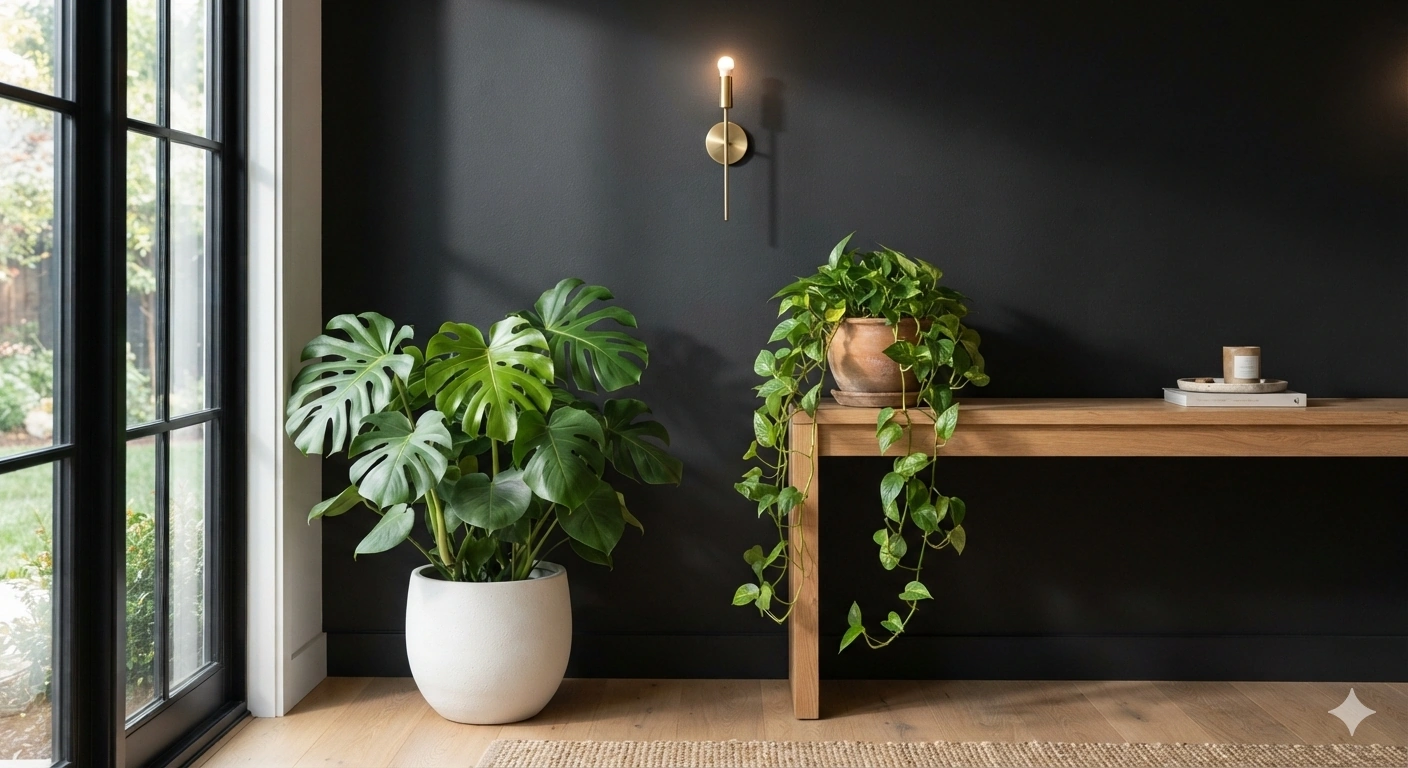
There is perhaps no design pairing more striking than the organic, vibrant green of live foliage against a deep, moody black backdrop. A black accent wall acts as a dramatic canvas, making the natural silhouettes and varied green tones of houseplants pop with extraordinary intensity. Where a plant might get lost against a standard white wall, it becomes a living work of art against a dark charcoal or soft black surface, instantly breathing life, movement, and freshness into the space.
This styling technique works wonders in sun-drenched living rooms, dining areas, or home offices where natural light can dance across the leaves. To maximize this contrast, choose plants with architectural shapes and large, textured leaves, such as a Fiddle Leaf Fig, a split-leaf Philodendron, or a dramatic Monstera Deliciosa. For shelves mounted directly onto the black wall, trailing plants like Pothos or Heartleaf Philodendron create a beautiful, cascading waterfall of green that softens the hard lines of the architecture.
When styling, pay close attention to your planters. Natural terracotta pots offer a gorgeous earthy contrast, while raw concrete or matte white ceramic vessels provide a clean, modern aesthetic. Avoid using dark or black pots, as they will disappear into the background and lose their definition. Ensure your plants receive adequate indirect sunlight, as the dark wall will absorb light rather than reflect it. Position a warm brass picture light or a low-profile spotlight to cast gentle shadows of the foliage onto the black wall at night, adding an enchanting, layered dimension to your evening ambiance.
19. Step-by-Step Preparation: How to Prep Drywall to Prevent Imperfections on Dark Walls
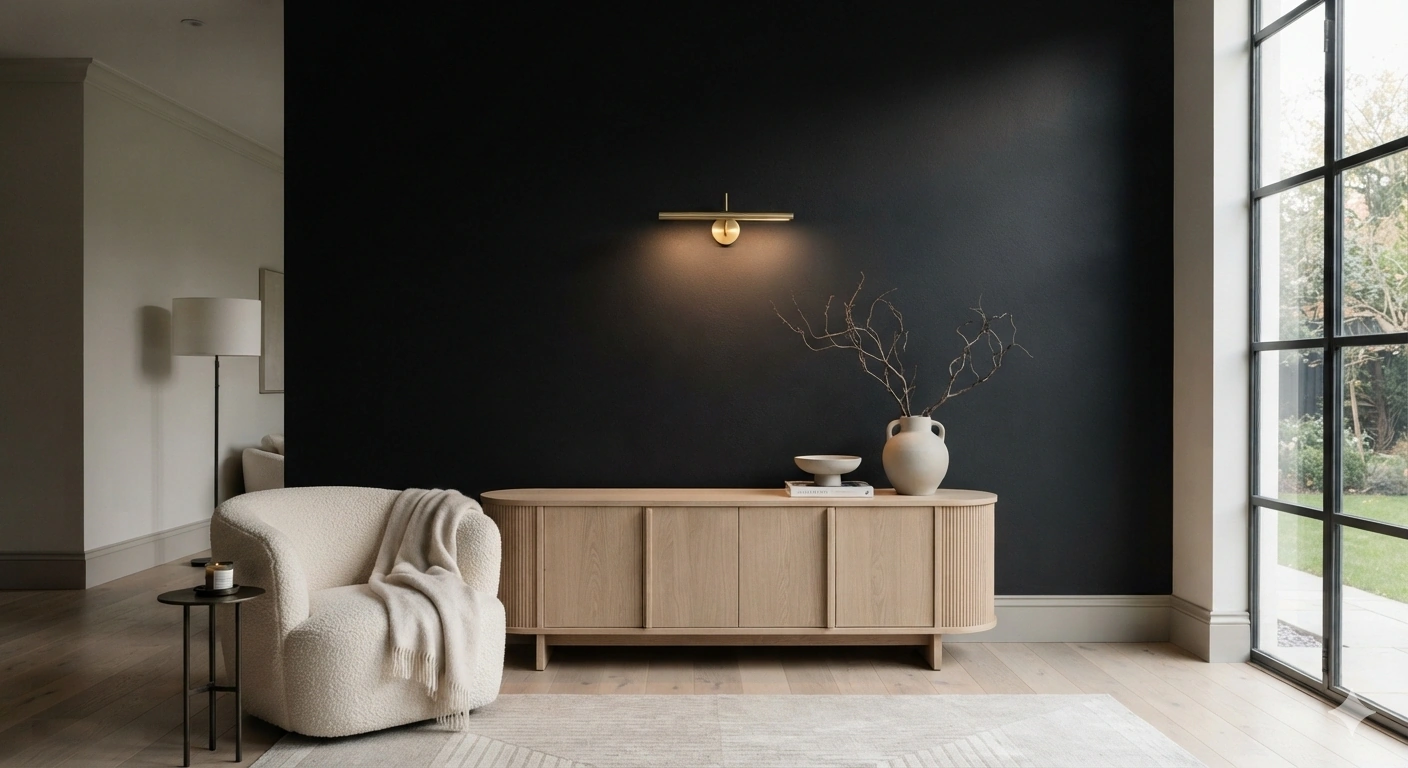
The secret to a designer-grade black accent wall lies entirely in the preparation. Dark paint behaves like a magnifying glass; its deep pigments absorb light in a way that highlights every minor drywall seam, nail pop, and texture inconsistency. To achieve that coveted, velvety smooth finish that looks like a custom architectural feature rather than a DIY project, meticulous surface preparation is non-negotiable.
This preparation phase is critical in spaces with strong directional lighting, such as entryways with high windows or bedrooms with bedside sconces, where raking light will expose any flaws. Begin by thoroughly cleaning the wall to remove dust, oils, and cobwebs. Next, patch every nail hole, dent, and hairline crack with a high-quality spackling compound. Once dry, sand the entire wall smooth using a fine-grit sanding block, paying extra attention to blended areas.
The most crucial, often overlooked step is applying a tinted primer. Always ask your paint store to tint your primer to a deep gray. A dark primer ensures rich, uniform color depth and prevents the bright white drywall or previous light paint from peeking through minor scuffs. After priming, do a quick light sanding to knock down any raised wood grain or paint bumps before applying your topcoat. For the ultimate luxury finish, opt for a flat, matte, or eggshell sheen. These low-luster finishes absorb light beautifully, minimizing the appearance of surface imperfections while delivering a sophisticated, ultra-modern look.
20. Common Mistakes to Avoid When Designing and Decorating a Black Accent Wall
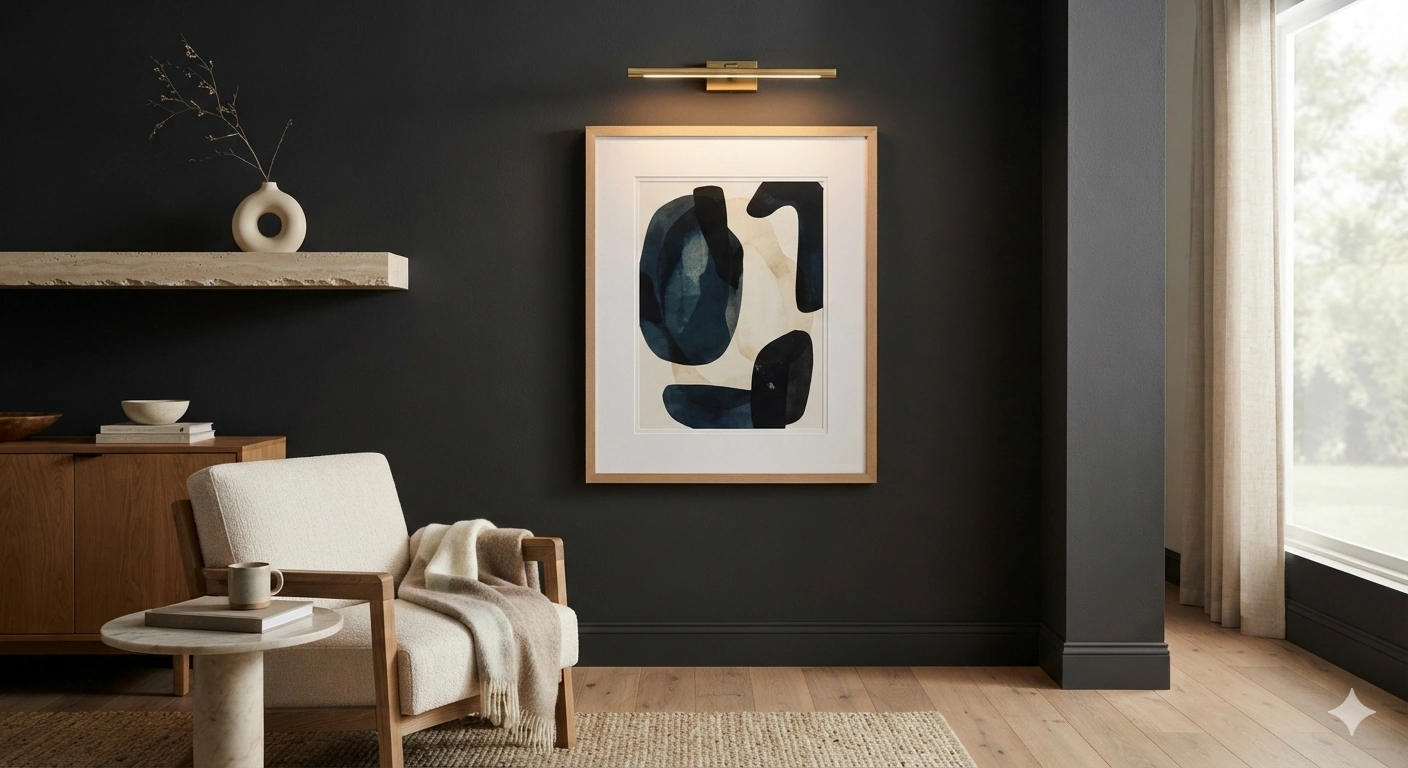
While a black accent wall can elevate a room’s design instantly, there are several common pitfalls that can easily derail your vision. The first major misstep is selecting a black paint with the wrong undertone. Many homeowners grab a generic black only to find it looks navy blue, forest green, or deep purple once applied to their walls. To avoid this, always test paint swatches in your room’s unique light. Opt for warm, charcoal-based blacks with brown or gray undertones, which feel much softer and more inviting than stark, cold blacks.
Another frequent error is choosing the wrong paint sheen. High-gloss or semi-gloss finishes reflect light harshly, creating distracting glares and exposing every fingerprint and drywall wave. Stick to flat, matte, or low-luster eggshell finishes to achieve a sophisticated, velvet-like texture. Furthermore, do not make the mistake of leaving the wall bare or hanging dark, low-contrast artwork against it. A black wall demands high-contrast decor. Frame your art in warm wood, bright brass, or clean white mats to make the pieces pop, and use light-colored oak or travertine shelving to break up the dark expanse.
Finally, never neglect your lighting plan. A black wall absorbs light, which can make a room feel small and cave-like if left in the dark. Avoid harsh overhead lighting, which casts gloomy shadows. Instead, layer your lighting with warm brass sconces, picture lights, and floor lamps to wash the wall in a soft, inviting glow. This transforms the dark surface from a cold barrier into a cozy, deeply sophisticated architectural feature.
Frequently Asked Questions
Will a black accent wall make my small room look smaller?
Actually, it can do the exact opposite! While it sounds counterintuitive, a black accent wall can create an illusion of depth, making the wall seem to recede into the background. The key is to choose a warm black with soft undertones and pair it with light-colored adjacent walls. This high-contrast boundary visually pushes the dark wall back, opening up the space. Just ensure you have plenty of natural light or layered artificial lighting to keep the room from feeling enclosed.
How do I choose the right paint finish for a black accent wall?
For black walls, we highly recommend a matte or flat velvet finish. These finishes absorb light rather than reflecting it, which hides minor drywall imperfections and gives the wall a rich, velvety texture. However, if you are painting a high-traffic area like a hallway or have young kids, look for a ‘washable matte’ or opt for an eggshell finish. Eggshell offers a tiny hint of sheen for easier cleaning without looking too shiny or highlighting every bump on your wall.
Can I have a black accent wall if my trim and ceiling are bright white?
Absolutely, but you’ll want to bridge the gap so the contrast doesn’t feel too jarring. To make a black accent wall look intentional against bright white trim and ceilings, introduce transitional elements. Use artwork with white matting and black frames, or bring in textiles that feature both black and cream tones. You can also paint the trim on that specific wall black to create a seamless, floor-to-ceiling look that instantly elevates the architectural feel of the room.
How do I touch up a black wall without it looking patchy?
Dark paint is notorious for showing touch-up marks, often called ‘flashing’ where the sheen looks different. To avoid a patchy look, always use the exact same can of paint and the same application tool (like a small foam roller rather than a brush) used originally. Gently feather the edges of your touch-up paint outward. If the spot is large or in direct sunlight, your best bet is to repaint the entire wall from corner to corner to guarantee a flawless, seamless finish.
What colors pair best with a warm black accent wall?
Warm black is incredibly versatile and acts as a beautiful neutral. It pairs beautifully with organic, earthy tones like cognac leather, warm oak, olive green, and terracotta. For metal accents, warm brass and brushed gold create a luxurious, high-contrast look. If you want to keep things softer, pair your warm black wall with creamy off-whites, soft greiges, and dusty blush tones to create a balanced, cozy, and inviting atmosphere.
Do I need to prime my wall before painting it black?
Yes, priming is a step you don’t want to skip. When painting a wall black, using a grey-tinted primer is a game-changer. Standard white primer requires multiple coats of dark paint to achieve full, rich coverage. A dark grey primer mimics the depth of your black paint, meaning you’ll only need two coats of your expensive topcoat to get a perfectly even, professional-looking finish without any light patches peeking through.
Conclusion
Embracing a warm black accent wall is one of the most transformative design choices you can make for your home. By understanding how to balance the deep, rich tones with strategic lighting, natural wood textures, and the right paint finish, you can easily avoid the dreaded ‘black hole’ effect. Instead, you will create a sophisticated, cozy sanctuary that exudes modern elegance and architectural depth.
If you are feeling hesitant, remember that you do not have to redesign your entire home overnight. Start small by swatching a few warm black paint samples in your room’s unique lighting, or commit to a single feature wall in a cozy bedroom or entryway. Once you see how beautifully your favorite artwork, plants, and metallic fixtures pop against the dark backdrop, you will wonder why you didn’t make the bold choice sooner.
Your home should be a reflection of your personal style, and taking a design risk is the ultimate way to make it feel uniquely yours. Grab those paint swatches, trust your creative instincts, and enjoy the process of turning your space into a stunning, high-contrast masterpiece.