Your entryway is the silent ambassador of your home, yet it often becomes a chaotic staging ground for mail, shoes, and the stresses of the day. When this high-traffic area lacks purpose, it can disrupt the flow of your entire living space, leaving you feeling cluttered the moment you walk through the door.
True comfort begins at the threshold. By embracing the 2026 philosophy of the Slow Entry, you can transform your foyer from a cold transition zone into a sensory-rich sanctuary that prioritizes both intentional beauty and daily utility. It is entirely possible to balance the practical demands of a busy household with the warm, curated aesthetic you deserve.
In the following guide, we have curated a collection of cozy entryway ideas designed to help you reclaim your space. Whether you are working with a narrow corridor or a windowless foyer, these actionable strategies will show you how to layer lighting, textures, and storage to create a welcoming first impression that lasts.
Embracing the Slow Entry Philosophy for Modern Homes
The ‘Slow Entry’ philosophy is about intentional transition. Instead of rushing past your foyer, view it as a decompression chamber that signals to your nervous system that you have arrived. By prioritizing sensory comfort over mere utility, you create a buffer zone that separates the chaos of the outside world from the sanctuary of your home.
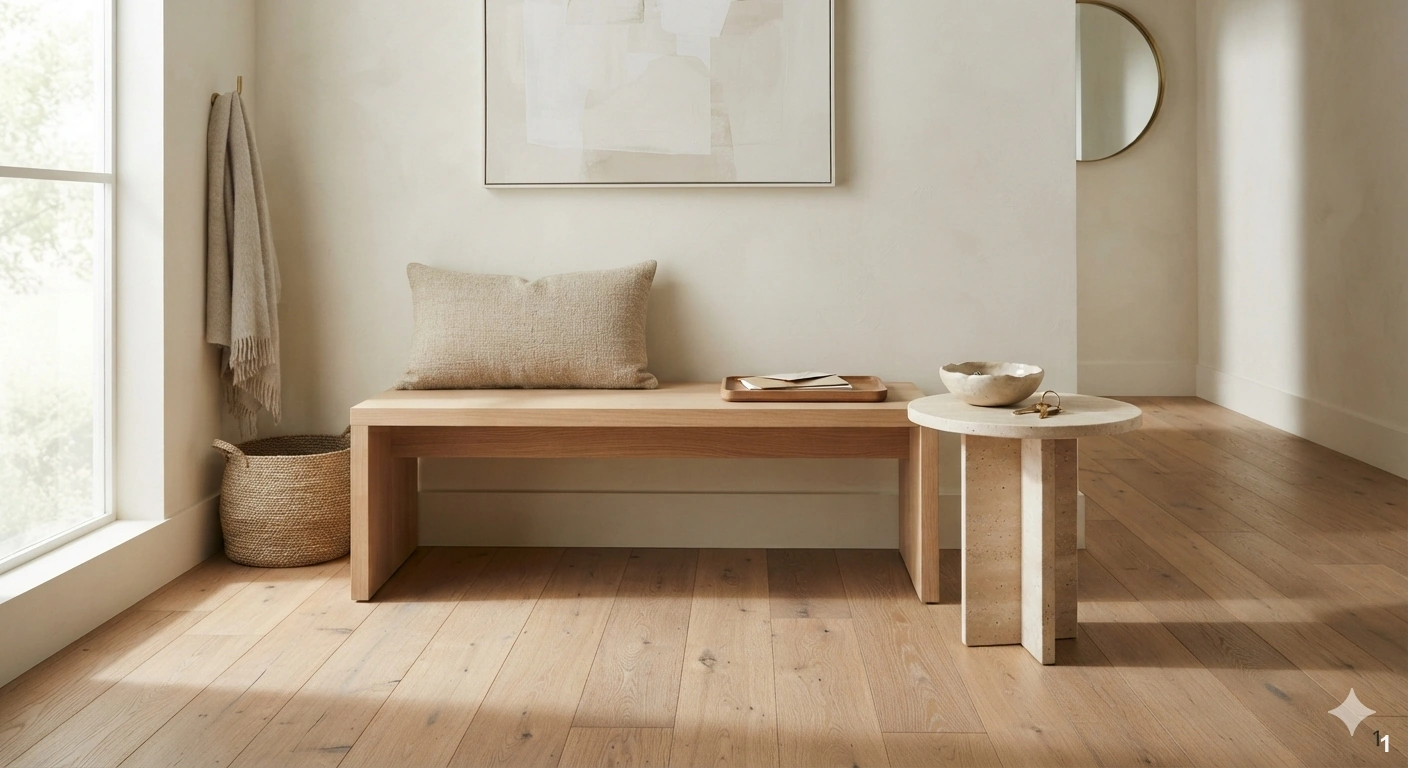
This approach works best in homes where the front door opens directly into a living space, requiring a defined sense of arrival. To achieve this, focus on items that engage the senses: a soft, tactile bench for removing shoes, a ceramic bowl for keys, and a curated scent profile. Avoid the common mistake of over-decorating with purely visual items; every piece should serve a purpose that encourages a slower, more mindful pace.
Designer-inspired tip: Keep a small, dedicated tray for your phone and mail, ensuring that digital distractions are left at the door. Use natural materials like raw wood or stone to ground the space, reinforcing the connection to nature. When the transition feels intentional, the entire home feels more settled.
Layering Textures with Durable High-Traffic Rugs
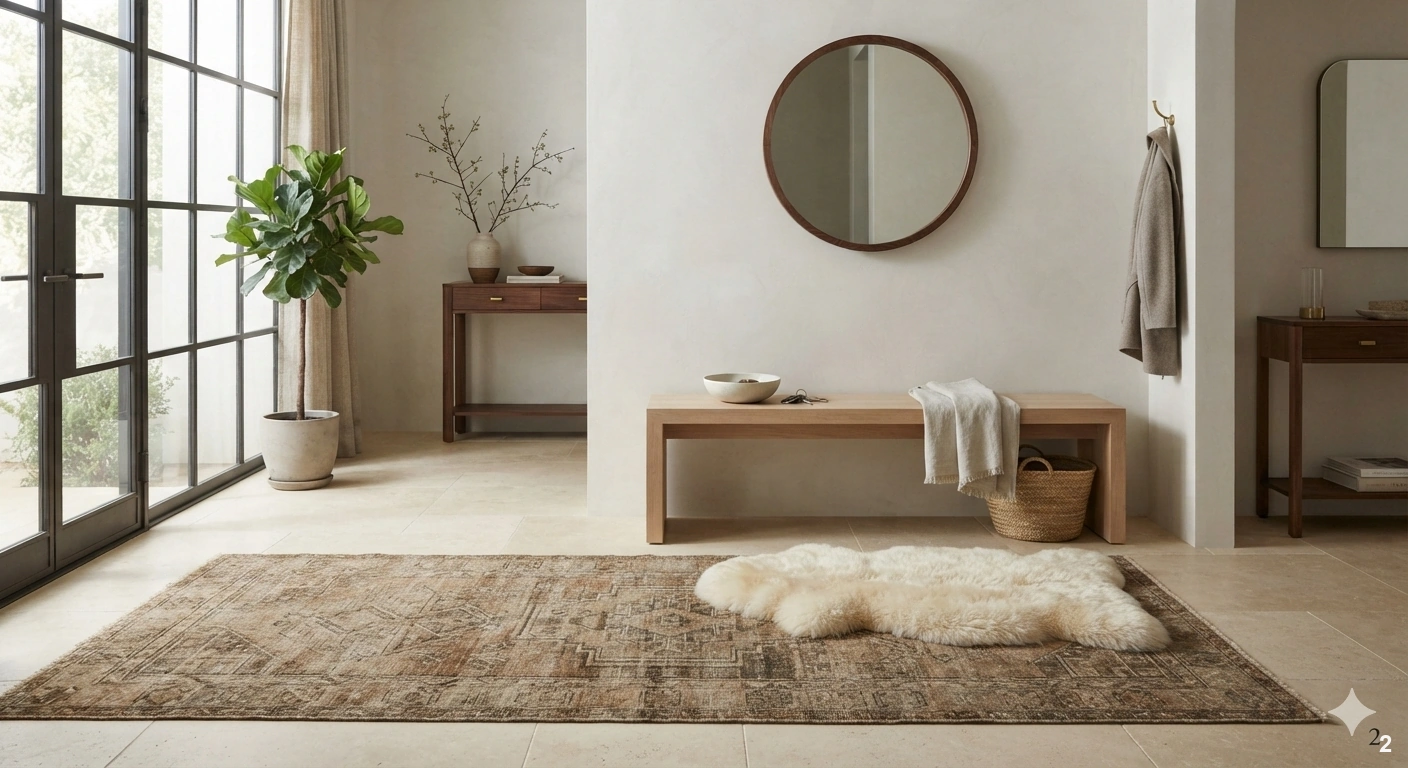
Entryways are the most abused zones in any home, yet they demand a level of sophistication that sets the tone for the rest of your decor. The secret to a cozy, high-traffic foyer is layering. Start with a durable, low-pile base rug—such as a vintage-inspired wool or a high-quality sisal—that can withstand daily wear while providing a grounding foundation.
This strategy is ideal for busy households that need both performance and style. If your space allows, layer a smaller, softer runner or a sheepskin throw over the primary rug near the bench area. This adds an immediate sense of luxury and warmth underfoot. Be careful not to choose rugs that are too plush; they will quickly look matted and trap debris. Instead, opt for complex patterns or mottled color schemes that naturally hide dust and grit between cleanings.
Designer-inspired tip: Ensure your rug is large enough to anchor the space; a postage-stamp-sized rug will make the area feel cramped. Look for wool blends, which offer natural stain resistance and a rich, matte texture that feels premium to the touch.
Warm Ambient Lighting Trends for 2026
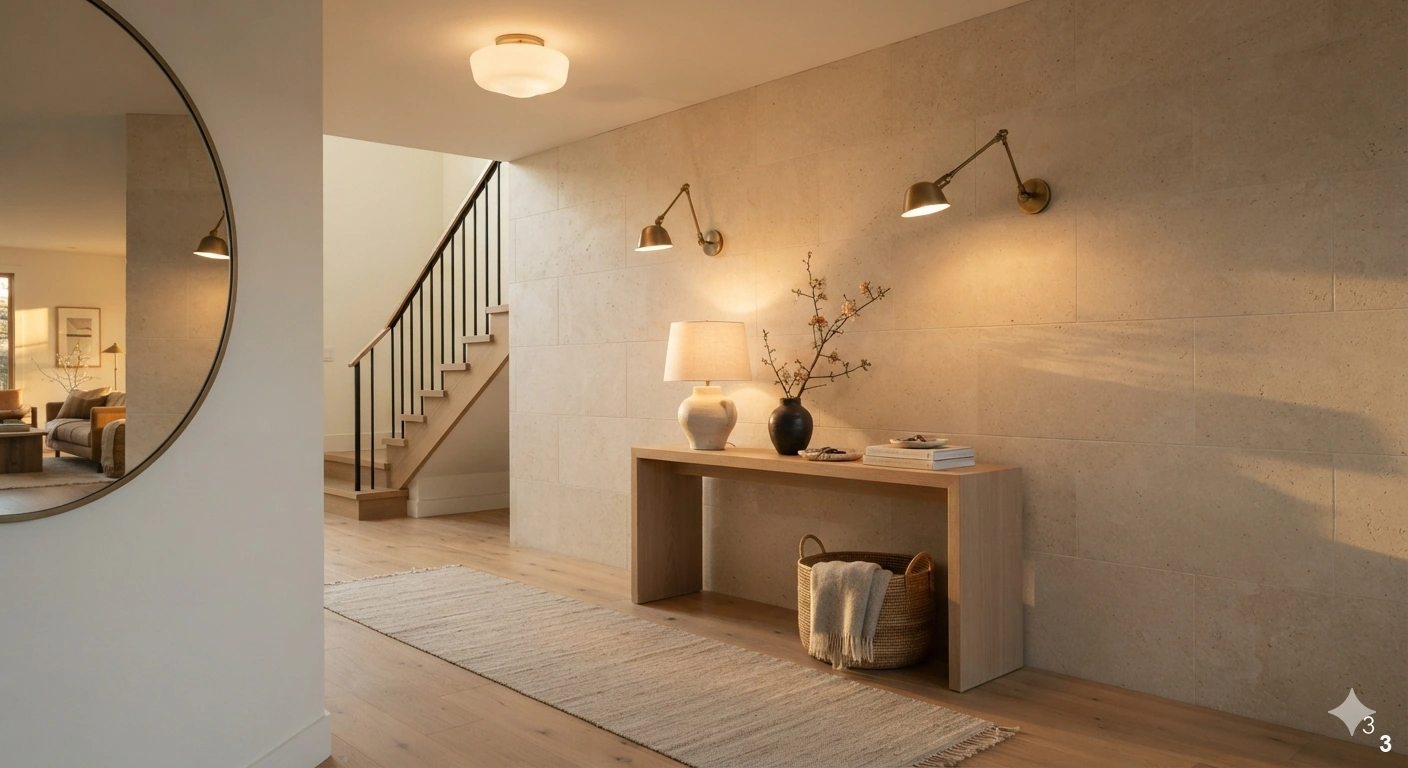
Lighting is the most significant factor in creating a ‘cozy’ foyer. In 2026, we are moving away from harsh overhead recessed lights and toward layered, warm-toned ambient sources. A soft, dimmable glow makes a small space feel expansive and welcoming, rather than sterile or cold.
This works best by incorporating at least three levels of lighting: a statement chandelier or flush mount for general visibility, a decorative table lamp on a console for soft task lighting, and subtle wall sconces to highlight architectural features. If your entry lacks natural light, use warm-spectrum bulbs—ideally 2700K—to mimic the golden hour, which softens edges and makes the space feel instantly more hospitable.
Common mistakes include relying solely on a bright, cold overhead light that casts unflattering shadows. Avoid this by choosing fixtures with frosted glass or linen shades that diffuse the light. For a designer touch, place a small lamp on a timer so your home greets you with a warm glow the moment you step through the door, regardless of the time.
Maximizing Vertical Storage with Wall-Mounted Organizers
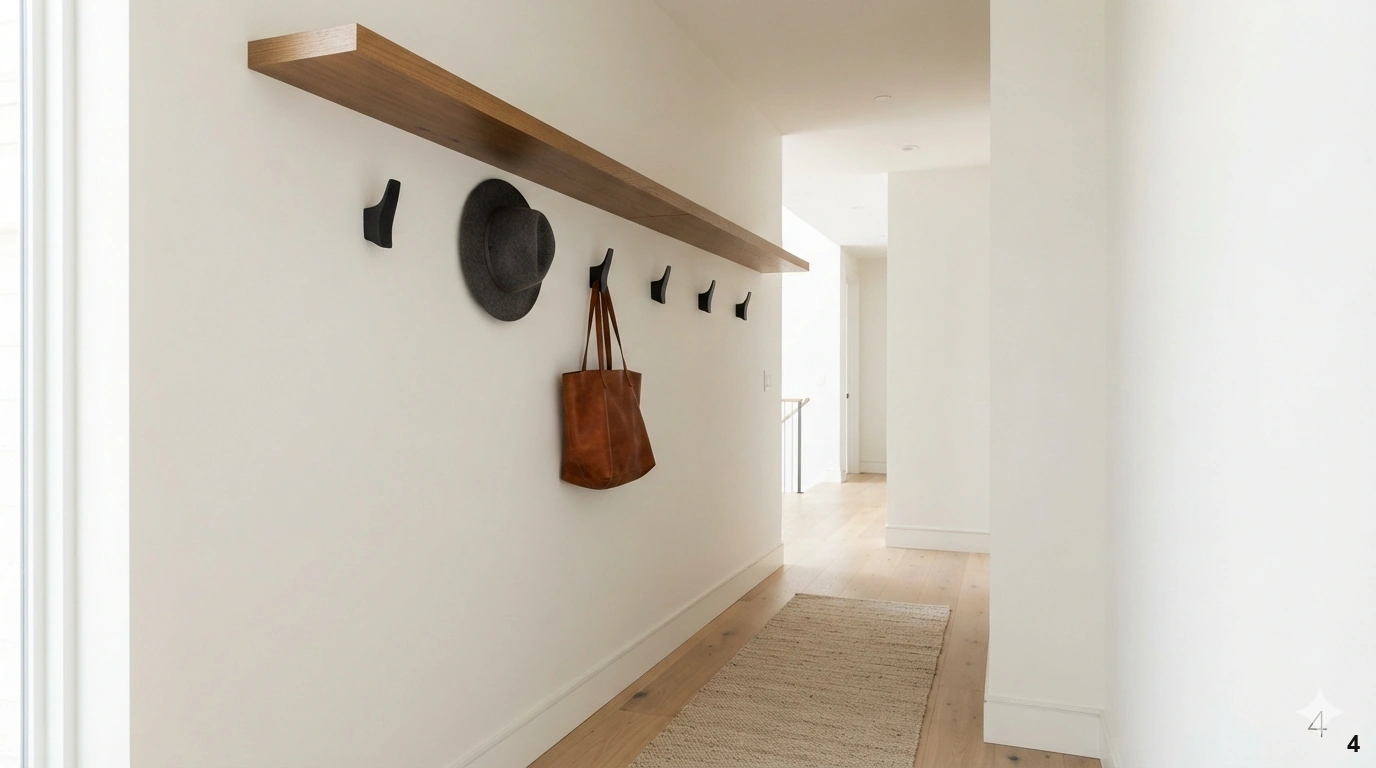
In small foyers, the floor is precious real estate. To keep the area feeling open and airy, take your storage to the walls. Wall-mounted organizers—like sculptural brass hooks, floating shelves, or integrated cabinetry that stops at eye level—draw the gaze upward, making the room feel taller while keeping the floor clear of clutter.
This is the ultimate solution for urban apartments or homes with narrow corridors. By mounting items like hats, bags, and coats, you turn your everyday essentials into a display of curated style. Use materials like matte black steel or warm, stained oak to add visual interest. Be careful not to clutter every inch of wall space; leave some negative space around your organizers to ensure the wall doesn’t look overwhelmed.
Designer-inspired tip: Install hooks at varying heights to accommodate different items and family members. A singular, long floating shelf above a row of hooks acts as a perfect drop zone for small items like sunglasses, keeping your surfaces clean and your entryway organized.
Choosing Earthy Color Palettes for a Grounding Vibe
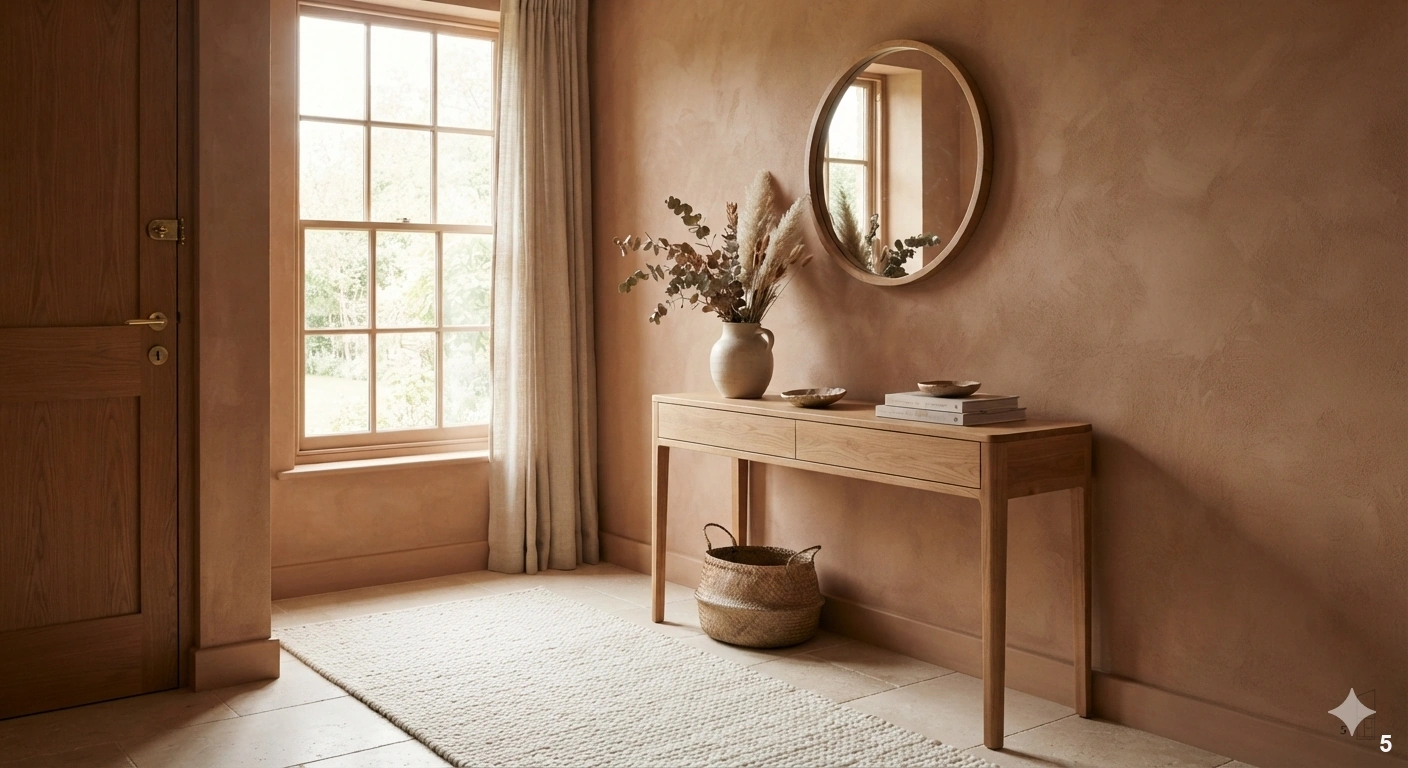
Color has a profound impact on how we perceive the size and ‘temperature’ of a foyer. For 2026, the trend is moving toward earthy, grounding tones that invite comfort. Think shades of terracotta, warm ochre, muted olive, or deep, sandy beiges. These colors create a cocooning effect that feels incredibly welcoming after a long day.
This approach works best in entryways that feel disconnected or ‘cold.’ By painting the walls and trim in a monochromatic, warm-toned palette, you blur the lines of the room, making it feel larger and more cohesive. Pair these wall colors with natural wood furniture and cream-colored textiles to maintain a sophisticated balance. Avoid stark, cool whites, which can make a small, shadow-prone entry feel clinical and uninviting.
Designer-inspired tip: Use a matte finish for your paint to absorb light rather than reflecting it; this adds a depth and richness that feels high-end. If you’re hesitant about bold color, start with an earthy, textured wallpaper or a limewash finish, which introduces subtle movement and character to the walls.
Integrating Shelf Lighting to Create Depth
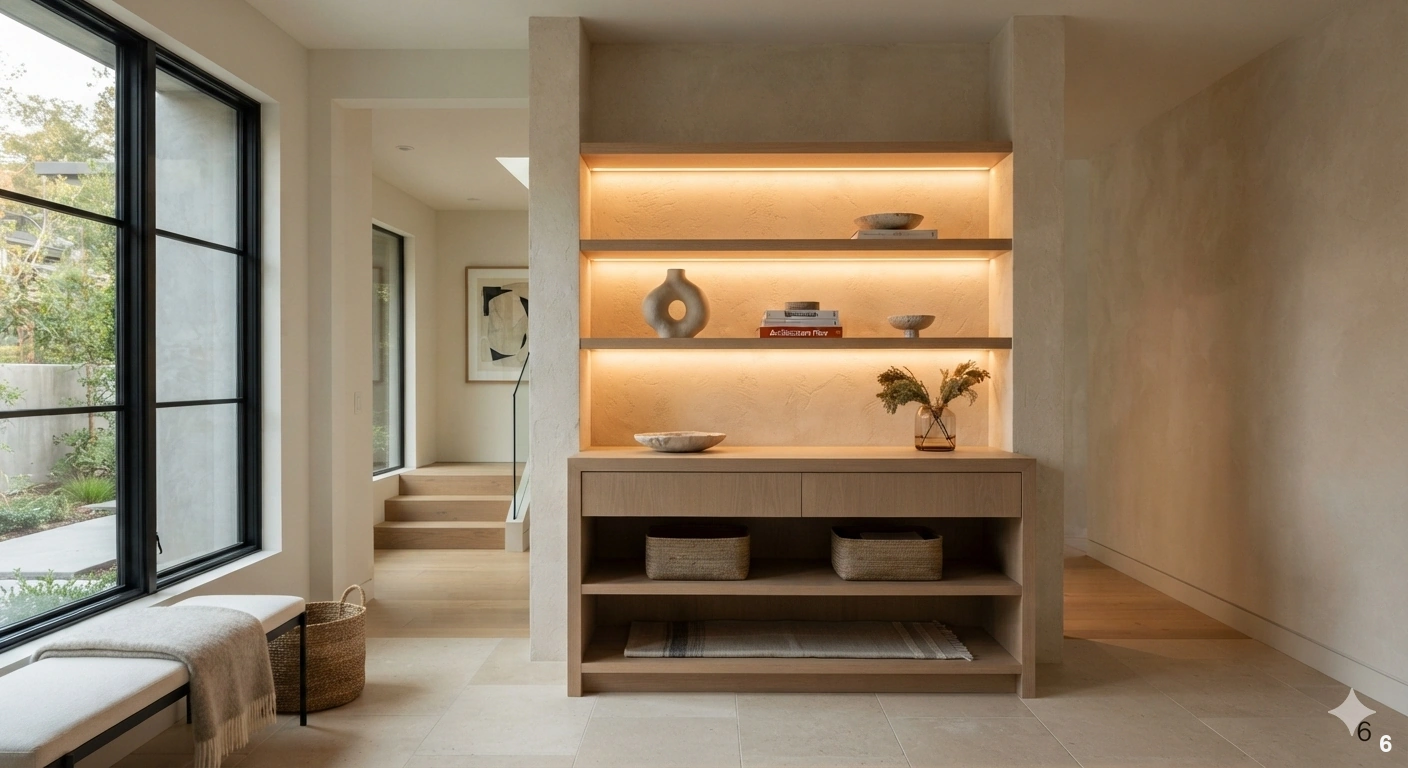
Adding integrated lighting to your entryway shelving is a professional design trick that elevates a basic storage unit into a high-end display. By tucking LED strips beneath the front edge of a shelf, you create a soft wash of light that highlights the objects below and adds a sense of depth to the wall. This is a game-changer for small, dark foyers that feel cramped.
This technique works best with open shelving or built-in consoles. It draws the eye to your curated decor—a sculptural vase, a stack of books, or a piece of art—rather than the clutter of daily life. Ensure the lighting is warm and the strips are hidden from view to avoid a ‘laboratory’ look. A common mistake is using light that is too bright or blue, which ruins the cozy atmosphere; always opt for a dimmable, warm-white LED.
Designer-inspired tip: Use this lighting to create a ‘gallery moment’ in your entry. By illuminating a specific piece of art or a favorite ceramic bowl, you tell a story about your home the moment someone walks in. This creates an immediate emotional connection and establishes your personal style.
The Psychology of the First Impression in Interior Design
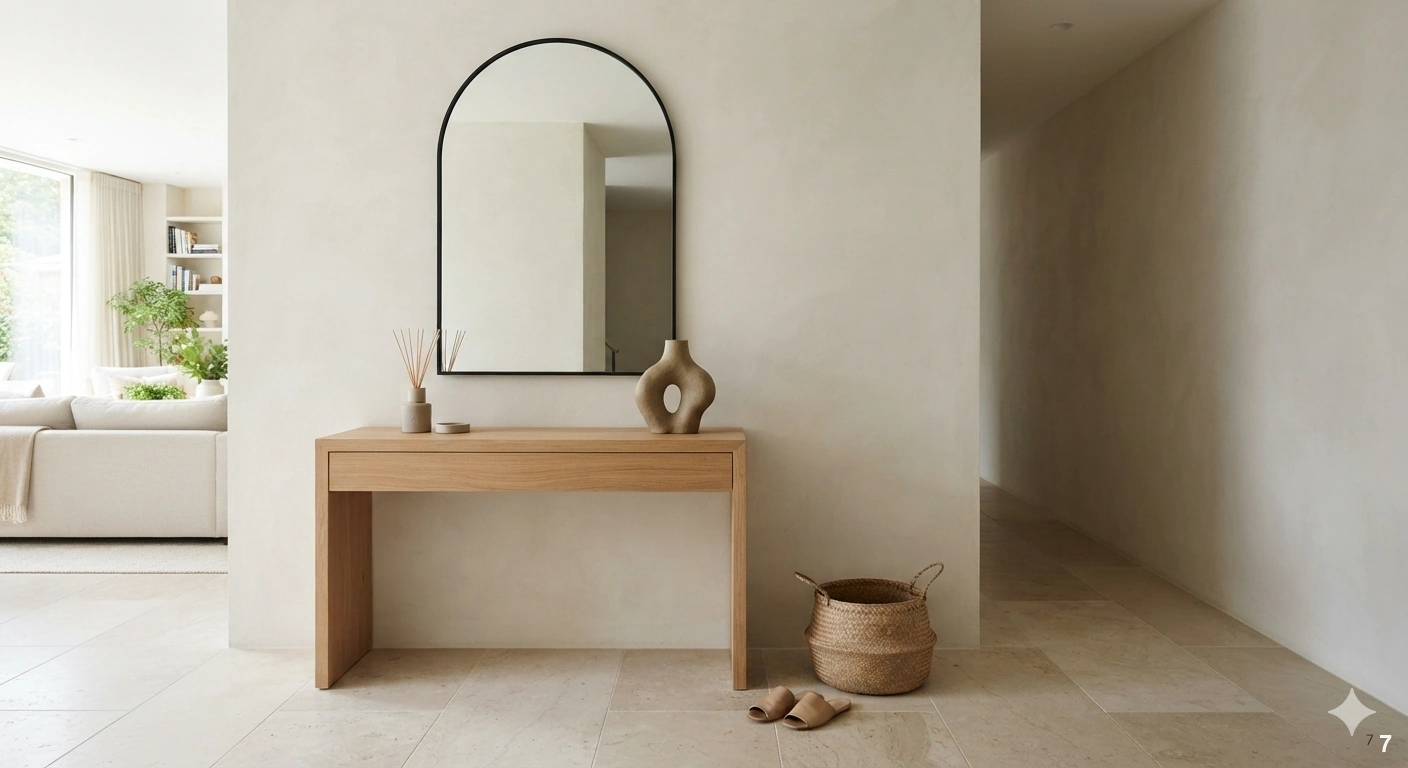
The entryway is the handshake of your home. It needs to communicate your personality while providing a sense of order. From a psychological standpoint, a cluttered entry triggers an immediate feeling of stress, while a well-curated space promotes a sense of calm and control. Your foyer should act as a filter, removing the noise of the outside world before you enter your living space.
This works best by establishing a ‘clear path’ to the rest of the home. Use a mirror to reflect light and expand the space, which also provides a functional spot for a final appearance check. The mirror should be positioned to catch the most beautiful angle of your home, creating a visual invitation to move forward. Avoid placing large, bulky items that impede movement or create a bottleneck right at the door.
Designer-inspired tip: Incorporate a scent element—like a high-quality reed diffuser or a subtle candle—to engage the sense of smell. Scent is the strongest trigger for memory and emotion, and having a signature ‘home scent’ creates an immediate, welcoming impression that is both invisible and deeply impactful.
DIY Rental-Friendly Upgrades for a Custom Look
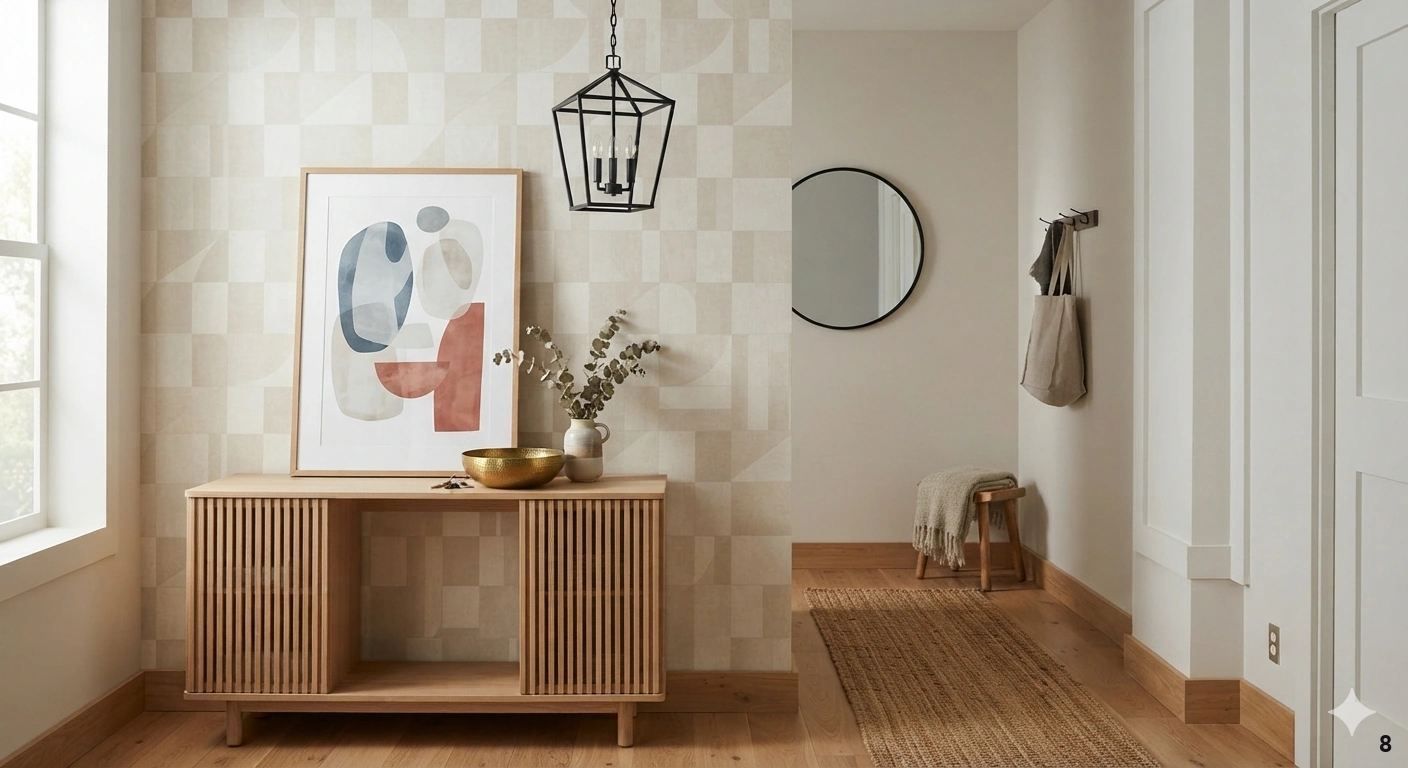
You don’t need a renovation to achieve a high-end foyer. Rental-friendly upgrades can transform a builder-grade entry into a bespoke space. Consider peel-and-stick wallpaper in a sophisticated, muted pattern, or swapping out standard door hardware for something with more weight and character, like unlacquered brass or matte black pulls.
These upgrades work best for homeowners who want to experiment with style without commitment. Replacing a basic overhead light fixture with a statement pendant is another high-impact, reversible change. Just be sure to keep the original hardware and fixtures to reinstall later. Avoid cheap, plastic-looking DIY materials; if you are going to invest time into a project, choose quality materials like solid wood, brass, or natural fibers that stand the test of time.
Designer-inspired tip: If you can’t paint the walls, focus on floor-to-ceiling curtains or a large-scale piece of framed art. These elements cover large surfaces and provide the same dramatic impact as a new paint color while being entirely portable when you move. Treat your rental as a canvas for your personal style.
Designing for the Five Senses: Scent and Sound in the Foyer
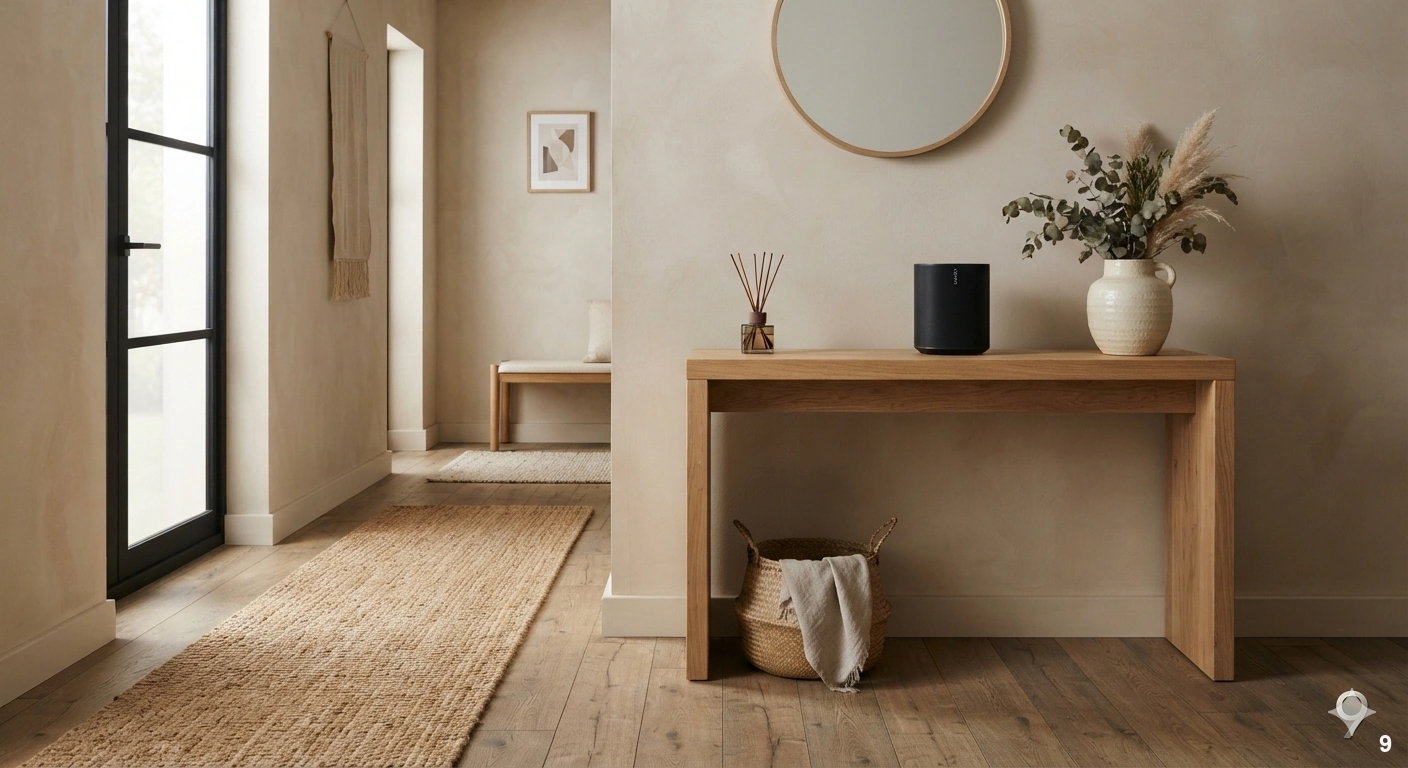
The ‘slow entry’ philosophy begins the moment you cross the threshold, turning a transitional zone into a sensory decompression chamber. To ground the space, incorporate an artisanal reed diffuser with notes of cedar, bergamot, or fig. These deeper, earthier scents signal to the brain that the chaos of the outside world has been left behind. Avoid synthetic, overly sweet fragrances, which can feel jarring in a small, enclosed area.
Sound is equally vital for creating a sanctuary. If your entryway faces a busy street, consider a small, high-quality wireless speaker tucked onto a console shelf. Playing a soft, ambient soundscape or low-fi jazz at a whisper-quiet volume immediately shifts the energy of the home. This creates a sonic boundary, masking the harsh noises of the urban environment.
For a truly curated experience, consider the tactile element of a heavy, solid-wood door or a soft, jute runner that feels grounding underfoot. When you engage multiple senses, the foyer stops being a mere hallway and starts feeling like a deliberate arrival. Aim for consistency; the scent should be subtle enough to linger without overwhelming the rest of the house. By layering these sensory cues, you transform the act of coming home into a restorative ritual.
Solving the Mail and Key Dumping Ground Dilemma
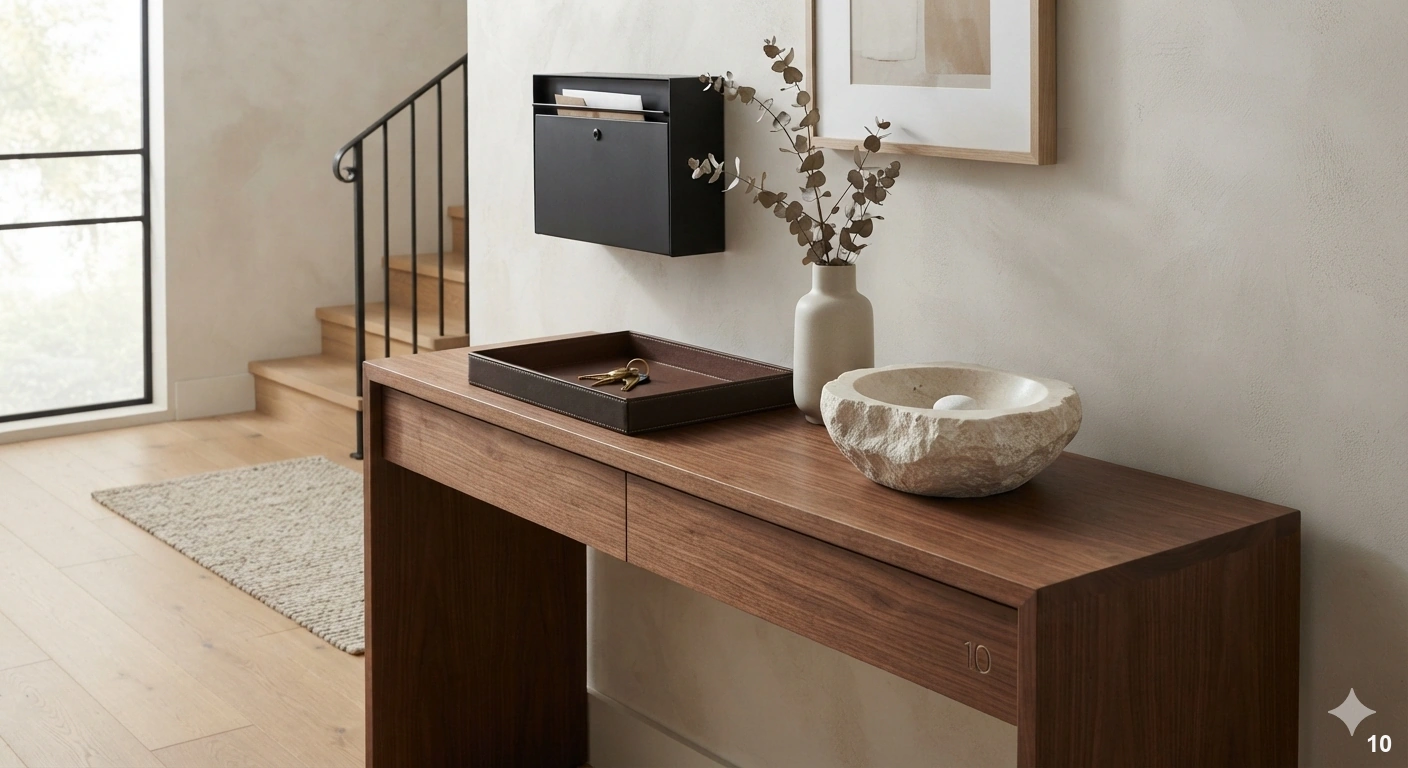
The infamous ‘dumping ground’ occurs when function is an afterthought. To reclaim your console surface, replace the traditional catch-all bowl with a structured, multi-tiered organization system that hides the visual noise. A leather-lined tray for keys and a dedicated, sleek wall-mounted mail slot are essential. By giving every item a ‘home’ that is intentionally designed, you eliminate the temptation to pile envelopes and loose change indiscriminately.
Designers often opt for closed storage—like a small drawer or an elegant lidded box—to keep the surface clear. If you must have a bowl, choose one that is sculptural, such as hammered brass or hand-carved stone, which elevates the space even when empty. The goal is to make the act of putting items away feel like an intentional part of your routine rather than a chore.
Avoid plastic organizers at all costs; they cheapen the entryway aesthetic. Instead, look for materials that complement your home’s architectural details, such as walnut, matte black metal, or woven rattan. A common mistake is using a tray that is too small, leading to overflow. Ensure your landing zone is proportional to your family’s daily output. By keeping the console surface mostly clear, you create a sense of calm that greets you the moment you walk through the door.
Selecting Furniture That Balances Flow and Function
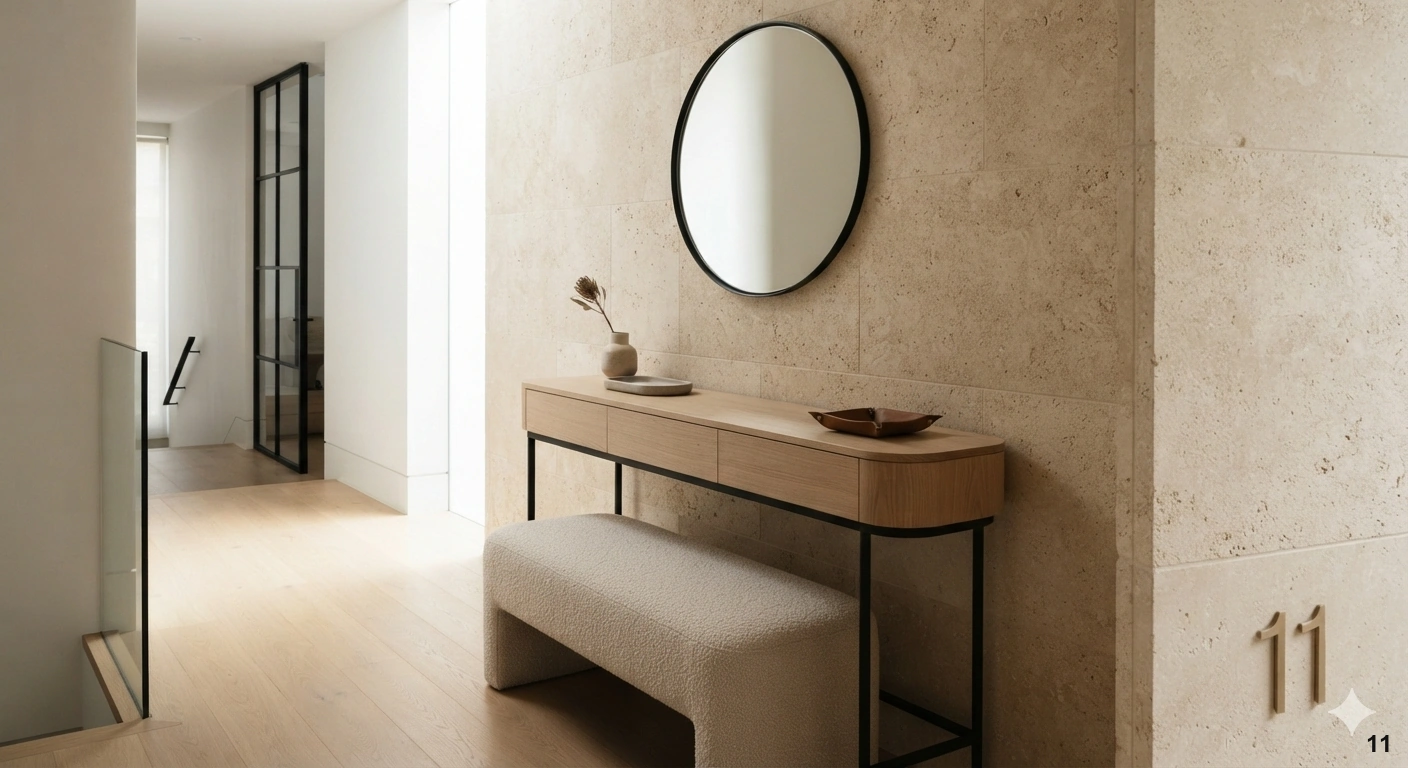
In a foyer, every square inch of furniture must earn its keep. The best pieces are those that offer a dual purpose: a slim-profile console with integrated drawers provides surface area for decor and hidden storage for masks, spare keys, or dog leashes. If your entry is narrow, consider a floating shelf or a wall-mounted bench to keep the floor visual clear, which tricks the eye into seeing more space.
Flow is the most critical consideration. You should never have to navigate around bulky furniture to move from the door to the living room. Choose pieces with rounded corners to soften the path of travel and prevent bruised hips. If you have the luxury of space, a slim bench with a low profile is ideal for putting on shoes, but ensure it doesn’t obstruct the door’s swing radius.
Think about materials that can withstand high traffic. Metal legs are excellent for longevity, while reclaimed wood adds warmth and hides minor scuffs better than high-gloss finishes. A common mistake is choosing furniture that is too deep for the hallway; always measure your clearance twice. If you have a long, narrow wall, consider a series of matching stools or a slender bench that runs parallel to the wall, keeping the center of the room open. This creates a structured, gallery-like feel that encourages movement through the house.
Tactile Design: Adding Soft Textiles to Entry Spaces
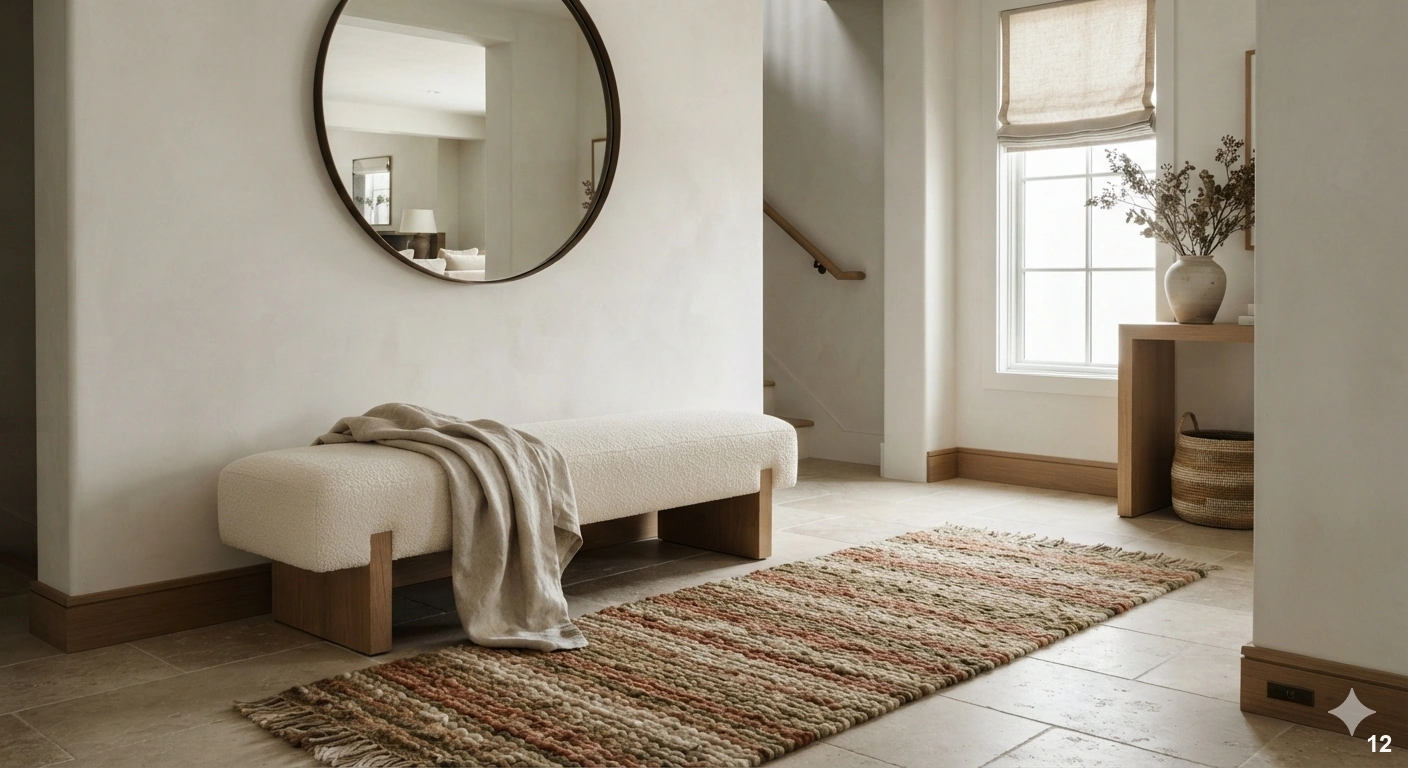
Textiles are the secret to preventing an entryway from feeling like a cold, institutional hallway. A high-quality, durable rug is the foundation; it anchors the space and provides a soft landing for your feet. For high-traffic areas, opt for wool or a high-performance jute blend that can withstand moisture and grit. A patterned runner in muted, earthy tones can hide daily wear while adding a layer of visual interest that ties the entry to the rest of your home’s color palette.
Beyond the floor, consider the walls. A plush, upholstered bench seat adds a layer of softness that makes the space feel more residential. If you have a coat rack, hang a heavy linen or wool throw over a chair or bench to introduce texture. This brings a ‘lived-in’ warmth that instantly makes guests feel welcome.
Don’t be afraid to mix textures—the contrast between a smooth, stone-tiled floor and a thick, hand-woven wool runner is essential for depth. Avoid synthetic, thin rugs that slide around; always use a high-quality rug pad to ensure safety and comfort. If you have a small window in the foyer, a simple linen roman shade can soften the light and add another layer of textile richness. These soft touches act as a sensory ‘hug’ as you walk into your home, bridging the gap between the exterior environment and your personal sanctuary.
Effective Lighting Solutions for Windowless Foyers
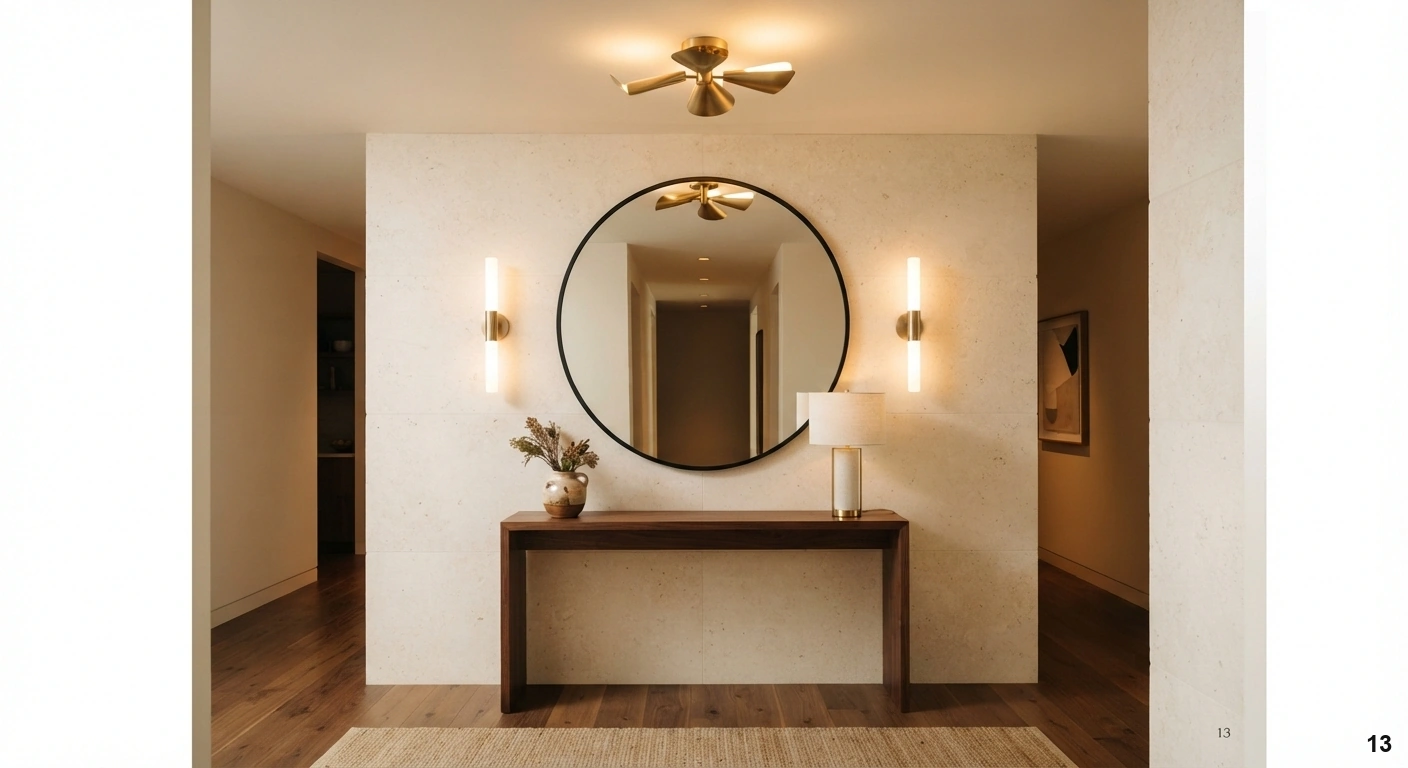
A dark, windowless foyer is a major design hurdle, but it also presents an opportunity to create a moody, intimate atmosphere. Avoid a single, harsh overhead light. Instead, layer your lighting to mimic natural cycles. Start with a statement flush-mount or pendant with a warm-toned bulb to provide general illumination, then add a lamp on your console table for a softer, localized glow.
Sconces are a game-changer in narrow hallways. They provide ambient light without taking up precious floor space, and they draw the eye upward, making the ceiling feel higher. If you can’t hardwire, opt for high-quality rechargeable LED sconces that look indistinguishable from traditional fixtures. This allows you to add light to spots where you previously couldn’t run electrical wiring.
Consider the color temperature of your bulbs. For a cozy, inviting feel, stick to 2700K or 3000K; anything higher will feel sterile and clinical. A common mistake is ignoring the power of reflection. A large mirror placed opposite a light source—or even just strategically on a wall—will bounce light around the room and double the sense of space. By combining decorative fixtures with soft, warm light sources, you turn a dungeon-like entry into a glowing, welcoming threshold. The goal is to create a ‘glow’ rather than a ‘glare,’ ensuring that the transition into your home feels like an embrace.
Curating Minimalist Mudroom Storage Without the Clutter
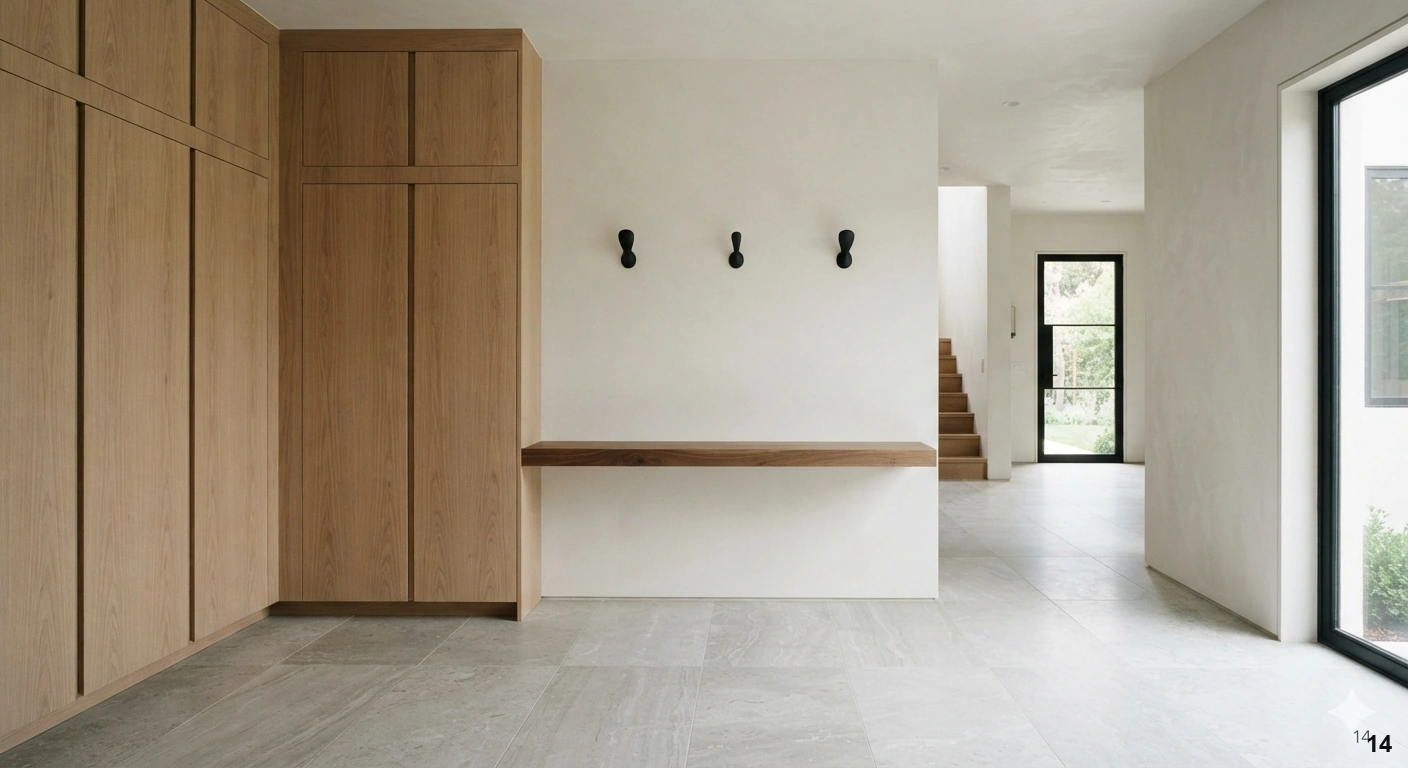
Minimalism in the mudroom isn’t about having nothing; it’s about having everything hidden behind clean lines. If you have the budget, custom millwork that reaches the ceiling is the gold standard, as it provides a place for everything while keeping the visual field clear. If custom cabinetry isn’t an option, use a series of uniform, closed-door lockers or a tall armoire to house coats and shoes. The key is uniformity—using the same hooks, baskets, and hangers creates a sense of order.
For smaller footprints, focus on ‘vertical storage.’ A row of high-end, sculptural hooks made of matte black iron or brushed brass can hold coats and bags while acting as wall art. Below these, use a closed shoe cabinet with a slim profile to keep footwear off the floor. The goal is to keep the floor as clear as possible; when the floor is empty, the space feels larger and more peaceful.
Avoid the ‘catch-all’ basket on the floor, which often becomes a magnet for loose items. Instead, use designated cubbies or drawers for each family member. A common mistake is overcrowding the wall space; leave some negative space between hooks so that even when the mudroom is ‘in use,’ it doesn’t look chaotic. By choosing high-quality, durable materials that match the rest of your home’s finishings, you ensure the mudroom feels like a curated extension of your living space rather than a utility closet.
The Five-Minute Daily Refresh Routine
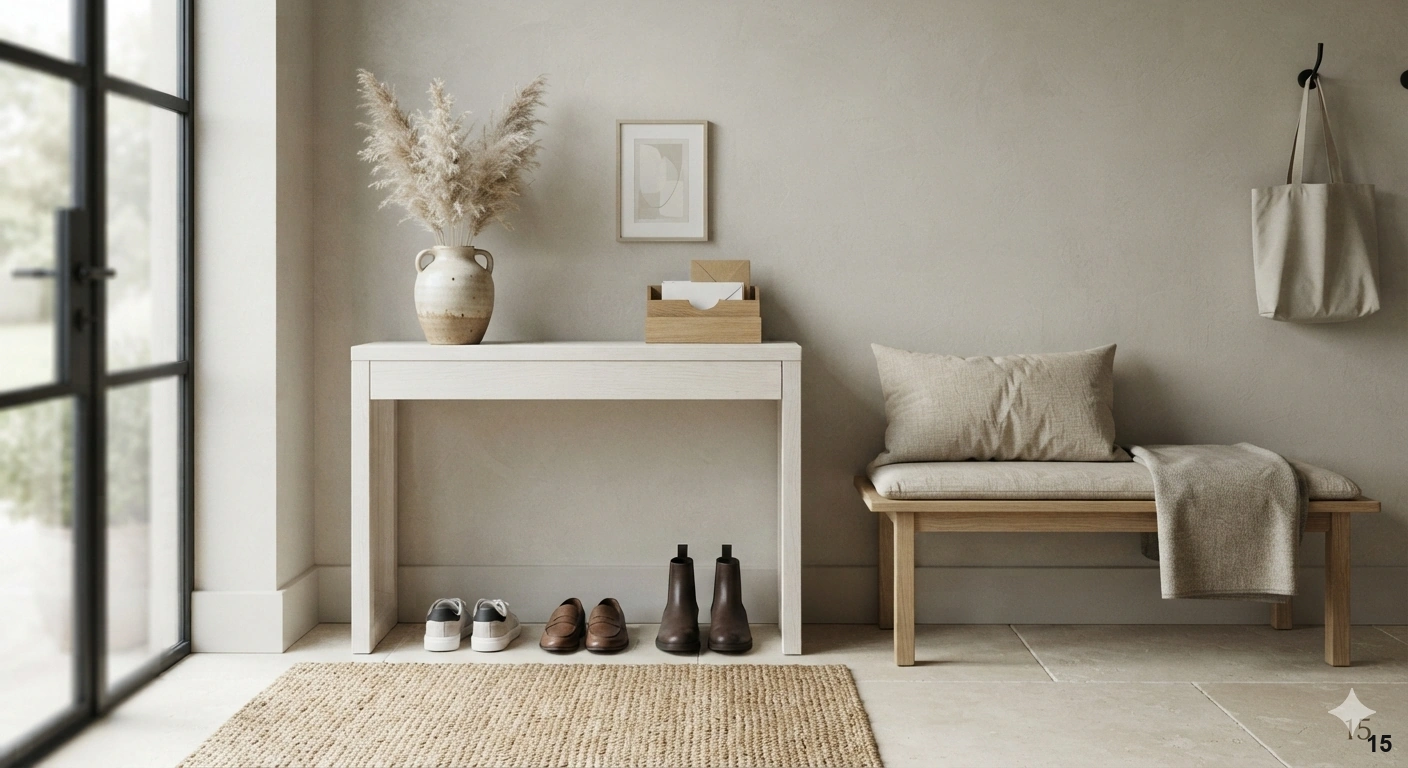
The secret to a pristine home isn’t constant cleaning, but rather the daily five-minute reset. In the entryway, this means addressing the ‘clutter creep’ before it takes hold. Start by clearing the console surface of any mail that has accumulated—file it, recycle it, or place it in a designated bin. Next, ensure shoes are tucked into their cabinets or aligned perfectly on the mat; a row of straight shoes instantly makes a space look tidier.
Use this time to wipe down high-touch surfaces like the door handle and the console top. A quick dusting of the console and a fluffing of any decorative pillows on a bench ensures the space looks ‘fresh’ for the next day. If you have a coat rack, ensure items are balanced and not overflowing; if a coat hasn’t been worn in a week, move it to a bedroom closet to keep the entry light.
This routine is about mindfulness. It’s the final act of your day, transitioning you from the ‘active’ mode of being out in the world to the ‘rest’ mode of being home. A common mistake is waiting for the weekend to tackle the entryway mess, which makes the task feel daunting. By doing it daily, the foyer remains a sanctuary rather than a source of stress. It’s a small investment of time that pays massive dividends in your overall sense of order and peace.
Using Wall Coverings to Define the Entryway Zone
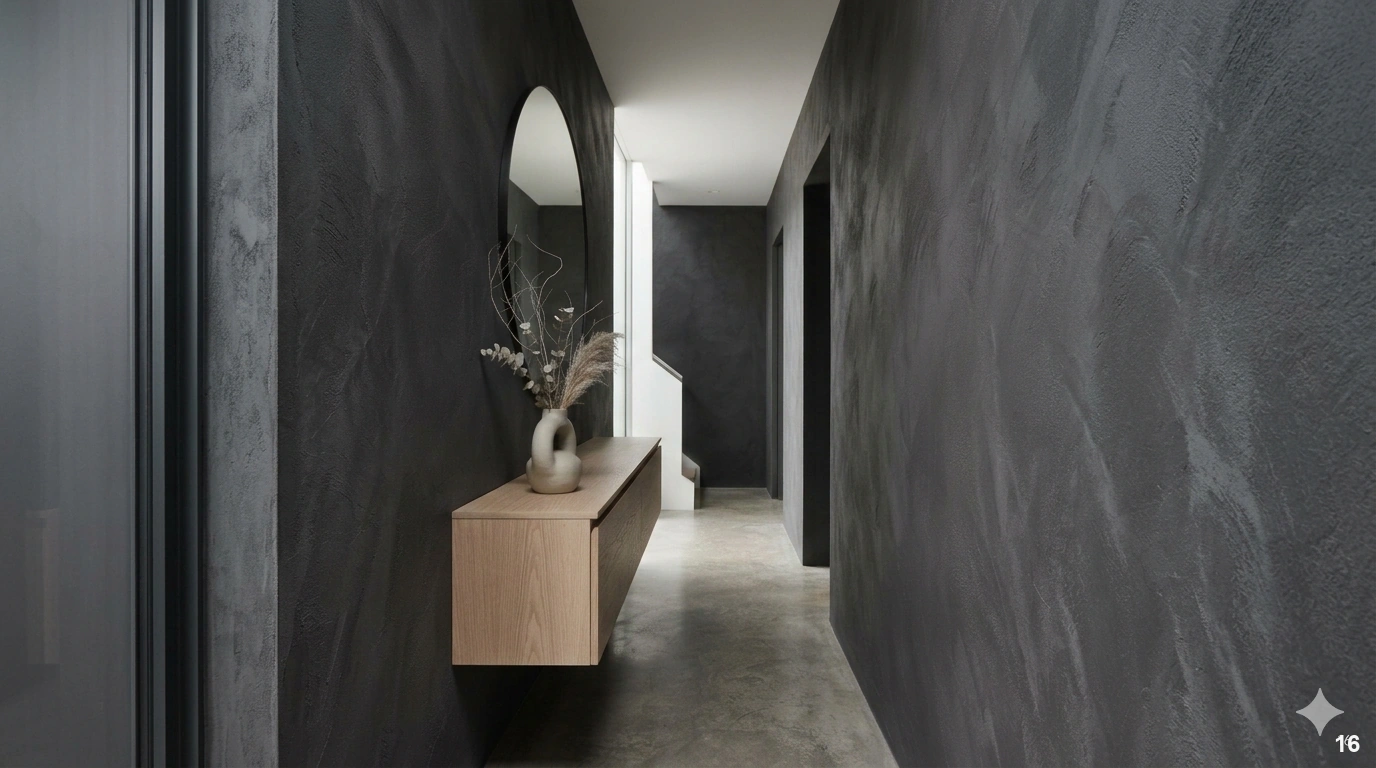
Because entryways are often small, they are the perfect place to be bold with wall coverings. A dramatic wallpaper or a textured lime wash paint can define the foyer as a distinct ‘zone,’ separate from the living room or hallway. This separation creates a sense of arrival; you are literally crossing into a different ‘vibe’ when you step inside.
If you prefer a more subtle approach, consider a grasscloth wallpaper. It adds incredible warmth and texture, making a small, boxy entry feel cozy and sophisticated. For a modern look, a limewash or venetian plaster finish provides depth and movement, catching the light in a way that standard flat paint simply cannot. This is especially effective in windowless foyers, as the texture creates shadows that add character to the walls.
Avoid busy, small-scale patterns that can make a tiny space feel claustrophobic. Instead, opt for large-scale patterns or monochromatic textures that enhance the architecture rather than fighting it. A common mistake is treating the entryway walls the same as the rest of the house; don’t be afraid to paint the trim and walls the same color for a moody, enveloping effect. This ‘color drenching’ technique is a designer favorite for making small spaces feel intentional and luxurious. By treating the walls with as much care as your furniture, you elevate the entire entry experience.
Styling Small Surfaces with Intentional Decor
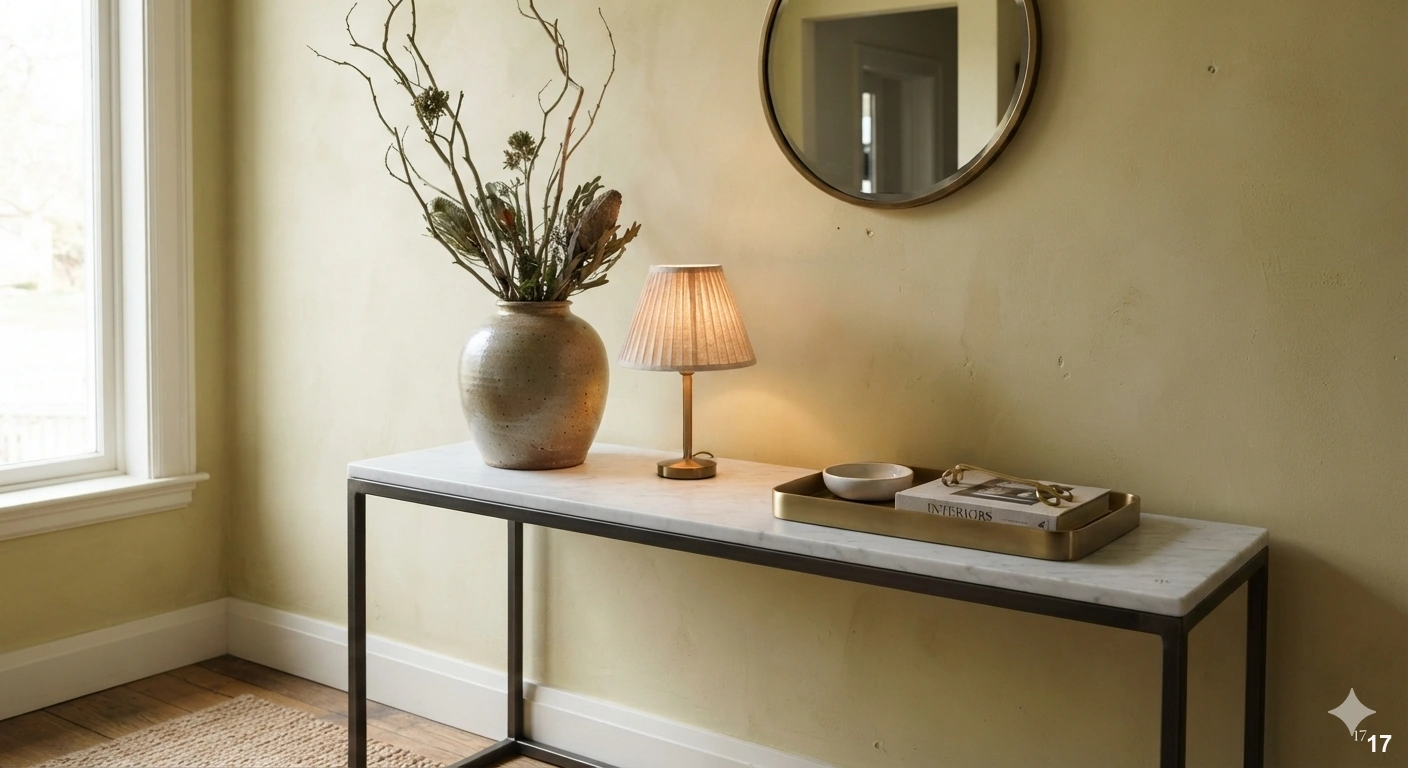
In the philosophy of the ‘slow entry,’ your console table shouldn’t be a catch-all for junk mail; it should be a curated vignette that signals you have arrived at your sanctuary. When styling a small surface, prioritize vertical height to draw the eye upward, which helps the space feel more expansive. A single, dramatic ceramic vase filled with seasonal branches or dried botanicals provides an immediate connection to nature, grounding the entryway in organic textures.
Balance is key here. Pair a sculptural piece with a small, low-profile tray to hold daily essentials like keys or sunglasses. This prevents the surface from feeling cluttered while maintaining functional utility. Opt for materials like honed marble, brass, or hand-thrown stoneware to introduce tactile interest. If your entryway is particularly narrow, a slim floating shelf can act as a pedestal without encroaching on floor space.
Avoid the trap of ‘over-accessorizing.’ A common mistake is placing too many small trinkets on a console, which creates visual noise. Instead, choose fewer, larger-scale objects that make a statement. Lighting plays a crucial role; place a small, dimmable table lamp with a pleated linen shade on the surface to cast a warm, ambient glow. This soft illumination is essential for creating a mood-setting transition as soon as you step through the door. Remember, every item on this surface should be either beautiful or useful—ideally, both.
Modern Farmhouse Touches for a Welcoming Entrance
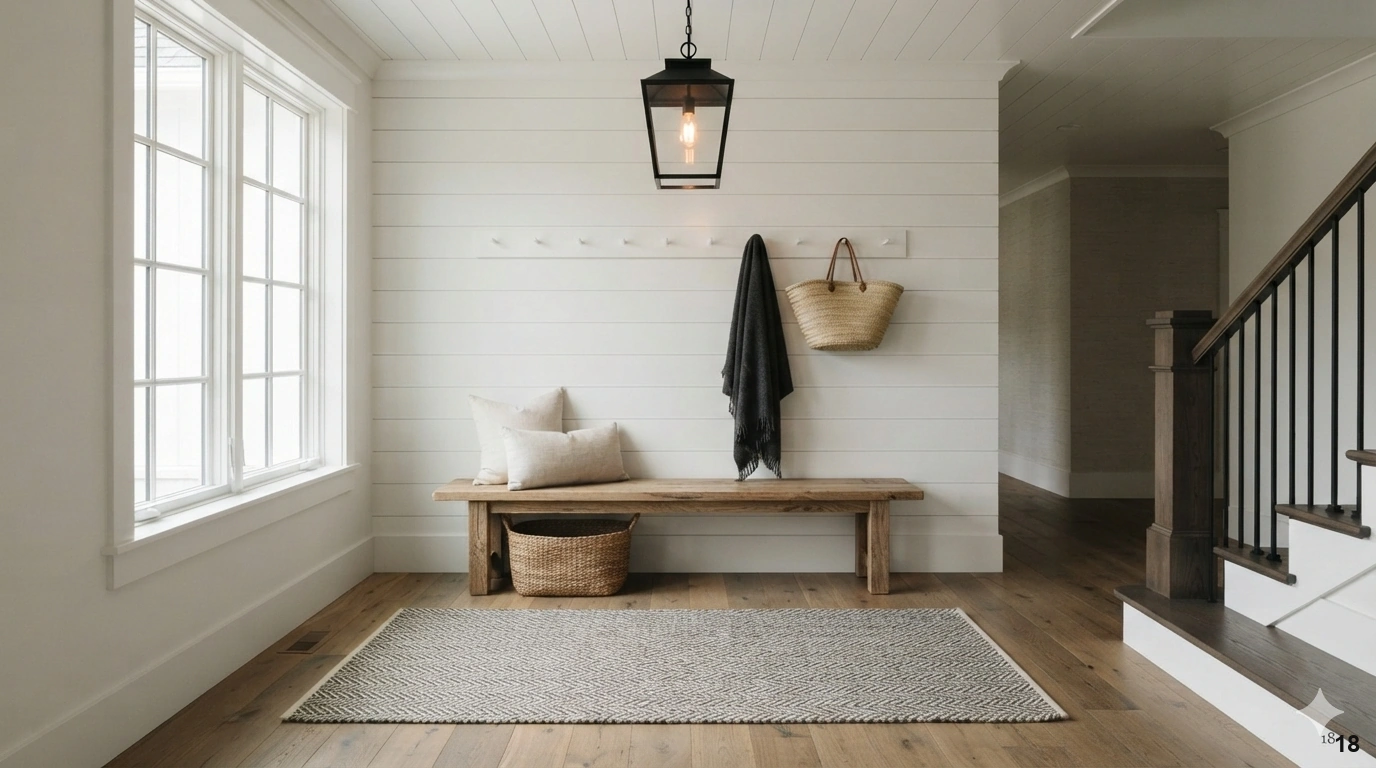
The modern farmhouse aesthetic remains a cornerstone of the ‘slow home’ movement because it inherently prioritizes comfort and heritage. To achieve this look without veering into kitsch, focus on high-quality materials that show age and character. Think reclaimed wood benches, iron hardware, and soft, natural textiles. A bench with a woven seagrass basket tucked underneath provides both a place to sit and a tactile, earthy element that screams comfort.
Where this style works best is in homes that feel a bit too sterile or new. The warmth of wood tones—whether it is a white oak plank or a distressed pine finish—immediately softens the hard lines of a foyer. Pair these wood elements with a neutral color palette of warm creams, taupes, or muted sage greens to maintain a sophisticated, airy feel. Avoid overly bright or neon accents; the goal is to create a space that feels lived-in and timeless.
For a designer-inspired touch, incorporate a heavy-duty jute or wool runner in a classic herringbone pattern. It adds durability and a layer of softness underfoot. Lighting should feel substantial; a lantern-style pendant in a matte black or antique bronze finish works wonders to anchor the space. Avoid cluttering the walls with too much signage; instead, rely on the texture of a shiplap feature wall or a simple, oversized vintage-inspired mirror to provide interest. By keeping the decor purposeful, you create an entrance that feels like a warm embrace rather than a hallway you just pass through.
Implementing Hidden Storage for Seasonal Gear
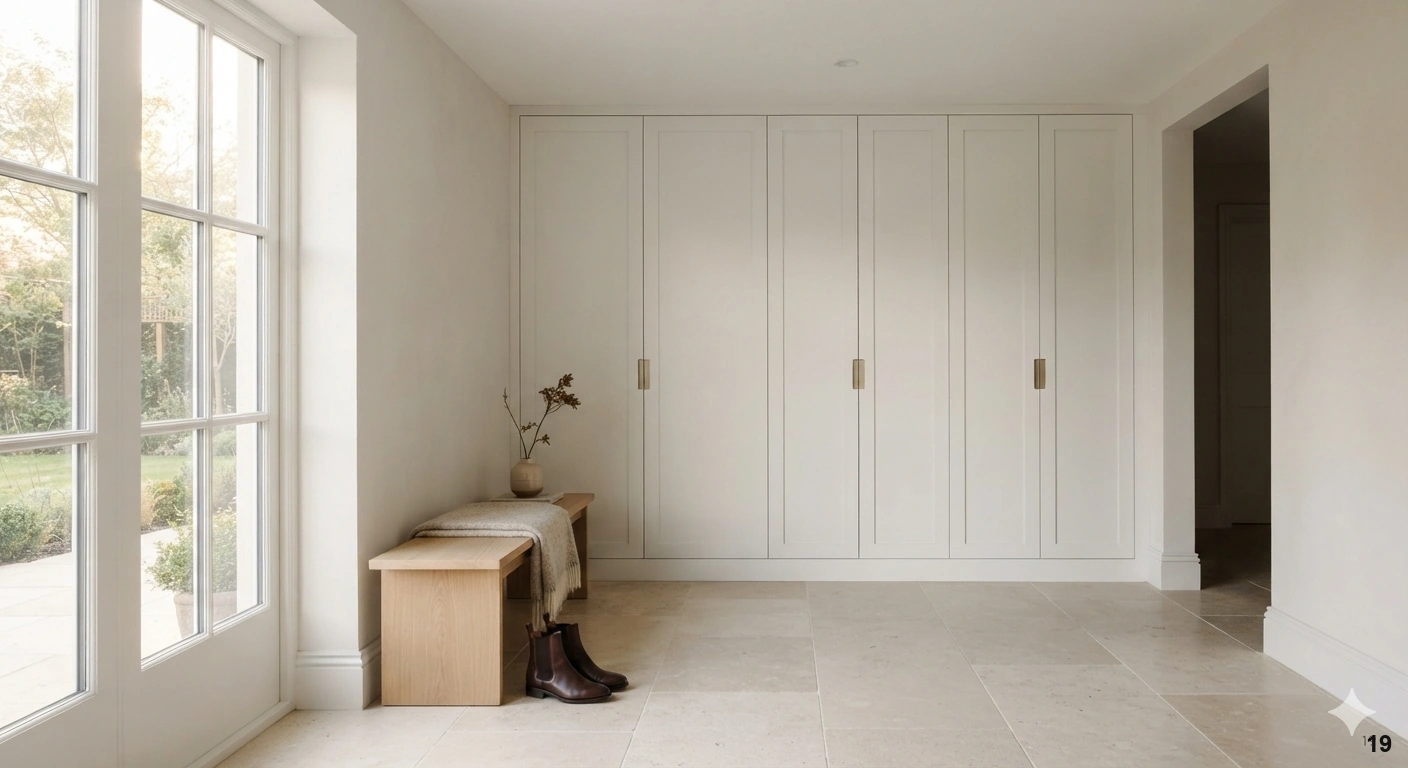
The primary enemy of a serene entryway is the ‘dumping ground’ effect created by bulky shoes and seasonal gear. The solution is integrated, hidden storage that keeps the visual field clear while maintaining high utility. Custom cabinetry is the gold standard, but if that isn’t feasible, look for tall, closed-door armoires or slim-profile cabinets with shaker-style doors that blend into the wall color. This ‘disappearing’ act makes the room feel larger and more intentional.
Inside these units, use a modular approach. Dedicated cubbies for shoes and specific bins for hats, gloves, and scarves ensure that every item has a permanent home. This is especially effective in family homes where the sheer volume of gear is high. By keeping everything behind closed doors, you maintain that ‘slow home’ atmosphere where visual clutter is minimized, allowing your carefully chosen decorative elements to shine.
Avoid the mistake of using open shelving for high-traffic items like rain boots or worn sneakers, as this immediately creates a chaotic look. If you must use open storage, ensure it is limited to one or two items, like a perfectly placed pair of leather boots. For lighting, consider installing motion-sensor LED strips inside your cabinets. It feels like a high-end luxury upgrade and makes finding gear in the early morning or late evening effortless. When the doors are closed, the space returns to its role as a calm, welcoming transition zone rather than a storage closet.
Choosing Durable Materials for High-Traffic Zones
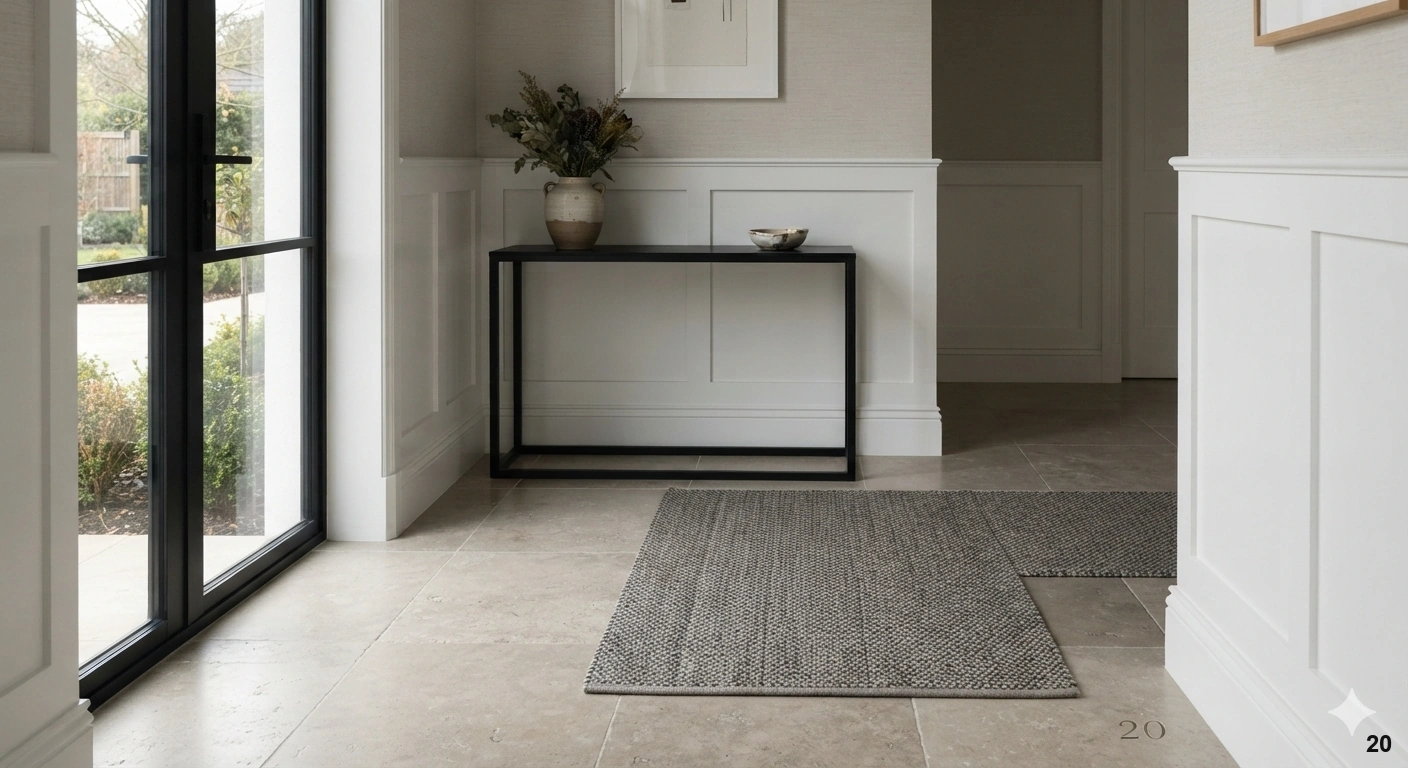
Your entryway is the most heavily used room in the house, so it requires materials that can handle the grit of daily life while still feeling luxurious. For flooring, look toward natural stone like slate, honed limestone, or high-quality porcelain tiles that mimic the look of stone but offer superior stain resistance. These materials are not only incredibly durable but also provide a grounded, high-end feel that signals to guests that they are entering a well-cared-for home.
When it comes to wall treatments, consider performance wallpapers or high-sheen, washable paints. A wainscoting paneling painted in a semi-gloss finish is a classic designer move; it protects the lower half of your walls from scuffs while adding architectural depth. For furniture, prioritize pieces with hard-wearing finishes, such as a metal-framed console or a bench upholstered in high-performance velvet or leather, both of which only get better with age.
Avoid delicate fabrics or high-pile rugs that are difficult to spot-clean, as they will quickly look worn in a high-traffic area. Instead, opt for a low-profile, tight-weave rug that can withstand heavy foot traffic while providing a pop of color or pattern. Lighting should also be robust; choose fixtures with glass or metal shades that are easy to wipe down. A designer tip: use a matte finish on your hardware to hide fingerprints better than polished chrome or brass. By selecting materials that marry resilience with beauty, you ensure that your entryway remains a sanctuary without requiring constant maintenance.
Strategic Mirror Placement to Enhance Natural Light
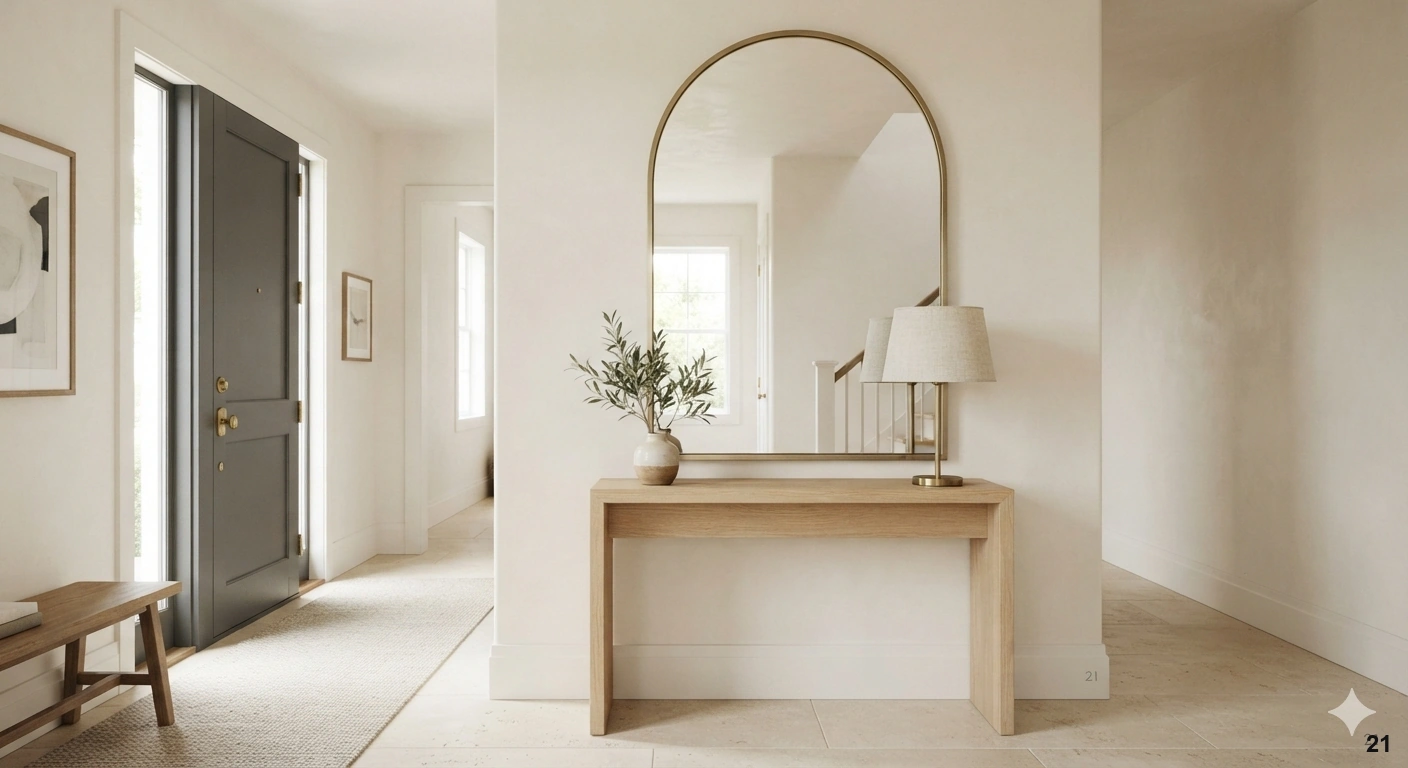
If your entryway feels dark or cramped, a mirror is your most powerful design tool. Beyond its obvious functional purpose for checking one’s appearance, a mirror acts as a ‘virtual window,’ bouncing natural light deep into the space. To maximize this effect, place a large mirror directly opposite or adjacent to your front door or a nearby window. This captures the available daylight and redirects it across the room, instantly lifting the mood of the entry.
Consider the shape of the mirror in relation to your home’s architecture. An arched mirror adds a touch of softness and elegance to a space with hard, rectangular lines, while a oversized, framed rectangular mirror can provide a sense of structure and formality. Ensure the frame complements your overall aesthetic; a thin brass frame feels modern and light, while a chunky wood frame adds that desired ‘slow home’ warmth and texture.
A common mistake is hanging the mirror too high. It should be positioned at eye level so that it serves both its decorative purpose and its functional one. If the mirror is too high, it looks disconnected from the rest of the vignette. For a layered look, place a small lamp or a candle on the console directly below the mirror. The light will reflect off the glass, creating a soft, shimmering effect in the evening hours. This creates a welcoming, luminous glow that greets you the moment you walk through the door, effectively turning a dark corner into a bright, inviting focal point.
The Anatomy of a Perfect Landing Strip
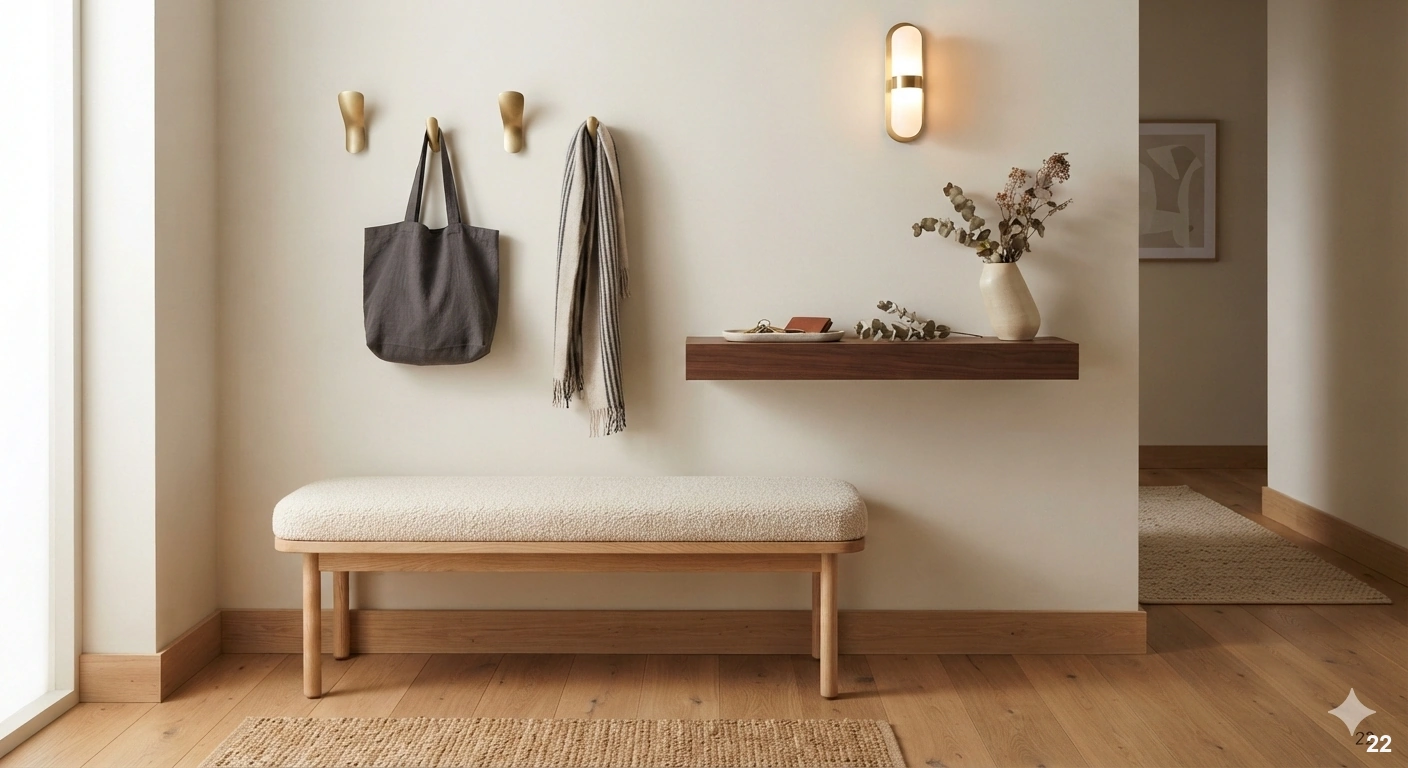
The ‘landing strip’ is the functional heart of the entryway—the exact spot where you drop your bags, shed your coat, and exhale after a long day. To design this perfectly, you need a combination of three elements: a surface for small items, a hook or closet for outerwear, and a comfortable place to sit. When these three work in harmony, the entryway transforms from a chaotic dumping ground into a highly organized, intentional space.
Start with the seating. A slim bench or a pair of upholstered stools provides a place to remove shoes, which is essential for keeping the rest of your home clean. Next, focus on the vertical storage. If you lack a closet, use a row of elegant, sculptural wall hooks installed at varying heights. This allows you to hang bags, scarves, and coats without the bulk of a large coat rack. Finally, the surface area—a small shelf or console—should be reserved for the ‘essentials only’ rule.
Avoid the mistake of neglecting lighting at the landing strip. This is where you need to see your keys and check your bag, so consider a wall-mounted sconce above the console or even recessed lighting directed at the bench area. This adds a layer of convenience that feels truly luxurious. Designer tip: incorporate a small, decorative bowl for mail and a dedicated tray for keys. By defining these specific zones for your daily rituals, you remove the mental load of ‘where did I put that?’ and allow yourself to transition seamlessly into the peace of your home.
Seasonal Styling Transitions for Year-Round Appeal
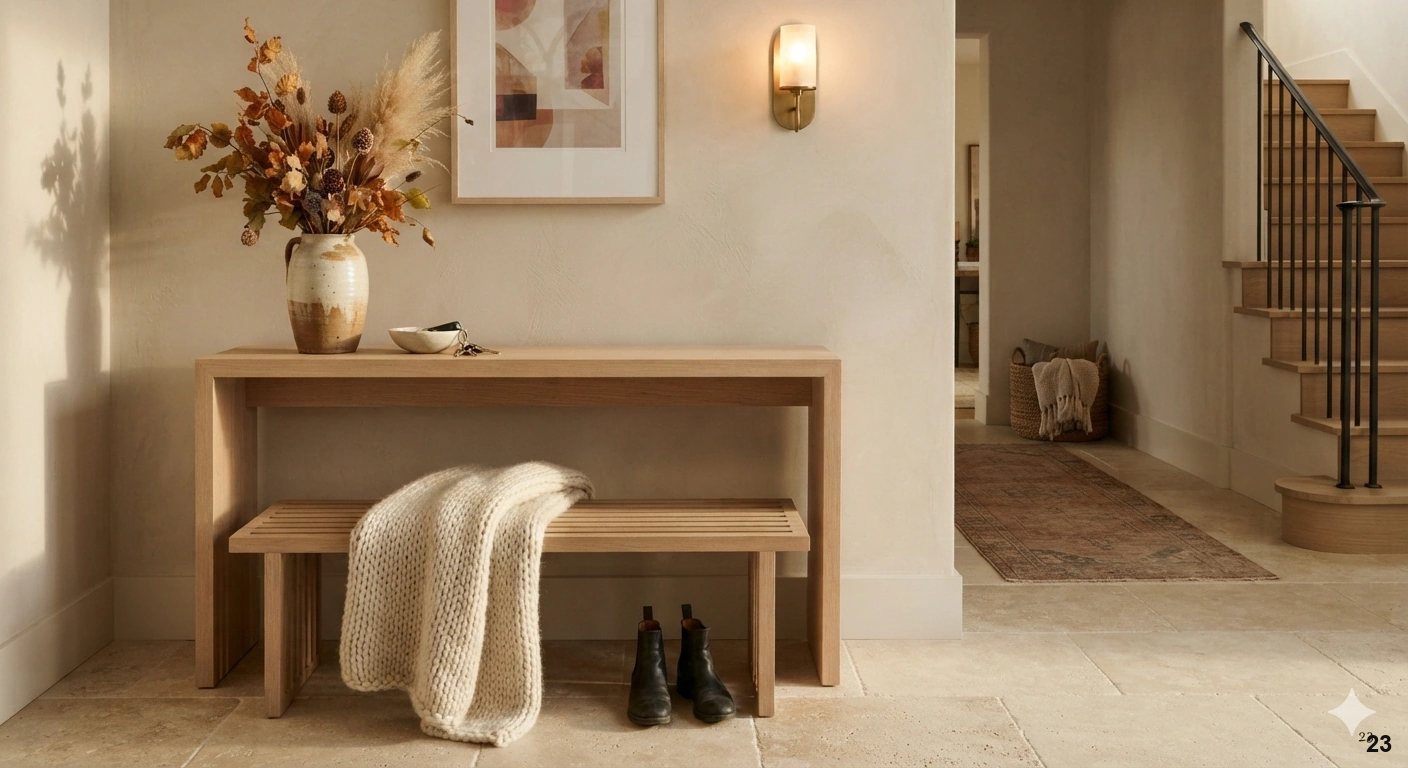
Your entryway is the first impression guests have of your home and the first thing you see when you return, so it should evolve with the seasons. Transitioning your decor doesn’t mean a complete overhaul; it’s about swapping out small, sensory-rich details that reflect the time of year. In the spring and summer, swap out heavy wool throws for lighter, textured cotton or linen cushions on your bench. Incorporate fresh floral arrangements that bring the brightness of the season indoors.
As you move into autumn and winter, shift toward deeper, warmer tones and materials. Introduce a chunky knit blanket on the bench and replace fresh flowers with dried grasses, seed pods, or evergreen boughs. These natural elements provide a tactile connection to the outdoors that feels cozy and grounding during the colder months. The goal is to keep the base of your entryway neutral and fixed—the console, the mirror, the lighting—while using these smaller accessories to update the vibe.
Avoid the urge to go overboard with seasonal kitsch. A few carefully chosen pumpkins or holiday baubles are fine, but keep them minimal to ensure the space remains sophisticated. Lighting is another great way to signal a transition; in the winter, use warm-toned bulbs and perhaps a scented candle with notes of pine or cedar to create an immediate sense of comfort. In the summer, switch to a brighter, crisper light and a lighter, citrus-based fragrance. By updating these small, sensory details, you keep your entryway feeling fresh, intentional, and perfectly in tune with the world outside your door.
Frequently Asked Questions
How can I make a tiny, windowless entryway feel more spacious and cozy?
To brighten a windowless space, start by installing a large statement mirror opposite the doorway to bounce light around the room. Pair this with layered lighting, such as a warm-toned wall sconce or a slim LED strip under a floating shelf, to add depth. Opt for lighter, earthy wall colors to open up the area, and keep the floor clear of clutter with wall-mounted hooks. By focusing on vertical storage and reflective surfaces, you create an inviting atmosphere that feels intentional and airy rather than cramped or dark.
What are the best durable materials for a high-traffic entryway rug?
For areas that see daily foot traffic, durability is non-negotiable. Look for natural fibers like jute or sisal, which are incredibly resilient and provide a beautiful, grounded texture. If you prefer something softer underfoot, choose high-quality wool or a low-pile synthetic blend, as these materials handle wear and tear better than delicate weaves. Always ensure your rug has a non-slip backing to keep it securely in place, which adds a layer of safety while maintaining that cozy, layered aesthetic that defines a well-designed entryway.
How do I stop my entryway from becoming a ‘dumping ground’ for mail and keys?
The secret to ending the clutter cycle is assigning a specific ‘home’ for every item the moment you walk through the door. Install a dedicated wall-mounted organizer with a small tray for keys and a vertical slot for incoming mail. If you have the space, a slim console table with drawers works wonders for hiding loose odds and ends. By creating a ‘landing strip’ that is both functional and tidy, you prevent the accumulation of mess and ensure your entryway remains a peaceful space rather than a source of stress.
Are there any rental-friendly ways to upgrade my foyer without damaging walls?
Absolutely! You can make a massive impact without a single nail. Use removable wallpaper or peel-and-stick decals to create a focal wall that adds personality and color. For storage, utilize over-the-door hooks or heavy-duty adhesive wall mounts that peel off cleanly when you move. Swap out standard light fixtures for plug-in wall sconces, which provide that high-end warm ambient lighting without requiring electrical work. These temporary touches allow you to personalize your home’s entrance while keeping your security deposit perfectly safe.
How can I incorporate scent into my entryway to make it more welcoming?
Scent is a powerful tool for creating a cozy first impression. Consider using an electric essential oil diffuser on your console table for a subtle, consistent fragrance, or opt for a reed diffuser if you prefer a low-maintenance option. Choose grounding, earthy scents like cedarwood, sandalwood, or soft citrus to mirror your home’s design aesthetic. The goal is to create a gentle, inviting aroma that greets you immediately, effectively transitioning your senses from the outside world into the comfort of your home.
Conclusion
Transforming your entryway is about more than just aesthetics; it is about creating a deliberate transition that honors your home and your well-being. By layering textures, optimizing your storage, and embracing the warmth of intentional lighting, you can turn a chaotic drop zone into a sanctuary that greets you with a sense of calm every single day.
We encourage you to start small—perhaps by clearing your console table or adding a single textured rug to define the space. You do not need to overhaul your entire home at once to feel the difference. Trust your instincts, choose the elements that bring you joy, and enjoy the process of crafting an entrance that truly feels like home.