A well-designed outdoor space should balance the needs of your children with the sophisticated aesthetic of your garden. Too often, play equipment feels like a visual intrusion, cluttering your patio with bright plastics that clash with your home’s exterior. However, with the right approach, you can create a dedicated sensory station that feels like a natural extension of your landscape design.
Integrating mud kitchen ideas into your backyard is an excellent way to encourage screen-free, imaginative play while maintaining a cohesive look. By selecting high-quality, weather-resistant materials and intentional styling, you can transform a simple play station into a functional architectural feature that ages gracefully alongside your garden.
In this guide, we explore how to design a durable and elevated play area that satisfies both your child’s need for exploration and your own desire for a refined outdoor environment. From selecting the right wood treatments to implementing smart organizational systems, these practical strategies will help you build or source a beautiful mud kitchen that enhances your home’s curb appeal.
Modern Minimalist Mud Kitchen Designs
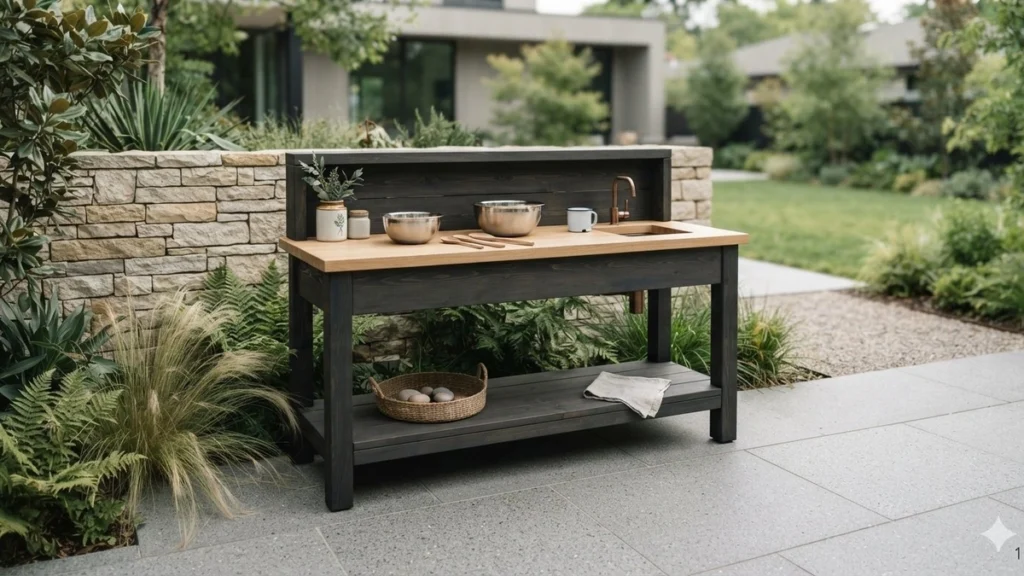
A mud kitchen doesn’t have to be a chaotic eyesore. By adopting a minimalist approach, you can create a play station that feels like a natural extension of your patio’s architecture. Focus on clean lines, a monochromatic color palette, and hidden storage to maintain a serene garden aesthetic. Think charcoal-stained cedar or matte black metal frames paired with light wood countertops, which offer a sophisticated contrast that appeals to both children and adults.
This design works best in contemporary backyards where softscaping and structured hardscaping meet. To style it, avoid the typical neon plastic accessories. Instead, opt for simple stainless steel bowls and neutral-toned wooden utensils. A common mistake is overcrowding the surface; keep the workspace sparse to encourage creative play rather than sensory overload. By treating the mud kitchen as a piece of outdoor furniture rather than a toy, you elevate the entire garden’s atmosphere. Proper lighting, such as subtle path lights nearby, ensures the area remains an inviting focal point even after the sun sets.
Selecting Weather-Resistant Sustainable Woods
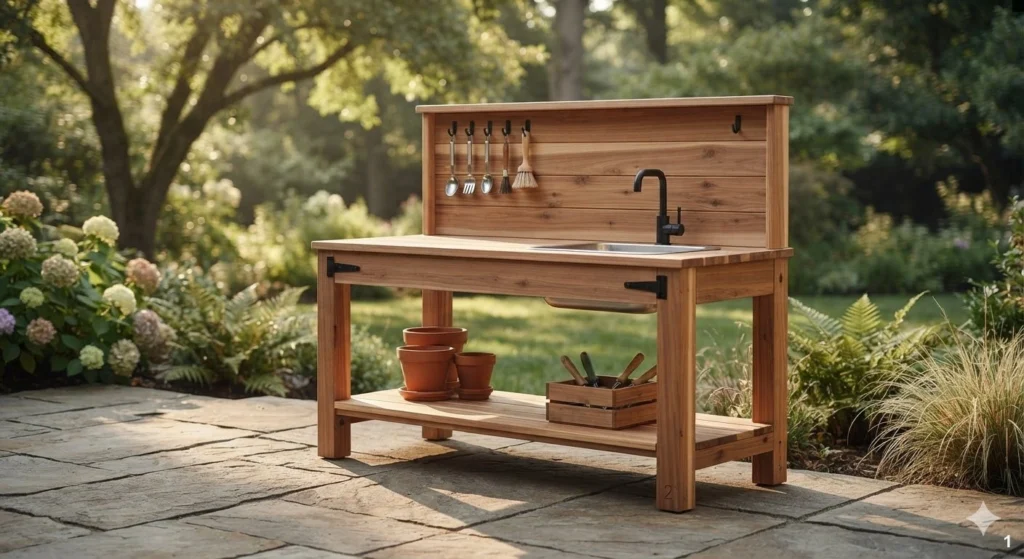
Longevity is the hallmark of a well-designed outdoor piece. When selecting materials for a mud kitchen, prioritize rot-resistant and sustainable woods like teak, western red cedar, or thermally modified timber. These materials naturally withstand fluctuating moisture levels and UV exposure without requiring toxic chemical treatments. Investing in high-quality lumber ensures that the structure remains sturdy and aesthetically pleasing year after year as it develops a soft, silver-gray patina.
These woods work exceptionally well in climates with high humidity or frequent rainfall. For a refined look, seal the wood with a natural, eco-friendly oil to preserve its rich grain and warmth. Avoid using pressure-treated pine, which often contains harsh chemicals that aren’t ideal for children’s hands. A designer tip is to use marine-grade hardware for any hinges or hooks; this prevents unsightly rust streaks from bleeding onto your beautiful wood surfaces. When the wood is cared for with periodic oiling, it retains its integrity, proving that sustainable choices are also the most durable ones for exterior play spaces.
Creative Upcycling for Budget Friendly Stations
You don’t need a massive budget to create a stylish, functional mud kitchen. Upcycling existing materials is a brilliant way to build a bespoke piece that feels curated rather than bought. Look for vintage side tables, old potting benches, or even repurposed kitchen cabinetry that can be modified for outdoor use. By stripping back old paint and applying a fresh coat of high-quality exterior-grade stain, you can transform a discarded piece into a stunning garden feature.
This approach works best in eclectic or rustic-style gardens where a sense of history is appreciated. When sourcing pieces, look for solid wood frames that provide a sturdy base. A common mistake is using materials that aren’t meant for outdoors, like particle board, which will swell and crumble at the first sign of rain. Instead, replace countertops with stone, tile, or thick cedar planks to ensure durability. To complete the look, source vintage-inspired hardware like brass knobs or cast-iron hooks. These small details anchor the piece, making your upcycled creation feel like an intentional designer find rather than a DIY project.
Integrating Functional Water Features
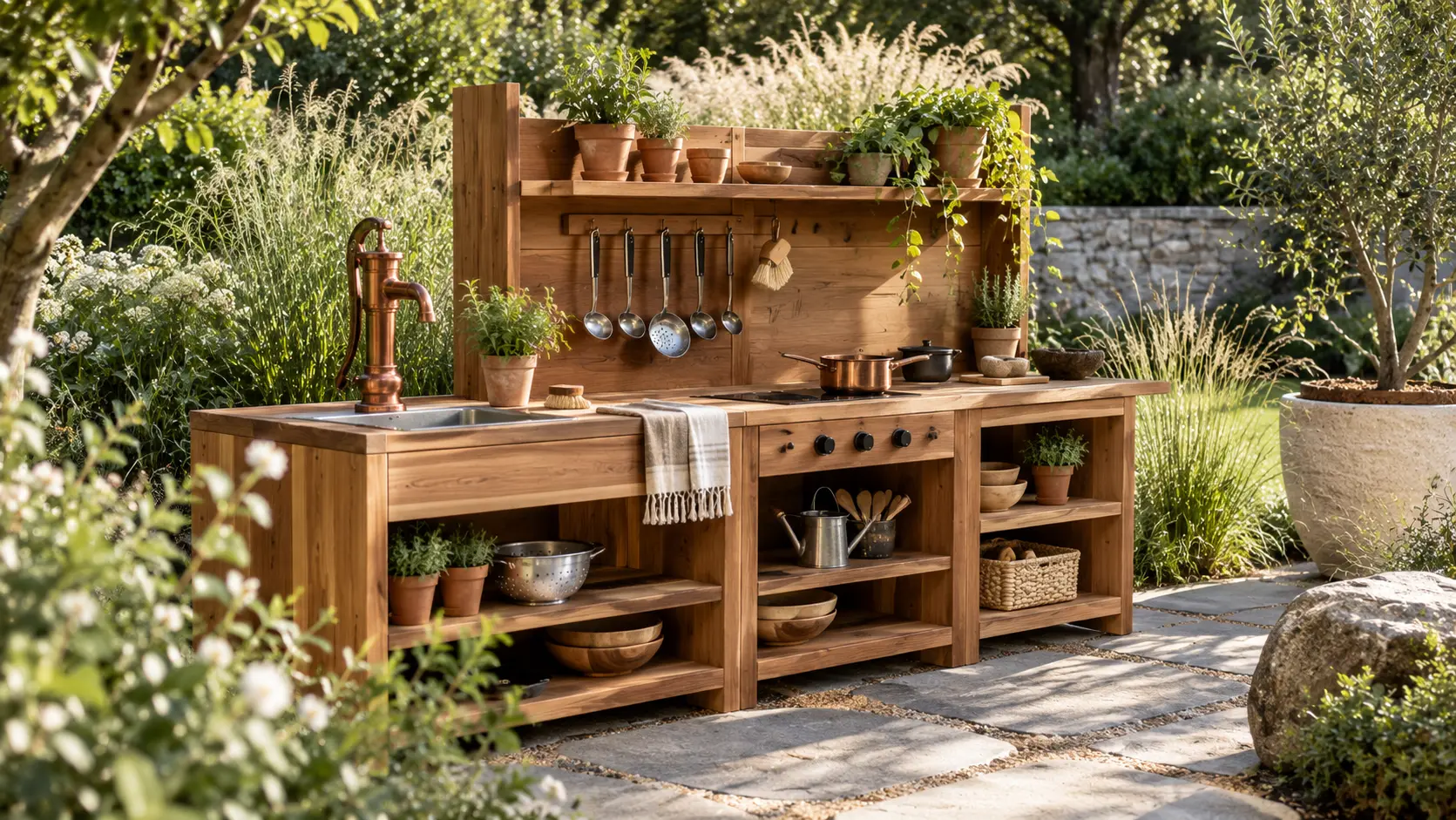
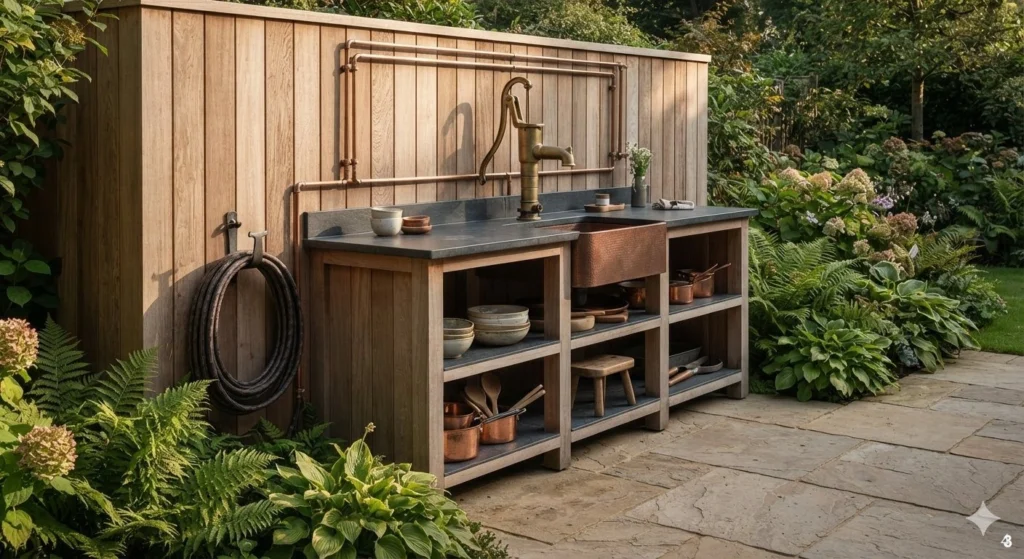
The true joy of a mud kitchen lies in the ability to mix water with earth. Integrating a functional water feature takes the play experience from basic to immersive. Consider installing a simple hand pump or a gravity-fed water system using a wall-mounted galvanized bucket. This not only adds an element of wonder for children but also serves as a sculptural feature in your garden design.
This works best when positioned against a wall or a dedicated garden fence, allowing the plumbing to be concealed or neatly arranged. Ensure the water source is easily accessible but controlled to prevent excessive flooding of your garden beds. A sophisticated way to style this is by using copper piping, which develops a beautiful, earthy patina over time. Avoid plastic hoses that detract from the visual appeal; instead, opt for braided fabric-covered hoses or metal conduits. By making water a central, purposeful part of the design, you transform a messy play area into a calming, interactive water station that feels right at home in a high-end landscape.
Ergonomic Heights for Growing Children
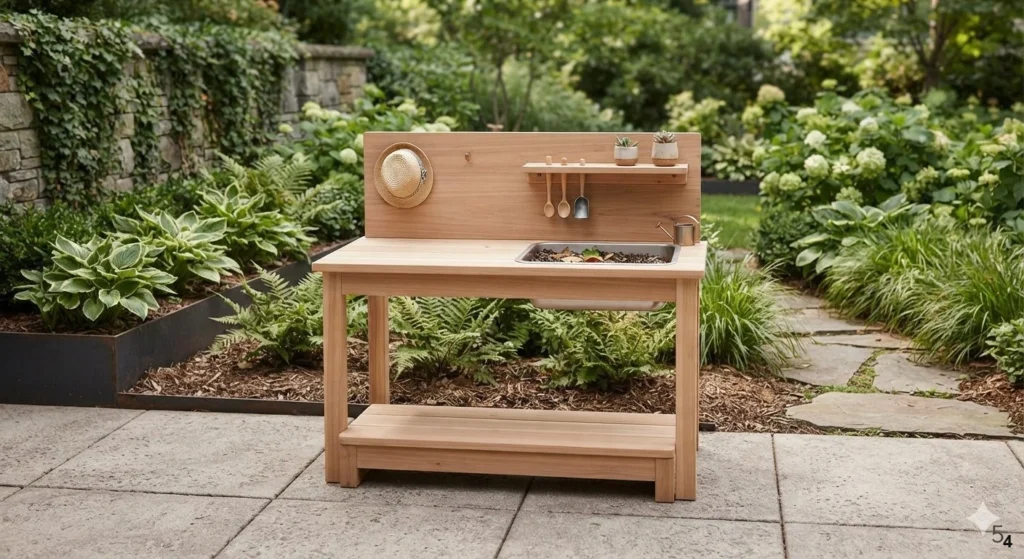
Designing for longevity means considering the ergonomics of your child’s play. A mud kitchen that is too low will be outgrown in a season, while one that is too high limits accessibility. The secret is to build or source a station with an adjustable or ‘intermediate’ height that serves toddlers and school-aged children alike. Generally, a countertop height around 20 to 24 inches is the sweet spot for maximum versatility.
This ergonomic approach works best in any garden setting because it prevents the need for frequent replacements. To keep the design feeling elevated, consider incorporating a removable platform or a ‘stepping stool’ integrated into the base of the kitchen. This adds a architectural layer to the design while providing the necessary height for younger children. Avoid cluttered, bulky legs; opt for sturdy, minimalist uprights that maintain a sense of lightness. By focusing on ergonomic proportions, you ensure the piece remains a functional part of your outdoor space for years, rather than becoming a temporary fixture that needs to be discarded as your children grow.
Curating Aesthetic Sensory Play Accessories
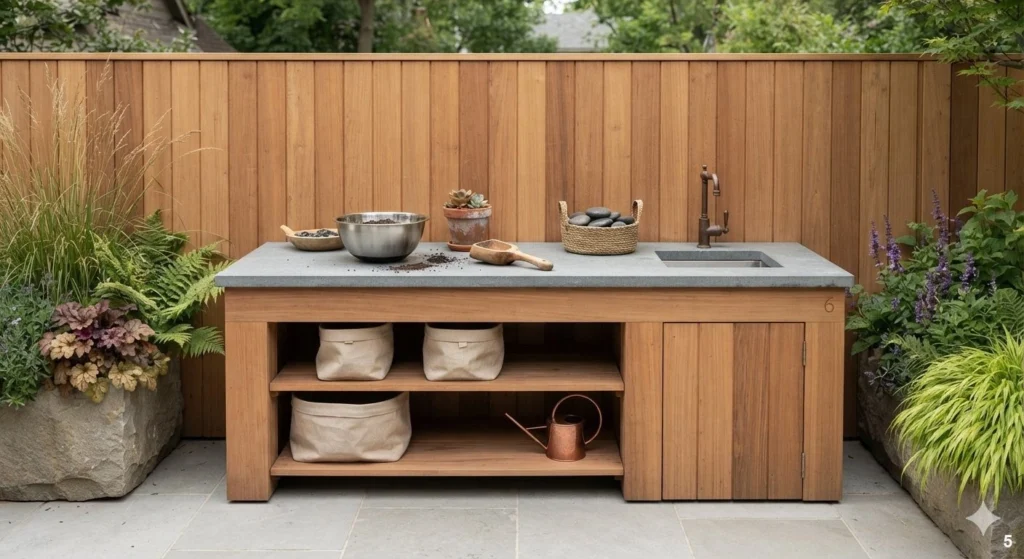
The accessories you choose define the overall look of your mud kitchen. To maintain a cohesive design, curate a collection of items that feel authentic and tactile. Replace neon plastic buckets with brushed stainless steel bowls, terracotta pots, and wooden scoops. These natural materials age beautifully and offer a satisfying sensory experience without the visual noise associated with mass-produced toys.
This styling works best when you keep the color palette neutral—think creams, grays, and natural wood tones. A common mistake is allowing ‘toy creep,’ where too many items clutter the workspace. Instead, use a rotating system where only a few select accessories are out at any given time. Add texture with small woven baskets for storage and natural stone ‘ingredients’ like pebbles or seashells. A designer tip is to label your storage containers with simple, elegant tags. This encourages organization and teaches children to tidy up while keeping the mud kitchen looking like a refined workstation that blends seamlessly into your curated outdoor living area.
Smart Drainage Solutions for Tidy Play Areas
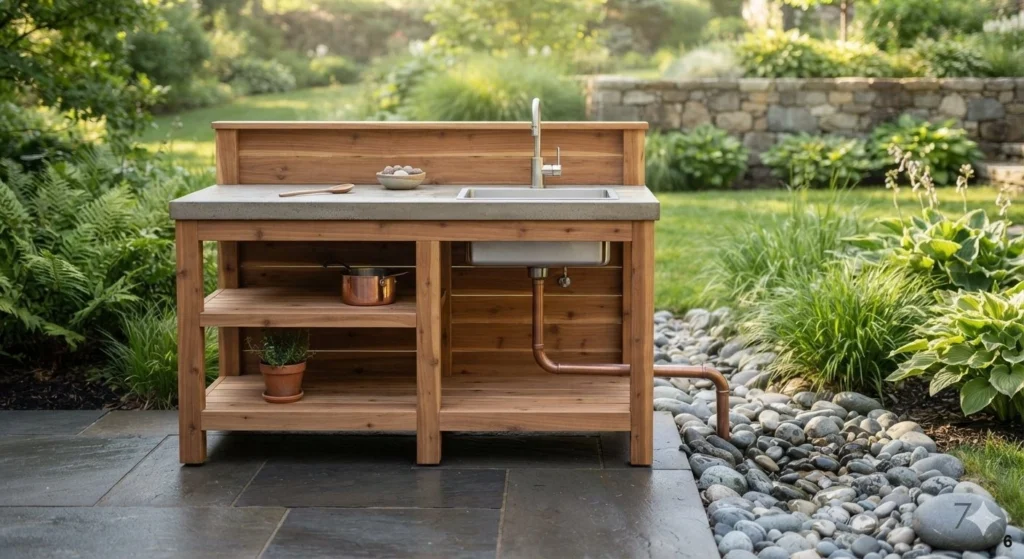
Managing mud and water is the biggest challenge in keeping an outdoor play area tidy. A well-designed mud kitchen should include a smart drainage solution that directs excess water away from the structure and your patio. Installing a removable basin or a sink with a direct drain pipe leading to a gravel bed is an effective way to keep the surrounding area clean and free of stagnant pools.
This works best on paved or decked surfaces where standing water can cause slip hazards. For a more aesthetic approach, fill the drainage zone with decorative river stones or smooth pebbles. This creates a functional ‘dry creek’ look that hides the drainage pipe while adding an organic texture to the landscape. Avoid letting water run directly onto wooden decking, as this can lead to rot over time. By incorporating a gravel-lined soakaway under the kitchen, you ensure the play area remains mud-free and pristine, regardless of how much ‘cooking’ your little ones do. It is a simple, invisible fix that preserves the integrity of your garden design.
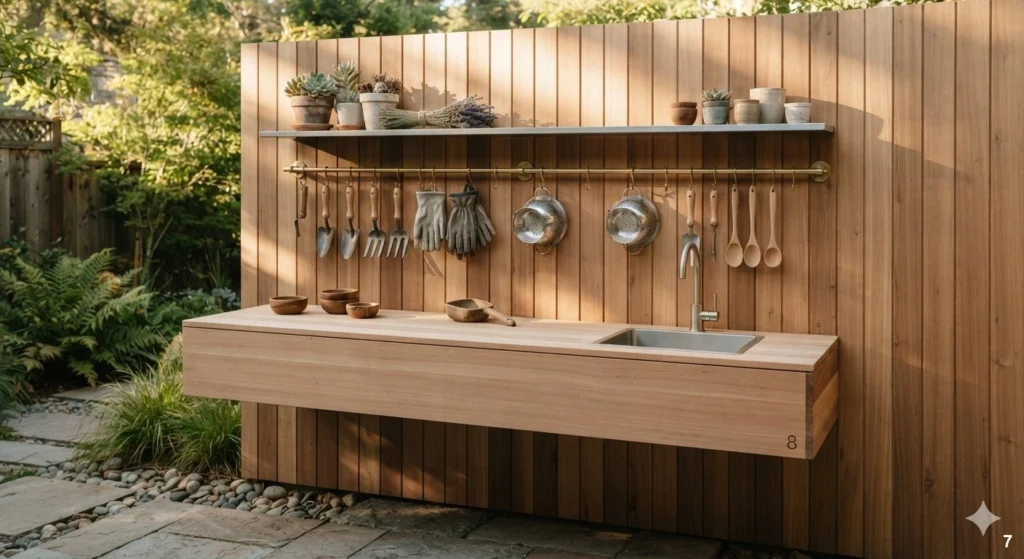
Utilizing Vertical Space for Tool Storage
In a compact garden or patio, vertical space is your best friend. Instead of cluttering the countertop, use the wall behind your mud kitchen to hang tools and supplies. A pegboard, a simple rail system, or a series of brass hooks can keep everything within reach while freeing up precious workspace. This vertical organization turns your mud kitchen into a professional-looking station that mimics an adult’s gourmet outdoor kitchen.
This approach works best when the kitchen is placed against a fence, a garden wall, or a privacy screen. Use uniform hooks to create a clean, repetitive pattern that appeals to the eye. A common mistake is mounting hooks too high or too close together, which makes it difficult for children to grab what they need. Ensure the layout is intuitive and accessible. For an extra touch of sophistication, consider adding a small, weather-resistant shelf for dried herbs or decorative plants. By utilizing the vertical plane, you keep the workspace clear for active play and create a visually engaging backdrop that highlights your commitment to intentional, organized garden design.
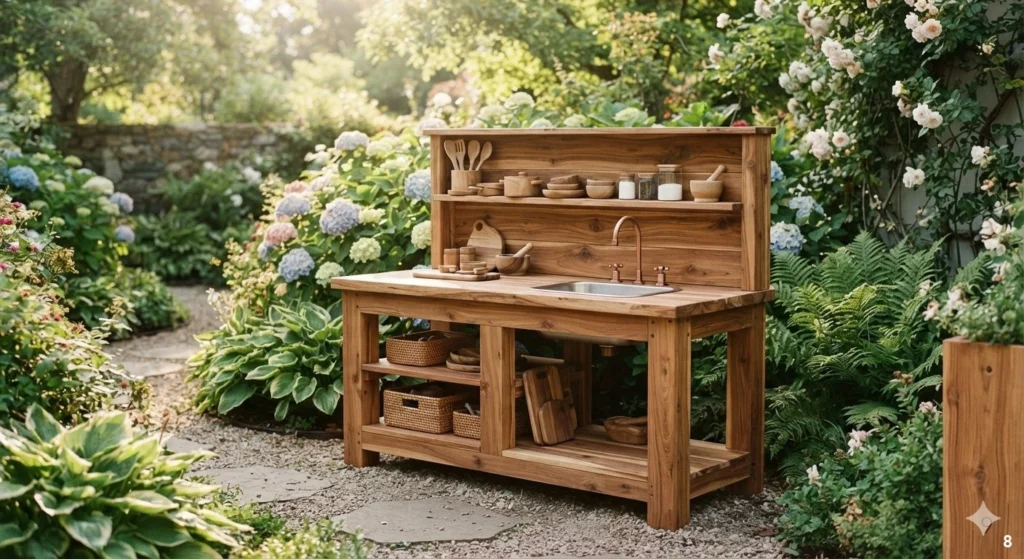
Choosing Non-Toxic Outdoor Wood Finishes
When designing a mud kitchen, the finish you select is as vital as the wood itself. Since children will be handling surfaces directly, opt for natural, food-grade finishes like raw linseed oil or tung oil. These penetrate the wood grain to provide a moisture-resistant barrier without off-gassing harmful chemicals. Avoid heavy synthetic stains or standard exterior paints that can flake or leach toxins when exposed to the elements.
Applying a high-quality, plant-based sealer keeps the wood looking rich and vibrant while protecting it from the inevitable water play. For a sophisticated aesthetic, look for finishes that enhance the wood’s natural grain rather than masking it. This approach ensures the station ages gracefully, developing a beautiful patina over time rather than looking weathered or neglected.
Always perform a patch test on an inconspicuous area to see how the wood tone reacts. Remember that reapplication is necessary every season to maintain the barrier. By choosing non-toxic options, you prioritize child safety without compromising on the high-end, organic look that defines a well-curated garden.
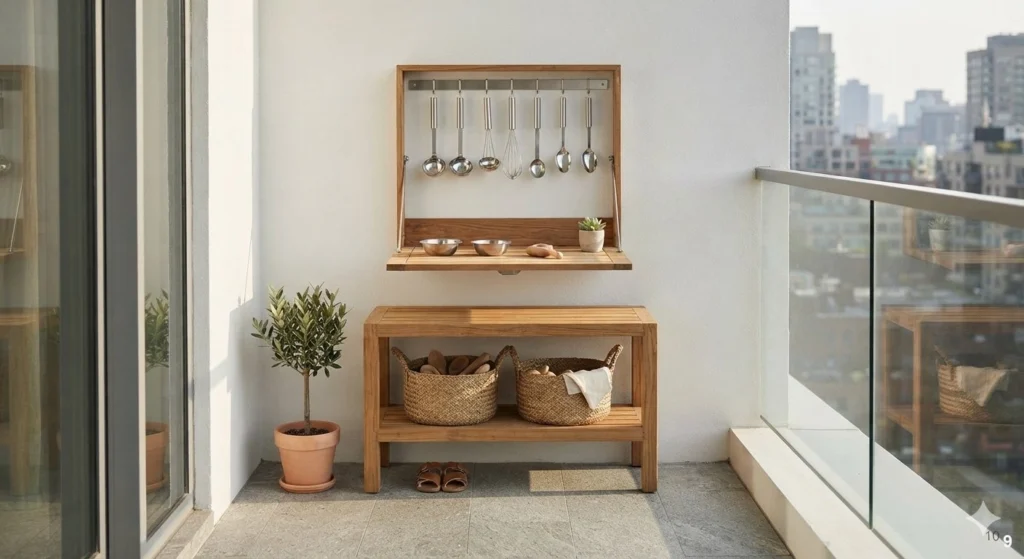
Small Footprint Ideas for Urban Balconies
Limited square footage doesn’t mean you have to sacrifice the joy of sensory play. For urban balconies, consider a vertical, wall-mounted mud kitchen design. By utilizing the vertical plane, you free up valuable floor space while still providing a dedicated area for mixing and pouring. A slim, fold-down shelf serves as the workstation, which can be tucked away when not in use to maintain a clean, minimalist profile.
Focus on modularity and multi-purpose furniture. A narrow console table crafted from weather-treated teak can double as a potting bench for adults and a play kitchen for children. Use the area underneath to tuck away small woven baskets for storage. This keeps the aesthetic refined and clutter-free, which is essential for smaller, high-visibility spaces.
When styling, keep the color palette neutral—think soft greys, whites, or natural wood tones—to ensure the play station feels like a cohesive part of your outdoor decor rather than an eyesore. Wall-mounted hooks are your best friend here, allowing you to hang stainless steel utensils vertically, which keeps the surface clear and adds a professional, chef-inspired touch to the small space.
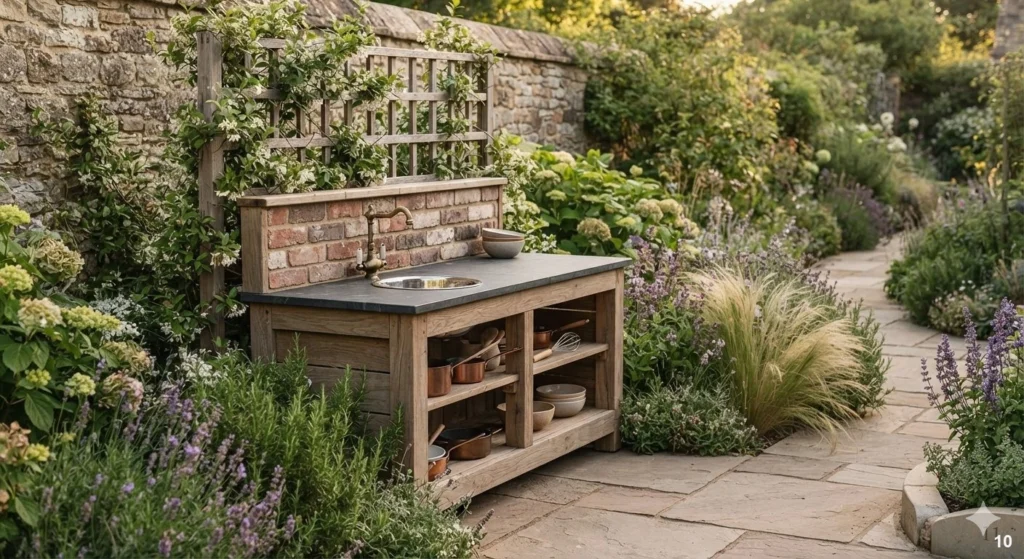
Blending Play Structures with Garden Landscaping
The secret to a sophisticated backyard is seamless integration. Instead of isolating your mud kitchen, position it within the flow of your existing garden beds or near your patio’s perimeter. Use the same materials found in your landscape design—such as reclaimed brick for a backsplash or slate pavers for the countertop—to anchor the structure visually.
Surrounding the kitchen with native grasses or aromatic herbs like rosemary and lavender creates a sensory-rich environment that feels intentional. By integrating the play station into the landscape rather than placing it in the middle of a lawn, you define the play area as a deliberate design choice. This also helps transition the space from a purely functional area to a beautiful focal point.
Avoid bright, primary-colored plastics that clash with nature. Instead, embrace a palette of earthy tones. If you are building the structure, consider incorporating a living roof or a trellis back to allow climbing plants to drape over the kitchen over time. This turns the mud kitchen into a living, breathing element of your garden that improves in appearance as your landscape matures.
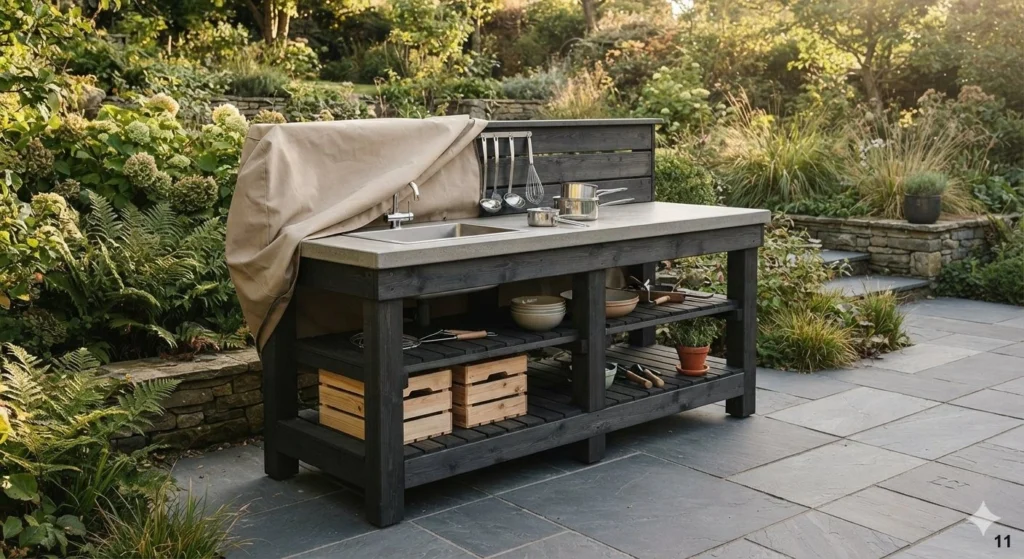
Weatherproofing Tips for Longevity
To ensure your mud kitchen survives the changing seasons, start with the foundation. Elevating the legs of the kitchen on stone pavers or rubber feet prevents the wood from sitting directly on damp soil, which is the primary cause of rot. For the countertop, consider durable materials like polished concrete, stainless steel, or stone, which handle water and mud far better than wood alone.
Investing in a custom-fitted, breathable canvas cover is a designer-approved trick to protect your investment during the winter months. Unlike heavy plastic tarps, canvas allows for airflow, preventing trapped moisture that leads to mold. If you live in an area with particularly harsh winters, choose a design that is easy to disassemble and store in a shed or garage.
Regular maintenance is the hallmark of a high-quality space. Once a month, check for any loosened hardware or areas where the finish may have worn thin. A simple wipe-down with a damp cloth and a quick inspection of the joints will keep the structure sturdy for years. By treating the mud kitchen like a piece of outdoor furniture rather than a disposable toy, you ensure it remains a functional, beautiful fixture in your family’s life.
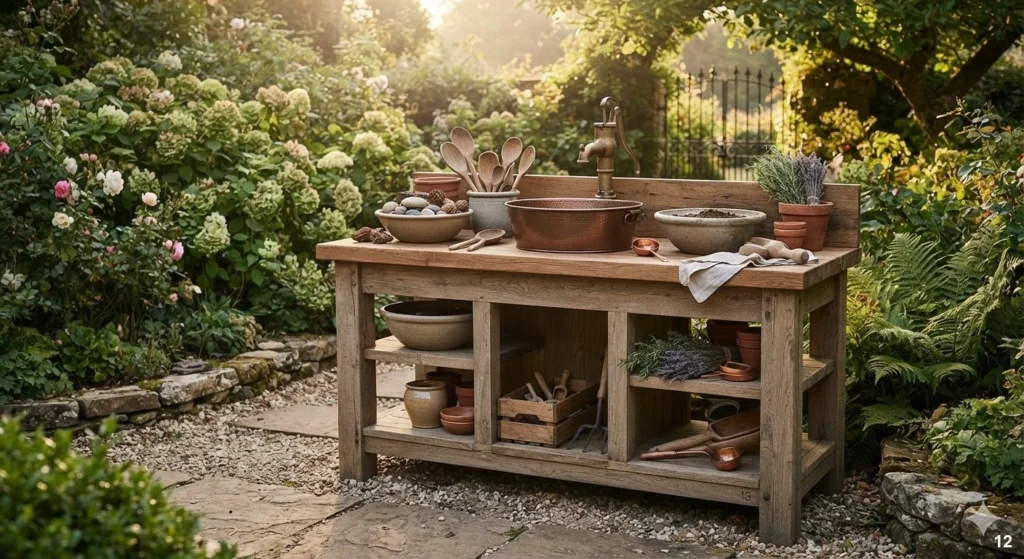
Incorporating Natural Elements into Play Stations
A mud kitchen should be an extension of the natural world. Instead of store-bought accessories, curate a collection of items that encourage tactile engagement with nature. Use heavy-duty ceramic bowls, vintage copper pots, or wooden spoons that provide a weight and texture plastic simply cannot replicate. These materials feel refined and look beautiful even when left out on the counter.
Think about including a built-in water source, such as a hand-pump or a gravity-fed basin. This adds an educational element to play and brings the soothing sound of water to your garden. Incorporating natural stones, seashells, or dried wood pieces as ‘ingredients’ encourages creative, open-ended play while keeping the aesthetic grounded in the earth.
Avoid cluttering the space with too many small items. Instead, rotate the ‘ingredients’ based on the season—pinecones and dried leaves in autumn, fresh flowers or petals in spring. This intentional approach keeps the play station feeling fresh and relevant. By prioritizing high-quality, natural materials, you teach children to appreciate the beauty of their environment while maintaining a sophisticated look that complements your home’s exterior.
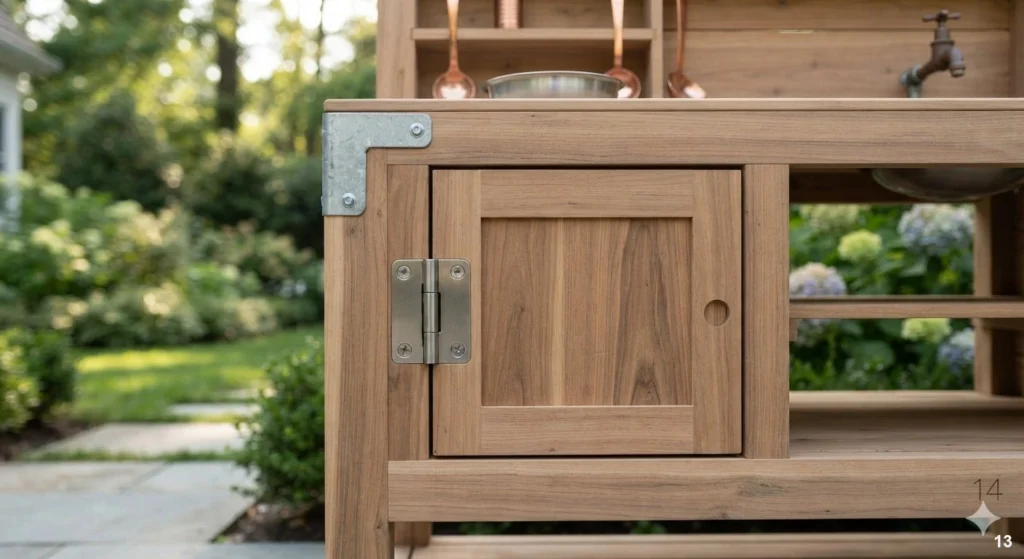
Essential Hardware for Sturdy Construction
The longevity of a mud kitchen relies heavily on the quality of its hardware. Because the structure will be subjected to water, sand, and heavy play, it is essential to use marine-grade stainless steel screws and hinges. Standard hardware will inevitably rust, leaving unsightly streaks on the wood and compromising the structural integrity of the frame over time.
When assembling, look for heavy-duty, recessed hardware that sits flush with the surface. This creates a clean, intentional look and prevents children from snagging their clothes or skin on sharp edges. If you are adding doors or drawers, choose soft-close hinges or magnetic catches to ensure they don’t slam, which adds a premium, quiet feel to the experience.
Think about the weight and balance of the structure. If you are building a larger kitchen, consider using galvanized metal corner braces to add rigidity. These can be painted to match the wood or left raw for an industrial-chic aesthetic. By focusing on the strength of the joints and the quality of the fasteners, you ensure the mud kitchen remains a stable, safe, and enduring part of your outdoor space, capable of being handed down or repurposed as a potting bench once the children outgrow the play phase.
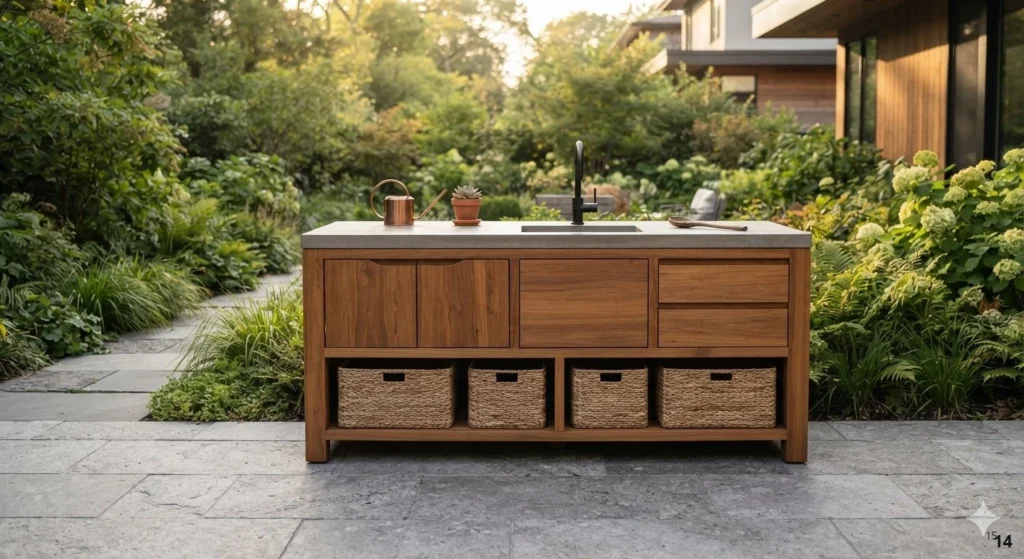
Implementing Hidden Storage for Clutter Control
The key to a stylish mud kitchen is the ability to hide the mess when playtime is over. Integrate built-in storage solutions that are both functional and discreet. Open shelving is charming, but it often leads to visual clutter. Instead, incorporate deep drawers or cabinets with woven seagrass bins that can slide in and out easily.
These bins are perfect for stashing away shovels, buckets, and molds, keeping the main workspace clear and tidy. For a more sophisticated look, consider a drop-down cupboard door that doubles as an additional workspace when open. This keeps the design streamlined and compact, ensuring the kitchen looks like a piece of high-end outdoor furniture rather than a toy box.
Another designer tip is to use the space beneath the sink basin for a hidden trash bin or a designated ‘mud bucket’ that can be easily emptied at the end of the day. By planning for storage at the design stage, you eliminate the temptation to leave loose toys scattered across the patio. This keeps your outdoor area looking polished and inviting, allowing the mud kitchen to blend seamlessly into your curated garden aesthetic while still being fully ready for the next day’s adventures.
Child-Safe Anchoring Techniques for Safety
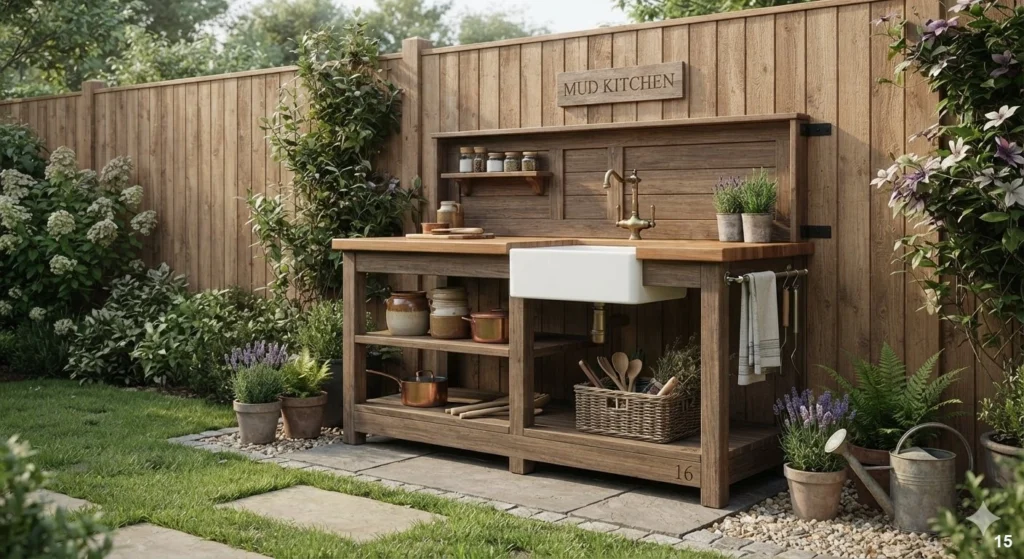
Safety is paramount when designing outdoor play structures, especially those that encourage active play. Anchoring your mud kitchen is a necessary step to prevent tipping, particularly if the structure includes heavy components like ceramic sinks or stone counters. The most elegant solution is to use hidden L-brackets to secure the back of the frame directly to a sturdy wall, fence, or deck railing.
If the kitchen is freestanding in the middle of a garden, consider using ground anchors or rebar stakes that are driven deep into the soil and concealed by mulch or decorative gravel. This ensures the unit remains perfectly stable without any visible, unsightly wires or external supports. It provides peace of mind for parents while maintaining a clean, professional appearance.
When anchoring, always ensure that no sharp metal edges are exposed. If you use bolts or screws, cover them with matching wooden plugs or exterior-grade wood filler to create a seamless, finished look. By taking the time to properly secure the structure, you are not just ensuring safety; you are reinforcing the quality of the build. A well-anchored kitchen feels substantial and permanent, elevating it from a temporary play item to a meaningful part of your home’s outdoor architecture.
Designing Multi-Level Countertop Workstations
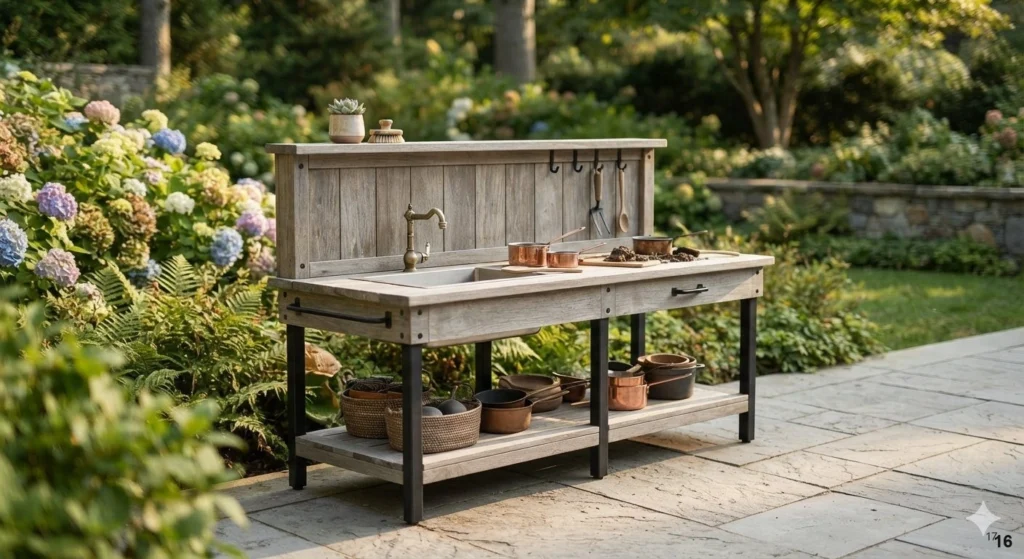
A multi-level countertop is the secret to a mud kitchen that truly grows with your child. By incorporating two distinct heights—a lower shelf for toddler-level digging and a higher bench for older children to stand at—you maximize the play area without sacrificing floor space. This tiered approach mimics professional outdoor kitchens, creating an ergonomic flow that keeps the mess contained to the lower zones while providing a dedicated workspace for more complex sensory experiments above.
This design works best on patios or expansive decks where you have a bit of perimeter room to play with. To maintain a sophisticated look, use reclaimed cedar or teak for the countertops. These woods weather beautifully to a soft, silver-gray patina that blends seamlessly into a mature garden. Avoid the common mistake of making the levels too steep; keep them within a six-inch variance to ensure the transition feels intentional rather than cluttered.
For an elevated touch, incorporate a built-in trough or a stainless steel insert into the lower tier to serve as a ‘mixing bowl’ station. Ensure your lighting plan includes low-voltage path lighting nearby so the kitchen remains a focal point during dusk hours. When styling, opt for copper or matte black hardware to anchor the wood tones, giving the station a refined, bespoke appearance that elevates your entire outdoor living area.
Selecting Durable Metal Accents and Hardware
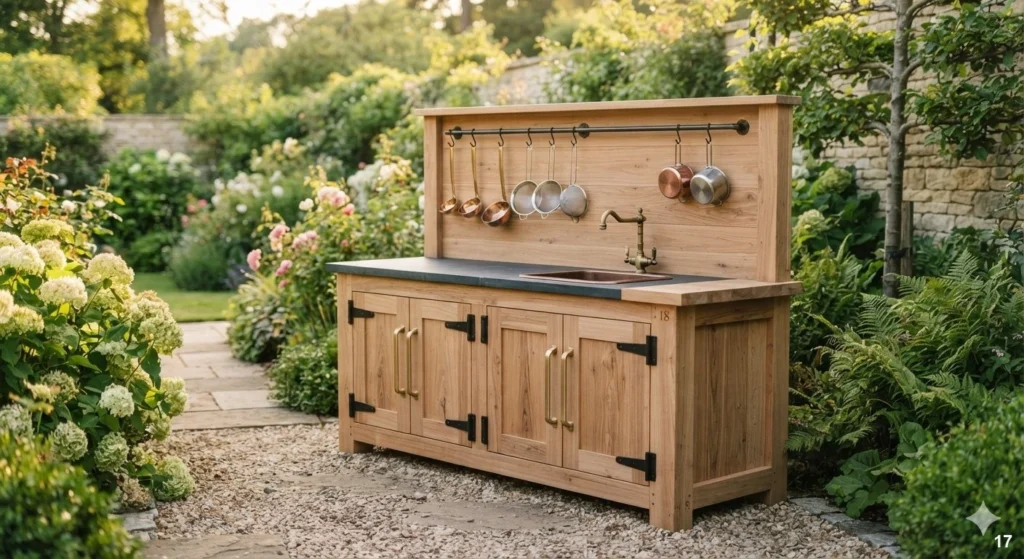
To ensure your mud kitchen stands the test of time, the hardware must be as resilient as it is stylish. While plastic fittings quickly fade and crack under UV exposure, high-quality metals like brushed brass, stainless steel, or powder-coated aluminum offer lasting elegance. These materials handle the inevitable moisture of mud and water play without rusting, provided you select marine-grade finishes that can withstand the elements.
This approach works best when you treat the mud kitchen as a piece of outdoor furniture rather than a toy. Use heavy-duty, oversized cabinet pulls for the doors and drawers, which are easier for small hands to grasp and offer a high-end, architectural feel. A common mistake is using standard indoor-grade hinges; always opt for stainless steel ball-bearing hinges to prevent the inevitable stiffening that comes with outdoor humidity and grit.
Consider adding a small metal rail or a series of S-hooks along the backsplash to hang copper ladles, whisking tools, and strainers. This keeps the work surface clear and creates an organized, boutique-style display. If you choose a matte black powder-coated finish, ensure it is applied over a galvanized base to prevent corrosion. The contrast between the warmth of natural wood and the cool precision of metal creates a visual balance that feels right at home in a curated garden, turning a play station into an intentional design element.
Creating Seamless Transitions Between Play and Lawn
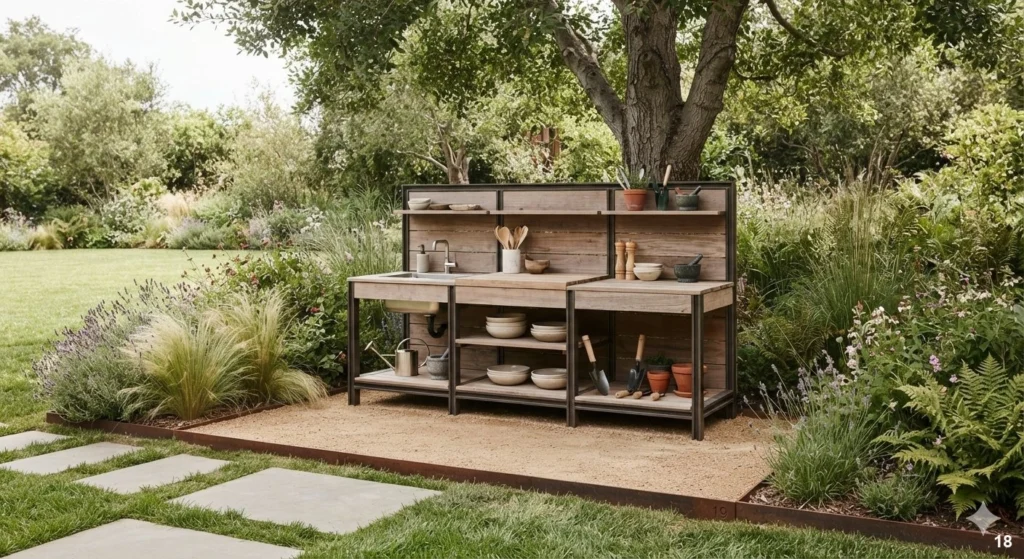
The key to integrating a mud kitchen into a refined garden is to avoid a ‘dropped-in’ look. Instead, create a seamless transition by anchoring the kitchen within a dedicated zone of pea gravel, decomposed granite, or oversized stone pavers. This creates a functional ‘containment’ area that prevents mud from tracking onto your pristine lawn or indoor flooring while visually defining the space as a purposeful outdoor room.
This layout works best when the play area is positioned near a garden edge or beneath a mature tree, allowing the kitchen to feel like a natural extension of the landscape. Use border edging made of corten steel or stone to keep the gravel contained and crisp. A common mistake is placing the kitchen directly on the grass, which can kill the lawn underneath and turn the play area into a muddy, unmanageable bog after a light rain.
To enhance the transition, surround the station with hardy, tactile plantings like ornamental grasses or low-maintenance lavender. These provide a soft visual buffer that hides the ‘business end’ of the kitchen from your main seating area. Consider installing a small, decorative stone step if the station is raised, which adds an architectural detail that mirrors the steps you might find on a patio. By treating the area as a destination rather than a utility spot, you ensure the play zone remains an asset to your garden’s overall aesthetic rather than a visual distraction.
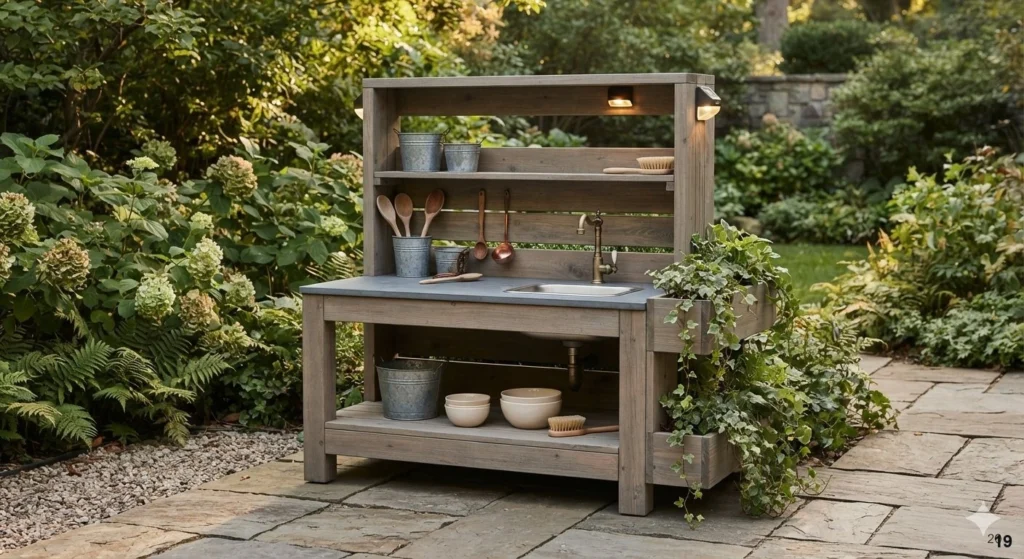
Choosing Neutral Palettes for Sophisticated Design
Moving away from the primary-colored plastics typical of children’s play equipment, a neutral palette is the fastest way to achieve a sophisticated, magazine-worthy mud kitchen. Think in terms of monochromatic layers: warm woods, slate grays, earthy taupes, and soft whites. By keeping the color scheme quiet, the kitchen integrates effortlessly into your existing outdoor decor, allowing the natural textures of the garden to take center stage.
This design strategy works best for homeowners who want their backyard to feel cohesive and serene. Use exterior-grade stains in muted tones—like a soft charcoal or a weathered driftwood gray—to protect the wood while providing a modern, finished look. A common mistake is over-accessorizing with bright plastic items; instead, source vintage metal pots, wooden spoons, and ceramic bowls that echo the neutral tones of the structure.
Lighting is crucial when working with a neutral palette. Use warm, amber-toned LED lanterns or solar-powered sconces mounted to the kitchen frame to highlight the texture of the wood and the depth of the finish during the evening. If you want a pop of color, introduce it through living elements, such as a planter box filled with trailing ivy or a small herb garden integrated into the side of the unit. This brings organic vitality to the space without disrupting the refined, minimalist aesthetic you’ve cultivated throughout your home.
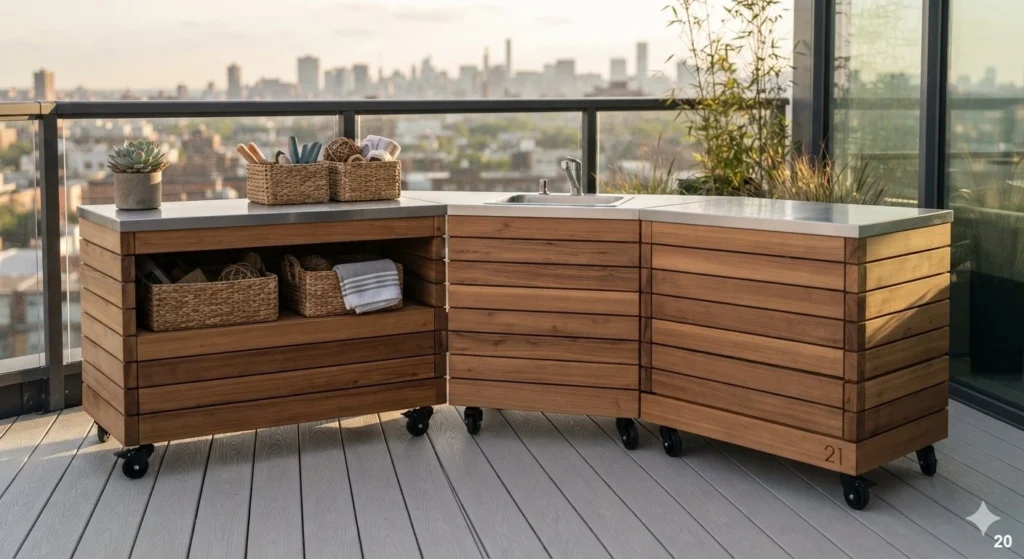
Modular Design Concepts for Flexible Play
For families with limited outdoor space or those who prefer a dynamic backyard, modular design is the ultimate solution. By creating the kitchen as a series of independent, interlocking components—such as a separate sink unit, a preparation bench, and a storage crate—you can reconfigure the layout based on the occasion or the child’s growing needs. This flexibility allows you to tuck the pieces away or rearrange them to suit different corners of the patio.
This concept works best on urban balconies or smaller terraces where space is at a premium. Each module should be built on heavy-duty, lockable casters, allowing for effortless movement without scratching the decking. A common mistake is making the modules too heavy to move; keep the structures lean by using cedar framing and thin-gauge stainless steel surfaces. This ensures that the kitchen remains functional and lightweight.
To keep the modular units looking intentional, ensure they share a consistent design language, such as uniform wood slats and hardware finishes. When not in use, these pieces can double as extra potting benches or side tables for your own gardening projects, effectively hiding their ‘play’ identity. Style the units with uniform storage baskets made of woven seagrass or wire to keep smaller toys contained. This approach transforms a collection of parts into a cohesive, high-design system that feels incredibly custom and adaptable to your changing lifestyle.
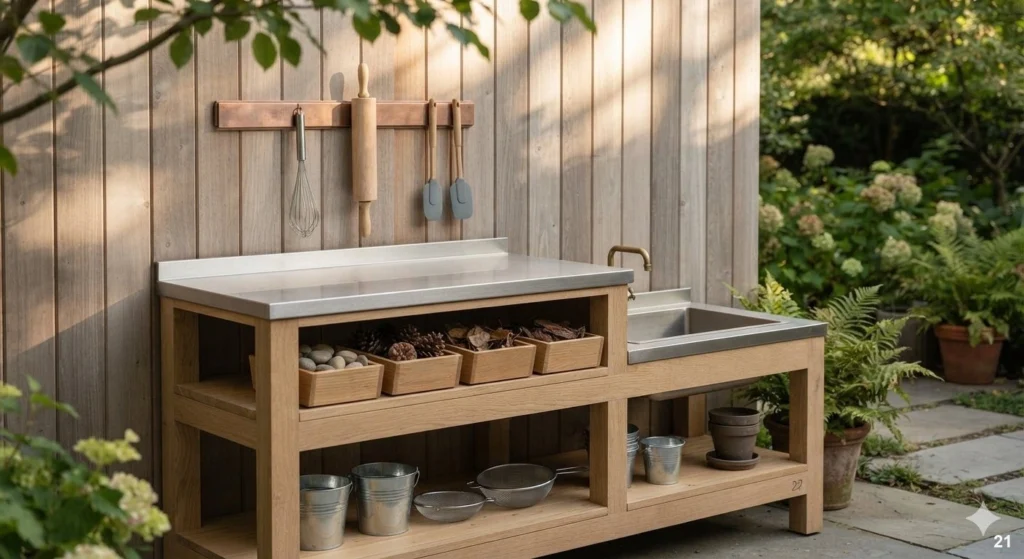
Essential Tools for Sensory Learning Success
The utility of a mud kitchen lies in its ability to facilitate sensory exploration, and the right tools make all the difference. Instead of cluttering the space with mass-produced plastic toys, curate a selection of high-value items that encourage creativity and fine motor skills. Think of items that would be found in a professional kitchen: metal whisks, silicone spatulas, glass measuring cups, and wooden rolling pins. These items provide a tactile, authentic experience that plastic simply cannot replicate.
This strategy works best when you keep the collection minimal and intentional. Use a wall-mounted magnetic strip or a series of pegboards to keep these tools organized and accessible. The visual appeal of these tools, especially when made from copper, stainless steel, or light wood, acts as a decorative element in its own right. A common mistake is providing too many options; a curated set of ten high-quality tools is far more effective for deep play than a bin overflowing with broken plastic trinkets.
Consider adding a small, dedicated space for ‘natural ingredients’—a few shallow bins or drawers filled with pinecones, river stones, or dried lavender. This encourages children to incorporate the garden’s natural textures into their play. When the kitchen is not in use, ensure these tools are cleaned and stored securely to prevent them from weathering too quickly. By treating these tools as real implements, you teach children to care for their environment while fostering a rich, sensory-driven play experience that feels just as elevated as the rest of your home.
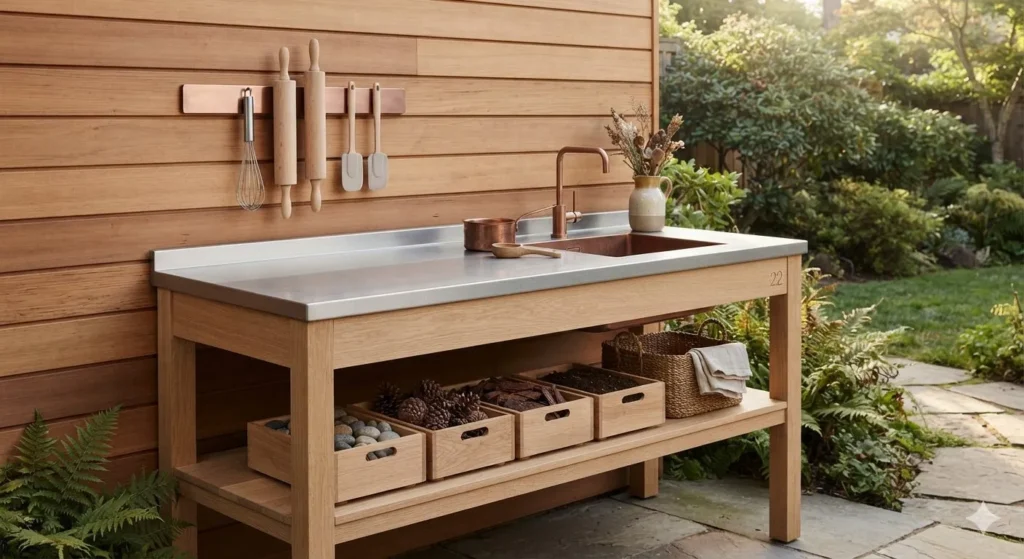
Frequently Asked Questions
How do I keep a mud kitchen from looking messy in my backyard?
The secret to maintaining a tidy aesthetic lies in intentional organization and smart storage. Incorporate closed cabinetry or woven baskets to hide smaller plastic toys when playtime concludes. By choosing a neutral color palette that complements your home’s exterior, the station will feel like a deliberate garden feature rather than a cluttered play area. Additionally, utilizing vertical wall space for hanging metal utensils keeps the countertop clear, ensuring the space looks orderly and refined, even when it is not currently in use.
What are the best materials for a mud kitchen that will last outdoors?
For long-term durability, prioritize weather-resistant hardwoods like teak, cedar, or acacia. These materials naturally withstand moisture and sun exposure far better than softwoods or low-quality plastics. If you are building your own, ensure you use stainless steel or galvanized hardware to prevent rusting over time. Applying a high-quality, non-toxic outdoor wood sealant is essential to protect the finish and maintain the wood’s structural integrity. Investing in these premium, natural materials ensures your play station remains a beautiful, enduring part of your landscape.
Can I build a mud kitchen for a small urban balcony or patio?
Absolutely. You can easily adapt mud kitchen concepts for smaller footprints by opting for a slim, wall-mounted design or a compact modular unit. Focus on vertical functionality by installing hooks and shelving above the workspace to maximize every inch. A narrow, elevated countertop takes up very little floor space while still providing ample room for sensory play. By choosing a sophisticated, minimalist design, you can create a functional play station that feels integrated and intentional rather than bulky, even in the tightest outdoor settings.
How do I incorporate water without creating a muddy mess in my garden?
To manage water effectively, integrate a removable stainless steel basin or sink insert that can be easily emptied. For a more sophisticated drainage solution, consider installing a gravel-filled dry well directly beneath the station to absorb runoff, or connect a hose to a simple basin drain. Keeping the play area slightly elevated on a stable, permeable surface like stone pavers or gravel helps prevent standing water and mud buildup, keeping the surrounding grass and patio area clean and well-maintained.
Are mud kitchens safe for toddlers and young children?
Safety is paramount when designing outdoor play stations. Ensure all structures are anchored securely to the ground or a wall to prevent tipping, especially if the unit is tall. Use only non-toxic, food-grade finishes on all wood surfaces to protect curious hands. Avoid sharp edges by sanding all corners smooth, and ensure that any metal accents or hardware are free from rust or jagged bits. By prioritizing quality construction and stable, child-safe design principles, you can create a secure environment that encourages independent play and sensory development.
Conclusion
Creating a mud kitchen that harmonizes with your home’s exterior is entirely achievable with a focus on quality materials and thoughtful design. By moving away from bright, temporary plastics and toward durable, natural elements, you can provide your children with an engaging sensory experience that enhances, rather than distracts from, your garden’s sophisticated landscape.
Start small by selecting one or two of these elevated design concepts—perhaps a neutral color scheme or a vertical storage solution—to begin your transformation. With the right approach, your play station will become a seamless, enduring feature of your home that fosters imagination and outdoor exploration for years to come. You have all the tools you need to build a space that is as beautiful as it is functional.