

A kitchen backsplash does much more than protect your walls from spills and splashes. It also adds personality, texture, and color that can completely transform the look of your kitchen. Whether you prefer timeless classics or bold statement designs, the right backsplash ties the entire space together.
Today’s backsplash options include everything from elegant marble and handcrafted ceramic tiles to sleek glass panels and natural stone. Each material offers unique advantages in terms of appearance, durability, and maintenance. Choosing the right one depends on your lifestyle, budget, and overall kitchen style.
This guide features 24 kitchen backsplash ideas that combine beauty with everyday functionality, from classic subway tile and marble slabs to Zellige, glass, and terrazzo. Start with the quick guide to choosing a material, height, and grout, then use the chooser to find the idea that fits your kitchen.
How to Choose a Kitchen Backsplash
The best backsplash balances looks with how easy it is to clean and how well it handles heat, grease, and water. Decide on the material and height first, then choose color and pattern.
- Material. Ceramic and porcelain tile are durable, widely available, and easy to wipe down. Glass and quartz slabs have few or no grout lines. Natural stone such as marble, travertine, and limestone is porous, so it needs sealing and gentle, non-acidic cleaners.
- Height. A low splash of about 4 inches (10 cm) is the budget minimum. Many kitchens tile the full space between the counter and the wall cabinets, often about 18 inches (46 cm), while a full-height backsplash runs to the ceiling behind a range or open shelves.
- Grout. Darker or color-matched grout hides cooking stains better than white. Epoxy grout resists stains better than standard cement grout but is harder to install.
- Heat behind the range. Choose materials suited to heat and follow your range manufacturer’s clearance guidance.
- Ordering. Order extra tile, commonly about 10 percent, to cover cuts, breakage, and future repairs, and confirm quantities with your installer.
Measure First: Height, Clearances, Costs and Tile Quantities
Measure before you order tile. The standard backsplash runs 18 inches from the countertop to the underside of the wall cabinets, with a 4-to-6-inch band as the minimum splash protection. Behind the range, tile up to the hood — usually 30 to 36 inches above the cooktop — and keep 24 inches of clearance to a noncombustible hood and 30 inches to cabinets above the cooktop.
Budget with real numbers: a simple tile backsplash in a small kitchen costs $800 to $1,800, while a typical kitchen runs $2,000 to $5,000 installed, according to EA Home Design’s 2026 cost guide. A full-height slab in the same stone as the counter adds $1,500 to $4,000 to the countertop job, so decide the height before you fall in love with a material.
Order 10 to 15 percent more tile than the wall measures, and check the height rules first: the tile should run from the counter to the bottom of the wall cabinets, about 15 to 24 inches, as myStofa’s planning guide recommends. If your kitchen remodel includes new cabinets, set the tile height after the cabinets are in, not before.
Key Takeaways
- The standard backsplash is 18 inches high, from countertop to wall cabinets; go full height behind the range.
- Tile costs $12–$60 per square foot installed depending on material; a typical kitchen backsplash runs $2,000–$5,000.
- Slabs have no grout and wipe clean, but cost $60–$250 per square foot; tile is cheaper and easier to repair.
- Seal porous stone — marble, travertine, limestone — before use and re-seal yearly.
- Order 10–15% extra tile for cuts, breakage and future repairs.
Which Backsplash Idea Fits Your Kitchen?
Small kitchens: classic white subway tile (idea 1), vertical stacked tile (idea 8), a glass sheet (idea 6), or a Scandinavian white backsplash (idea 19) keep the room bright.
Low maintenance: glass (idea 6), full-height quartz (idea 15), and wood-look porcelain (idea 17) have few joints or resist moisture well.
Statement backsplashes: Zellige (idea 3), mosaic (idea 9), patterned cement tile (idea 18), blue ceramic (idea 14), and black marble (idea 21) give the kitchen a focal point.
Budget-friendly: subway tile (idea 1), hexagon tile (idea 10), and a standard-height ceramic splash usually cost less than slabs or full-height stone.
Farmhouse and rustic: brick-style (idea 12), shiplap-look (idea 20), and natural stone (idea 7) add warmth and texture.
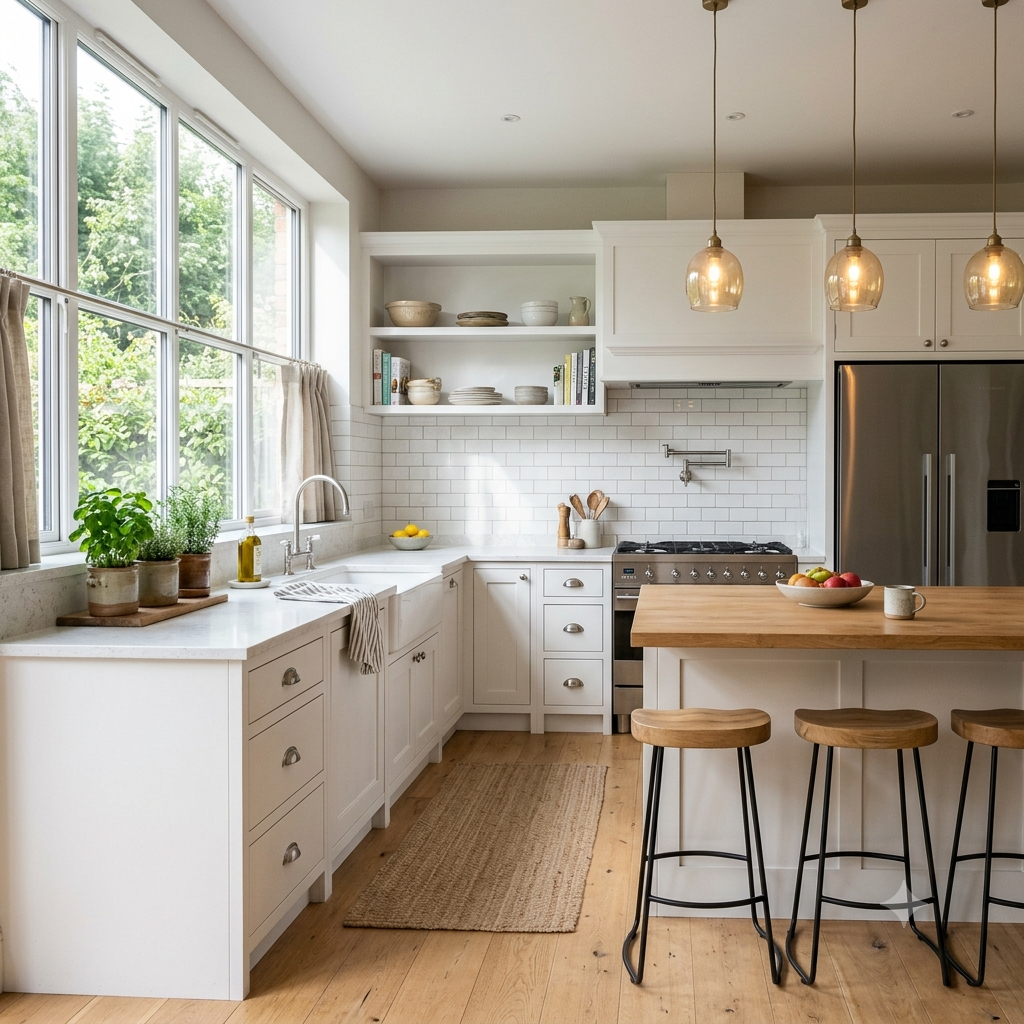
1. Classic White Subway Tile
A classic white subway tile backsplash remains one of the most versatile choices for kitchens of every style. Its clean lines brighten the room while complementing modern, farmhouse, and traditional interiors alike. This timeless design never goes out of fashion and works with almost any cabinet color.
Choose light gray grout for a softer appearance or dark grout for a bold contrast that highlights each tile. Pair the backsplash with quartz countertops and brushed nickel hardware for a balanced and elegant finish. Avoid overly busy countertops because a simple surface allows the timeless tile pattern to stand out.
Budget around $15 to $28 per square foot installed for ceramic subway tile, or $800 to $1,800 for a simple tile backsplash in a small kitchen. Use 1/16-inch grout joints and a matching grout colour for the cleanest look.
2. Marble Slab Backsplash
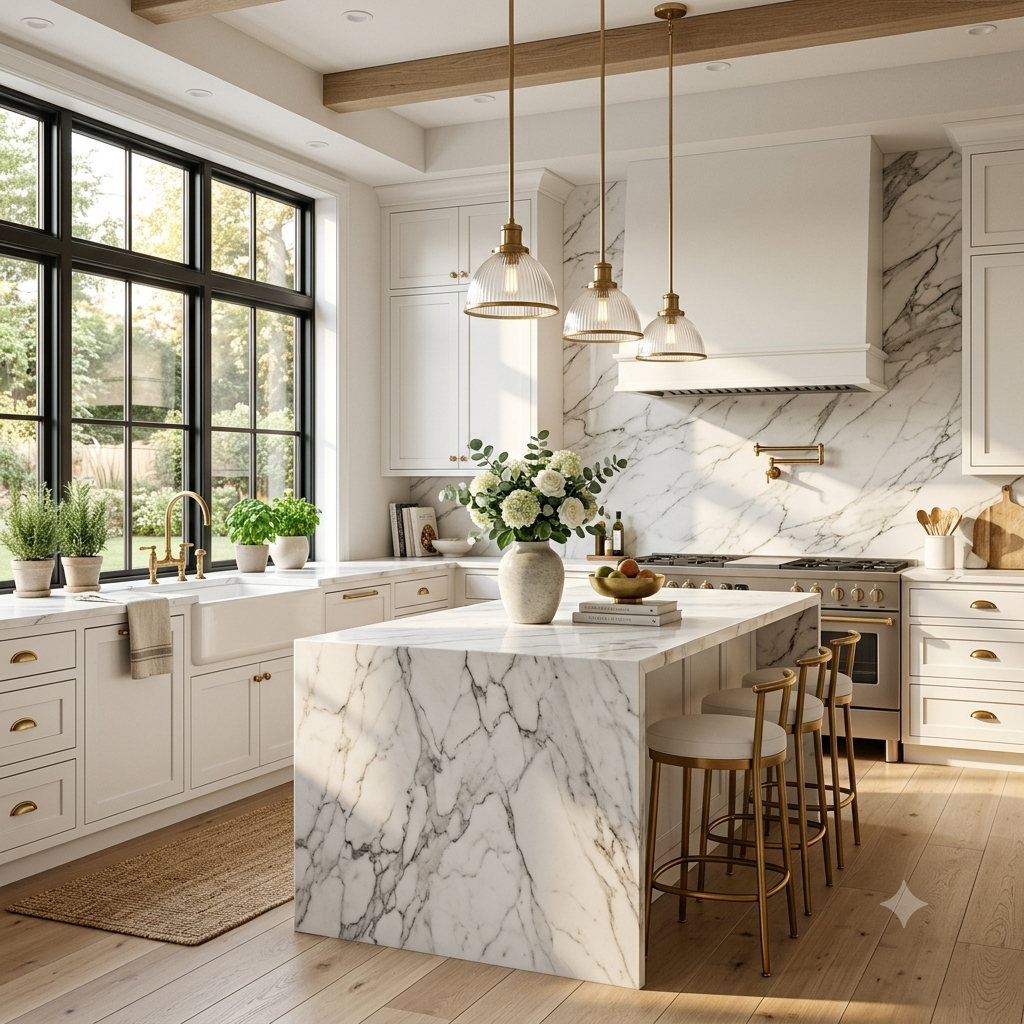
A marble slab backsplash creates a luxurious focal point with uninterrupted natural veining. The seamless surface gives the kitchen a refined appearance while making cleaning easier because there are no grout lines. This design works especially well in contemporary, transitional, and luxury kitchens.
Pair marble with simple cabinetry so the natural stone remains the star of the space. Seal the surface regularly to protect it from stains and preserve its beautiful finish for years. Avoid harsh acidic cleaners because they can damage the marble’s polished surface.
A full-height slab in the same stone as the counter adds $1,500 to $4,000 to the countertop job, and marble slabs run $100 to $250 per square foot. Seal the stone annually and wipe spills quickly, since marble etches on contact with acids.
3. Zellige Tile Backsplash
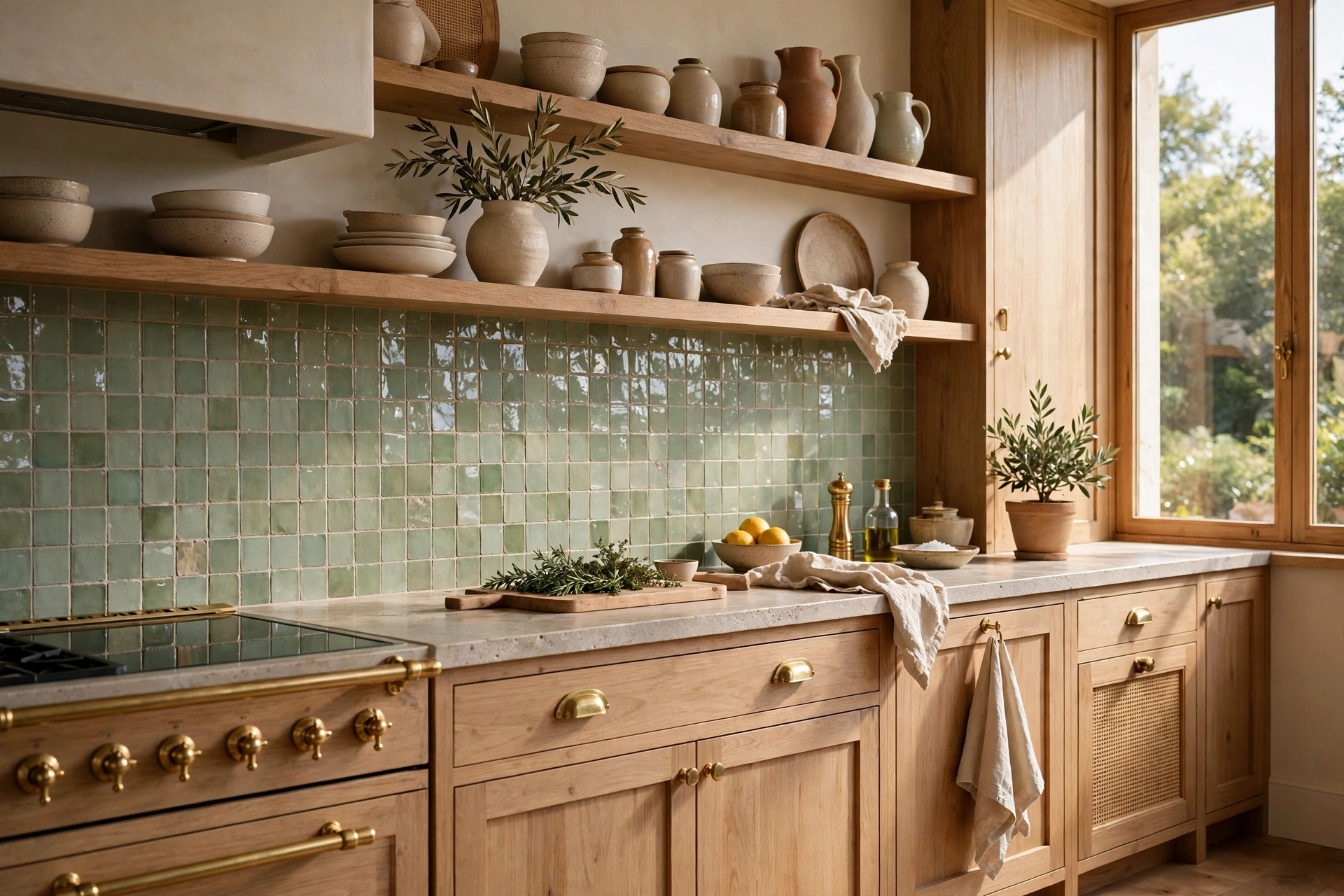
A Zellige tile backsplash brings handcrafted beauty and subtle texture to any kitchen. Each tile has slight variations in color and finish, creating a unique surface that reflects light in different ways throughout the day. This timeless choice complements Mediterranean, Moroccan, modern, and farmhouse kitchens.
Choose soft white, sage green, or warm beige Zellige tiles for a classic look that won’t feel dated. Pair them with natural wood cabinets, brass hardware, and stone countertops to highlight their artisanal character. Avoid perfectly matching every design element because the charm of Zellige comes from its natural imperfections.
Handmade zellige runs $30 to $65 per square foot installed, and taking it to the ceiling adds $2,000 to $4,000 over a subway tile to the uppers. Order 10 to 15 percent extra, since handmade tiles vary in size and some pieces will be imperfect.
4. Herringbone Tile Pattern
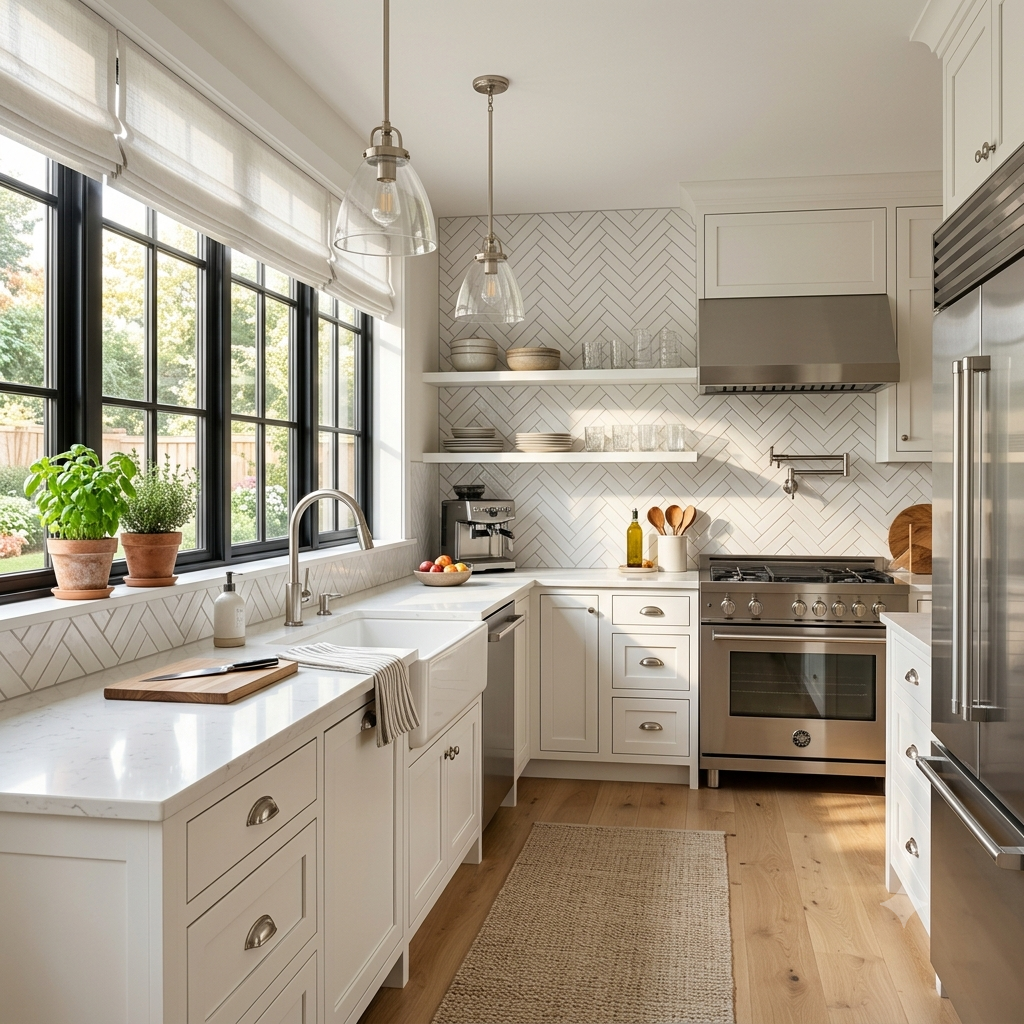
A herringbone tile backsplash introduces movement and visual interest without overwhelming the kitchen. The diagonal layout transforms simple rectangular tiles into a sophisticated architectural feature. This pattern works beautifully in modern, transitional, and classic kitchens. Use white or neutral tiles if you want the pattern to remain elegant and timeless.
Match the grout color closely to the tile for a seamless appearance or choose contrasting grout to emphasize the herringbone layout. Avoid combining this pattern with heavily patterned countertops because the overall design may appear too busy.
Herringbone uses about 10 to 15 percent more tile than a straight layout because of the angled cuts at the edges. Keep the pattern behind the range or on one wall, and let the rest of the kitchen stay quiet.
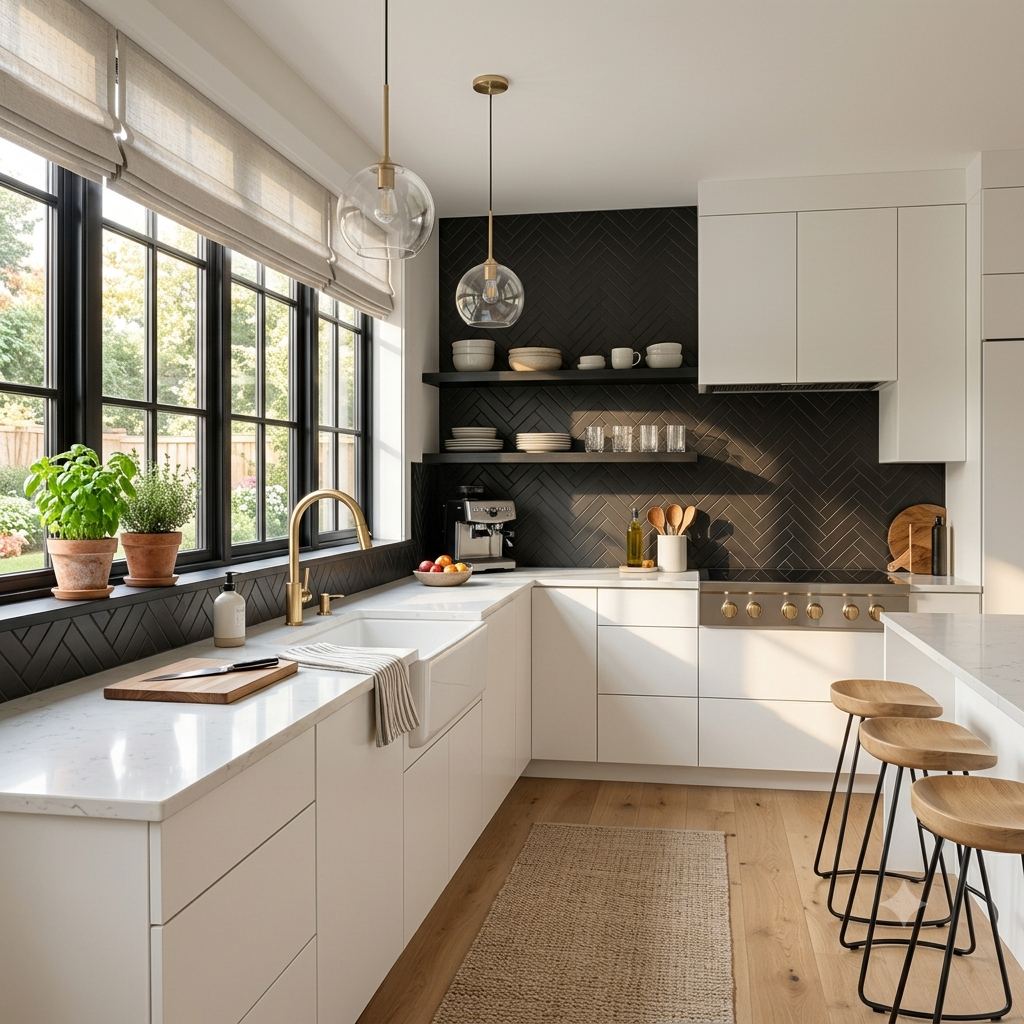
5. Matte Black Backsplash
A matte black backsplash creates dramatic contrast while adding a sleek modern character to the kitchen. The dark finish pairs beautifully with light cabinetry and metallic accents for a balanced appearance. This style is especially effective in contemporary, industrial, and minimalist interiors.
Combine matte black tiles with white or oak cabinets to keep the room bright and visually balanced. Add under-cabinet lighting to highlight the backsplash and prevent the darker color from making the kitchen feel enclosed. Avoid using glossy black surfaces throughout the room because too much reflection can reduce the clean modern look. For more ideas, see our kitchen lighting ideas.
Matte black tile hides cooking splashes better than gloss, but it shows dust and water spots, so wipe it down weekly. Pair it with under-cabinet lighting so the dark wall does not make the kitchen feel smaller.
6. Glass Sheet Backsplash
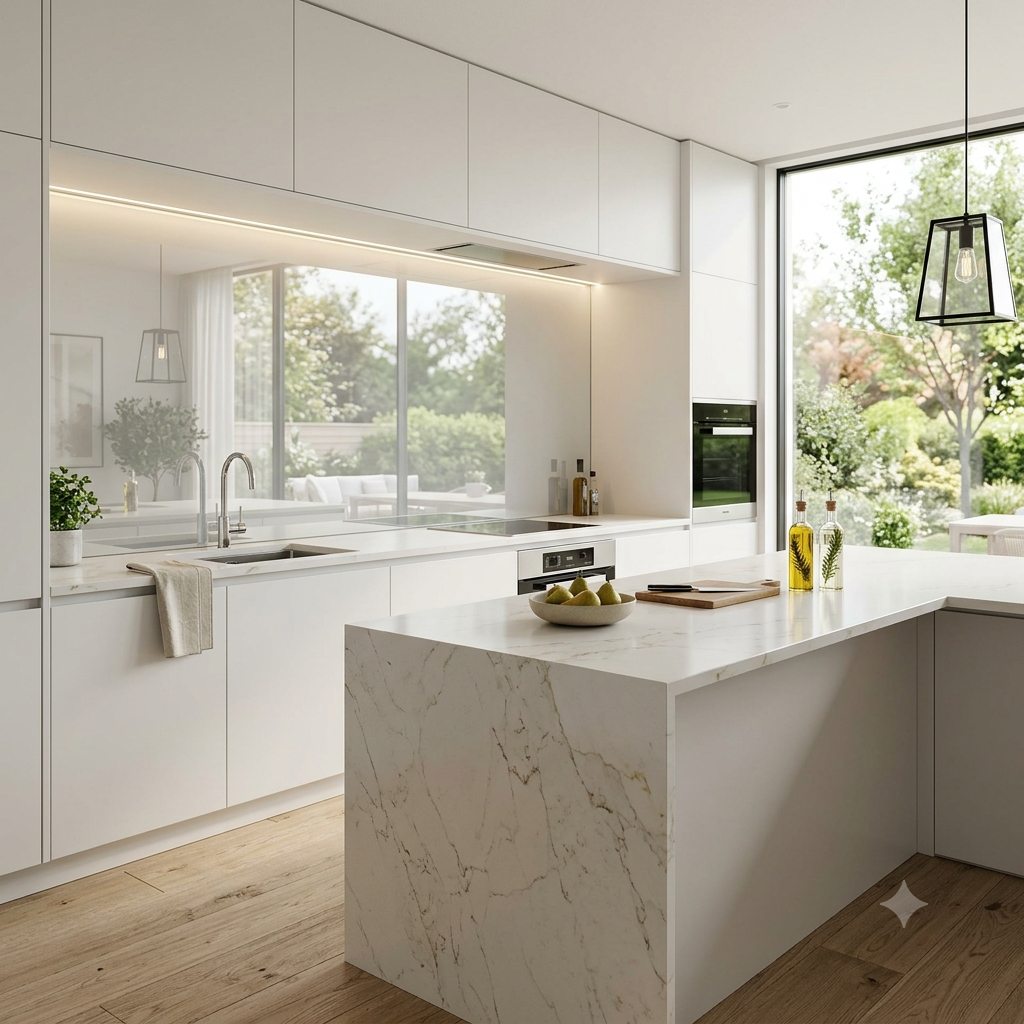
A glass sheet backsplash provides a seamless appearance that reflects light and makes the kitchen feel more spacious. The smooth surface is easy to clean because it has very few joints where grease and dirt can collect. This option is perfect for modern kitchens that prioritize simplicity and functionality.
Choose low-iron glass for exceptional clarity and a premium finish that enhances natural light. Pair it with handleless cabinets and subtle lighting to create a clean, contemporary design. Avoid placing too many decorative items on the countertops because minimal styling complements the sleek glass surface.
A glass sheet backsplash costs $1,500 to $3,000 in a typical 10-by-10 kitchen. Tempered glass is required behind the range, and a low-iron panel stays truly clear instead of green-tinged at the edges.
7. Natural Stone Backsplash
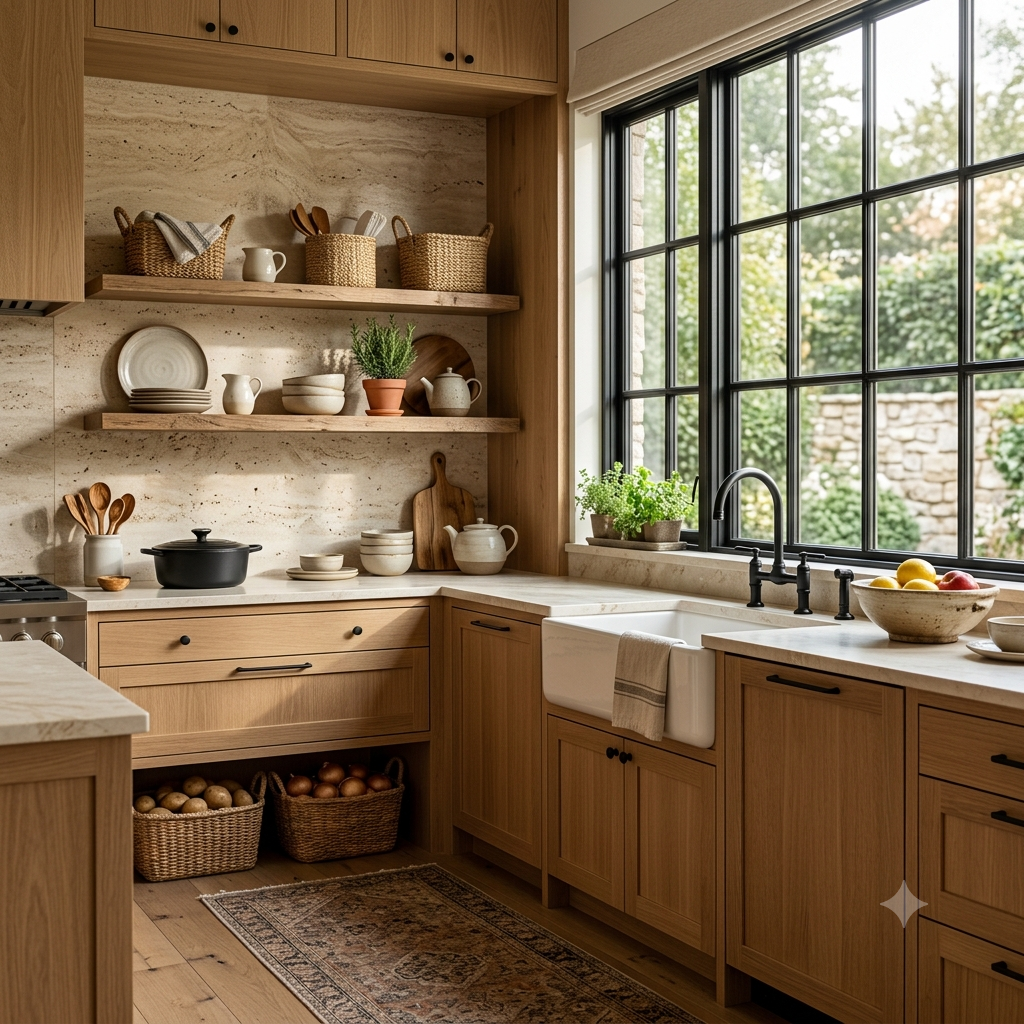
A natural stone backsplash adds timeless texture and organic beauty that never goes out of style. Materials such as travertine, slate, and limestone create a warm, inviting atmosphere while introducing unique patterns that cannot be replicated. This idea suits rustic, Mediterranean, farmhouse, and luxury kitchens. Seal the stone regularly to protect it from moisture, grease, and everyday cooking stains.
Pair the backsplash with wooden cabinets, matte black fixtures, and quartz countertops for a balanced design that highlights natural materials. Avoid abrasive cleaners because they can damage the stone’s surface and reduce its longevity.
Natural stone tile runs $2,000 to $4,500 in a typical kitchen, and porous stones such as travertine and limestone need sealing before use and again every year or two. Use a penetrating sealer that does not change the stone’s colour.
8. Vertical Stacked Tiles
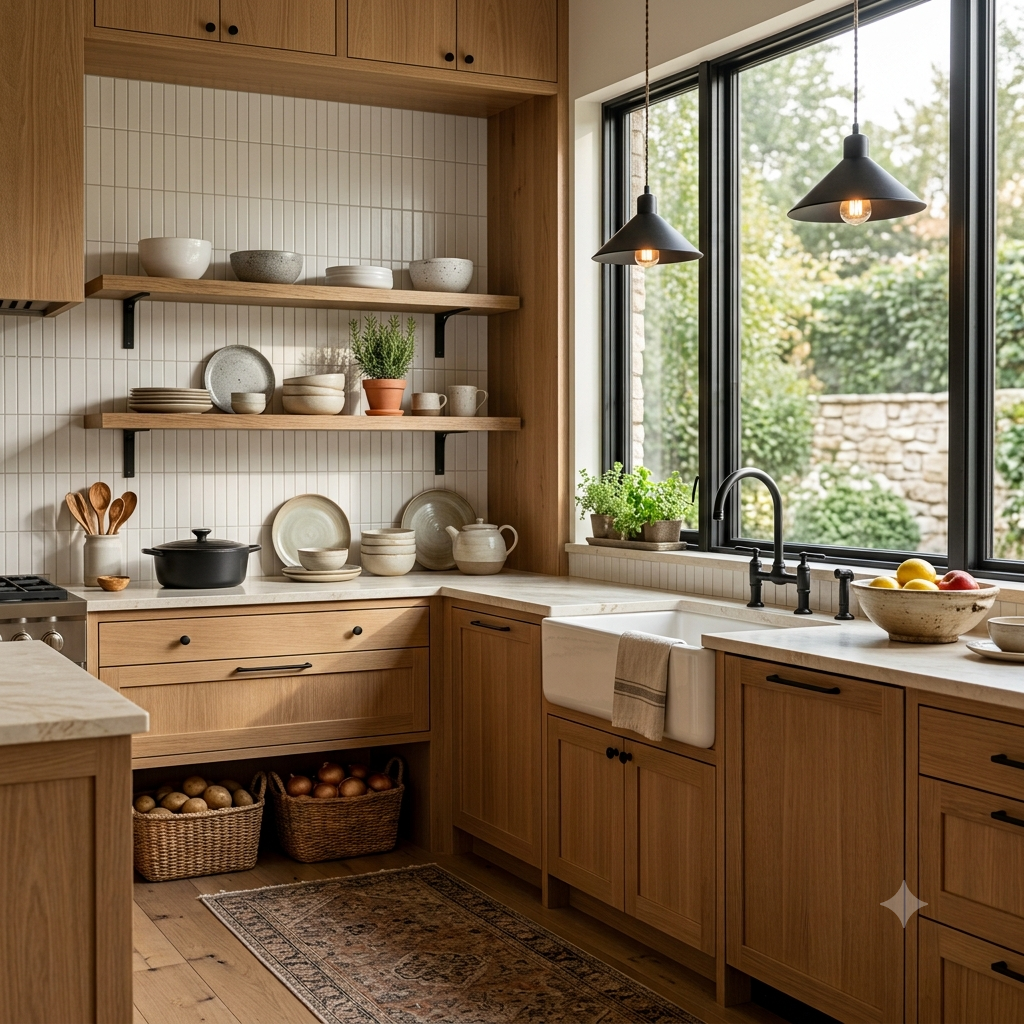
A vertical stacked tile backsplash offers a fresh alternative to traditional horizontal layouts. The vertical arrangement draws the eye upward, making ceilings appear higher and kitchens feel more spacious. This modern design complements minimalist, Scandinavian, and contemporary interiors.
Choose elongated ceramic tiles in neutral shades to achieve a clean and sophisticated appearance. Match the grout color closely to the tiles for a seamless effect that emphasizes height rather than individual pieces. Avoid combining vertical tiles with overly decorative cabinetry because simple surroundings allow the pattern to stand out.
Vertical stacking works best with long, thin tiles, and it draws the eye upward, making an 8-foot ceiling feel taller. Keep grout lines tight at 1/16 inch so the vertical rhythm stays crisp.
9. Mosaic Tile Accent
A mosaic tile backsplash introduces intricate detail and artistic character without requiring a complete kitchen makeover. Small tiles create beautiful patterns that add movement, texture, and personality to the cooking space. This idea works especially well behind the stove or as a feature wall.
Select a color palette that complements your cabinets and countertops to maintain visual harmony throughout the kitchen. Keep surrounding surfaces simple so the mosaic becomes the natural focal point of the room. Avoid mixing several bold patterns because one statement backsplash creates a stronger design.
Mosaic accent tiles cost $25 to $60 per square foot installed. Use them as a panel behind the range or a border strip, since a full wall of small tiles means a lot of grout to clean.
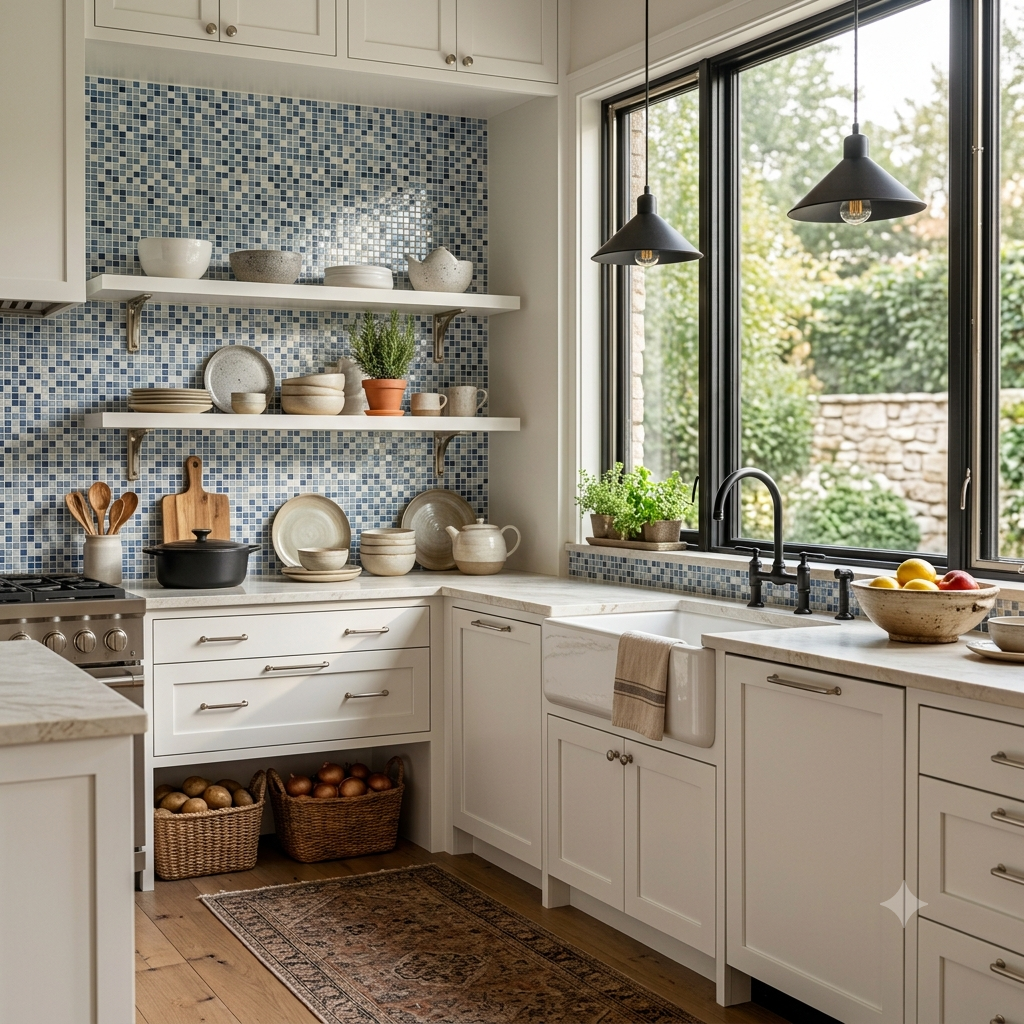
10. Hexagon Tile Design
A hexagon tile backsplash introduces geometric interest while maintaining a clean and modern appearance. The distinctive shape creates subtle visual movement that works well in kitchens of every size. This style pairs beautifully with Scandinavian, contemporary, and transitional interiors.
Choose large hexagon tiles for a modern look or smaller ones for added texture and detail. Coordinate the tile color with your countertops and cabinet hardware to achieve a cohesive design throughout the room. Avoid selecting grout that contrasts too strongly because it can make the pattern appear overly busy.
Hexagon tiles come in sizes from 1 inch to 8 inches across, and larger hexagons mean fewer grout lines. A white hexagon backsplash pairs well with marble counters, while a coloured hexagon can anchor the whole room.
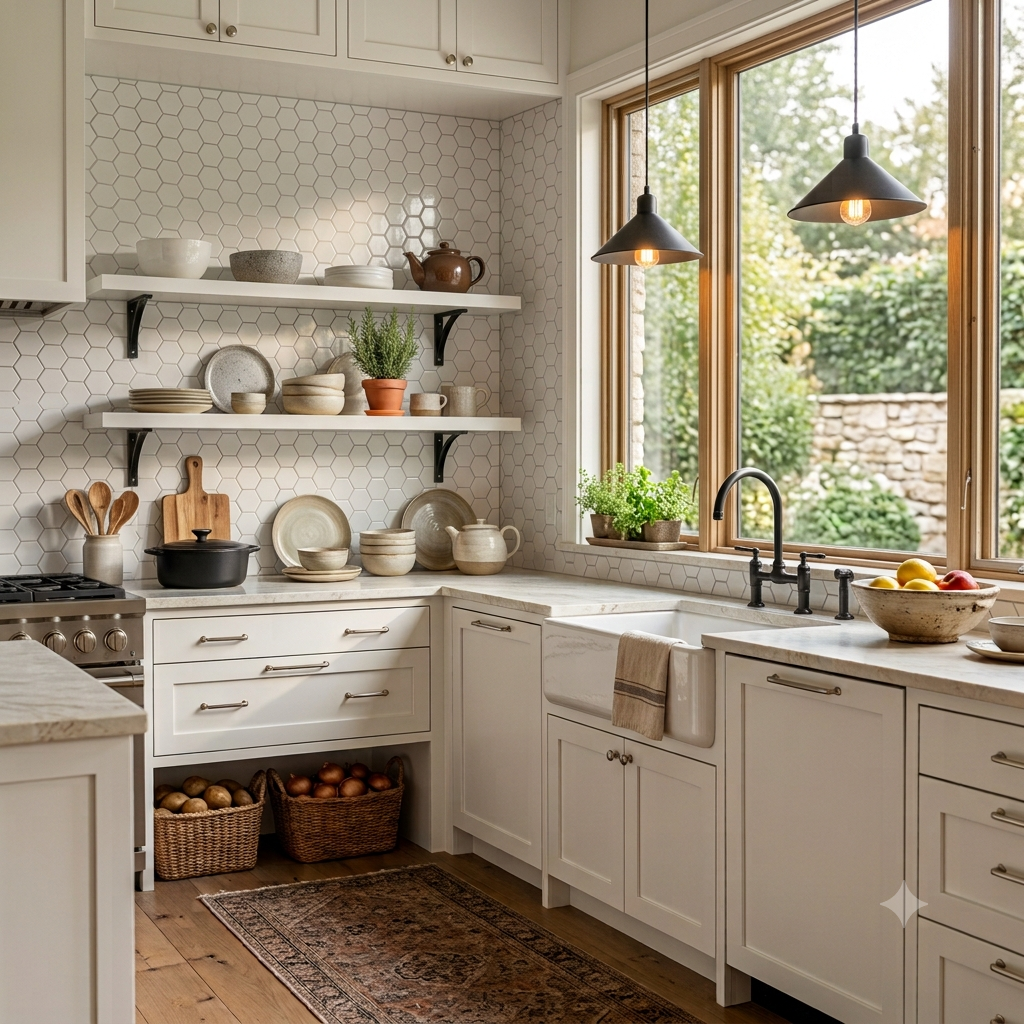
11. Terrazzo Backsplash
A terrazzo backsplash brings playful texture and timeless style to modern kitchens. Its speckled surface combines stone chips with neutral tones to create a design that feels both contemporary and classic. This backsplash works beautifully in Scandinavian, minimalist, and mid-century modern interiors.
Pair terrazzo with simple white or light oak cabinets to let the material stand out naturally. Use solid-colored countertops and understated hardware to keep the kitchen visually balanced. Avoid introducing too many competing patterns because terrazzo already provides plenty of character.
Terrazzo slabs and tiles cost roughly $40 to $90 per square foot installed. Choose a fine aggregate for a subtle look or large chips for a bold statement, and seal cement-based terrazzo to resist stains.
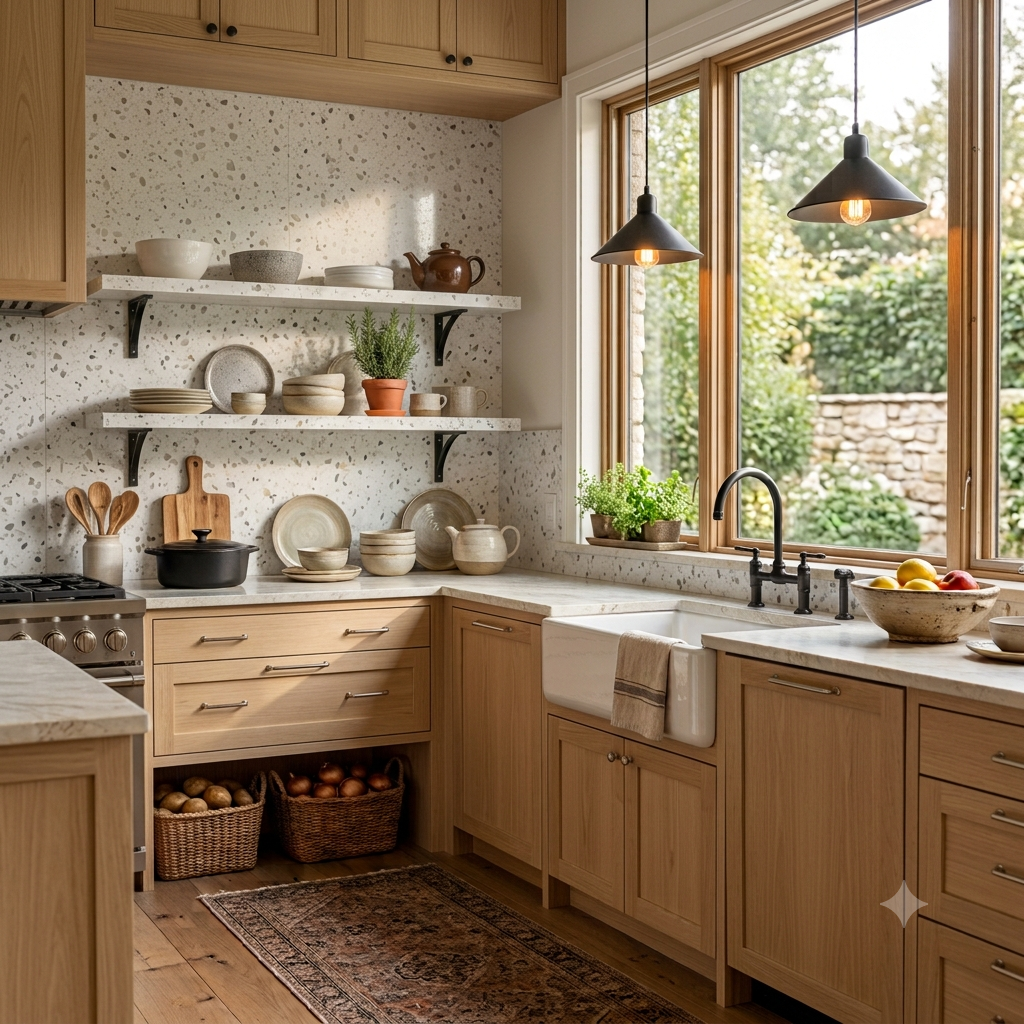
12. Brick Style Backsplash
A brick-style backsplash introduces warmth and rustic charm while adding rich texture to the kitchen. Whether you choose real brick or porcelain brick-look tiles, the result creates a welcoming atmosphere with timeless appeal. This design is ideal for farmhouse, industrial, and cottage-style kitchens.
Seal exposed brick regularly to reduce staining and make cleaning easier after everyday cooking. Pair the backsplash with reclaimed wood shelving and black metal hardware for an authentic look. Avoid overcrowding open shelves because the textured brick deserves to remain the focal point.
Seal brick with a matte masonry sealer before grouting, and re-seal every two to three years. Whitewashed brick brightens a farmhouse kitchen while keeping the texture that makes brick so appealing.
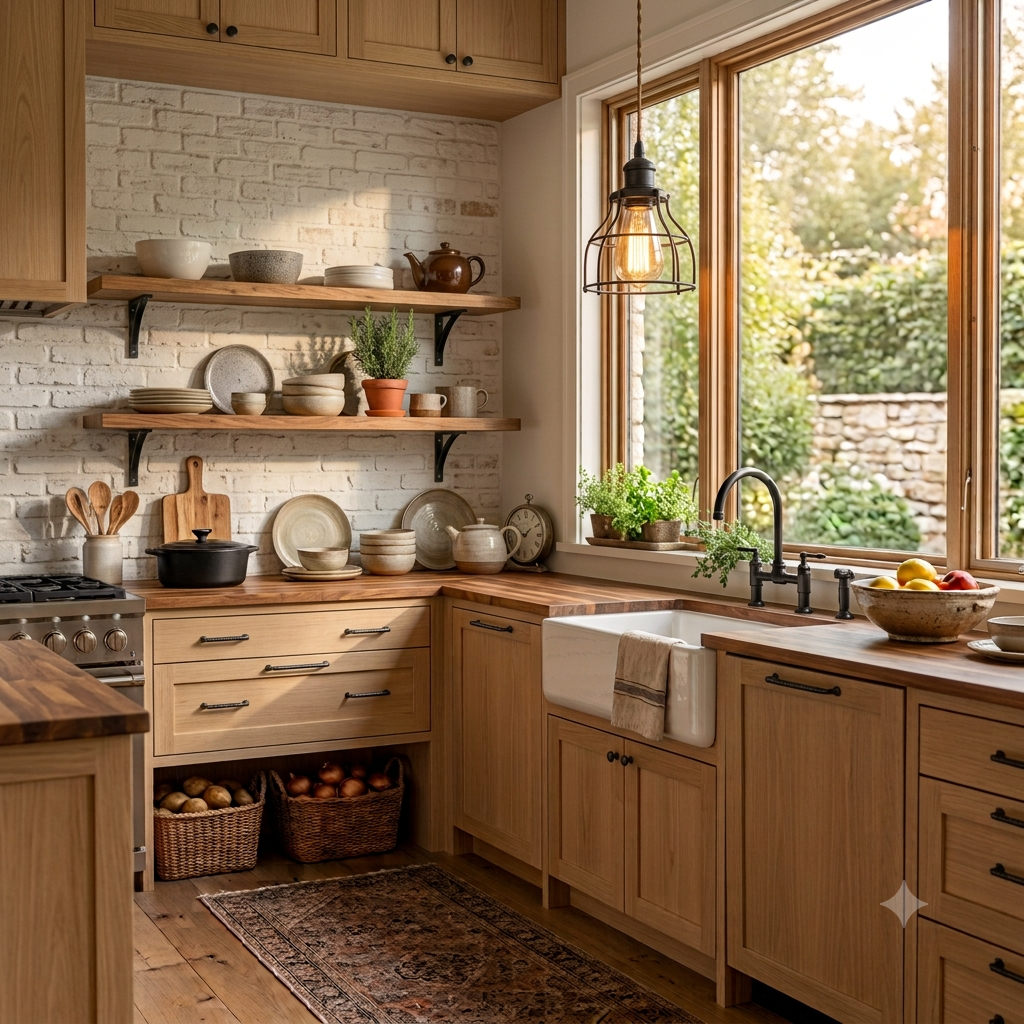
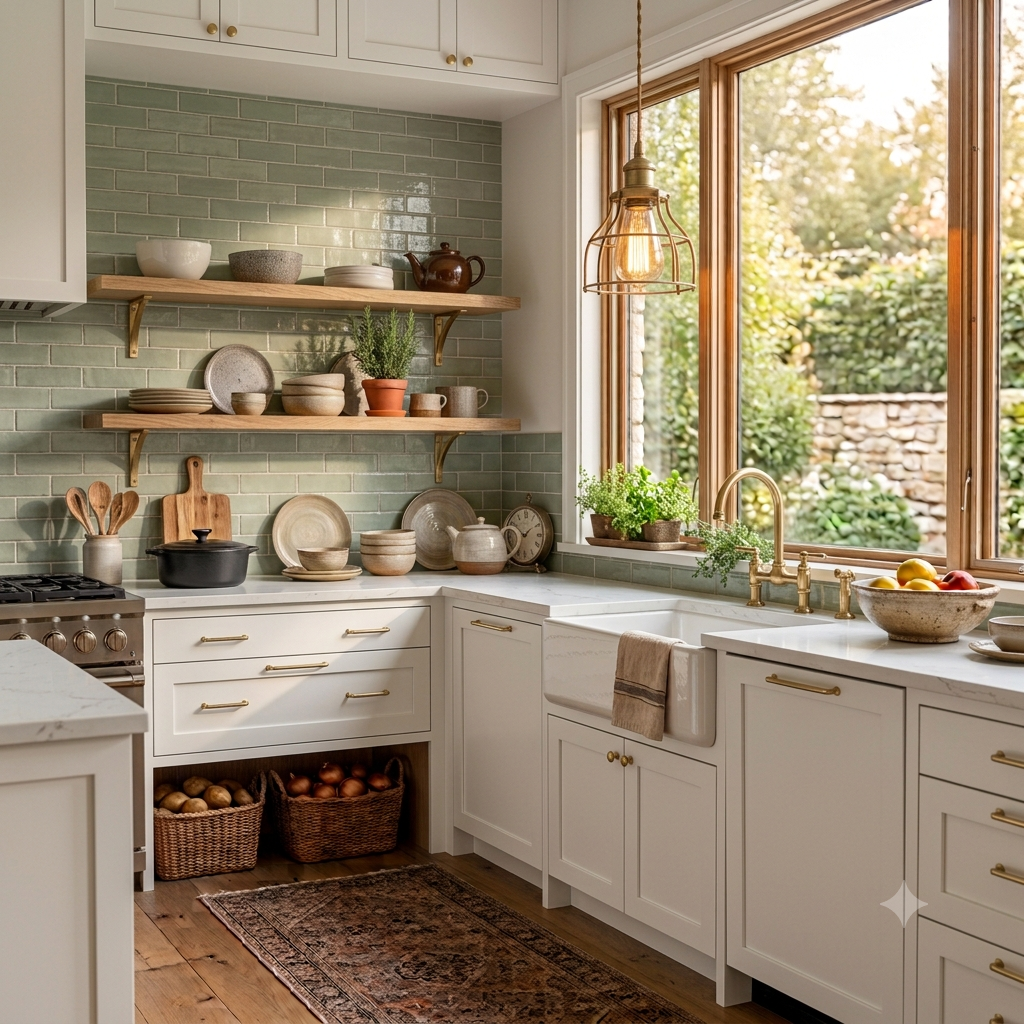
13. Sage Green Tile Backsplash
A sage green tile backsplash adds gentle color while maintaining a calm and sophisticated atmosphere. The earthy tone pairs beautifully with natural materials and creates a kitchen that feels fresh throughout every season. This idea complements farmhouse, Scandinavian, coastal, and contemporary homes.
Combine sage green tiles with white cabinetry, oak accents, and brushed brass hardware for a timeless palette. Add potted herbs and woven accessories to reinforce the natural color scheme. Avoid pairing sage green with too many bold colors because soft neutrals create a more harmonious design. Browse our colourful kitchen cabinet ideas for matching cabinet colors.
Sage green tile works with white, cream, and natural wood, and it never fights the countertop. Use a glossy glaze in a dark kitchen to bounce light, or a matte finish for a softer, chalky look.
14. Blue Ceramic Tiles
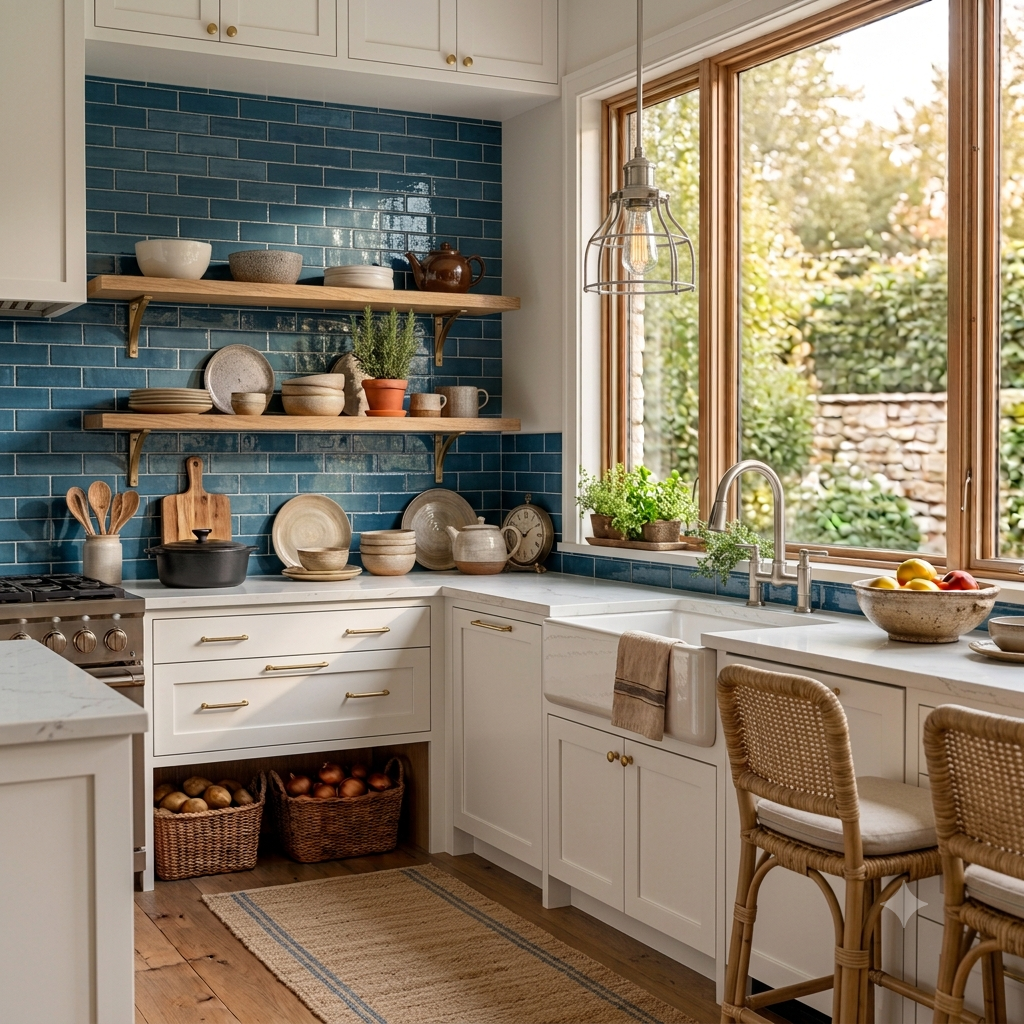
Blue ceramic tiles create a refreshing backsplash that instantly brightens the kitchen with color and personality. Shades ranging from soft sky blue to deep navy provide flexibility for both classic and contemporary interiors. This backsplash works especially well in coastal, Mediterranean, and transitional kitchens.
Balance the blue tiles with white cabinets and light countertops to keep the space feeling open and airy. Introduce natural wood elements and woven textures to soften the vibrant color palette. Avoid selecting several different shades of blue because a consistent tone creates a more polished appearance.
Glossy blue ceramic tile costs $12 to $25 per square foot installed. In a small kitchen, keep the blue to the backsplash and the rest of the room pale, so the colour reads as an accent rather than a takeover.
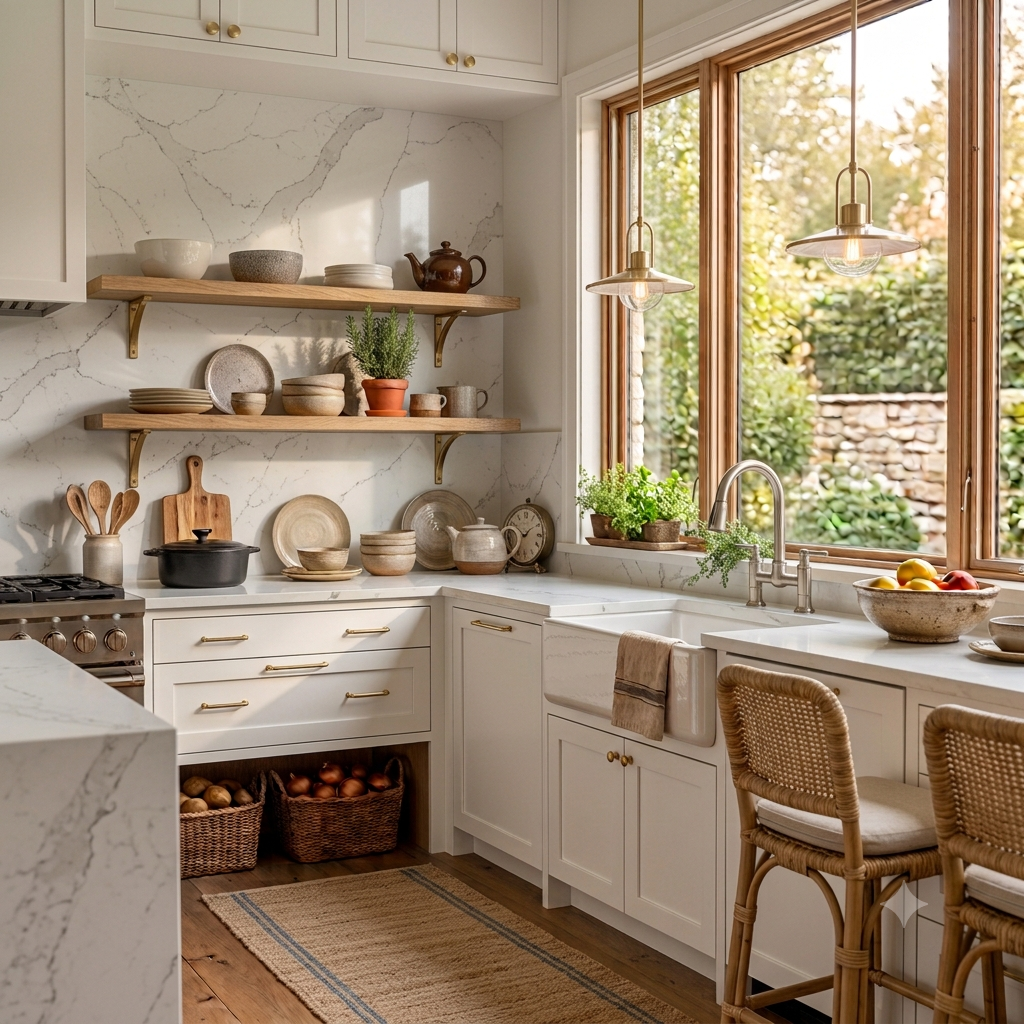
15. Quartz Full-Height Backsplash
A full-height quartz backsplash creates a seamless transition from the countertop to the upper cabinets. The continuous surface gives the kitchen a clean, luxurious appearance while eliminating grout lines that require frequent maintenance. This design is perfect for modern, minimalist, and high-end kitchens.
Choose quartz that complements your countertop to create a cohesive and elegant look throughout the room. Install under-cabinet lighting to highlight the stone’s subtle veining and enhance the kitchen’s overall brightness. Avoid cluttering the countertops because a streamlined layout showcases the beauty of the quartz surface.
A quartz slab backsplash costs $60 to $150 per square foot as an addition to the counter order. Because quartz is non-porous, it never needs sealing and wipes clean with a damp cloth.
16. Metallic Tile Accent
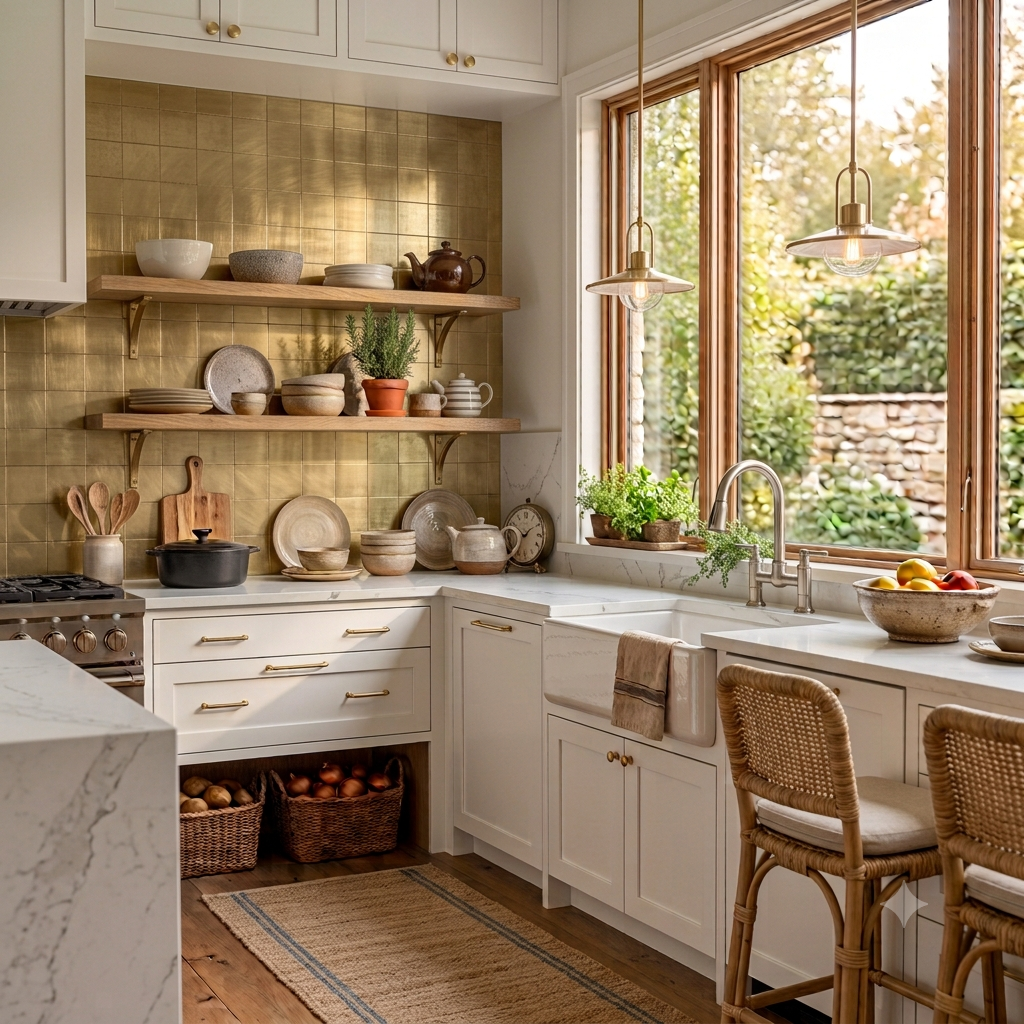
A metallic tile backsplash adds a sophisticated shine that instantly elevates the kitchen. Finishes such as brushed brass, stainless steel, or copper reflect light beautifully while creating a luxurious focal point. This idea works especially well in contemporary, industrial, and upscale modern kitchens.
Use metallic tiles as a feature behind the cooktop rather than covering every wall for a balanced design. Pair them with matte cabinets and natural stone countertops to soften the reflective surface. Avoid mixing several metallic finishes because one consistent finish creates a cleaner and more cohesive appearance.
Brushed brass and copper tiles show fewer fingerprints than polished metal, so choose a brushed or antiqued finish behind the range. Wipe with a soft cloth and avoid abrasive cleaners that scratch the surface.
17. Wood Look Backsplash
A wood look backsplash introduces natural warmth without the maintenance concerns of real wood near cooking areas. Porcelain wood-look tiles provide the appearance of timber while resisting heat, moisture, and stains. This design suits Scandinavian, farmhouse, rustic, and Japandi kitchens.
Choose light oak or warm walnut finishes that complement your cabinetry and flooring. Combine the backsplash with white countertops and simple hardware to maintain a bright and welcoming atmosphere. Avoid using several different wood tones because a consistent palette creates a more harmonious kitchen.
Wood-look porcelain tile costs $14 to $30 per square foot installed and needs no sealing. It brings timber warmth to a splash zone where real wood would warp, swell, and stain.
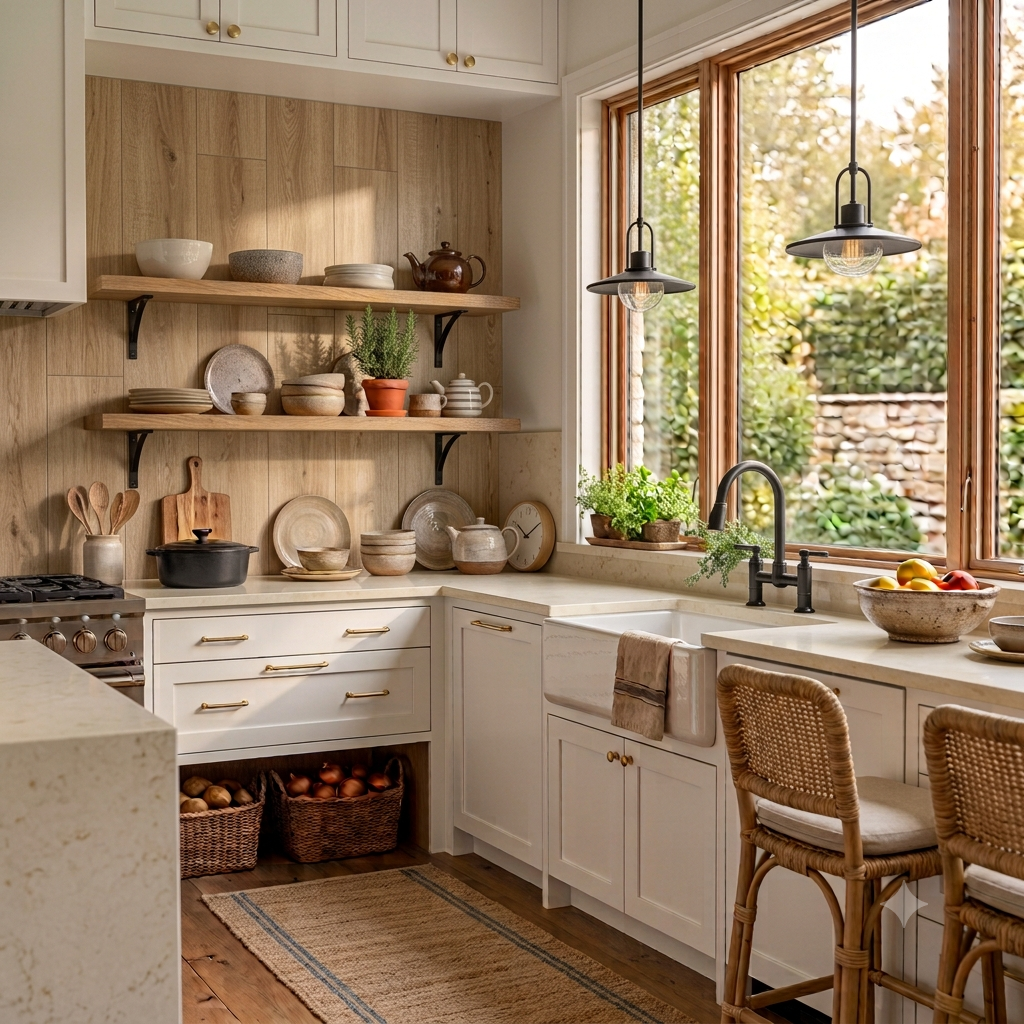
18. Patterned Cement Tiles
A patterned cement tile backsplash brings artistic character and timeless craftsmanship into the kitchen. Geometric and floral motifs create a striking focal point while adding depth and personality to the space. This backsplash works beautifully in Mediterranean, Spanish, eclectic, and vintage-inspired homes.
Balance the decorative tiles with simple cabinets and neutral countertops to prevent the room from feeling overwhelming. Repeat one or two colors from the tile pattern through kitchen accessories for a coordinated appearance. Avoid introducing additional bold patterns because the backsplash should remain the main visual feature.
Patterned cement tiles cost $25 to $60 per square foot and need sealing before grouting and again yearly. Seal them well, since unsealed cement absorbs grease and tomato sauce permanently.
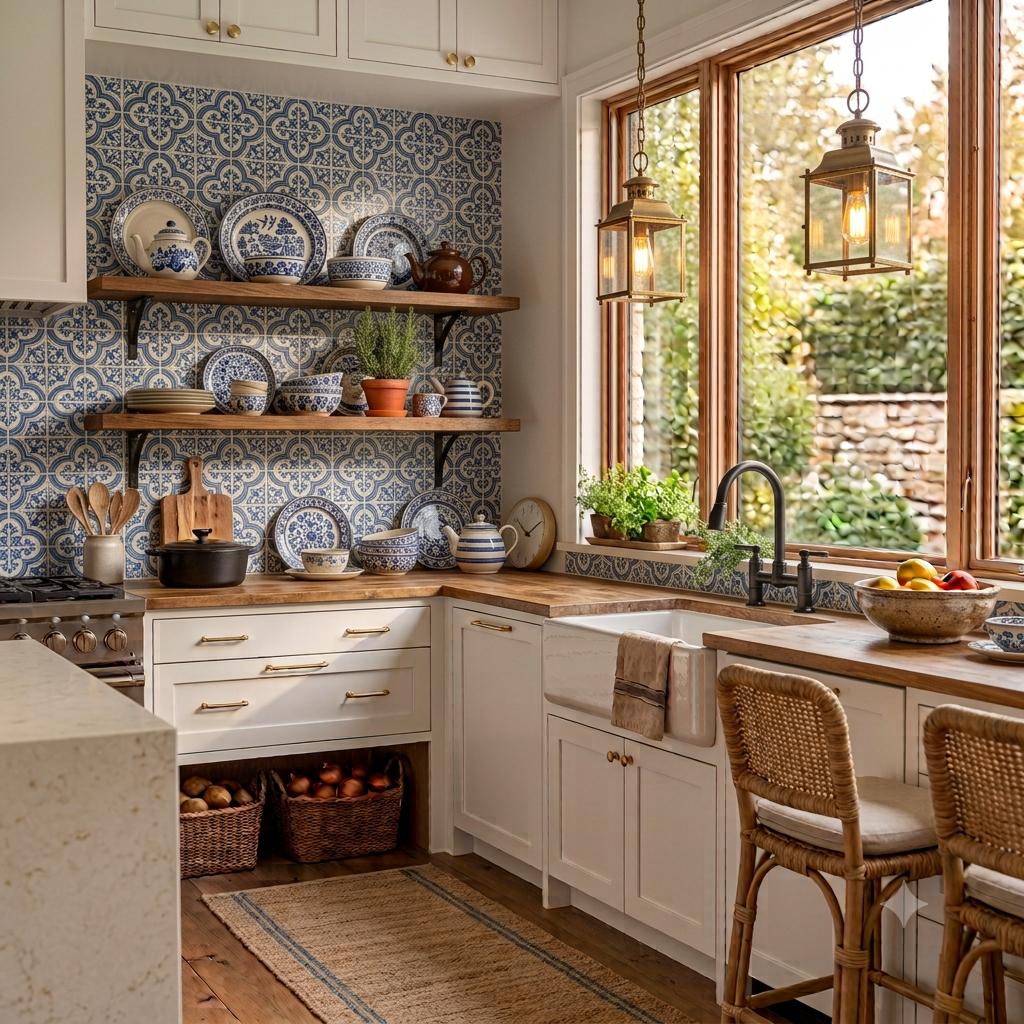
19. Scandinavian White Kitchen Backsplash
A Scandinavian white kitchen backsplash creates a bright, uncluttered environment that feels fresh throughout the year. Clean white tiles reflect natural light and provide the perfect backdrop for natural wood and minimalist décor. This timeless design remains one of the most versatile choices for modern homes.
Pair white ceramic tiles with oak cabinets, black fixtures, and open shelving for a balanced Scandinavian aesthetic. Introduce woven textures, ceramic accessories, and fresh greenery to add warmth without sacrificing simplicity. Avoid overcrowding countertops because clean surfaces enhance the airy atmosphere.
A plain white tile backsplash is the cheapest route to a timeless kitchen, at $12 to $25 per square foot for ceramic subway tile. Add interest with a handmade-look glaze or a subtle vertical stack instead of colour.
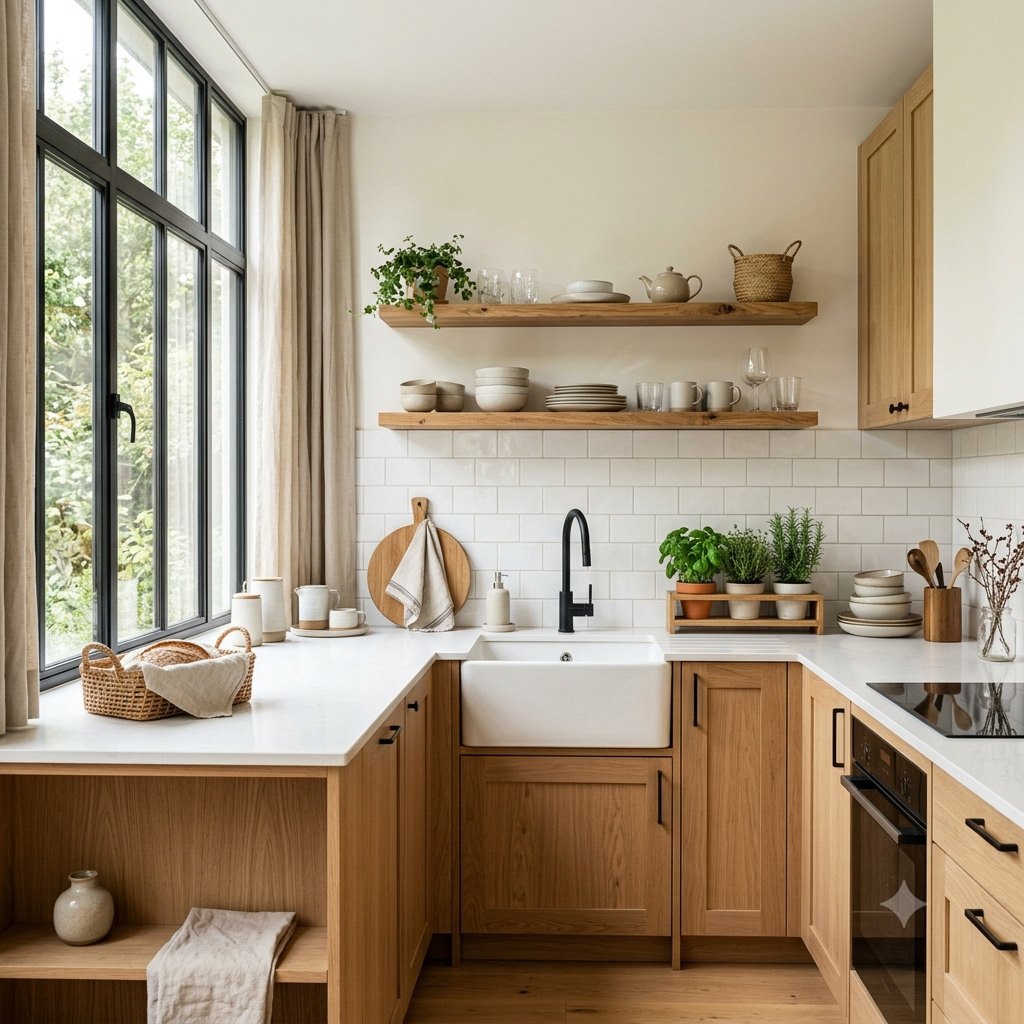
20. Farmhouse Shiplap Backsplash
A farmhouse shiplap backsplash brings rustic charm and cozy character to the heart of the home. Painted shiplap creates subtle texture while maintaining a bright and welcoming appearance. This design is ideal for farmhouse, cottage, and country-style kitchens.
Choose moisture-resistant materials designed specifically for kitchen environments to improve durability. Pair white shiplap with butcher block countertops, apron-front sinks, and black hardware for a timeless farmhouse look. Avoid using untreated wood because humidity and cooking moisture can shorten its lifespan.
Paint shiplap with a moisture-resistant, scrubbable paint and seal the joints with caulk. Behind the range, use a heat-resistant panel or tile instead, since wood should not sit directly behind an open flame.
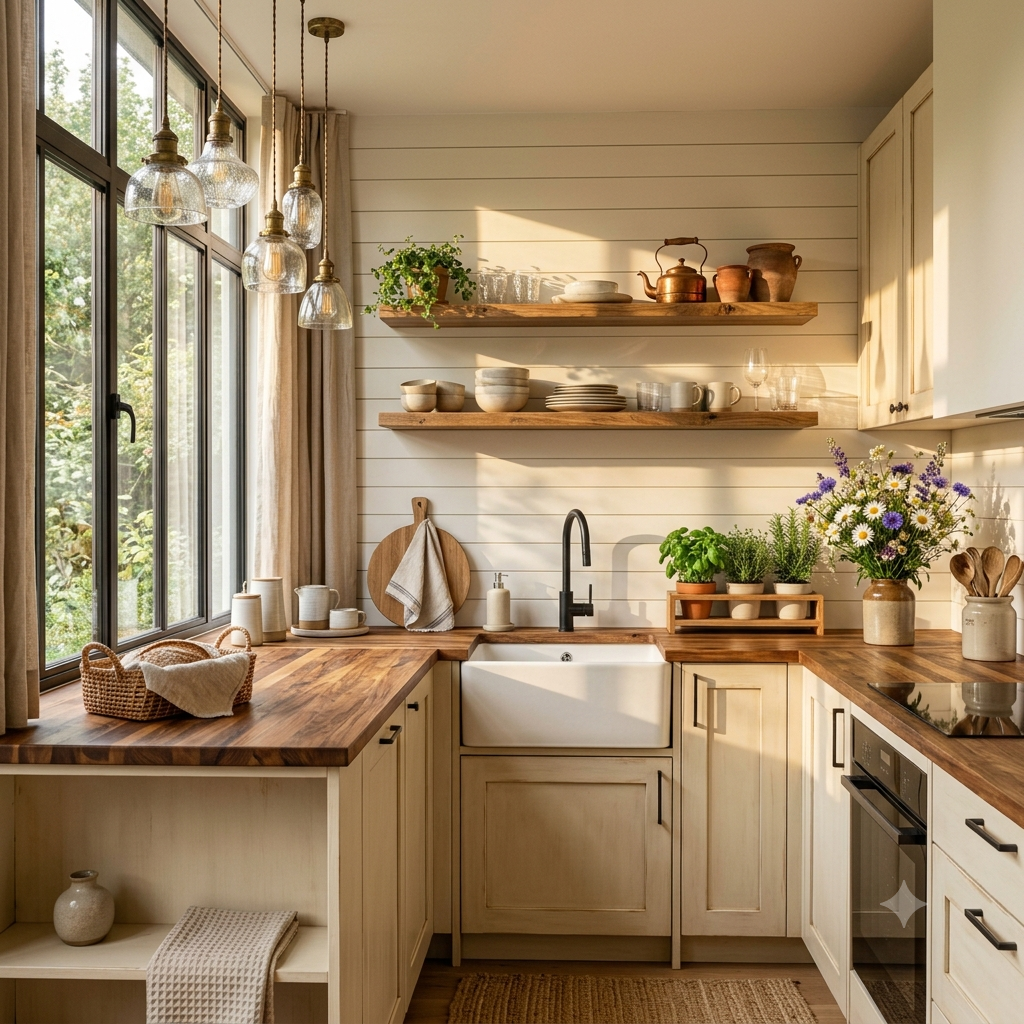
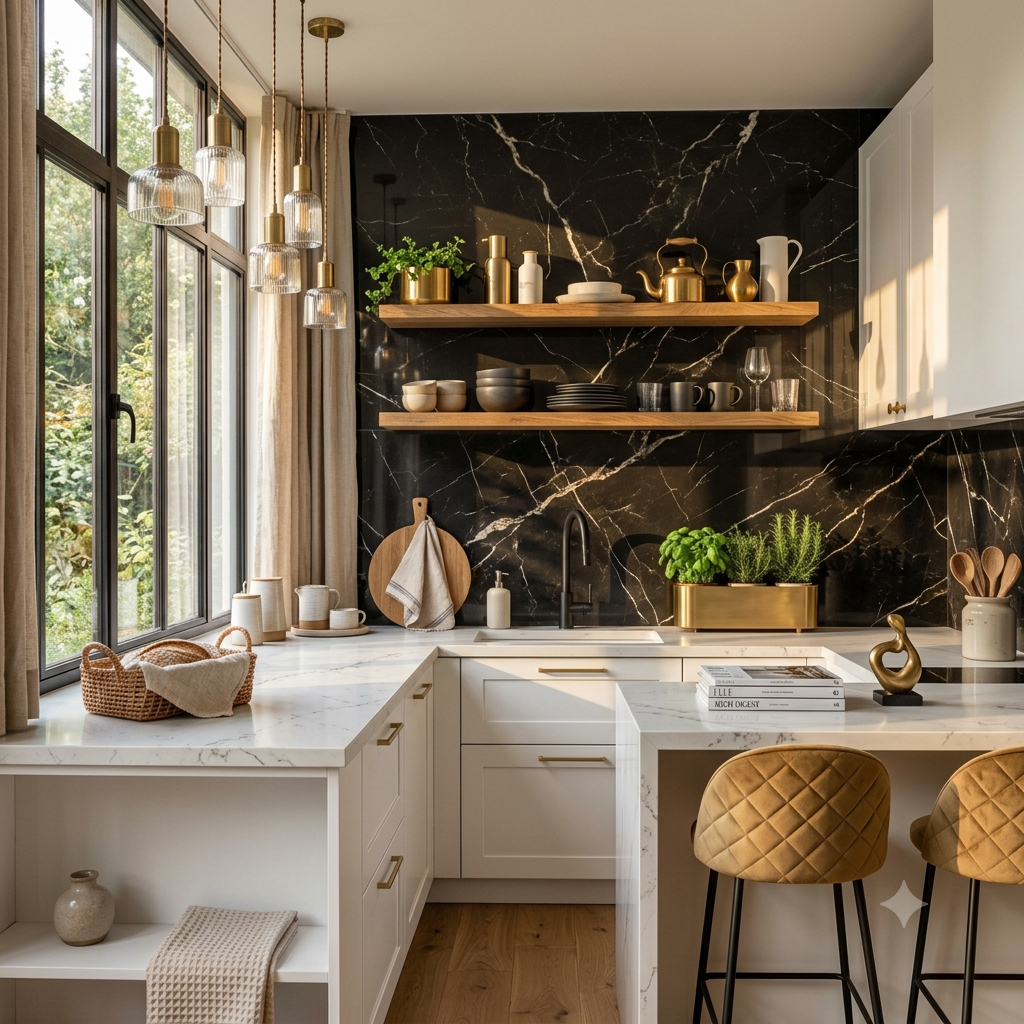
21. Dramatic Black Marble Backsplash
A dramatic black marble backsplash creates a luxurious statement that instantly elevates the entire kitchen. The bold white veining adds depth and elegance while providing a striking contrast against lighter cabinetry. This design is perfect for contemporary, luxury, and modern minimalist kitchens.
Pair black marble with white or light wood cabinets to maintain a balanced and sophisticated appearance. Install warm under-cabinet lighting to highlight the natural veining and enhance the stone’s rich texture. Avoid pairing black marble with dark countertops and cabinets because too many dark surfaces can make the kitchen feel enclosed.
Black marble slabs run $100 to $250 per square foot, and a full-height slab makes the strongest statement. Keep the rest of the kitchen pale and let the marble be the single dramatic element.
22. Two-Tone Backsplash Design
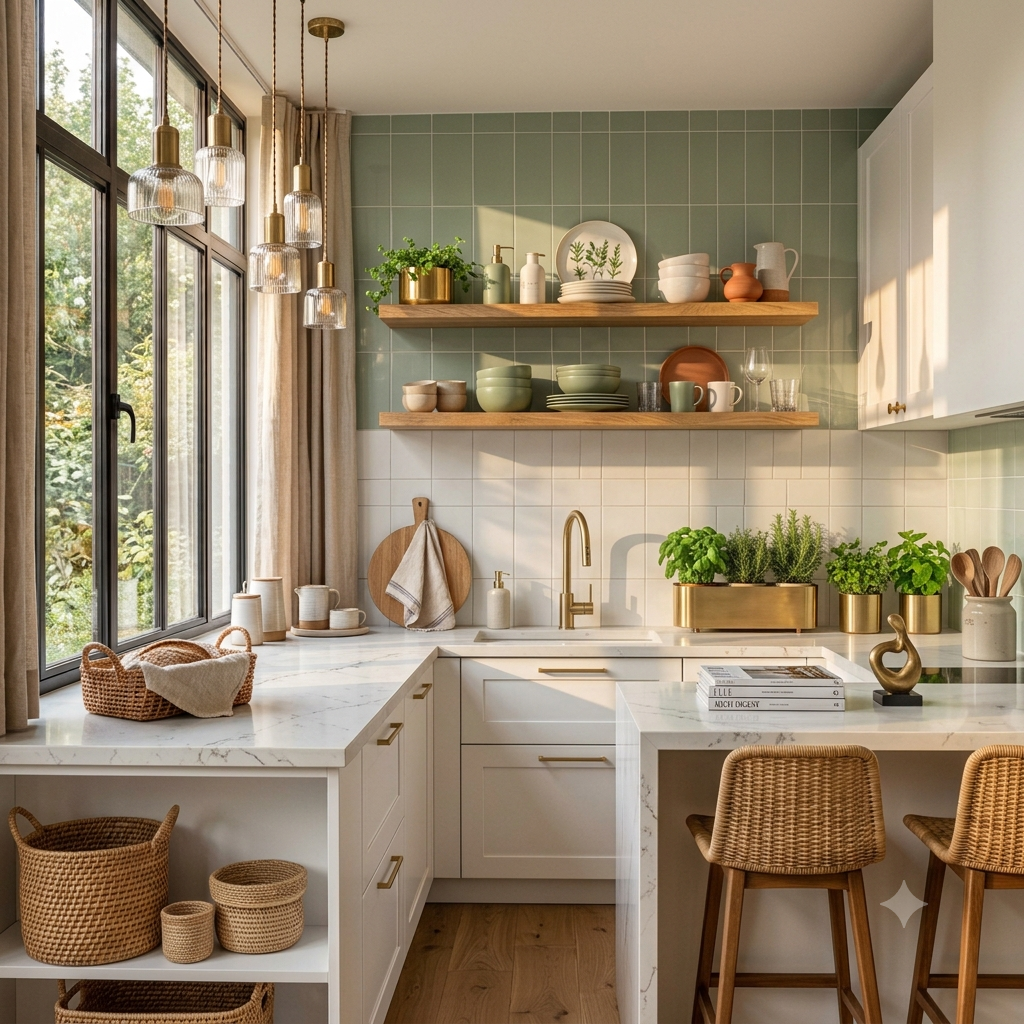
A two-tone backsplash design combines complementary colors to add depth and visual interest without overwhelming the kitchen. Pairing neutral shades with a subtle accent color creates a custom appearance that feels modern and timeless. This versatile idea works well in contemporary, transitional, and Scandinavian-inspired homes.
Choose one dominant neutral color and one accent shade to maintain a balanced composition throughout the kitchen. Repeat the accent color in decorative accessories or seating to create a cohesive design. Avoid combining several bold colors because limiting the palette produces a cleaner and more elegant result.
Two-tone backsplashes work best when one colour is quiet and the other does the talking — white with sage green, or cream with dusty blue. Keep the darker tone on the lower half so the room still feels bright.
23. Peel-and-Stick Tile Backsplash
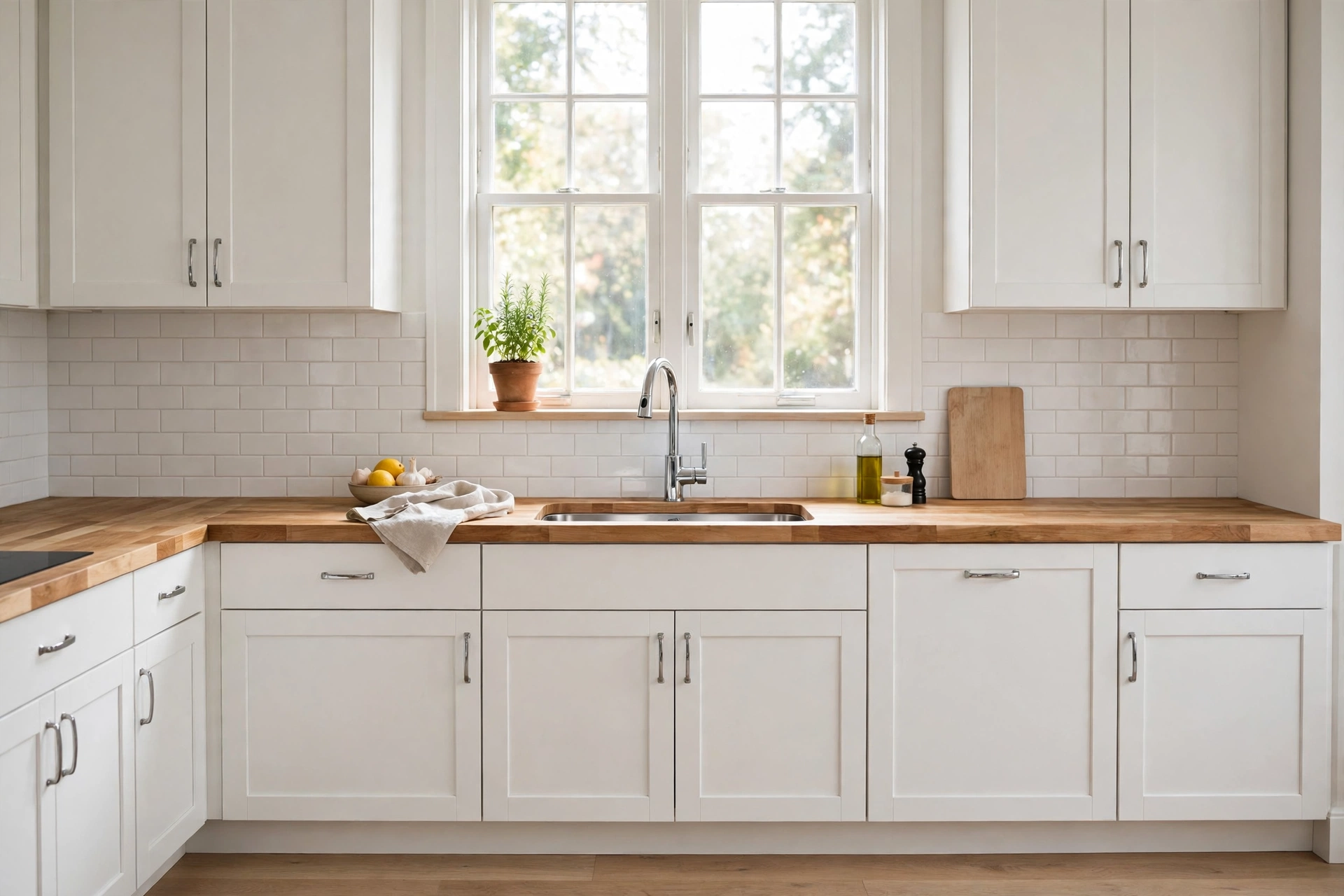
A peel-and-stick tile backsplash is the fastest way to refresh a kitchen without a contractor. The tiles cost $6 to $30 per square foot, install in an afternoon with no grout and no special tools, and peel off cleanly when you move out — which is why renters love them. Use them on a clean, smooth wall, and avoid textured plaster or fresh paint that has not cured for at least four weeks.
Choose a peel-and-stick tile that looks like the real thing: subway, herringbone and mosaic patterns all come in vinyl and gel forms, and the best ones have a slight texture that reads as ceramic from a normal distance. Behind the range, check the heat rating first — most peel-and-stick tiles are rated for walls, not for direct heat, so keep a heat-safe panel behind an open flame. For more budget options, Roswell Kitchen Remodeling’s cost breakdown puts peel-and-stick panels at $6 to $20 per square foot installed.
Peel-and-stick is a smart test before a full kitchen remodel: live with the colour and pattern for a season, then commit to real tile with confidence. Replace a damaged tile in minutes by peeling it off and sticking a new one on — no grout, no dust, no downtime.
24. Stainless Steel Backsplash
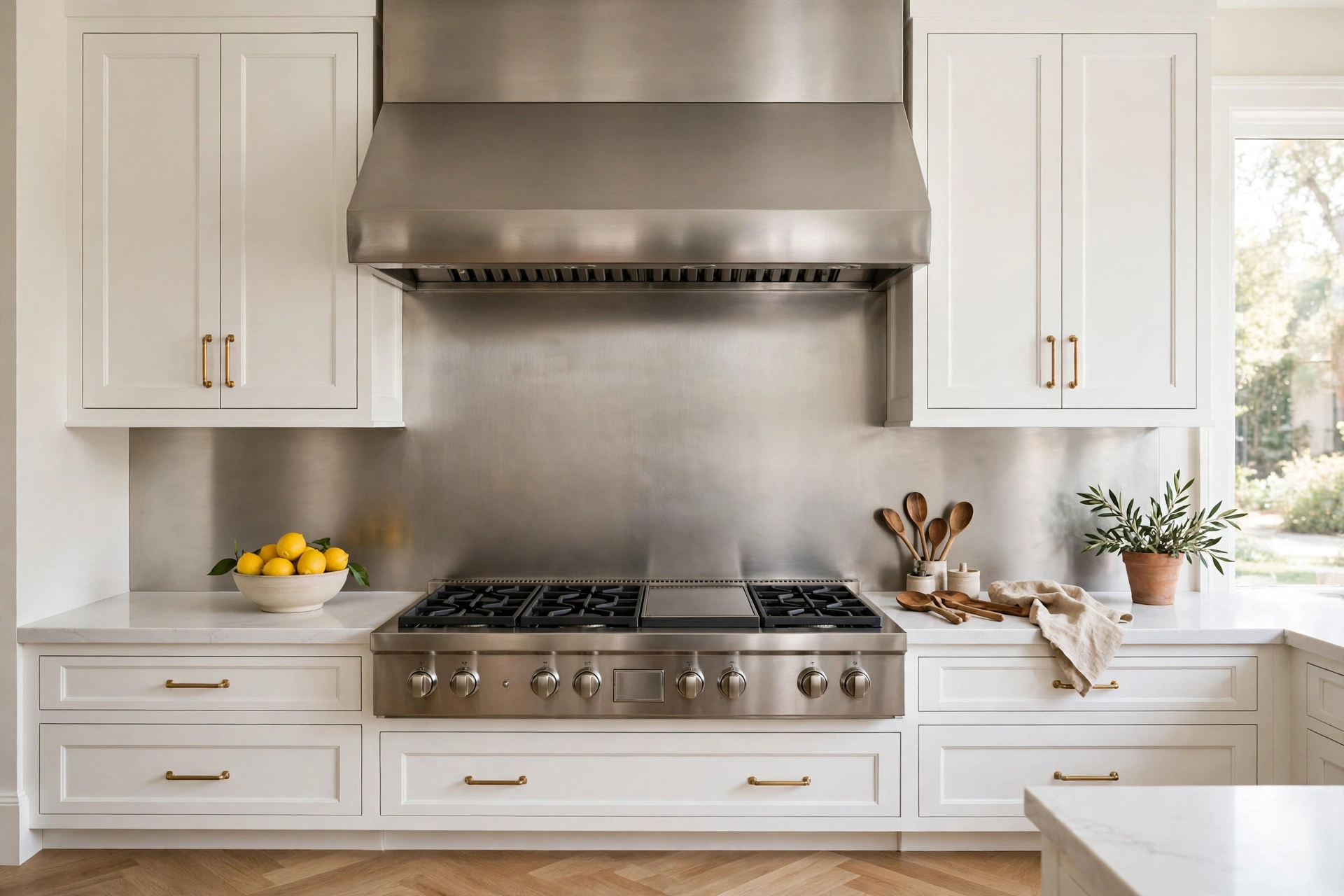
A stainless steel backsplash brings a professional kitchen feel to a home range wall. Brushed steel costs $75 to $200 per square foot installed, resists heat and grease better than any tile, and wipes clean with a damp cloth in seconds. It pairs beautifully with white shaker cabinets and brass hardware, softening the industrial edge.
Choose brushed steel over polished, since brushed finishes hide fingerprints and water spots far better. Order the panel as a single sheet cut to size, with cutouts for outlets and switches, and mount it with construction adhesive or screws hidden behind the range hood. EA Home Design’s material guide lists stainless steel at $75 to $200 per square foot, the most durable option in its comparison.
Steel suits serious cooks who want the wall behind the range to disappear into the background. Pair it with colourful kitchen cabinets or warm wood to keep the kitchen from feeling cold, and add under-cabinet lighting so the metal reflects a soft glow instead of glare.
Kitchen Backsplash Materials at a Glance
| Material | Cost per sq ft | Upkeep | Best for |
| Ceramic subway tile | $12–$25 | Low; seal grout | Classic, any budget |
| Porcelain tile | $14–$30 | Very low | Heavy-use walls |
| Zellige / handmade tile | $30–$65 | Moderate; more grout | Artisan texture |
| Glass sheet or tile | $20–$45 | Low; shows smears | Small, dark kitchens |
| Natural stone | $25–$60 | Seal yearly; marble etches | Organic, rich looks |
| Quartz slab | $60–$150 | Lowest; no sealing | Seamless full-height walls |
| Marble slab | $100–$250 | Seal; etches behind range | Statement walls |
| Peel-and-stick | $6–$30 | Low; replaceable | Budget and rentals |
5 Mistakes to Avoid with a Kitchen Backsplash
- Choosing the tile before the height — decide the stop line (cabinet bottom, hood or ceiling) first, or the tile order will be wrong.
- Skipping the sealer on stone — unsealed marble and travertine stain permanently from the first splash of tomato sauce.
- Forgetting extra tile — order 10 to 15 percent more, or a future repair will mean a mismatched batch.
- Mixing two busy patterns — if the countertop has strong veining, keep the backsplash quiet, and vice versa.
- Tiling behind the range with wood — shiplap and wood-look panels need a heat-safe material behind an open flame.
Frequently Asked Questions
A thoughtfully chosen backsplash does more than protect your kitchen walls. It defines the room’s personality, enhances everyday functionality, and brings together your cabinets, countertops, and flooring into one cohesive design.
Whether you prefer timeless subway tiles, luxurious marble, handcrafted Zellige, or bold geometric patterns, selecting quality materials and a balanced color palette will create a kitchen you’ll enjoy for years. Start with one design that matches your lifestyle and build the rest of your space around it. Planning a bigger update? See our kitchen remodeling ideas, modern open kitchen designs, and breakfast nook ideas.
Conclusion
A kitchen backsplash is the smallest surface in the room and the one you touch most, so choose it with the same care as the counters. Measure the height first, set the budget with real numbers, and pick a material you can live with — not just one that photographs well.
Whether you choose a classic white subway tile, a full-height marble slab, a budget peel-and-stick refresh, or a professional stainless steel wall, these 24 kitchen backsplash ideas all share one rule: the best backsplash is the one that fits your kitchen, your cooking, and your budget. Pick the height, pick the material, and start with the wall behind the range.