
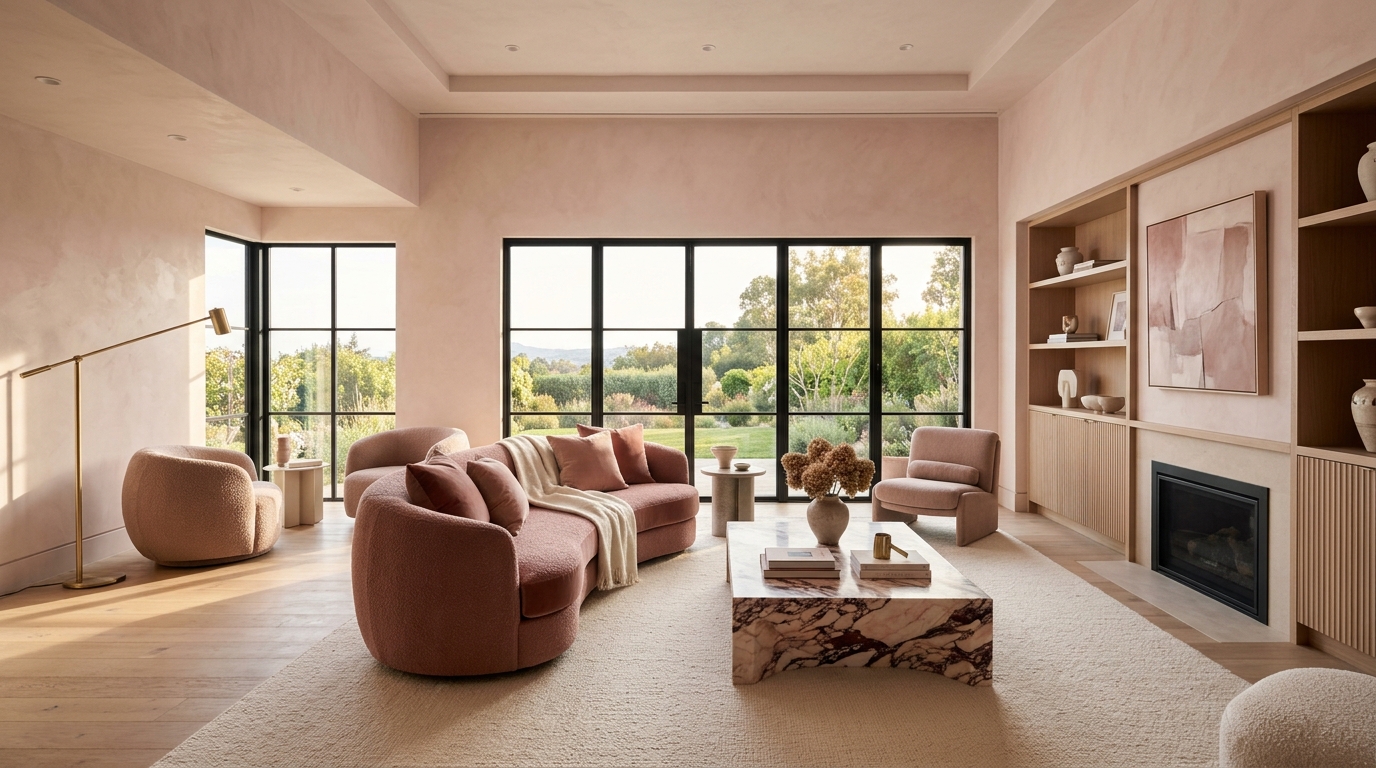
These pink room ideas prove pink is not just for children’s bedrooms — it is one of the most adaptable colours in interior design, from the palest blush that calms to a vivid magenta that energises. The same shade works in a bedroom, a living room, a home office or a hallway when it is paired with the right neutrals. Below are 21 ideas for every style and space, each built on one simple rule: pick one pink, repeat it in two or three places, and let neutrals, natural wood and one contrasting colour do the rest.
Key Takeaways
- Choose the shade first. Light changes pink more than almost any other colour — always test a sample on the wall before committing.
- Follow 60-30-10: 60% calm neutral base, 30% pink, 10% contrast (gold, sage, charcoal or wood). Pink at 30% looks chosen; pink at 90% looks like a theme.
- Mix three textures. Velvet, linen and a nubby knit in pink look rich together; one texture alone looks flat.
- Add one grown-up material. Marble, travertine, brass, solid wood or ceramic keeps pink sophisticated instead of sweet.
- Repeat the pink three times. The wall or the bed counts as one — repetition is what makes the colour feel intentional.
How to Pick Your Pink (Shade Guide)
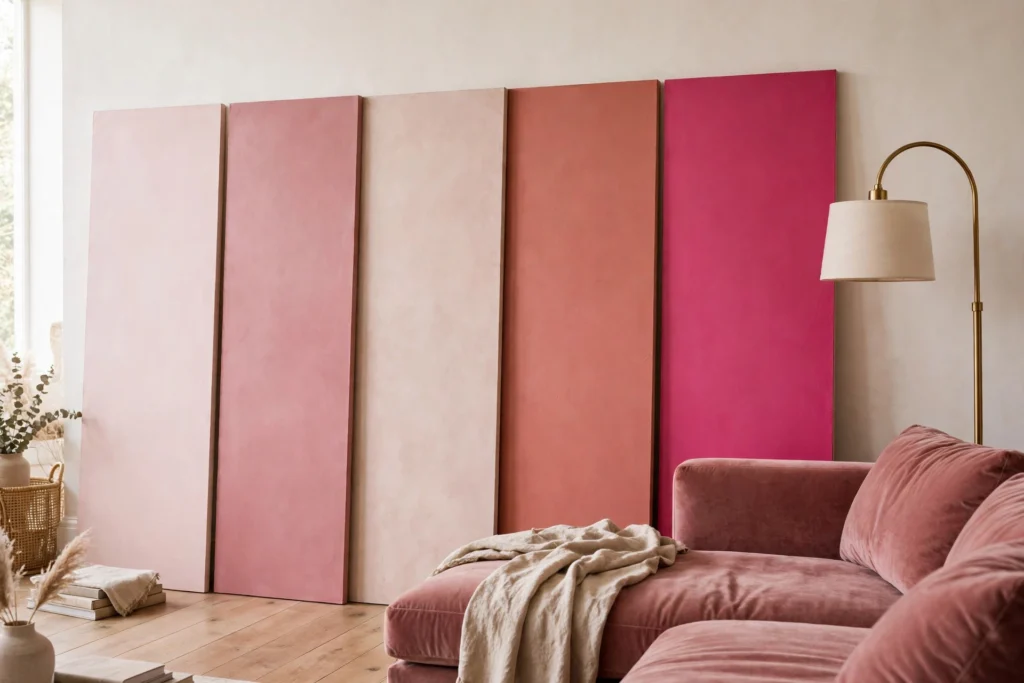
Before you buy a single cushion, choose your shade — it decides everything else. Blush and ballet pink are calming and read almost like a warm white in low light, so they suit bedrooms best. Dusty rose is warm and grounded, perfect for living rooms and reading nooks. Setting plaster pink (a soft, chalky, clay-toned pink) is romantic and works beautifully in bedrooms and bathrooms. Terracotta pink brings a sun-baked, earthy warmth. Fuchsia and magenta are for accents only — pillows, rugs and art.
Light matters as much as shade. Pink is perfect for warming up north-facing rooms, where soft pale shades with just a hint of apricot look amazing — but cooler blush pinks can look chilly there. In rooms with plenty of natural or warm LED light, every pink works beautifully. Always paint a large sample on the wall and look at it morning and evening before you commit.
1. Create a Soft Blush Pink Bedroom
The easiest way into a pink room is blush. Blush pink walls create a gentle background that works with white, cream, beige, light wood and warm metallic accents, and blush is the hardest pink to get wrong — in low light it reads almost like a warm white, which is why it suits bedrooms so well.
Choose one main blush tone and repeat it through smaller details: cushions, curtains, artwork and a throw blanket. Keep the bed linen white or cream so the pink stays soft rather than sweet, and add a warm wood nightstand or an oak bed frame to ground the scheme. A brass bedside lamp or a small gilt mirror adds the grown-up touch that stops blush from feeling childish.
2. Add a Pink Accent Wall Behind the Bed or Sofa
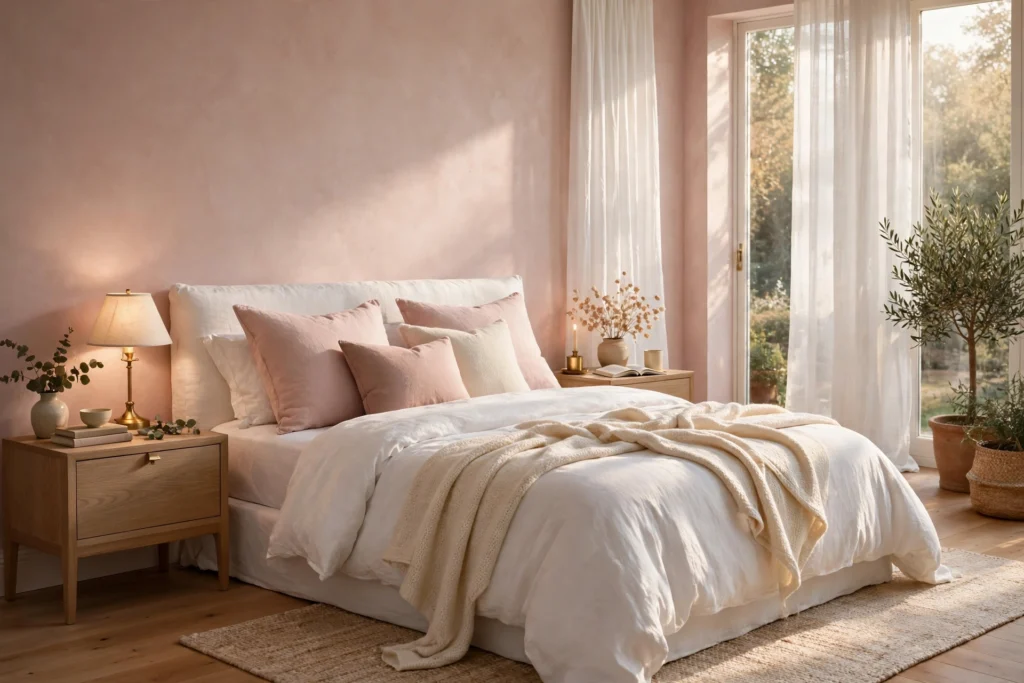
If painting the whole room pink feels like too much, one accent wall gives you the look with a fraction of the commitment. Choose the wall behind the bed, the desk or the main seating area — the wall your eye lands on when you walk in — and make it the focal point. A soft pink accent wall works with cream, beige, grey, white and natural wood.
Painting one wall is also the lowest-risk way to test a bolder shade: a dusty rose or a warm terracotta pink on a single wall feels rich, not overwhelming. Buy one gallon per 350 to 400 square feet for two coats, cut in the edges with a brush, roll in a W pattern, and wait two to four hours between coats.
3. Try a Pink and White Colour Scheme
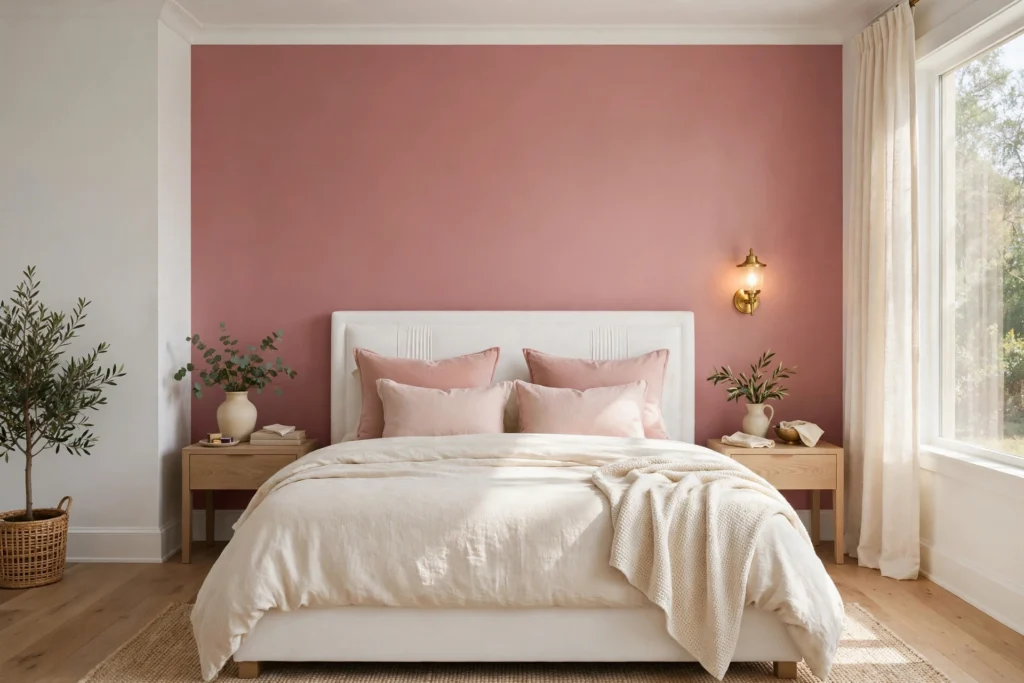
A pink-and-white room is timeless, fresh, and the easiest version of this look to decorate. White furniture and bedding let pink walls or pink accessories stand out while the room stays bright — and white is doing real work here, not just filling space.
Use white as the main neutral and pink as the feature colour. A blush wall with a white bed, a white nightstand and white curtains is the classic version: add pink pillows or a textured blanket to connect the two colours, and the scheme is done. In a living room, the same logic works with a white sofa, a blush rug and pink cushions.
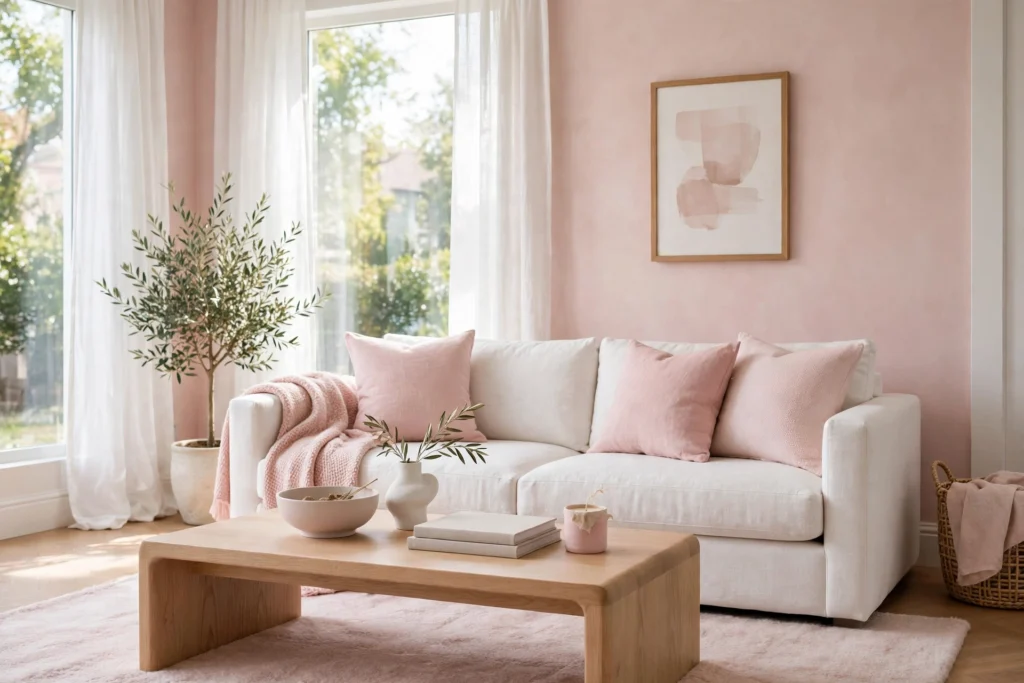
4. Make a Dusty Rose Velvet Sofa the Focal Point
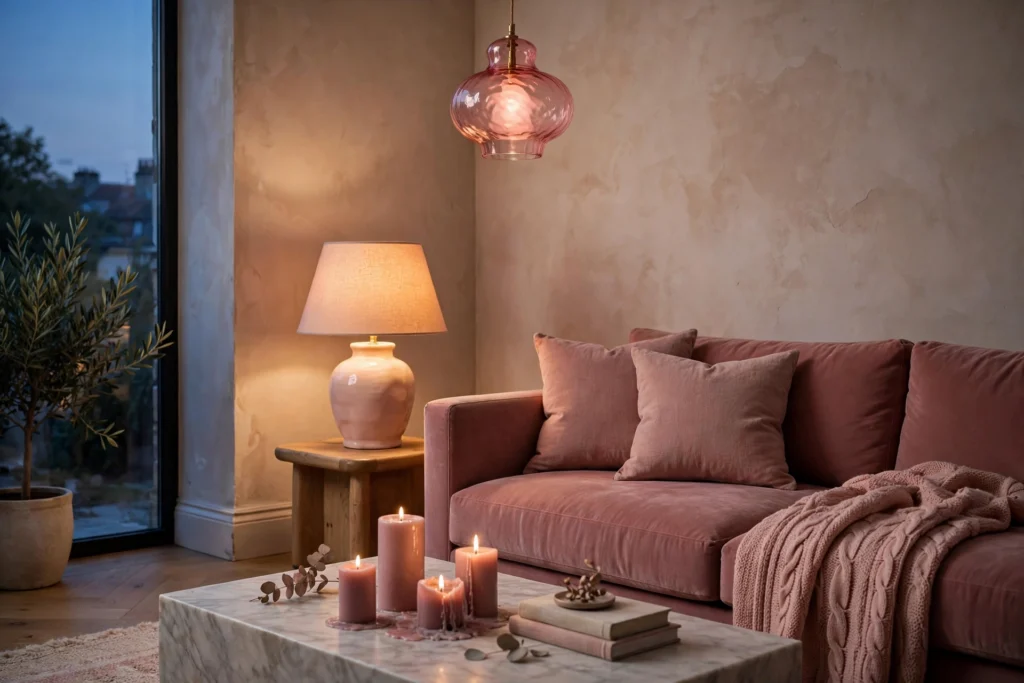
If you want one statement piece, make it a dusty rose velvet sofa. Velvet gives pink a depth and richness that flat fabrics cannot, and dusty rose is warm and grounded enough to anchor a whole living room. It works with cream walls, warm oak floors, marble coffee tables and brushed brass accents — the exact palette of our featured image.
Keep everything else quiet: cream or warm white walls, a neutral rug, and one or two blush cushions that echo the sofa without matching it exactly. A brass floor lamp or a gilt mirror nearby adds the glamour; a linen throw softens it.
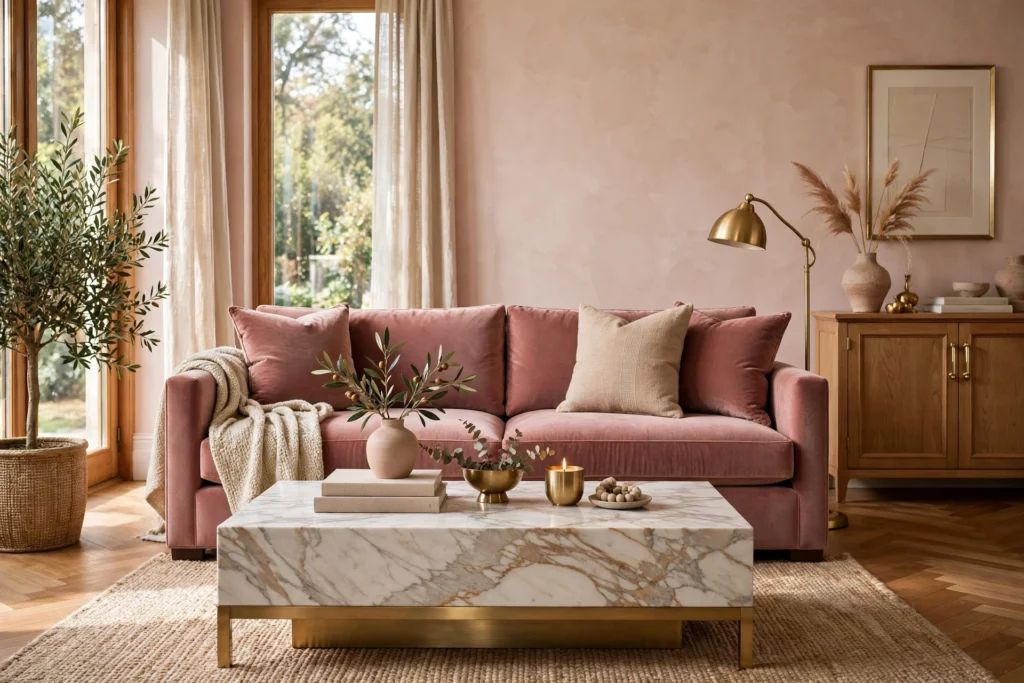
5. Mix Pink with Gold for a Glamorous Look
For a more elegant pink room, combine pink with gold — but keep the gold in check. A blush-pink room with gold-framed mirrors, warm lighting, metallic hardware or small decorative accessories feels sophisticated fast. The combination that works best is blush pink with cream and warm white, plus gold only in the metal: the mirror frame, the lamp base, the drawer pulls.
Gold works hardest in small doses. A gilt mirror above a blush console, brass sconces flanking a pink headboard, or a gold tray on a dusty rose ottoman all read as glamour; gold on every surface reads as costume.

6. Create Drama with Pink and Black
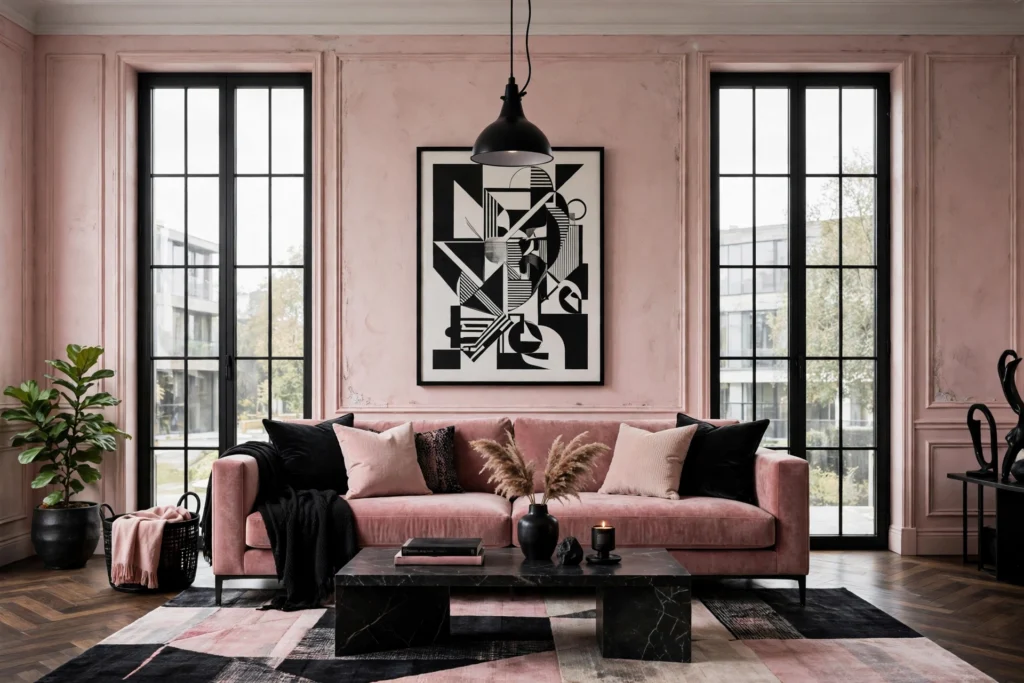
Pink and black is the boldest pairing in this guide — and the most grown-up. Black grounds pink’s sweetness instantly: a black-framed window against blush walls, matte black hardware on a pink vanity, or a black-and-white graphic print above a dusty rose sofa. The contrast makes the pink look chosen rather than accidental.
Use black sparingly, at about 10% of the room: one black element per wall at most. A black pendant light, black picture frames, or a black side table are enough. Too much black tips the room into a harsh, graphic look; too little and the pink drifts back toward sweet.
7. Pair Pink with Sage Green for a Garden Feel
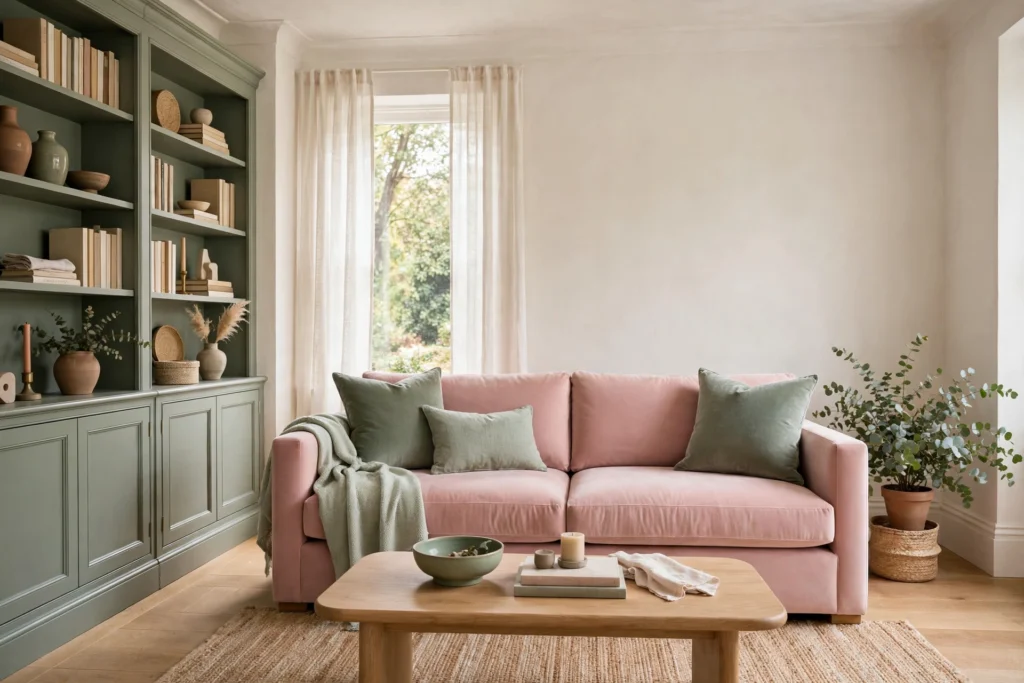
Rose pink and sage green is the freshest pairing in this guide — garden-like, restful, and perfect for living rooms, reading corners and bathrooms. The cool green tempers pink’s warmth, so the room feels balanced rather than sugary.
Use warm white as the base (about 60%), rose pink as the feature (30%), and sage as the accent (10%): sage cushions on a blush sofa, a sage-painted bookcase against a pink wall, or eucalyptus and ferns in the room’s planters. Natural wood and linen complete the garden feel.
8. Go Sophisticated with Dusty Pink and Grey
Dusty pink and grey is the most sophisticated version of this look — quiet, modern, and perfect for home offices, living rooms and shared spaces where pink needs to behave. Light grey walls carry the base, dusty pink soft furnishings hold the middle, and charcoal or black provides the 10% contrast.
The key is temperature: choose a warm grey with pink undertones, not a cold blue-grey, or the two colours will fight. A light grey sofa with dusty pink cushions, a pink throw over a grey armchair, and a charcoal floor lamp is the whole scheme — calm, considered, and unmistakably grown-up.
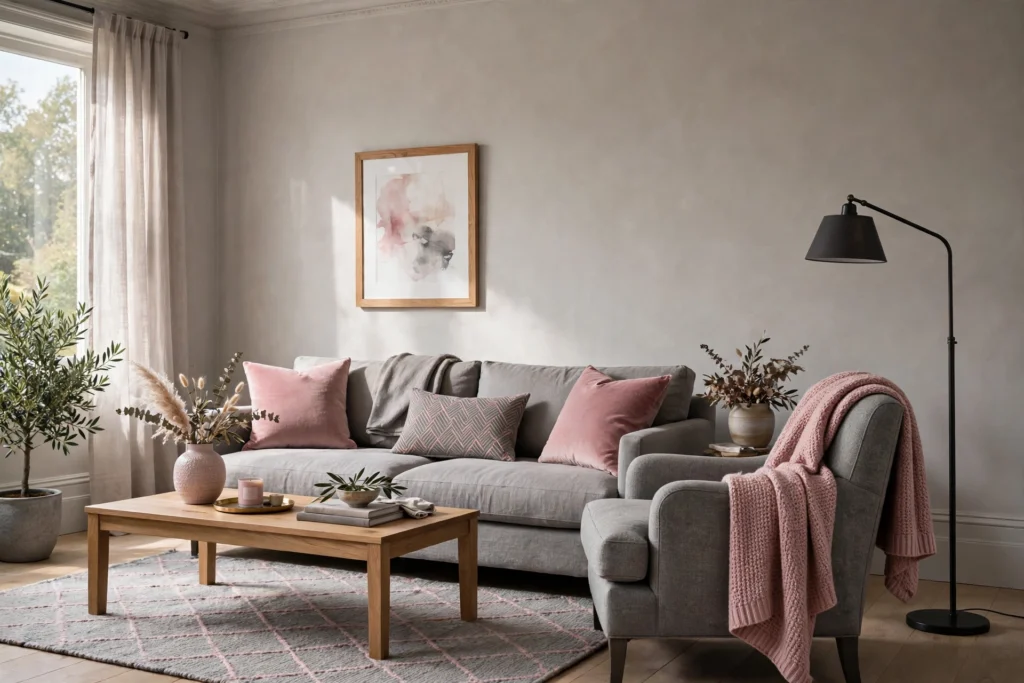
9. Use Pink Bedding as the Main Feature
If you don’t want to paint, let the bedding do the work. Pink bedding is the main feature in a white or cream bedroom: a blush duvet, dusty rose pillows and a pink throw turn a plain room pink for the price of a linen set — and you can change it with the seasons.
Layer at least two pinks (a pale blush duvet with a deeper rose pillow) plus one texture — linen, velvet or a nubby knit — so the bed looks styled rather than flat. White or cream sheets underneath keep it fresh, and a warm wood headboard or brass lamp stops it feeling like a theme.
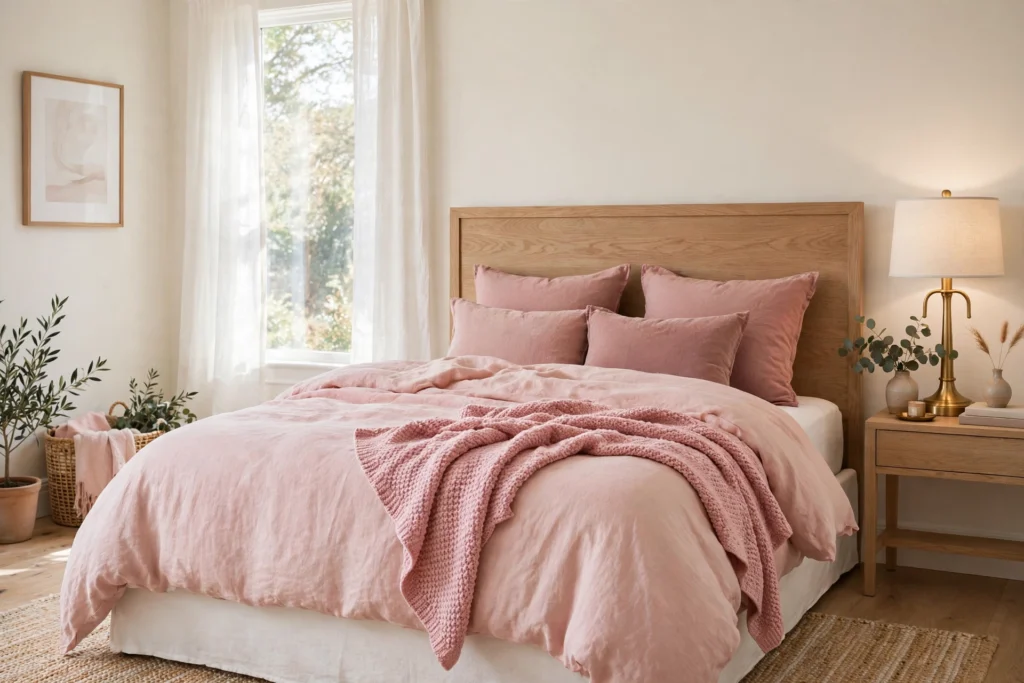
10. Hang Pink Curtains as a Foil to Botanical Prints
Pink curtains are one of the most useful pink room ideas because they add colour at eye level without touching the walls. They work beautifully as a foil to botanical prints: blush linen curtains beside a green leaf-print wallpaper or a floral artwork let the pink and the green play off each other.
Hang them high and wide — the rod should extend past the window frame so the curtains frame the view rather than blocking it — and choose a fabric with some weight (linen or velvet) so they fall in soft folds. In a bedroom, floor-length blush curtains with a white sheer behind them give privacy and romance in one move.
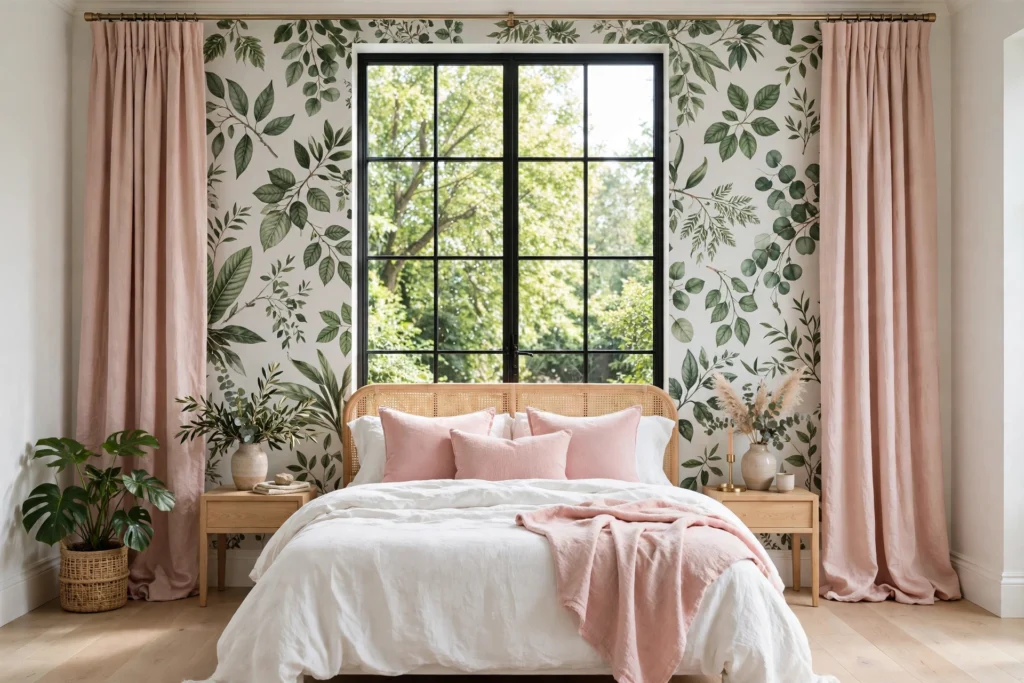
11. Paint Pink and White Stripes to Add Height
Painting wide vertical stripes is one of the most creative pink room ideas — it gives the illusion of height and adds character to a room that lacks original features. Alternate a soft pink with a crisp white in wide bands (about 8–12 inches each) on one wall, or all four for a bolder look.
Stripes work best in hallways, nurseries and small bedrooms, where the vertical lines stretch the walls upward. Keep the furniture simple and the rest of the room quiet: white bedding, light wood, and one pink accent that matches the stripe colour exactly.
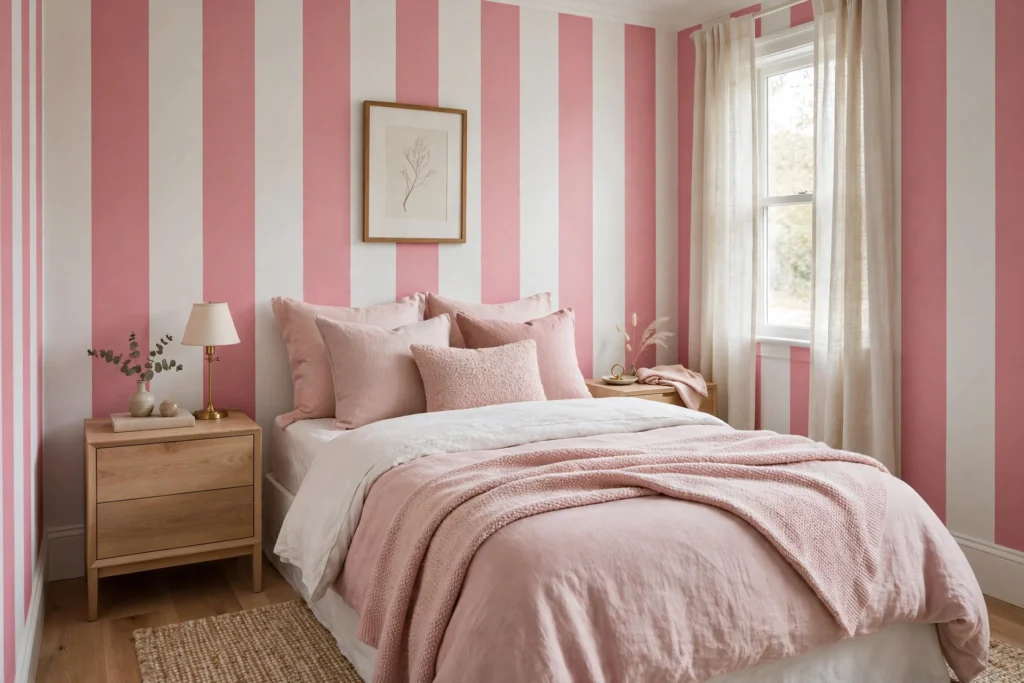
12. Bring a Playful Feel to the Kitchen with Pink
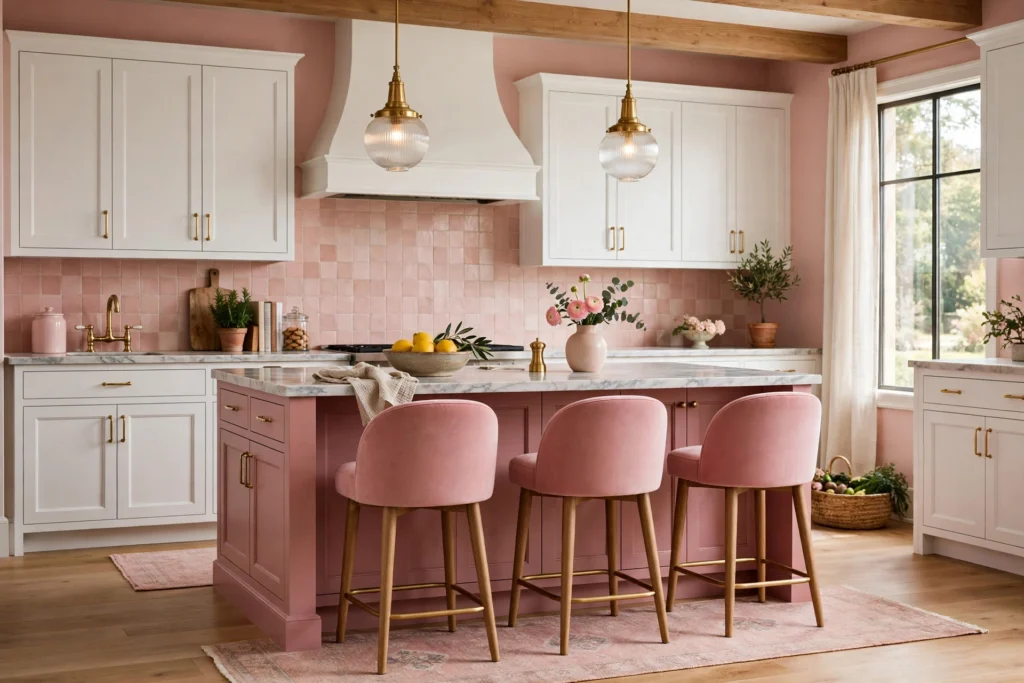
Pink in the kitchen is unexpectedly joyful: a blush-pink island, dusty rose bar stools, or pink metro tiles as a backsplash turn a hardworking room into a warm one. Because kitchens are full of hard surfaces, pink softens them — especially against white cabinets, marble worktops and brass taps.
Start small if you are unsure: pink bar stools, a pink kettle and a blush runner are enough to test the colour. For a bigger commitment, paint the island dusty rose and keep the wall cabinets white — the island becomes the room’s focal point without overwhelming it.
13. Design a Soothing Bathroom Sanctuary with Blush Pink
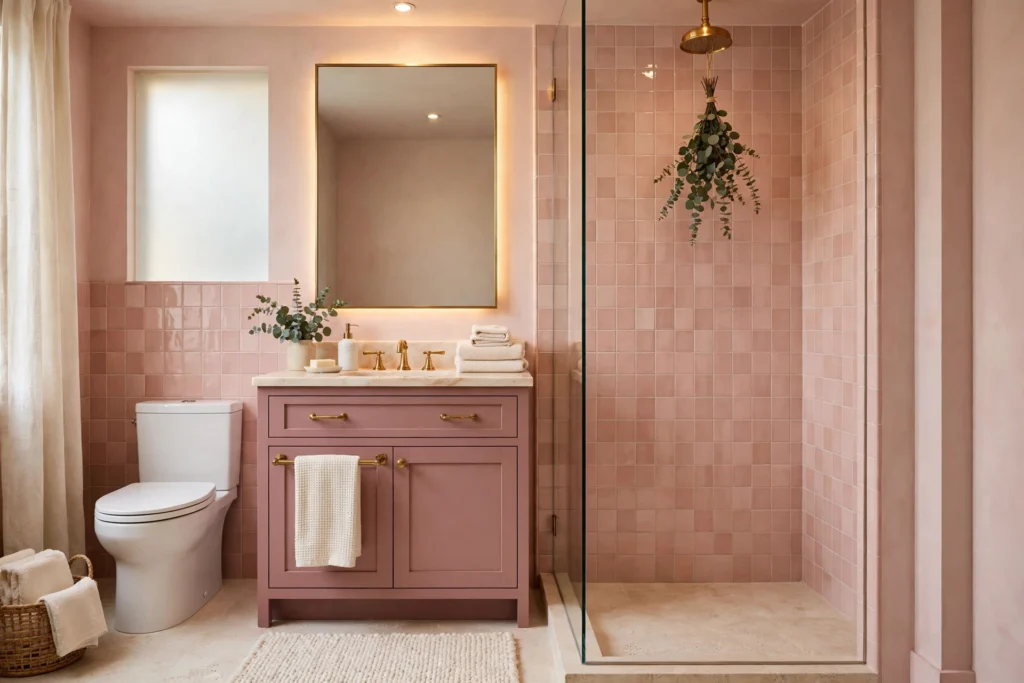
Bathrooms are small, private spaces — the perfect place to be playful with colour. A blush pink bathroom feels like a sanctuary: pink tiles, a blush-painted vanity, or a soft pink plaster wall turn a clinical room into a spa.
Try blush metro tiles in the shower, a dusty rose vanity with brass taps, or pink Luna-style tiles as a feature wall. Keep the sanitaryware white and the towels cream so the pink stays the star, and add a eucalyptus bundle or a small plant for the spa feeling. Warm LED lighting (2700K) keeps the pink soft rather than cold.
14. Design a Pink Nursery That Grows Up
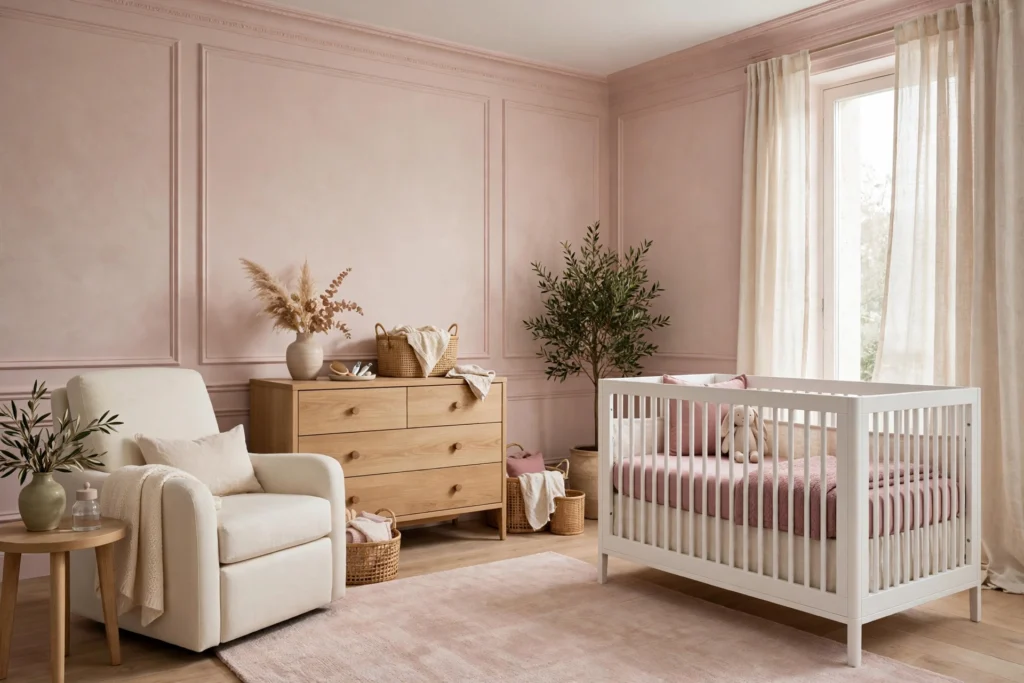
A pink nursery should be designed to grow up with the child — soft, not themed. Blush walls, white furniture and natural wood create a calm base, while dusty rose textiles (a rug, a cushion, a blanket) add the colour. The trick is to choose furniture you would keep in a teenager’s room: a white crib that converts, an oak dresser, a neutral armchair for feeding.
Avoid pink on every surface and skip character themes; instead add one piece of art, a soft rug and a mobile in blush and cream. When the child outgrows pink, you change the textiles — not the room.
15. Make a Pink Home Office Feel Calm, Not Sweet
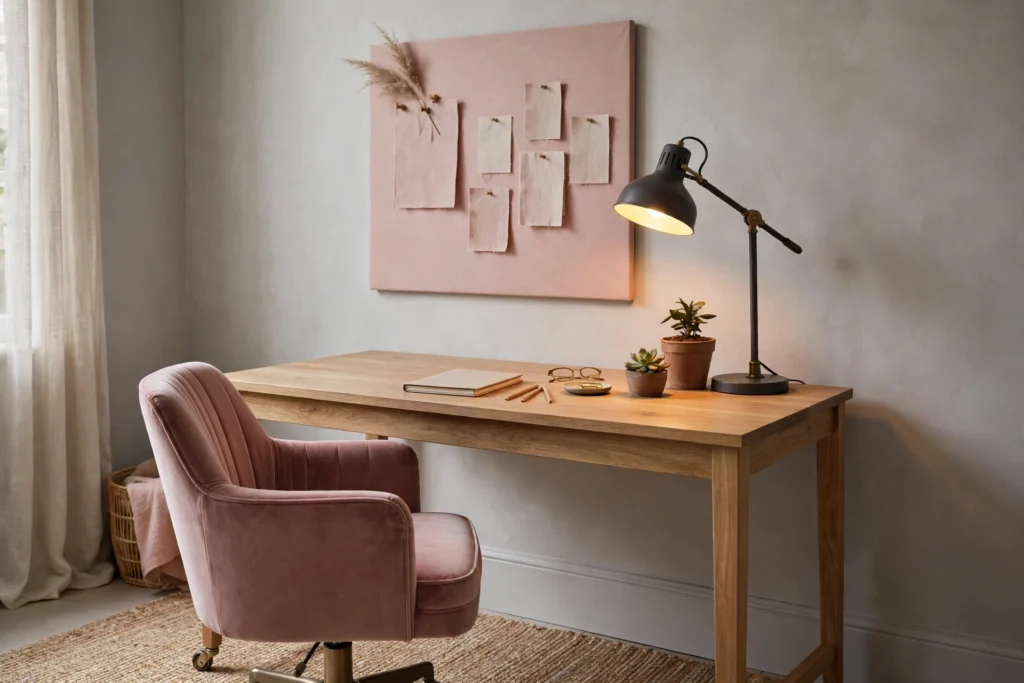
Pink works surprisingly well in a home office because the right shade is calming, not distracting. Dusty pink and grey is the pairing to use: light grey walls, a dusty pink desk chair or a blush pinboard, and charcoal accents (a lamp, a desk organiser) for contrast.
Keep the desk surface clear and the pink to soft furnishings — a pink chair, a blush desk mat, a dusty rose storage box — so the room still reads as a workspace. Natural wood (an oak desk, a walnut shelf) and a plant keep it grounded, and good task lighting matters more than colour: a warm-white desk lamp at 2700K–3000K keeps the pink warm.
16. Pair Pink with White Oak for a Scandinavian Feel
Pink and white oak is the warmest, most natural pairing in this guide — Scandinavian in spirit and welcome in any room with wood floors or furniture. The rule is simple: 60% white or oat, 30% pink, 10% oak. The oak does the grounding, so the pink can stay soft.
A blush sofa on pale oak floors, a pink rug under an oak dining table, or dusty rose cushions on an oak-framed bed all work. Add linen (oat-coloured curtains, a cream throw) and one brass or ceramic accent, and the room feels effortless rather than decorated.
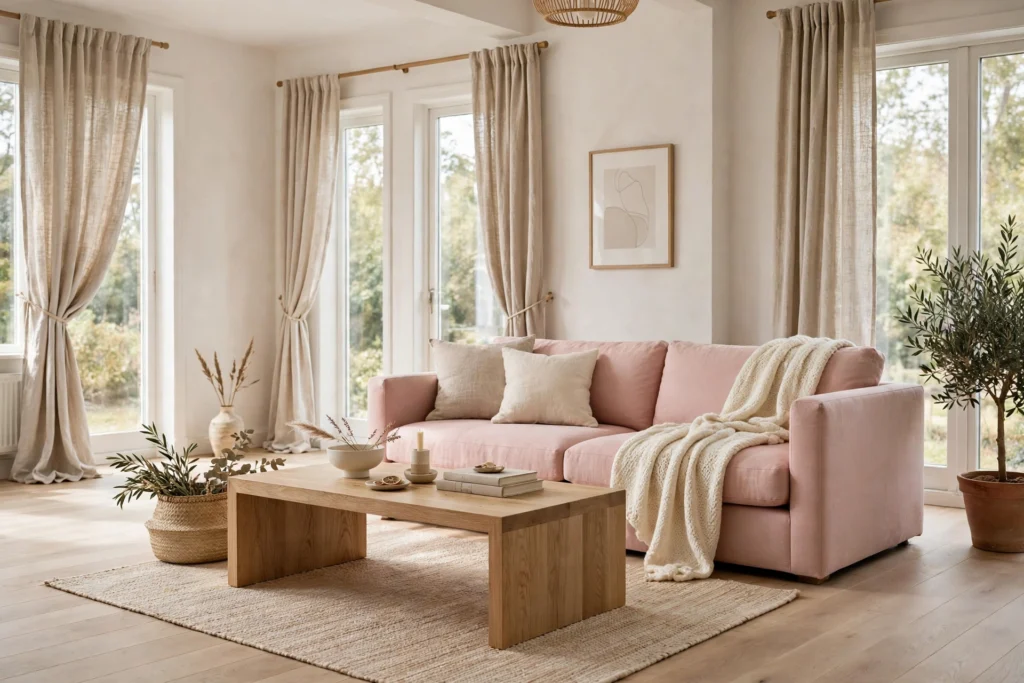
17. Layer Pink Textiles: Velvet, Linen and Bouclé
Texture is what makes pink look expensive. One pink fabric alone looks flat; three together look rich. Layer velvet (a dusty rose cushion), linen (blush curtains or bedding) and a nubby knit or bouclé (a throw, an accent chair) in the same room, in two or three shades of pink rather than one exact match.
The mix works in any room: a velvet cushion + linen curtains + a knit throw in a bedroom; a bouclé chair + velvet pillows + a linen sofa in a living room. Keep the base neutral (cream, white, oat) so the textures — not the colour — carry the richness.
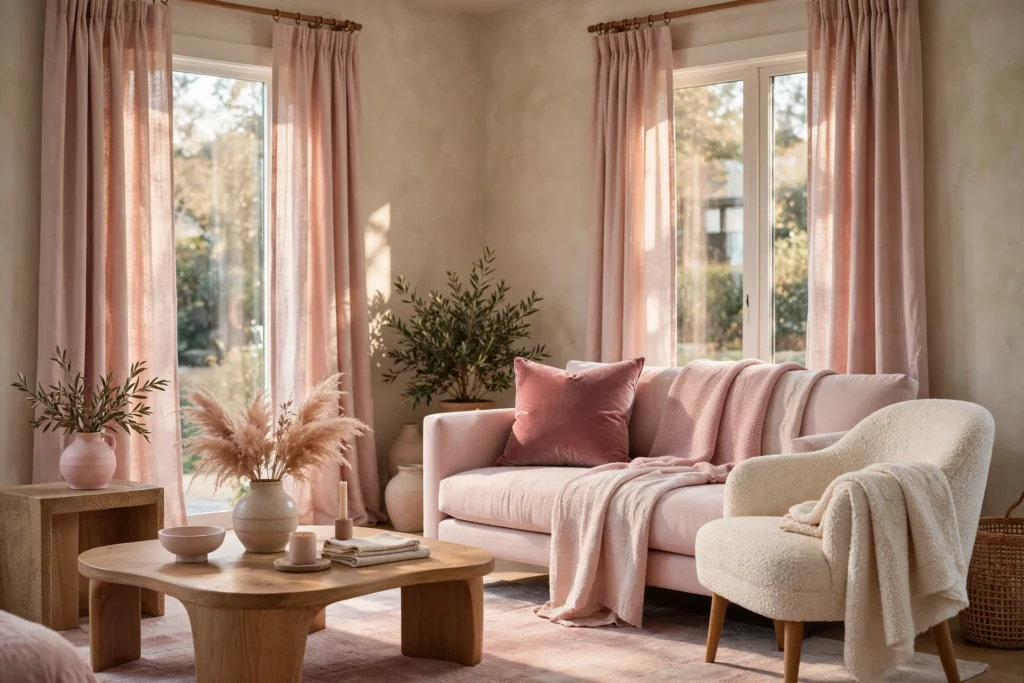
18. Use Peel-and-Stick Pink Wallpaper (Renter-Friendly)
If you rent — or you are not ready to paint — peel-and-stick pink wallpaper gives you the look with zero commitment. A blush botanical print behind the bed, a dusty rose stripe in a hallway, or a soft pink toile in a powder room all peel off cleanly when you move.
Apply it to one wall only (the focal wall), and keep the rest of the room neutral so the pattern has room to breathe. Measure carefully, match the pattern at the seams, and smooth from the centre outward to avoid bubbles. It is also the cheapest way to test a bold pink before painting it.
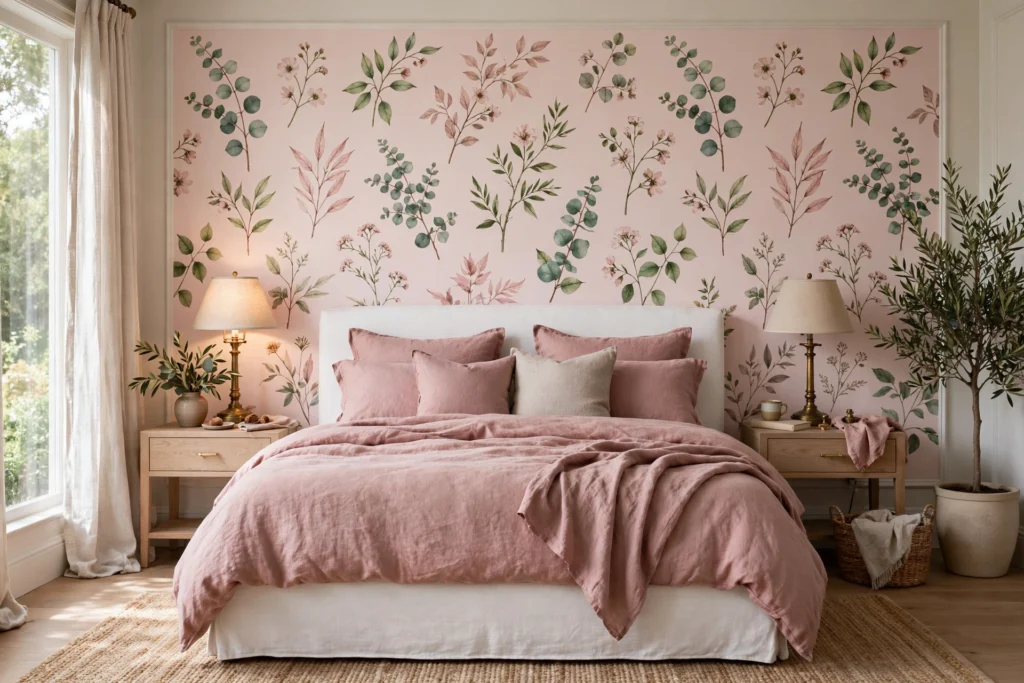
19. Build a Pink Gallery Wall
A gallery wall is the smallest commitment in this guide — and one of the most personal. Collect prints, photographs and small art in blush, rose, cream and black, frame them in matching slim frames (white, oak or black), and hang them in a neat grid or a salon-style cluster on one wall.
The rule: one pink in the art should match one pink in the room (a cushion, a throw, the rug), so the wall feels connected to the space instead of random. Keep the opposite wall clear so the gallery reads as a feature, not clutter.
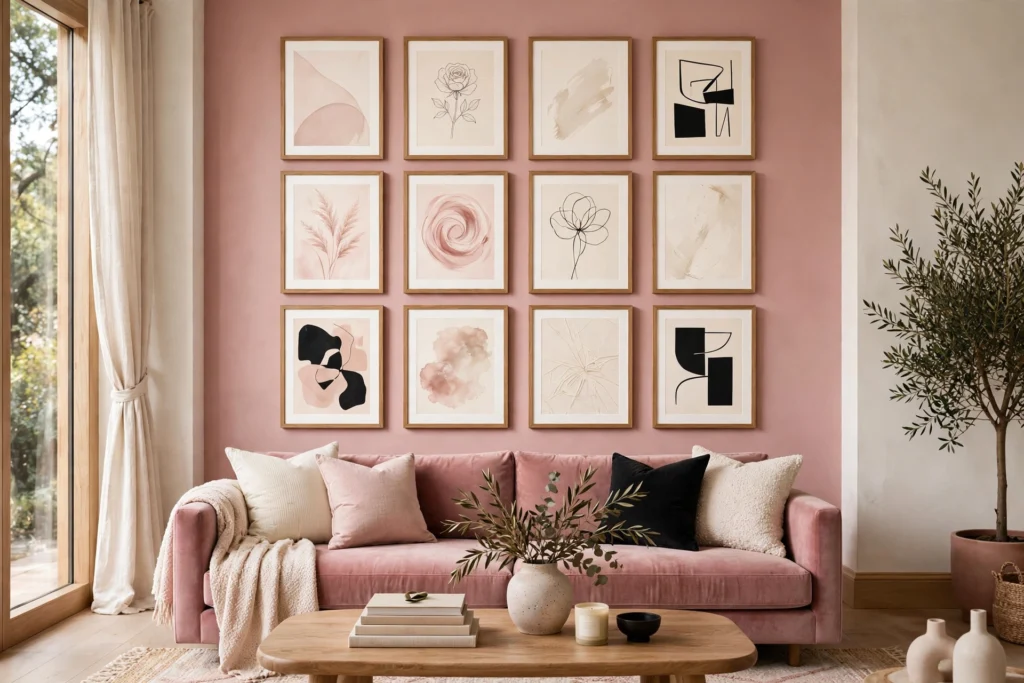
20. Light It Pink: Lamps, Sconces and Candles
Lighting is the most overlooked way to bring pink into a room. A blush ceramic lamp base, a pink glass pendant, or a rose-tinted sconce shade casts a warm pink glow in the evening that paint never can — and it costs far less than a repaint.
Pair pink lighting with warm-white bulbs (2700K) so the glow stays soft. A blush lamp on a bedside table, a pink pendant over a dining table, or a cluster of dusty rose candles on a coffee table all add the colour at the 10% level — the finishing touch, not the main event.
21. Finish with Small Pink Accents (The 10% Rule)
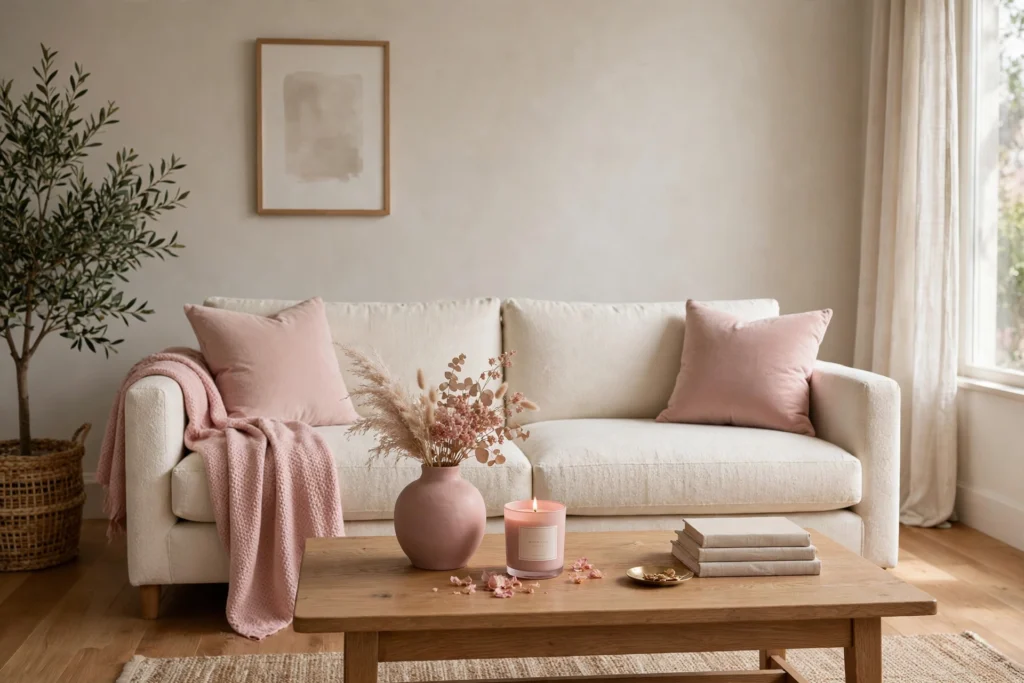
If a full pink room is too much, finish with small accents — the 10% in the 60-30-10 rule. A dusty rose vase, blush cushions, a pink throw, a rose candle, a small pink artwork: five small things in one shade, repeated around the room, are enough to make pink the room’s accent colour without repainting anything.
The discipline is in the shade: all five accents should be the same pink family (all dusty rose, or all blush), not five different pinks. One shade, repeated five times, looks intentional; five shades looks accidental.
Palette Pairings Comparison Table
These palette pairings show how much pink to use with each partner colour — the ratios below come from the most-loved combinations.
| Pairing | Mood | Best rooms | Ratio |
|---|---|---|---|
| Blush + cream | Soft, airy, calm | Bedrooms, small rooms, north-facing spaces | 60% cream, 30% blush, 10% wood or brass |
| Rose + sage | Fresh, garden-like, restful | Living rooms, reading corners, bathrooms | 60% warm white, 30% rose, 10% sage |
| Pink + gold | Glamorous, a little Old Hollywood | Vanity corners, entryways, dressing areas | 60% pale pink, 30% white, 10% gold |
| Dusty pink + grey | Sophisticated, quiet, modern | Home offices, living rooms, shared spaces | 60% light grey, 30% dusty pink, 10% charcoal or black |
| Pink + white oak | Warm, natural, Scandinavian | Any room with wood floors or furniture | 60% white or oat, 30% pink, 10% oak |
| Pink + black | Bold, dramatic, grown-up | Living rooms, bedrooms with strong contrast | 60% blush, 30% white, 10% black |
5 Mistakes to Avoid with Pink
- Using one shade everywhere. Pink walls, pink bedding, pink rug and pink curtains in the exact same tone flatten the room — use two or three shades instead.
- Skipping the sample test. Light changes pink more than any other colour; a shade that looks perfect in the shop can look cold or garish on your wall.
- No grown-up material. Pink with only soft fabrics reads as a child’s room — add marble, brass, solid wood or ceramic.
- Too much pink, no neutral. Pink at 90% looks like a theme; keep it at 30% with a calm neutral base.
- Five different pinks. Accents in five shades look accidental — pick one pink family and repeat it.
Frequently Asked Questions
Blush and ballet pink are the best bedroom shades — they are calming and read almost like a warm white in low light. For a warmer feel, try dusty rose or setting plaster pink. Avoid bright fuchsia on bedroom walls; keep it for cushions and art.
Follow 60-30-10: 60% neutral base, 30% pink, 10% contrast. Mix three textures (velvet, linen, knit) and add one grown-up material — marble, brass, solid wood or ceramic. One pink family, repeated in two or three places, looks chosen, not themed.
Cream and white keep pink fresh; sage green makes it garden-like; grey makes it sophisticated; gold makes it glamorous; black adds drama; white oak makes it Scandinavian. Pick one partner colour per room and repeat the pink in two or three places.
Yes — pink is ideal for north-facing rooms because it warms them up. Choose soft pale shades with a hint of apricot, which look amazing in cool northern light. Avoid cooler blush pinks there, as they can look chilly; warm LED lighting helps too.
Yes, if you choose the right shade. Pale blush reads almost like a warm white and makes a small room feel airy, especially with white trim and light wood. Keep the pink to one wall or the textiles, use a large mirror, and avoid dark, saturated pinks.
Sixty percent of the room is a calm base (cream, white, oat or light grey), thirty percent is your pink, and ten percent is a contrasting accent (gold, sage, charcoal or wood). Pink at thirty percent looks intentional; pink at ninety percent looks like a theme.
Yes. Use peel-and-stick wallpaper on one wall, pink bedding and curtains, a dusty rose rug, and small accents like cushions, vases and art. All of it removes cleanly, and you get the full pink look without painting or your landlord’s permission.
Blush pink is best for bathrooms — blush metro tiles, a dusty rose vanity with brass taps, or a soft pink plaster wall all feel spa-like. Keep sanitaryware white, towels cream, and use warm LED lighting at 2700K so the pink stays soft rather than cold.
Conclusion
These pink room ideas work because they treat pink as a design colour, not a theme: one shade, repeated in two or three places, balanced by a calm neutral and one contrasting accent. Start with the shade — test it in your light — then pick your level of commitment, from a full blush bedroom to five small dusty rose accents in a neutral living room. You do not need all twenty-one ideas; two or three, done well, will change how the room feels. If your bedroom needs the same treatment, our modern bedroom ideas show how to carry a soft, grown-up palette through the whole room.